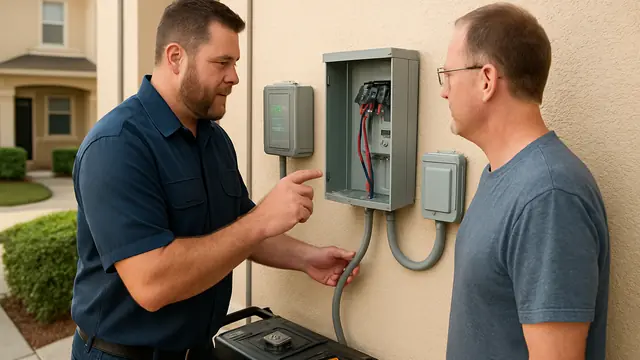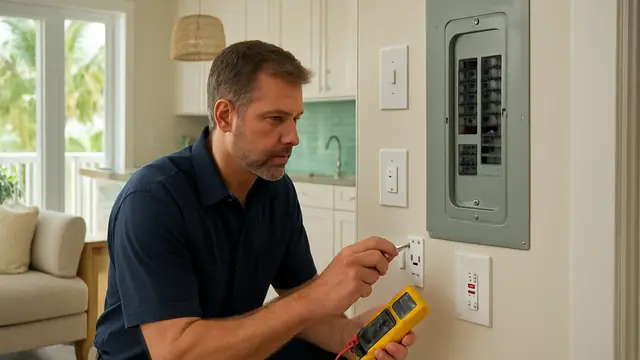
Do not remove an electrical panel cover, touch exposed conductors, bypass protection, or repeatedly reset a fault. Keep clear of smoke, sparks, burning odors, hot equipment, standing water near electricity, and downed lines, then call qualified help.
The refrigerator is running, the air conditioner starts, and the kitchen lights flutter. Minutes later, an outlet stops working even though its breaker appears on. That evening, you hear a faint crackle near the panel. Together, these symptoms can indicate a loose connection, failing breaker, or damaged conductor.
Unplug sensitive electronics and reduce the load on the affected circuit. Reset a tripped breaker only once after removing portable loads. If it trips again, leave it off. Keep the panel cover closed.
Do not touch the panel if it is wet or unusually hot. Smoke, sparks, a burning odor, or loud popping require immediate attention. Call emergency services for an active fire.
Seven Signs Your Electrical Panel Needs an Inspection in Parker
1. A Breaker Will Not Stay Reset
A breaker that immediately returns to the tripped position is usually responding to an active problem. Possible causes include a short circuit, ground fault, damaged appliance, overloaded circuit, loose connection, or defective breaker.
A short circuit or ground fault sends current along an unintended path and can make a breaker trip quickly.
Unplug portable devices on that circuit and try one reset only if there is no heat, odor, moisture, or visible damage. Leave it off after another trip.
2. Outlets or Lights Lose Power While the Breaker Looks On
- A breaker handle can appear on even when it has tripped internally. Intermittent power may also come from a loose connection in the circuit, panel, or service equipment.
- Note whether the outage affects one circuit or unrelated rooms.
- Do not repeatedly move the breaker handle in an attempt to restore unstable power.
3. Lights Flicker Across More Than One Circuit
One fixture may flicker because of a loose bulb or switch. Flickering across the home may indicate voltage instability, a loose neutral, a poor panel connection, or a utility-side problem.
When the neutral becomes loose, lights may alternate between unusually bright and unusually dim. Widespread flickering should be evaluated promptly.
4. The Panel Makes a Noise It Did Not Make Before
Persistent buzzing, humming that changes with load, sizzling, crackling, snapping, or popping can indicate a loose terminal, failing breaker, poor bus-bar contact, or electrical arcing.
The bus bar supplies power to the breakers. Arcing happens when electricity crosses a gap rather than flowing through a secure connection.
Do not remove the cover or stand close to the equipment to identify the exact source.
5. You Notice Heat, Discoloration, or a Burned Smell
A hot panel door or concentrated hot spot requires attention. Discoloration, blistering, melted plastic, or an odor resembling scorched insulation suggests excessive heat.
Loose connections create resistance and heat that can damage components. Stop operating heavy loads if it is safe to do so away from the panel.
6. Rust or Moisture Is Present
Rust on the enclosure, water streaks, dampness near cable openings, or powdery residue may indicate moisture intrusion. Corrosion can damage breakers, conductors, and bus bars.
Do not wipe inside the cabinet, apply cleaner, or attempt to sand corrosion. The panel must be inspected and the source of moisture corrected.
7. The Panel Shows Crowding, Missing Covers, or Improvised Changes
- Missing blanks, loose breakers, confusing labels, scorched areas, or conductors entering through damaged openings justify inspection.
- Added appliances, HVAC equipment, workshops, water heating, or charging equipment can change demand.
- An electrician can complete a load calculation. The solution might be one dedicated circuit, a subpanel, panel replacement, or service upgrade.
Safe Checks the Homeowner Can Perform
- Keep the panel closed. Note which breaker is involved, what equipment was running, how long the problem lasted, and whether the issue affects one circuit or several rooms.
- Look for rust, stains, discoloration, or a damaged door. Inspect accessible appliance cords and plugs for obvious wear.
- Unplug portable equipment from the affected circuit. Reset the breaker once only if conditions are otherwise normal. Stop after another trip.
What You Should Not Attempt
- Do not remove the dead-front cover, tighten terminals, move conductors, replace service components, or test exposed energized parts.
- Do not install a breaker with a higher amperage rating to stop nuisance trips.
- Never tape or hold a breaker on, use an unapproved breaker, bypass protective devices, spray chemicals into the cabinet, or attempt to dry wet electrical equipment yourself.
Signs That Make the Situation Urgent
Urgent warning signs include smoke, visible sparks, active arcing, a burning smell, melted plastic, a hot cover, water inside the panel, electrical shocks, repeated main-breaker trips, or lights that become dramatically brighter and dimmer.
A large partial outage may involve the service connection. Keep everyone away from damaged exterior electrical components and downed lines.
How a Licensed Electrician Diagnoses the Problem
The electrician reviews the timing, affected circuits, and equipment involved. The inspection may include breaker compatibility, conductor size, terminals, loading, bus bars, grounding, corrosion, moisture, heat damage, and previous modifications.
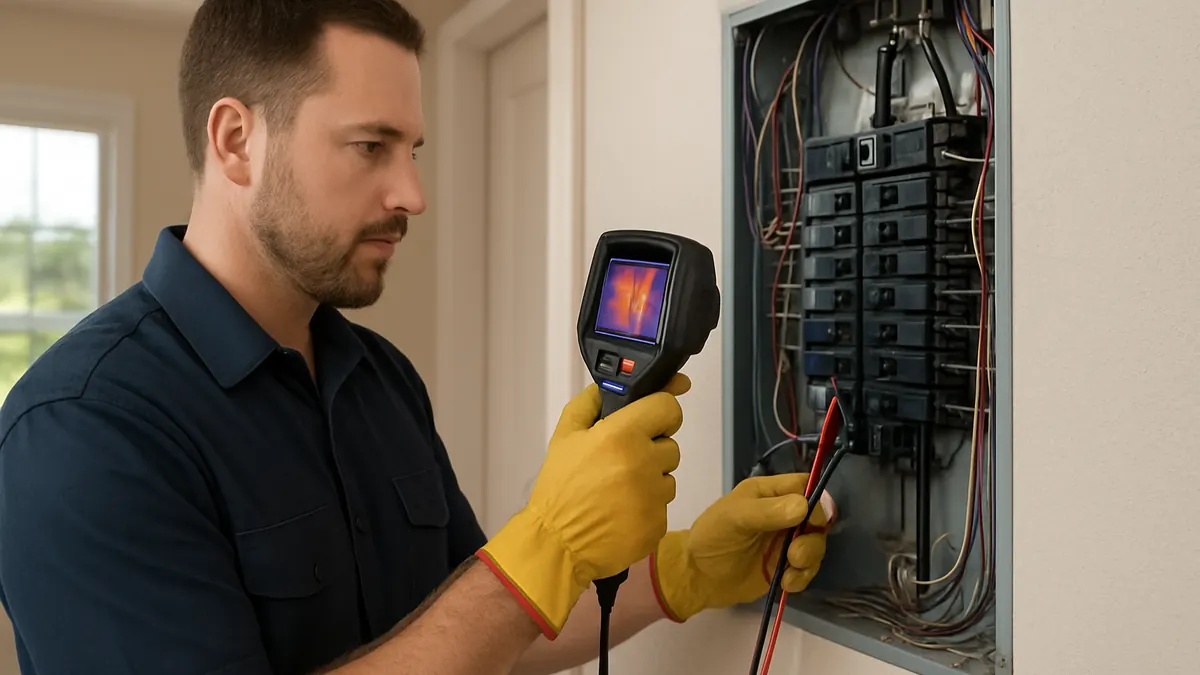
Voltage and current measurements help identify overloads, poor connections, and unstable supply. Thermal imaging may show abnormal heat.
Repair Options Beginning With the Least Invasive
A targeted repair may involve replacing one compatible breaker, correcting a loose branch connection, repairing damaged wiring at an outlet or appliance, or installing a dedicated circuit for equipment that is overloading a shared circuit.
Other options include replacing damaged conductors, correcting grounding, repairing moisture entry, or adding a subpanel.
Panel replacement may be appropriate when internal bus bars are damaged, corrosion is widespread, heat damage is extensive, compatible parts are unavailable, or unsafe modifications cannot be corrected. A service upgrade is considered when a load calculation shows that demand exceeds capacity.
Typical Factors That Affect Cost
Cost depends on the location and severity of the defect, panel type, breaker availability, access, number of affected circuits, conductor damage, service size, grounding work, permits, and necessary finish repairs.
The estimate should explain the finding, the least invasive safe option, and why larger work is necessary.
Prevention and Maintenance Guidance
Keep the panel dry, clear, and accurately labeled. Do not stack household items in front of it. Have added circuits and major appliance connections completed by qualified professionals.
Schedule an evaluation before installing high-demand equipment. After leaks, renovations, or appliance changes, watch for tripping, heat, sounds, odors, or flickering.
Surge protection can reduce damage from certain transient voltage events, but it cannot repair loose connections, overloaded wiring, corrosion, or failing breakers.
Homeowner FAQs
Why does my breaker look on when the circuit has no power?
Some breakers move only slightly when tripped. A loose connection or another protective device may also be responsible.
Can a loose neutral damage appliances?
Yes. A loose neutral can create uneven voltage, causing some circuits to receive too much voltage and others too little.
Is a buzzing electrical panel always an emergency?
Persistent buzzing is not normal. Heat, odor, flickering, or tripping adds urgency; loud crackling or sparking is immediate.
Can a single breaker be repaired?
Breakers are generally replaced rather than internally repaired. The electrician must also inspect the breaker's connection and the circuit for the cause of failure.
Does a new panel automatically mean I need a service upgrade?
No. Panel replacement and a capacity upgrade are separate decisions. A load calculation determines what is necessary.
How can I prevent circuits from becoming overloaded?
Use high-demand equipment on properly designed dedicated circuits and avoid operating multiple heavy portable loads on the same branch circuit.
Do Not Ignore Repeated Electrical Warnings
Seven signs your electrical panel needs an inspection in Parker include a breaker that will not reset, power loss with the handle on, multi-circuit flickering, abnormal sounds, heat or burning evidence, moisture damage, and visible crowding or alterations. These symptoms do not automatically mean the entire panel must be replaced. They do mean that a licensed electrician should identify the cause and recommend the least invasive safe repair.
About this guide: This resource provides general homeowner education, not a remote diagnosis. Actual conditions, code requirements, equipment, and safe repair options must be evaluated at the property.