Do not remove an electrical panel cover, touch exposed conductors, bypass protection, or repeatedly reset a fault. Keep clear of smoke, sparks, burning odors, hot equipment, standing water near electricity, and downed lines, then call qualified help.
You plug in a new appliance, start the clothes dryer, and then hear a breaker trip. On another day, the lights dim when the air conditioner starts, and you notice there are no open spaces left in the electrical panel. If you are also planning a workshop circuit, electric water heater, or EV charger, you may be asking whether your Parker home needs a 200-amp electrical service.
Do not keep resetting a breaker that trips repeatedly, and do not try to solve the problem by installing a larger breaker. Reduce unnecessary electrical use until the cause is identified. If the panel smells hot, makes crackling sounds, shows discoloration, or has been exposed to water, stay away from it and arrange prompt electrical service. A licensed electrician can determine whether the home needs more total capacity or simply needs a specific circuit or component repaired.
What Service Amperage Tells You
The service amperage is the amount of current the complete electrical service is designed to carry safely. Common residential ratings include 100, 125, 150, and 200 amps.
The main-breaker number is an important clue, but the meter enclosure, service conductors, disconnect, panel, grounding, and bonding must also be correctly rated. A 200-amp upgrade adds capacity; it does not lower energy use or repair damaged branch wiring.
Why Homeowners Consider a 200-Amp Service
The Home Has Accumulated More Electrical Equipment
Electrical demand often increases one project at a time through new cooking, water-heating, HVAC, pool, workshop, or charging equipment. The service may still be sufficient, but it should be calculated before another major load is connected.
The Main Breaker Trips
A main breaker that opens during heavy use may indicate excessive demand, a defective breaker, a loose connection, overheating, or another fault. Repeated trips should not be treated as a minor inconvenience.
The Panel Is Physically Full
No available breaker positions does not necessarily mean there is no capacity. If the calculation is acceptable, a subpanel may add circuit positions, but it does not increase service amperage.
Future Projects Require Dedicated Circuits
Major equipment often needs dedicated circuits. An EV charger, hot tub, workshop tool, or electric water heater requires correctly sized wiring, protection, and available service capacity.
Safe Checks You Can Make Without Opening the Panel
Open only the hinged panel door and look for the number printed on the main breaker handle. Do not remove the inner cover or any screws.
Make a list of major electric equipment and planned additions. Include HVAC units, water heaters, cooking equipment, dryers, pool or spa equipment, chargers, and workshop tools. Equipment labels can help identify the required amperage.
Write down when electrical symptoms occur. Note which breaker trips, what was operating, how long the equipment had been running, and whether the entire home or only one area lost power.
From a safe distance, report broken covers, rust, staining, impact damage, or moisture without touching the equipment.
What You Should Never Attempt
- Do not replace a smaller main breaker with a 200-amp breaker unless the complete service has been upgraded. The breaker must match the conductors and equipment.
- Do not bypass breakers, install unapproved tandems, double-tap terminals, or use extension cords as permanent wiring for high-demand appliances.
- Never remove the panel cover or enter the meter enclosure. Service conductors can remain energized even after the main breaker is switched off.
When the Situation Is Urgent
A burning odor, smoke, sparking, melted plastic, or black marks near the panel require immediate attention. If there is active fire or smoke, leave the home and call emergency services.
- Call for urgent help if the panel is hot, the main breaker trips repeatedly, or you hear persistent buzzing, crackling, or sizzling. Do not reenergize damaged equipment.
- Water inside electrical service equipment is another urgent condition. Keep away from the affected area and do not touch wet enclosures.
- If lights become noticeably brighter in some rooms and dimmer in others, a loose neutral or service connection may be exposing equipment to damaging voltage.
How a Licensed Electrician Diagnoses the Problem
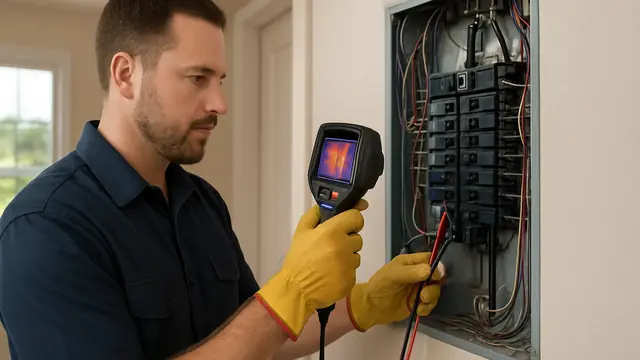
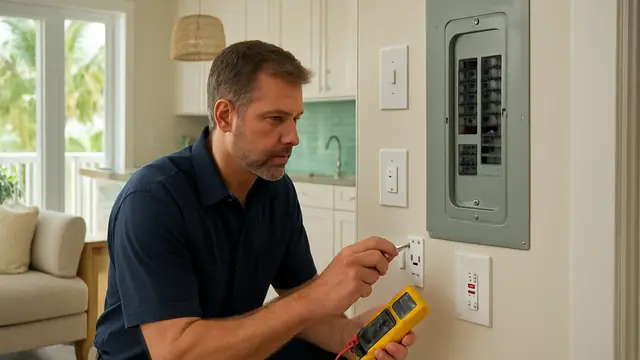
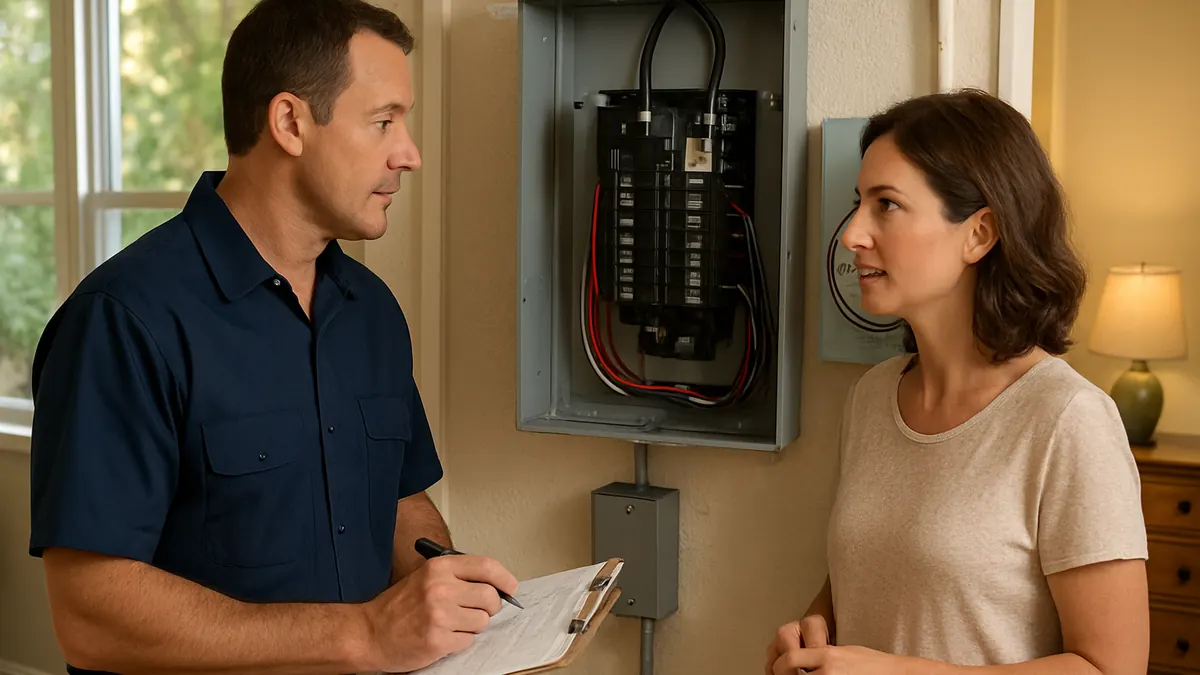
The electrician begins by confirming the existing service rating and equipment condition. The main breaker, panel label, service entrance conductors, meter equipment, disconnect, grounding, and bonding are inspected.
A load calculation is then performed using established electrical-code methods. It considers general household loads, kitchen and laundry circuits, HVAC, cooking, water heating, fixed appliances, EV charging, and other major equipment. Demand factors are used because the system is not sized by simply adding every breaker rating together.
The inspection also looks for loose terminations, overheating, corrosion, damaged breakers, improper additions, and faulty equipment. Measurements can help separate a capacity issue from a circuit or utility-side problem.
Repair Options From Smallest to Largest
The least invasive option is to correct the specific fault, such as a defective breaker, loose termination, damaged wire, or malfunctioning appliance.
If one circuit is overloaded, a new dedicated circuit may solve the issue when service capacity is available. If the panel lacks spaces, a properly designed subpanel may provide additional positions.
- For an EV charger, listed load management or a lower charging output may be practical.
- A same-amperage panel replacement may be appropriate when the existing panel is damaged, poorly arranged, or unsuitable but the calculated service size remains adequate.
- A full 200-amp electrical service upgrade is justified when the existing system cannot safely support the calculated current and planned demand.
What Affects Upgrade Cost?
Cost factors include the present service rating, meter and panel configuration, overhead or underground service, conductor route, grounding needs, accessibility, and the number of circuits involved.
Permits, utility coordination, disconnect equipment, surge protection, relocation, finish repairs, and correction of unsafe work can add to the scope.
A written estimate should state whether it includes only a panel change or a complete service upgrade.
How to Prevent Future Capacity Problems
- Review the service before buying high-demand equipment. Keep the panel directory current and maintain clear, dry access.
- Respond early to repeated trips, heat, burning odors, buzzing, or worsening light fluctuations.
- Whole-home surge protection can help reduce damage from certain voltage surges, but it does not increase amperage or replace proper circuit design.
Homeowner FAQs
Does a crowded panel mean I need 200 amps?
No. It may mean you need more circuit spaces. A load calculation determines whether the service also needs more capacity.
Can a 125-amp or 150-amp service be adequate?
Yes. Either may be adequate when properly installed and large enough for the home's calculated load.
Can I add a subpanel instead of upgrading?
Possibly. A subpanel can add circuit positions when the existing service has available capacity, but it cannot create additional service amperage.
Why does the main breaker trip only occasionally?
High simultaneous demand is one possibility. A failing breaker, loose connection, overheating, or another electrical fault can also cause intermittent trips.
Can load management help with an EV charger?
Sometimes. Approved equipment can reduce or pause charging when the home's electrical demand rises, potentially avoiding an unnecessary service upgrade.
Is a 200-amp upgrade a complete rewiring project?
Usually not. Service-upgrade work focuses on the service equipment and related connections, although unsafe or incompatible existing circuits may also need correction.
Does Your Home Need a 200-Amp Electrical Service in Parker?
Your Parker home needs a 200-amp electrical service only when a licensed evaluation shows that the existing system cannot safely support current and planned demand. A crowded panel, dimming lights, or one tripping breaker may instead call for a smaller repair, dedicated circuit, subpanel, load-management device, or same-size panel replacement. An inspection and formal load calculation provide the clearest path forward without replacing more equipment than necessary.
About this guide: This resource provides general homeowner education, not a remote diagnosis. Actual conditions, code requirements, equipment, and safe repair options must be evaluated at the property.