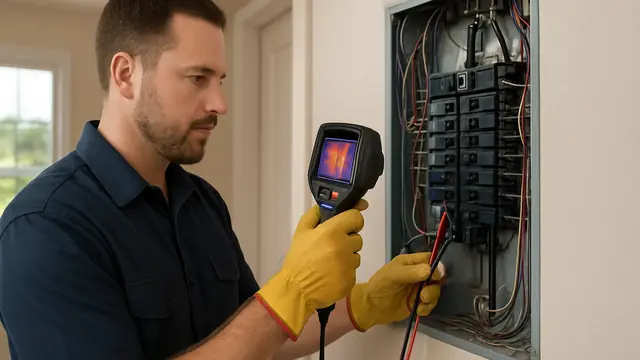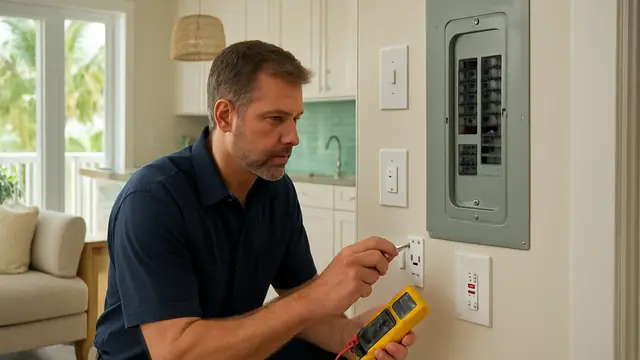
Do not remove an electrical panel cover, touch exposed conductors, bypass protection, or repeatedly reset a fault. Keep clear of smoke, sparks, burning odors, hot equipment, standing water near electricity, and downed lines, then call qualified help.
A storm has moved through Parker, and when power returns you hear a buzzing sound near the electrical panel while one bedroom remains without power. Buzzing can come from a loose connection, damaged breaker, unstable voltage, or arcing inside electrical equipment. Do not remove the panel cover or keep operating breakers. Unplug sensitive electronics, keep people away from the panel, and arrange prompt professional evaluation if the sound continues.
A Northwest Florida hurricane electrical checklist in Parker should help homeowners prepare the electrical system before severe weather, use generators and extension cords safely during an outage, and identify damage before it causes a fire, shock, or equipment failure.
Organize the Home Before the Weather Deteriorates
Locate the main panel and verify that each breaker is clearly labeled. Identify the circuits serving refrigeration, HVAC equipment, water heating, essential lighting, garage doors, internet equipment, and any medical devices.
- Keep the panel area dry and unobstructed.
- Charge emergency devices and test smoke and carbon-monoxide alarms.
- Unplug electronics that do not need to remain connected.
Most Common Hurricane Electrical Problems
Loose Exterior Equipment
Wind and debris can damage outdoor receptacle covers, lighting, conduit, HVAC disconnects, and the service attachment.
Moisture in Circuits and Devices
Wind-driven rain can enter through a damaged cover, loose fitting, roof leak, or broken wall surface. Moisture may trigger a GFCI, trip a breaker, corrode connections, or damage cable insulation.
Surges and Unstable Utility Voltage
Lightning, damaged lines, and utility switching can produce voltage changes. These events may damage HVAC controls, appliances, and electronics.
Overloaded Generator Circuits
A generator can become overloaded when too many appliances are connected or several motors start together.
Damaged Neutral Connection
The neutral conductor helps balance voltage across household circuits. A loose or damaged neutral may cause some lights to become unusually bright while others dim. This condition can quickly damage appliances.
Safe Checks Before the Hurricane
Walk around the property without opening electrical enclosures. Look for cracked weatherproof covers, loose fixtures, damaged conduit, rust, missing screws, or a service mast that appears bent or unsecured.
Test accessible GFCI receptacles using the test and reset buttons. GFCI stands for ground-fault circuit interrupter. It is designed to shut off power when current leaks along an unintended path, especially where water may be present.
Inspect extension cords for damage, and use outdoor-rated cords sized for the load.
Review generator capacity, priority loads, and safe operating clearances before the outage.
Safe Checks After the Storm
- Begin outside and stay clear of downed lines, limbs touching wires, damaged poles, or displaced service equipment. Treat every wire as energized.
- Do not walk through standing water when electrical equipment, appliances, cords, or receptacles may be involved.
- Inside, check for smoke, burning odors, buzzing, sizzling, heat, or discoloration before operating switches or breakers.
A tripped breaker may be reset once only when the panel is dry, no visible damage exists, and connected loads have been unplugged. Move the breaker fully to OFF and then to ON. If it trips again, leave it off.
What Homeowners Should Not Attempt
Do not remove the panel cover or open the meter enclosure. Service conductors can remain energized even when the main breaker is off.
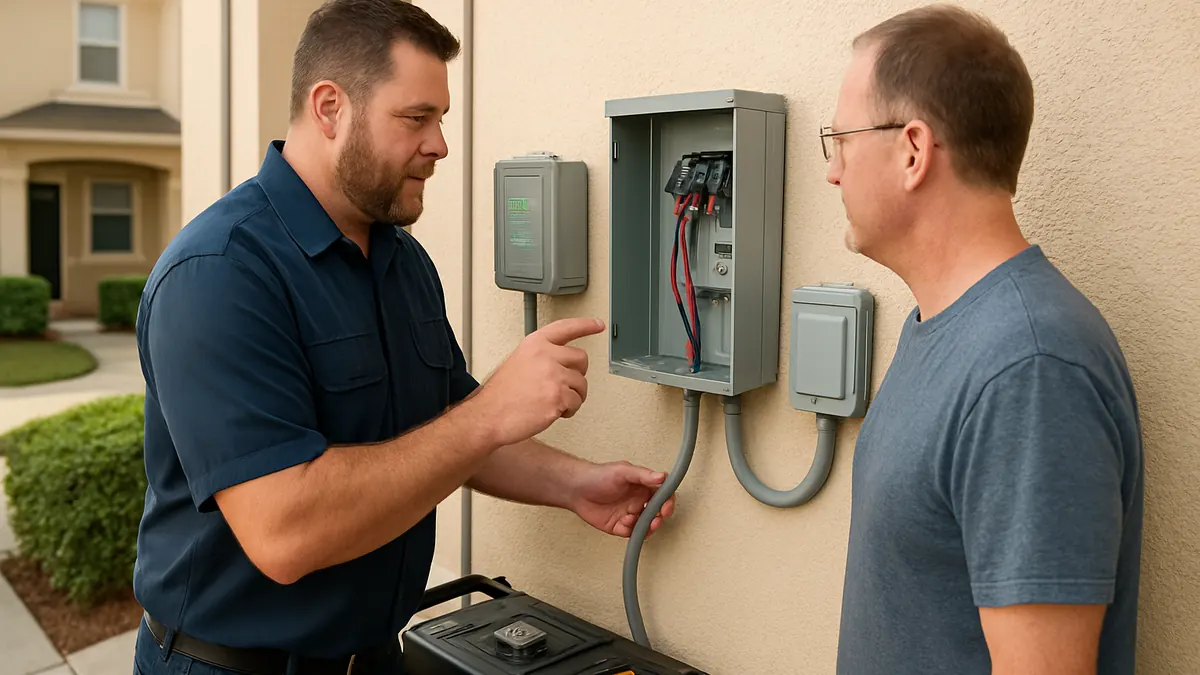
Never connect a portable generator through a dryer outlet, range outlet, or ordinary wall receptacle. That can backfeed electricity toward utility lines. Use an approved transfer switch or listed interlock installed for the specific panel.
Do not operate a generator in a garage, enclosed porch, shed, or near doors, windows, and air intakes. Carbon monoxide can enter the home quickly.
Do not repeatedly reset a breaker, GFCI, or generator. Repeated tripping means a fault, overload, or equipment problem may still be present.
Warning Signs That Make the Problem Urgent
- Smoke, sparks, glowing, exposed wiring, melted plastic, or water inside electrical equipment require immediate attention.
- A panel, breaker, outlet, switch, or cord that feels hot should remain out of service.
- Bright lights in one part of the home and dim lights in another may indicate a neutral problem. Turn off sensitive equipment and seek prompt help.
- A shock or tingling sensation from an appliance, faucet, railing, outdoor fixture, or other metal surface is an emergency warning. Keep people away from the area.
How a Licensed Electrician Diagnoses the Problem
A licensed electrician determines whether the trouble begins with the utility supply, service equipment, electrical panel, one branch circuit, or a connected appliance.
The inspection may include service equipment, grounding, outdoor devices, HVAC disconnects, and generator equipment.
Voltage measurements help identify low voltage, high voltage, imbalance, or a damaged neutral. The electrician may also test GFCI and AFCI devices. AFCI means arc-fault circuit interrupter and helps detect dangerous electrical arcing.
When water exposure is suspected, the affected circuit may be isolated and tested before power is restored.
Repair Options From Least Invasive to Most Extensive
- A minor repair may involve replacing a broken weatherproof cover, failed GFCI receptacle, damaged switch, loose light fixture, or worn extension cord.
- Localized damage may require replacing one breaker, disconnect, junction box, surge protective device, generator inlet, or limited section of cable.
- Overheated conductors and terminals may require replacement rather than tightening alone.
More extensive repairs may involve replacing contaminated panel components, service conductors, the meter enclosure, service mast, or complete electrical panel. Full replacement is considered when damage is widespread, corrosion is severe, equipment is obsolete, or reliable repair is not possible.
Typical Factors Affecting Cost
Cost depends on the location of the problem, number of affected circuits, equipment accessibility, panel type, and whether the utility must disconnect or reconnect service.
Prevention and Maintenance Guidance
Before hurricane season, correct recurring flickering, warm outlets, tripping breakers, buzzing equipment, damaged exterior covers, and GFCIs that will not reset.
Maintain weatherproof covers and clear panel access. Have grounding and bonding evaluated after service repairs.
Consider whole-home surge protection along with point-of-use protection for sensitive electronics. Surge protection reduces many voltage spikes but cannot prevent damage from flooding, direct physical impact, or every lightning event.
Review the generator plan annually. Confirm which appliances can operate together, inspect cords, store fuel safely, and never refuel a hot generator.
After a storm, watch for delayed symptoms such as intermittent lights, nuisance tripping, corrosion, warm devices, and appliance failures.
Homeowner FAQs
Why is my electrical panel buzzing after the storm?
Buzzing may indicate a loose connection, overloaded component, damaged breaker, unstable voltage, or arcing. Keep away from the panel and arrange prompt inspection.
Can I reset a breaker that tripped during the hurricane?
Only when the area is dry, no damage is visible, and connected loads are unplugged. Reset it once. If it trips again, leave it off.
Should I turn off the main breaker before evacuating?
Not automatically. The correct decision depends on flood risk, known electrical damage, and evacuation instructions. Never approach a wet or damaged panel.
Is a portable generator safe in an open garage?
No. Carbon monoxide can accumulate and enter the home even with the garage door open. Operate the generator outdoors according to manufacturer clearances.
Can wet outlets be used after they dry?
They should be inspected first. Water can leave corrosion and conductive contamination inside the device or box.
Why do my lights brighten and dim after power returns?
Possible causes include unstable utility voltage, simultaneous appliance startup, a loose connection, or a damaged neutral. Uneven or persistent changes require professional evaluation.
Complete the Parker Hurricane Electrical Checklist
A Northwest Florida hurricane electrical checklist in Parker should include labeled breakers, protected exterior equipment, safe generator procedures, working alarms, surge protection, and a cautious inspection before circuits and appliances are restarted.
Do not ignore buzzing, repeated tripping, severe dimming, heat, moisture, damaged service equipment, or burning odors. Leave the affected circuit off until the cause is identified and corrected.
About this guide: This resource provides general homeowner education, not a remote diagnosis. Actual conditions, code requirements, equipment, and safe repair options must be evaluated at the property.