Do not remove an electrical panel cover, touch exposed conductors, bypass protection, or repeatedly reset a fault. Keep clear of smoke, sparks, burning odors, hot equipment, standing water near electricity, and downed lines, then call qualified help.
You have selected a Level 2 charger for your new electric vehicle, but the installation estimate changes when the electrician sees the electrical panel. There may be no two adjacent breaker spaces, the panel directory may be incomplete, or previous additions may not be clearly labeled. You may wonder whether the contractor is being overly cautious or whether the home truly needs additional electrical work.
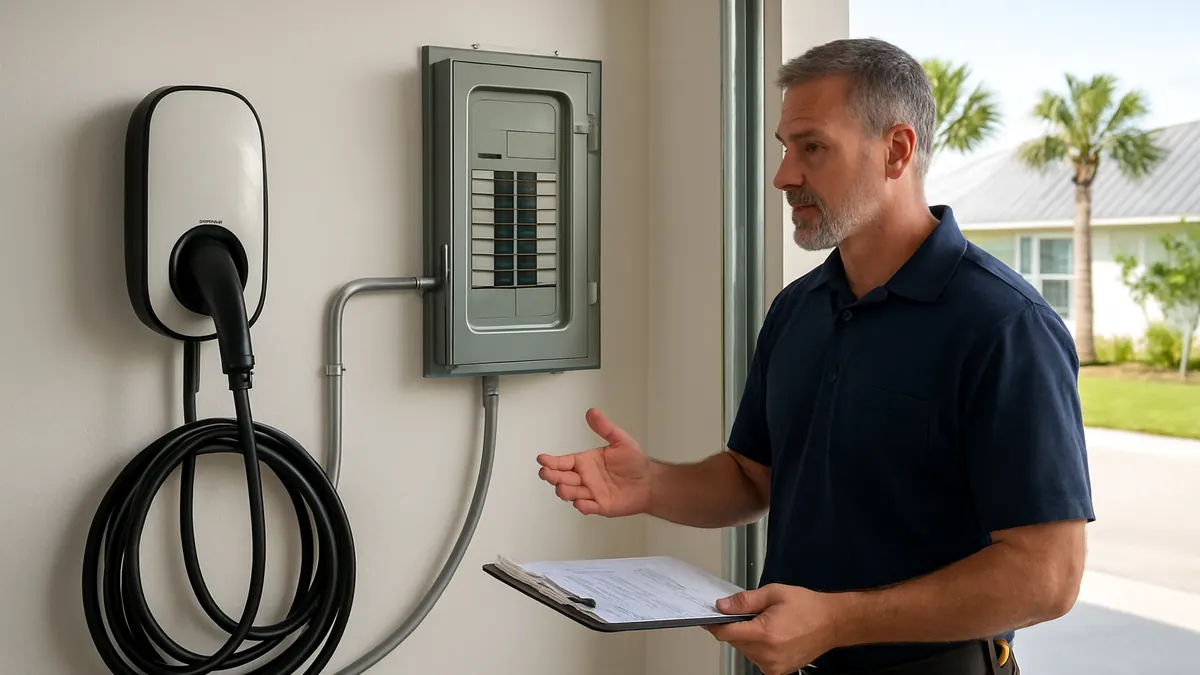
A charger cannot be approved based only on whether a breaker can be squeezed into the panel. The electrician must determine how much power the home already requires, whether the equipment is in safe condition, and how large the charging circuit needs to be. Until that evaluation is complete, use only the vehicle manufacturer's approved charging equipment. Do not alter the panel, use an extension cord, or repeatedly reset a breaker that trips.
Can Your Electric Panel Support a Level 2 EV Charger in Parker?
A Level 2 charger normally operates at 240 volts. It usually requires a dedicated two-pole circuit, meaning the circuit supplies only the charger.
The charger's operating amperage determines the circuit size. A 32-amp charger commonly uses a 40-amp circuit. A 40-amp charger commonly uses a 50-amp circuit, and a 48-amp charger commonly uses a 60-amp circuit and is often hardwired. The final installation must match the equipment instructions and applicable electrical requirements.
Most Common Reasons the Panel Needs Attention
The electrical service has limited spare capacity
Central air conditioning, electric water heating, cooking appliances, clothes dryers, pumps, and other fixed loads all contribute to household demand. The main breaker may never have tripped, but that does not prove there is enough calculated capacity for another large circuit.
There are not two usable breaker spaces
An EV charger usually needs two adjacent spaces. Empty-looking positions may be restricted by the panel design, and not every panel permits tandem breakers. A breaker must be specifically approved for the equipment.
The panel or connections show damage
Heat marks, corrosion, loose connections, damaged insulation, worn breakers, or an altered enclosure can make the panel unsuitable until repairs are completed. A charger's long operating time can place extra stress on a weak connection.
The proposed charger output is unnecessarily high
The vehicle may not accept the charger's maximum output. Even when it does, a lower setting may still replace the homeowner's daily mileage during normal parking hours.
Safe Checks the Homeowner Can Perform
Look at the panel only from the outside. Photograph the main breaker, manufacturer label, breaker arrangement, and directory. Do not remove screws or covers.
Make a list of major electric equipment, including air conditioning, heat, water heater, range, dryer, pool or spa equipment, pumps, and large shop tools. Note recent additions or planned upgrades.
Check the vehicle's maximum AC charging rate and the charger's available amperage settings. Record whether the unit is plug-in or hardwired.
What You Should Not Attempt
Do not calculate capacity by adding all breaker numbers together. Breaker ratings represent individual circuit limits and do not directly reveal the home's calculated demand.
Do not remove the panel cover, test internal components, or move breakers yourself. Service conductors may remain energized even when the main breaker is off.
Never replace a tripping breaker with a larger one. Do not put the charger on a dryer, water-heater, or air-conditioning circuit through an improvised adapter or manual switching arrangement.
Do not use an ordinary extension cord for EV charging. Avoid any receptacle that is loose, damaged, discolored, corroded, or warm.
Signs That Require Urgent Attention
Stop charging when the charger or circuit breaker trips repeatedly. A one-time interruption may still require investigation, but repeated trips should never be treated as normal.
Arrange prompt service for a burning odor, buzzing, crackling, popping, visible sparks, melted plastic, scorch marks, or noticeable heat at the panel, charger, plug, or receptacle.
Other warning signs include substantial light flickering when charging begins, recurring ground-fault or wiring-error messages, a breaker that will not remain reset, and visible moisture or corrosion around electrical equipment.
If smoke, flame, or active arcing is present, leave the property and call emergency services.
How a Licensed Electrician Diagnoses the Problem
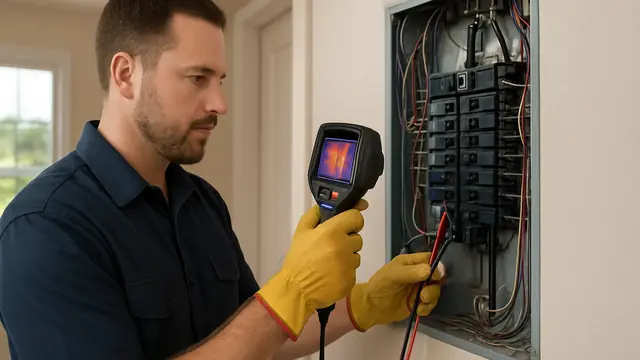
The electrician identifies the service rating and panel specifications. The panel is checked for approved breaker types, usable spaces, bus condition, conductor sizes, grounding, bonding, enclosure integrity, and signs of overheating or improper alterations.
A load calculation is then performed. This calculation uses established methods to estimate the home's electrical demand. It considers general household use, major fixed appliances, heating and cooling, and the proposed charger.
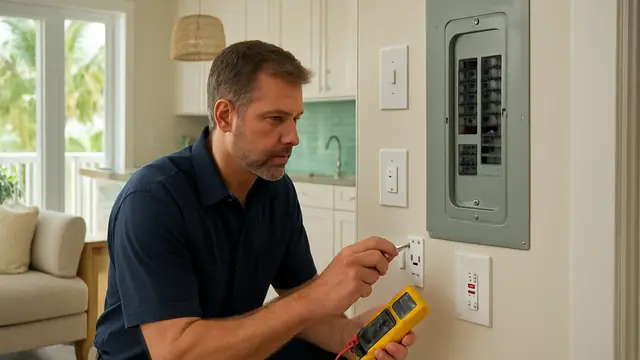
The proposed route is evaluated for distance, conductor size, accessibility, weather exposure, and protection from impact. If an existing circuit is malfunctioning, voltage measurements and connection testing help identify whether the trouble is in the charger, breaker, conductors, receptacle, panel, or power supply.
Repair Options Beginning With the Least Invasive
The first reasonable option may be setting the charger to a lower fixed output. Level 2 charging at 16, 24, or 32 amps can still be much faster than standard 120-volt charging.
An approved energy-management system may also be suitable. It monitors the home's electrical demand and reduces or pauses charging when other large loads are operating. The charger resumes when capacity is available.
If the service calculation passes but the panel has no room, an electrician may install a subpanel or reorganize circuits using a manufacturer-approved arrangement. A subpanel creates spaces but does not add service capacity.
Individual problems can often be repaired without replacing the complete electrical system. Work may include replacing an unsuitable breaker, correcting a loose connection, installing proper conductors, replacing a damaged receptacle, or hardwiring the charger.
Panel replacement becomes appropriate when the panel itself is damaged, obsolete, improperly modified, or unable to accept the required circuit safely. A service upgrade is considered when the existing service cannot support the calculated demand and a lower charging rate or approved management system is not a reasonable solution.
Typical Factors That Affect Cost
Cost is affected by charger output, circuit length, conductor size, breaker type, panel access, wall or attic access, exterior conduit, trenching, and protection near the parking area.
The scope also changes when the project requires load management, a subpanel, panel repairs, panel replacement, service enlargement, or correction of previous work. Hardwired and receptacle-based installations can have different equipment and labor requirements. Permits and inspections may also be part of the project.
Prevention and Maintenance Guidance
Keep the cord away from tires, doors, sharp edges, standing water, and equipment that could cut or crush it. Store the connector in its holder.
Inspect visible components periodically for cracking, looseness, discoloration, corrosion, or heat. Have recurring errors, trips, or interruptions evaluated promptly. Keep the charger circuit accurately identified in the panel directory.
Make the Decision From a Complete Electrical Evaluation
Can your electric panel support a Level 2 EV charger in Parker? The home may need only a properly sized dedicated circuit. Other situations call for lower-amperage charging, load management, a subpanel, targeted repairs, panel replacement, or a service upgrade. A licensed inspection and load calculation identify the least invasive safe option while matching the charger to the vehicle and the homeowner's actual driving needs.
About this guide: This resource provides general homeowner education, not a remote diagnosis. Actual conditions, code requirements, equipment, and safe repair options must be evaluated at the property.