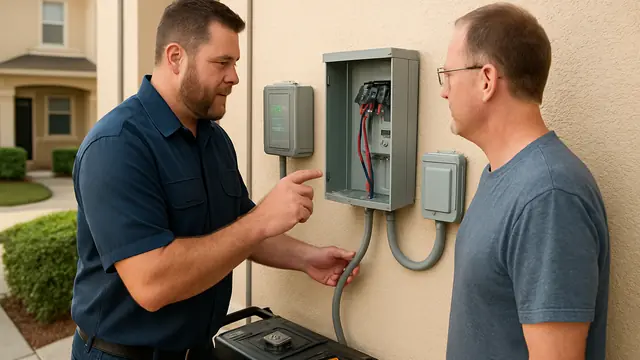
Do not remove an electrical panel cover, touch exposed conductors, bypass protection, or repeatedly reset a fault. Keep clear of smoke, sparks, burning odors, hot equipment, standing water near electricity, and downed lines, then call qualified help.
A guest staying at your Parker vacation rental reports something different from a simple dead outlet: the hallway lights became brighter for a moment, the bedroom lights dimmed, and a power strip shut off. A few minutes later everything looked normal again.
That kind of symptom deserves attention because changing brightness across different areas can indicate more than a bad bulb. Possible causes include a loose neutral connection, voltage drop, an overloaded circuit, a failing connection in the panel, or an incoming power problem. The safest immediate action is to turn off sensitive electronics, stop using any device that is hot, sparking, or behaving abnormally, and avoid opening the panel. If the voltage changes continue, arrange prompt electrical service.
The most common electrical problems on vacation rentals in Parker can range from ordinary worn outlets to connection problems that only appear under load. Because guests may describe symptoms differently, documenting exactly what happened is one of the most useful things an owner or property manager can do.
Most Common Electrical Problems on Vacation Rentals in Parker
Lights That Become Bright, Dim, or Flicker
One flickering bulb is often a fixture-level problem. Several lights changing brightness at the same time can point to a loose neutral, voltage fluctuation, overloaded circuit, or connection problem.
Outlets That Lose Power Intermittently
An outlet may work during a turnover check and fail later when a guest plugs in a lamp or charger. Worn receptacle contacts, loose connections, a tripped upstream GFCI, or a damaged circuit connection may be responsible.
Breakers That Trip With No Clear Pattern
A breaker may trip because of overload, a short circuit, a ground fault, a damaged appliance, or a failing connection. When the pattern seems random, one portable appliance may be moved between rooms and make the cause harder to identify.
Ask guests what was plugged in before the trip. A repeated breaker trip should not be treated as a normal part of operating the rental.
Warm Switches, Outlets, or Breakers
Heat can come from a loose terminal, overloaded circuit, worn contact, or damaged device. Discoloration, melting, crackling, or a burning smell increases the urgency.
GFCI Outlets That Refuse to Reset
A GFCI may protect more than the receptacle where the buttons are located. If it will not reset, there may be no incoming power, a downstream ground fault, moisture, damaged wiring, or a failed GFCI device.
Electrical Problems Related to Previous Changes
If a problem begins after new equipment or renovation work, tell the electrician. That history can narrow the diagnosis.
Safe Checks the Homeowner Can Perform
Start with observation rather than disassembly. Ask whether the problem affected one light, one room, or several rooms. Find out what appliances were running and whether the guest noticed heat, odor, buzzing, crackling, or sparks.
Unplug portable devices from the affected circuit. A dry, undamaged GFCI may be reset once. A visibly tripped breaker may be moved fully off and then on once.
Inspect visible cords, plugs, power strips, outlet covers, and lamps. Remove anything that is melted, cut, scorched, or loose from service.
What the Homeowner Should Not Attempt
- Do not remove the panel cover to look for a loose wire. Energized components inside the panel can be dangerous even when individual branch breakers are switched off.
- Do not install a larger breaker, bypass a protective device, hold a breaker in the on position, or replace fuses or breakers with mismatched equipment.
- Do not keep using an outlet that only works when the plug is moved. Do not cover scorch marks with a new wall plate or repair damaged appliance cords with tape.
Signs That Make the Problem Urgent
Treat a burning odor, smoke, visible sparks, melted insulation, shocks, crackling sounds, or significant heat as urgent.
Rapid changes in light brightness across multiple rooms also deserve prompt attention, especially when appliances behave abnormally at the same time. That pattern can be associated with a loose neutral or supply problem.
If a breaker trips immediately after one reset, leave it off. If water is contacting electrical equipment, keep guests away and do not touch the equipment.
For an active electrical fire or smoke condition, evacuate and call emergency services.
How a Licensed Electrician Diagnoses the Problem
An electrician begins by identifying whether the symptom is limited to one branch circuit or affects multiple circuits.
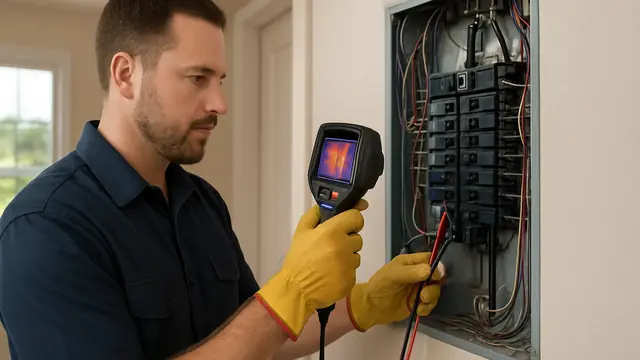
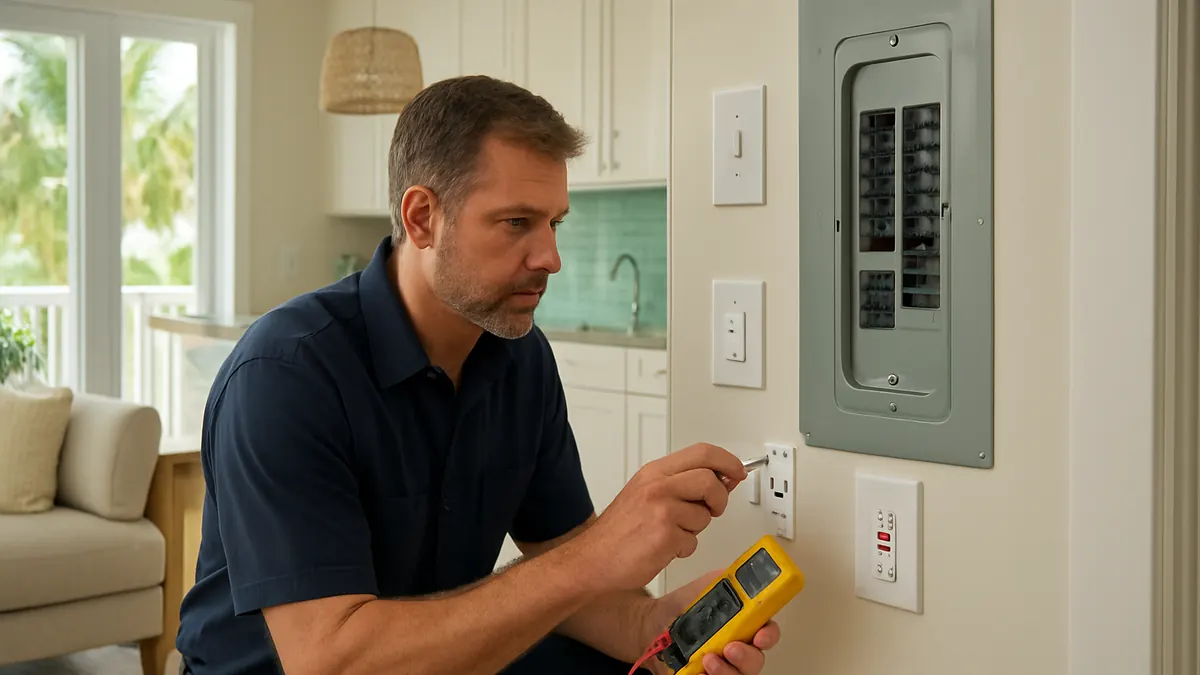
Voltage testing can reveal abnormal or unstable readings. Load measurements can show whether a circuit is operating near or beyond its intended capacity. The electrician may inspect panel connections, breakers, receptacles, switches, and accessible junctions for looseness, overheating, or damage.
If the symptom appears to involve incoming power rather than a branch circuit, the electrician can determine what portion of the system requires further attention and coordinate the appropriate next step.
Repair Options Beginning With the Least Invasive
The least invasive repair may involve replacing a damaged cord, removing a faulty appliance, correcting a loose connection, or replacing one worn receptacle, switch, GFCI, or control.
A defective breaker can be replaced with the correct listed component after the circuit has been tested. A damaged fixture connection or junction may also be repairable without replacing the entire circuit.
If guest use consistently overloads a circuit, the solution may be to redistribute portable loads or install a dedicated circuit for equipment that requires one.
Damaged cable may require limited access to a wall, attic, or ceiling. More extensive panel work may be justified if connections or equipment are damaged, crowded, or unsuitable for the property's electrical demand.
A service upgrade or widespread rewiring should follow testing and load evaluation. It should not be recommended simply because one device failed.
Factors That Affect Cost
The cost of an electrical repair depends heavily on diagnosis. An obvious failed receptacle is generally easier to locate than a loose connection that appears only when several appliances are running.
Other factors include wiring access, panel condition, the number of affected circuits, required parts, permit needs, and whether new circuits must be routed through finished areas.
Prevention and Maintenance Guidance
Create a simple electrical history for the rental. Record breaker trips, GFCI failures, flickering, warm devices, and guest reports by room and date.
During turnovers, test representative lights, outlets, GFCIs, fans, and alarms. Look for loose wall plates, damaged cords, plugs that no longer fit securely, and power strips being used beyond their intended purpose.
Keep the breaker directory accurate. If new appliances or electrical equipment are added, confirm that the existing circuits can support them.
Take Intermittent Electrical Symptoms Seriously
The most common electrical problems on vacation rentals in Parker include unstable lighting, intermittent outlets, repeated breaker trips, warm devices, failed GFCIs, and problems associated with added electrical loads or previous changes.
Even when the power returns on its own, the cause may still be present. Document the symptom, stop using questionable equipment, avoid panel work or repeated resets, and have a licensed electrician identify the least invasive safe repair.
About this guide: This resource provides general homeowner education, not a remote diagnosis. Actual conditions, code requirements, equipment, and safe repair options must be evaluated at the property.