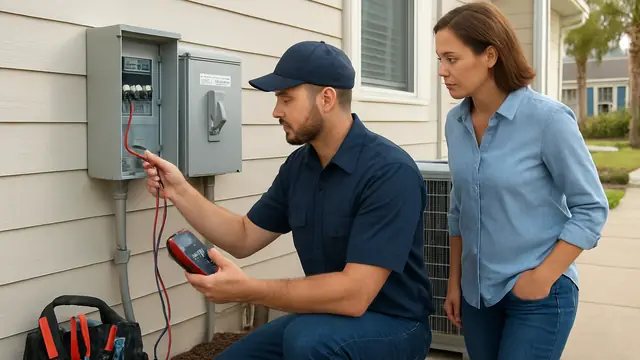
Do not remove an electrical panel cover, touch exposed conductors, bypass protection, or repeatedly reset a fault. Keep clear of smoke, sparks, burning odors, hot equipment, standing water near electricity, and downed lines, then call qualified help.
A kitchen, bathroom, garage, or laundry outlet loses power, but the RESET button will not click into place. It may also trip again when an appliance starts. When a GFCI outlet will not reset in a Springfield home, the outlet usually has no incoming power, the circuit still has a fault, or the GFCI has failed.
Unplug every device from the affected and other dead outlets. Do not touch the outlet if it is wet, hot, cracked, buzzing, or discolored. Check the breaker and other GFCIs once. If power does not return, leave the circuit unused until a licensed electrician can test it.
The RESET button is not an override. A GFCI opens when current does not return through the normal neutral conductor.
Match the GFCI's Behavior to the Likely Problem
No response may mean incoming power is missing. An immediate release can indicate a ground fault. A trip caused by one appliance points toward that appliance, while inconsistent operation can indicate a failing device or loose connection.
These clues help narrow the cause, but electrical testing is still needed.
Common Causes of a GFCI That Will Not Reset
A Breaker or Upstream GFCI Has Tripped
A tripped breaker may rest in a middle position and look nearly on. Move it fully OFF and then ON once.
A separate GFCI may also control the dead outlet. One GFCI can protect several standard receptacles connected to its LOAD side. If the breaker or upstream GFCI immediately trips again, stop. The fault has not been removed.
A Small Appliance or Cord Is Defective
- A GFCI reacts to electrical leakage rather than only excessive demand. A device can trip it even when it is not drawing enough current to trip the breaker.
- Coffee makers, hair dryers, refrigerators, tools, chargers, and extension cords can develop faults. A damaged cord may show only a crushed spot or loose blade.
- Unplug everything before attempting a reset. If the GFCI holds, reconnect items individually and stop using the device that causes another trip.
Water or Dampness Is Affecting the Circuit
Water may reach a GFCI through a sink splash, leaking supply line, appliance leak, wet plug, exterior cover, or damp electrical box. Moisture at a downstream outlet can also trip the controlling device.
The receptacle may look dry while moisture or corrosion remains behind it. Do not repeatedly energize it.
A Loose Neutral or Damaged Wire Is Present
The neutral conductor carries current back toward the electrical panel. A loose or damaged neutral can interfere with GFCI operation.
Other possibilities include an overheated terminal, damaged cable, or improper neutral-to-ground contact. These require instrument testing.
The GFCI Is Worn Out
Electronic sensing parts and mechanical contacts can fail because of age, repeated operation, heat, surges, or corrosion.
A worn GFCI may not latch, respond to TEST, or deliver reliable power. Replacement follows confirmation that the circuit is sound.
Safe Checks for a Springfield Homeowner
- Unplug equipment from the affected circuit. Inspect plugs and cords for melting, cuts, loose blades, missing grounding pins, or moisture.
- Check the panel. Move a tripped breaker fully OFF and then ON one time. Leave it off if it trips again.
- Search for other GFCI outlets. Press RESET only on devices that are dry, cool, and undamaged.
- At the affected outlet, press TEST and then RESET once. A firm push is appropriate; forcing the button is not.
- If power returns, reconnect devices one at a time. This can identify a faulty appliance without opening the outlet.
What You Should Not Do
- Do not pull the receptacle from the wall unless you are qualified to verify that every wire in the box is de-energized.
- Do not replace the GFCI with a standard receptacle because it keeps tripping. That removes shock protection and leaves the underlying fault.
- Do not install a larger breaker, disconnect grounding, tape the RESET button down, or exchange LINE and LOAD conductors.
- Do not use extension cords as a permanent substitute for a dead circuit.
Signs That Require Prompt Attention
- Turn off the breaker immediately if you notice smoke, sparks, melting, darkened plastic, buzzing, crackling, or a strong electrical smell.
- Visible water in the box, shocks, tingling, or a plug that feels unusually hot are also urgent warning signs.
- A breaker that will not remain on after all loads are removed may indicate a short circuit, ground fault, or damaged branch wiring. Repeated resetting can worsen heat damage.
How a Licensed Electrician Finds the Fault
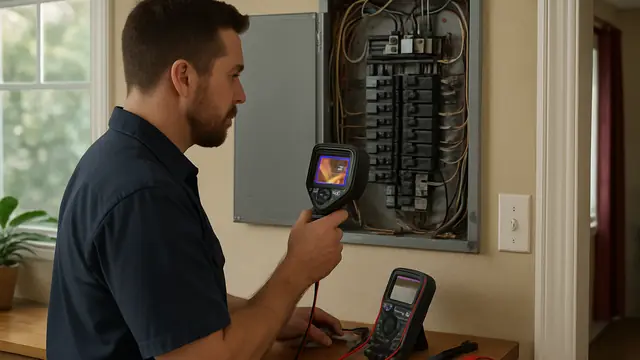
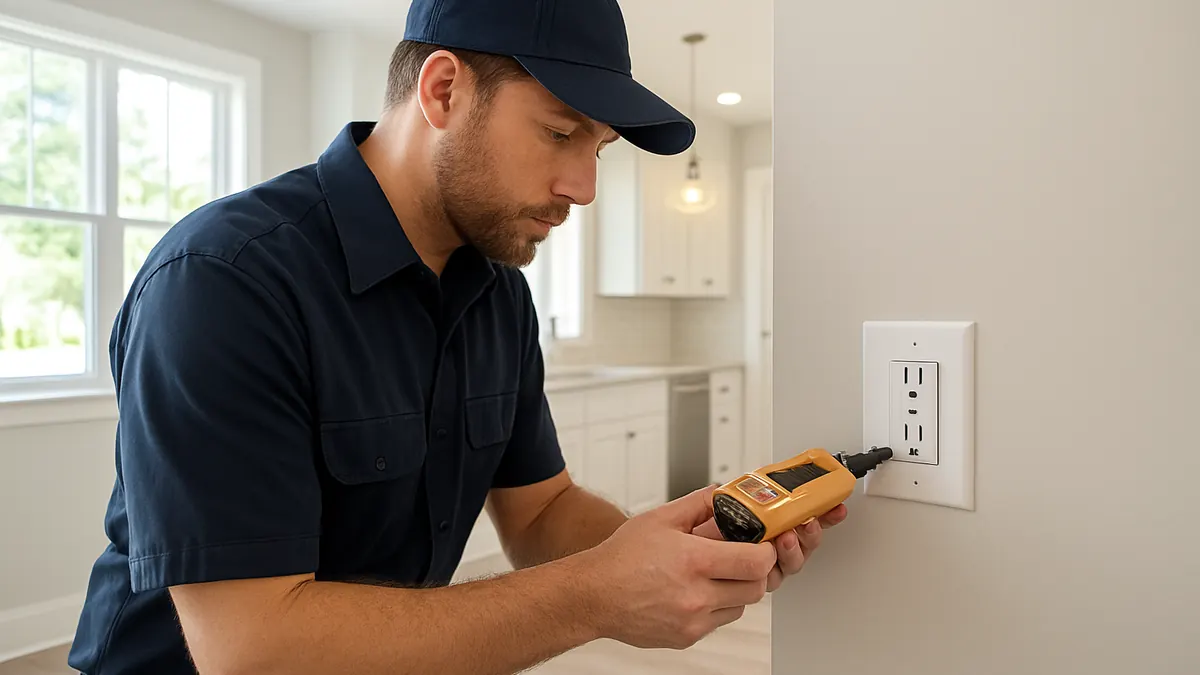
The electrician begins at the panel and verifies that the breaker supplies proper voltage. Testing at the GFCI confirms whether power reaches the LINE terminals.
The neutral and grounding paths are checked, and the LOAD wires may be removed to isolate downstream outlets.
If the device resets with the LOAD side disconnected, the fault lies farther along the circuit. Each section is tested until the affected receptacle, splice, cable, or appliance connection is located.
If proper power reaches an isolated GFCI and it still will not reset, replacement is usually indicated. Final testing confirms that the repaired GFCI protects all connected outlets.
Repair Options, Starting With the Simplest
- The least invasive solution may be removing a defective appliance, replacing a damaged cord, or restoring an upstream GFCI after the fault is cleared.
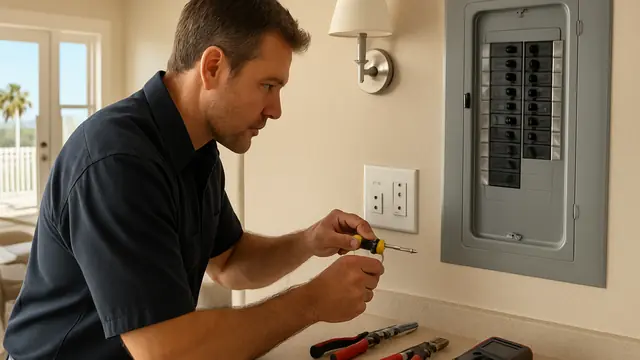
- A loose terminal may be corrected with a proper new connection. Heat-damaged wire ends may need to be removed before reconnection.
- Moisture repairs may include correcting a leak, drying the box, replacing a cover, and changing corroded components.
If the GFCI has failed, a compatible device can be installed and tested. A downstream fault may require repair of one receptacle, junction, or cable section rather than the entire circuit.
More extensive rewiring is considered only when damage affects a larger portion of the circuit.
Factors That Influence Cost
A direct device replacement is less involved than tracing an intermittent fault through several rooms. Cost depends on downstream outlets, accessibility, damaged boxes, wall access, and intermittent symptoms.
The replacement device and any required cover or box repair also affect the scope.
Prevention and Maintenance
- Use the TEST and RESET buttons monthly. TEST should shut power off, and RESET should restore it. A device that fails either step should be evaluated.
- Keep cords away from heat, water, and crushing. Replace damaged cords rather than taping them.
- Correct plumbing and appliance leaks promptly. Keep outdoor and damp-location covers in good condition.
- Avoid overloaded adapters and power strips. If an appliance repeatedly trips GFCI protection, have the appliance checked.
Do Not Bypass the Warning
When your GFCI outlet will not reset in Springfield, unplug connected equipment, make one breaker check, and look for another tripped GFCI. Stop if the outlet still will not latch or the circuit opens again.
Heat, moisture, electrical odors, visible damage, shocks, and repeated trips require prompt attention. A licensed electrician can determine whether the appropriate repair is a corrected appliance connection, repaired wire, moisture correction, new GFCI, or downstream circuit repair.
About this guide: This resource provides general homeowner education, not a remote diagnosis. Actual conditions, code requirements, equipment, and safe repair options must be evaluated at the property.