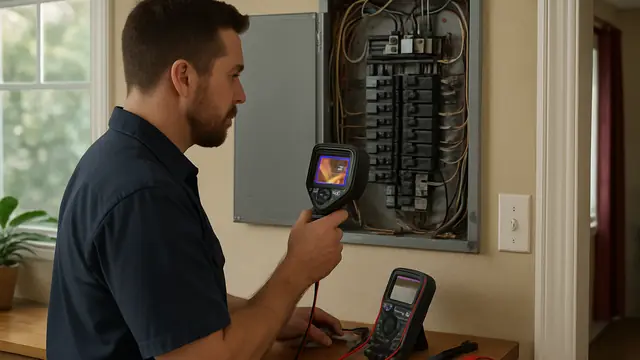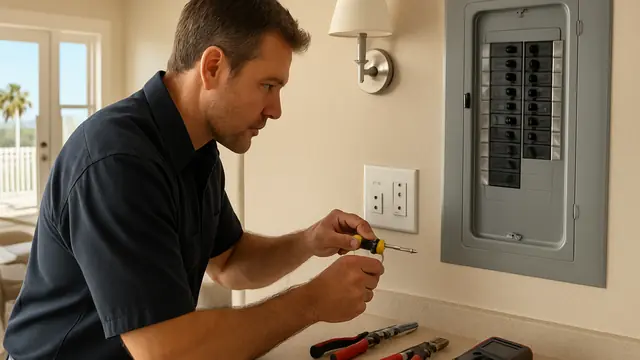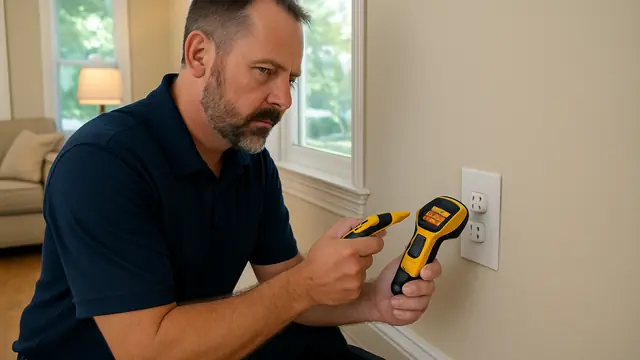
Do not remove an electrical panel cover, touch exposed conductors, bypass protection, or repeatedly reset a fault. Keep clear of smoke, sparks, burning odors, hot equipment, standing water near electricity, and downed lines, then call qualified help.
Your EV is charging from a regular household outlet, but the added range is not keeping pace with work, errands, and family driving. You have started looking at Level 2 chargers, yet the existing electrical panel may be crowded, poorly labeled, or equipped with a main breaker that seems small compared with the charger's advertised amperage. You may also have noticed that lights dim briefly when large appliances start.
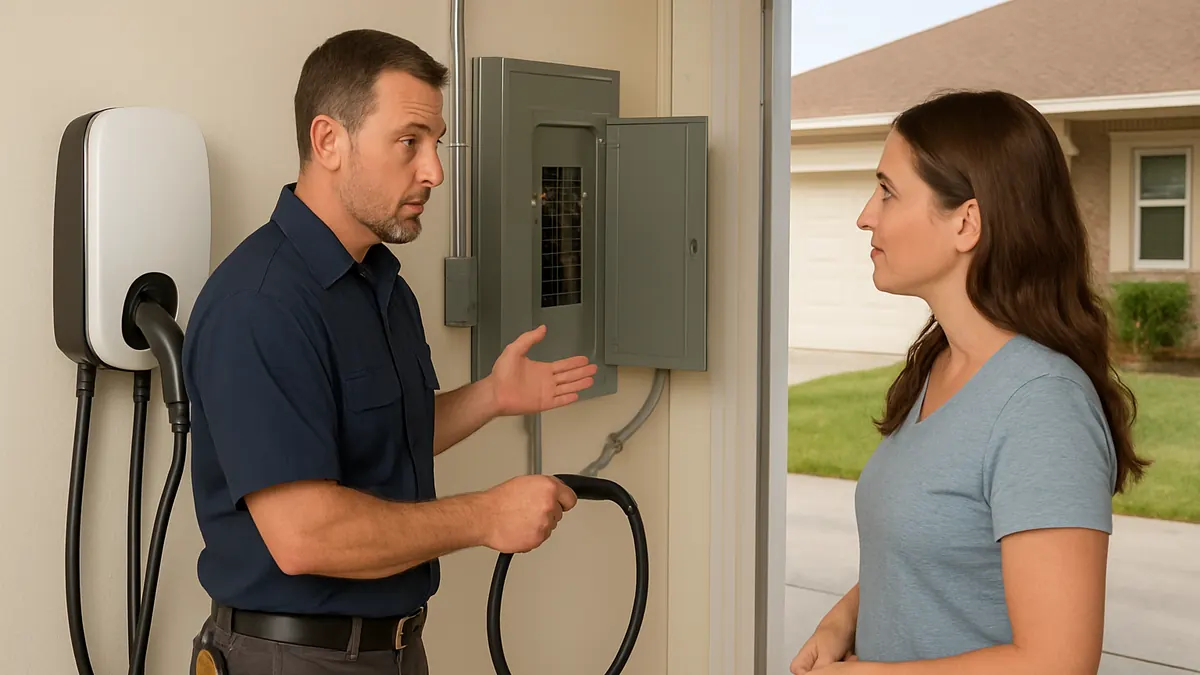
Those conditions do not automatically mean the home cannot support faster charging, but they do mean the installation should not be guessed at. Can your electric panel support a Level 2 EV charger in Springfield? A licensed electrician must evaluate the electrical service, existing loads, panel condition, charger output, and circuit route. Until that happens, use only approved equipment as directed. Stop charging if a breaker trips repeatedly, a connection becomes hot, or you smell overheated electrical material.
Why Level 2 Charging Requires Careful Planning
A Level 2 charger normally uses a dedicated 240-volt circuit that no other appliance shares.
Charging current determines circuit size. A 32-amp charger commonly uses a 40-amp circuit, a 40-amp charger a 50-amp circuit, and a 48-amp charger a 60-amp circuit and is frequently hardwired.
Because charging may continue for hours, breaker sizing, conductors, connections, and service capacity matter.
Most Common Reasons a Panel Needs Work Before Installation
The existing service has little capacity left
The home may already have an electric range, dryer, water heater, central air conditioner, supplemental heat, pumps, or large shop equipment. Working appliances do not prove the service can accept another sustained load.
Previous additions were not coordinated
Over time, circuits may have been added for appliances, remodeling, outdoor equipment, or garage use. A panel directory may not accurately show what each breaker controls. Improper breakers, crowded terminals, or other defects may need correction.
Breaker space is unavailable
Most Level 2 charger circuits require two adjacent panel positions. A visually empty space may be unusable, and a compact breaker cannot be installed unless the panel is specifically designed and approved for it.
The proposed charging rate is unnecessarily high
The vehicle may accept less power than the charger can deliver, or a lower rate may easily restore daily mileage overnight.
The wiring route is difficult
A long path through finished, exterior, or underground areas can affect conductor size, voltage drop, and installation method.
Safe Checks the Homeowner Can Perform
Photograph the front of the panel, including the main breaker, manufacturer label, circuit directory, and visible breaker positions. Do not remove the cover.
Make a list of major electric loads. Include the heating and cooling system, water heater, range, dryer, pumps, pool or spa equipment, and large workshop tools. Note planned electrical additions.
Find the vehicle's maximum Level 2 charging rate. Review the charger specifications for available amperage settings and whether the unit is intended for a receptacle or hardwired connection.
Note the route's distance, access, exposure, underground sections, and possible impact hazards.
What You Should Not Attempt
- Do not remove the electrical panel cover or touch internal components. Parts of the service equipment may remain energized even with the main off.
- Do not add breaker ratings together; they show circuit limits, not calculated household demand.
- Never replace a tripping breaker with a larger one. Do not use an ordinary extension cord, homemade adapter, or unapproved device to share a dryer or range circuit.
- Do not install a breaker from another manufacturer simply because it appears to fit. Breakers must be approved for the specific panel.
Signs That Make the Problem Urgent
Stop charging and arrange prompt service when the charger breaker trips repeatedly or the main breaker opens during charging. Significant dimming or flickering throughout the home when charging starts should also be evaluated.
Burning odors, buzzing, crackling, popping, melted plastic, darkened insulation, visible sparks, or unusual heat at the panel, receptacle, plug, or charger are urgent warning signs.
A loose, hot, or nonresetting breaker and visible moisture or corrosion require professional attention.
If smoke, fire, or active arcing is present, leave the property and call emergency services.
How a Licensed Electrician Diagnoses the Electrical System
The electrician identifies the service rating, panel model, approved breaker types, and available spaces. The internal inspection checks the bus, breakers, conductors, connections, grounding, bonding, enclosure condition, and signs of overheating or improper modifications.
A residential load calculation follows. It estimates demand from household use, major appliances, heating and cooling, and the proposed charger.
The electrician compares the vehicle's charging limit with the charger's possible output settings. A lower setting may avoid electrical work that provides no practical benefit.
The circuit route is reviewed for conductor length, accessibility, weather exposure, voltage drop, and protection from impact. Existing problems may require voltage, connection, and charger testing.
Repair and Installation Options From Least Invasive to Most Extensive
The first option may be setting the charger to a lower output. A 16-, 24-, or 32-amp charger can still add substantial overnight range.
Approved load-management equipment may allow the charger to operate within the existing service capacity. It monitors household demand and reduces or pauses EV charging when other large loads are active.
If the service calculation is acceptable but the panel lacks breaker spaces, an electrician may install a subpanel or reorganize circuits using an approved arrangement. A subpanel adds circuit locations, not service capacity.
Individual defects may be repaired without replacing the entire panel. Repairs may include a breaker, termination, conductor, receptacle, or hardwired connection.
Panel replacement may be appropriate when the panel is damaged, obsolete, improperly altered, or unable to accept the required circuit safely. A service upgrade is the most extensive option and is considered when calculated demand exceeds existing capacity and no smaller approved solution is suitable.
Typical Factors Affecting Cost
Cost depends on charger amperage, conductor length, panel location, access, exterior conduit, trenching, and connection method.
Load management, a subpanel, panel or service work, surface repair, permits, and inspections can expand the scope.
Prevention and Maintenance Guidance
Choose listed charging equipment that matches the vehicle and the installation location. Protect the cord from tires, doors, sharp edges, standing water, and outdoor equipment.
Inspect the connector, cable, enclosure, plug, and receptacle for cracks, looseness, discoloration, corrosion, or heat. A plug-in charger should fit firmly and should not wobble in the receptacle.
Have repeated charger errors, breaker trips, or interruptions evaluated promptly. Do not assume a problem is harmless because charging eventually restarts.
Make the Charging Plan Fit the Entire Home
Can your electric panel support a Level 2 EV charger in Springfield? The answer may be a standard dedicated circuit, reduced charger output, managed charging, targeted repairs, a panel replacement, or a larger service. A professional inspection and load calculation determine what the home actually needs without assuming that the most expensive option is necessary.
About this guide: This resource provides general homeowner education, not a remote diagnosis. Actual conditions, code requirements, equipment, and safe repair options must be evaluated at the property.