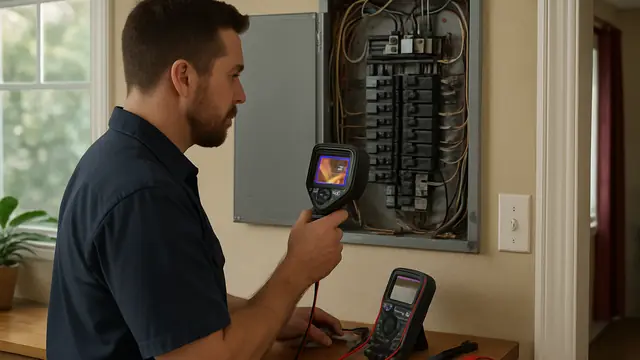
Do not remove an electrical panel cover, touch exposed conductors, bypass protection, or repeatedly reset a fault. Keep clear of smoke, sparks, burning odors, hot equipment, standing water near electricity, and downed lines, then call qualified help.
The storm is over, the neighborhood has power again, but several outlets and lights in your home remain dead. One breaker appears tripped, yet it immediately clicks off when you try to reset it. That may mean a wet circuit, damaged appliance, short circuit, ground fault, or wiring problem is still present. Unplug everything on the affected circuit, check for water or visible damage, and leave the breaker off if it will not remain on after one safe reset.
A Northwest Florida hurricane electrical checklist in Springfield should help homeowners distinguish a routine outage from a condition that requires the circuit, appliance, or entire service to remain off until a licensed electrician inspects it.
Prepare the Panel and Essential Circuits First
Before hurricane conditions arrive, locate the electrical panel and verify that the breaker labels are accurate. Identify the circuits serving the refrigerator, freezer, HVAC system, water heater, important lighting, communication equipment, garage door, and medical devices.
Photograph the panel directory so you can identify circuits without guessing during an outage.
Common Reasons Power Problems Appear After a Hurricane
A Breaker Is Detecting a Real Fault
A circuit breaker opens when current becomes unsafe. It may trip because the circuit is overloaded, a wire is shorted, an appliance has failed, or moisture is allowing electricity to travel along an unintended path.
An Upstream GFCI Has Tripped
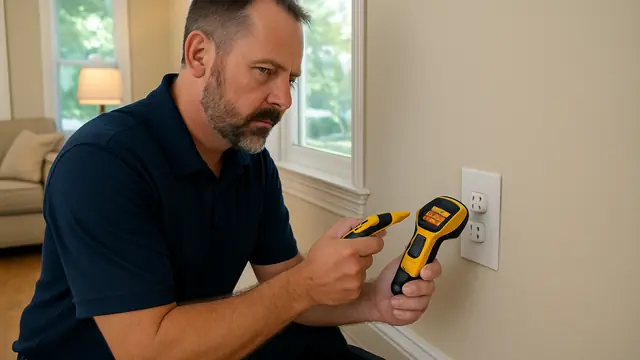
Several outlets can be protected by one GFCI receptacle located elsewhere. A dead bathroom, garage, kitchen, or exterior outlet may be connected to an upstream GFCI that has tripped.
Utility Power Is Only Partially Restored
A home can lose one incoming power leg or experience a loose neutral. The result may be partial power, unusual dimming, bright lights, or major appliances that will not operate correctly.
Storm Damage Has Affected the Service
Wind or debris may damage the service mast, weatherhead, meter enclosure, or conductors attached to the home. The utility may restore power to the area while the individual property still needs repairs.
Electronics Were Damaged by a Surge
A breaker may remain on even when an appliance control board has failed. Air conditioners, refrigerators, televisions, routers, and smart devices may stop working after lightning or switching surges.
Safe Checks Homeowners Can Perform
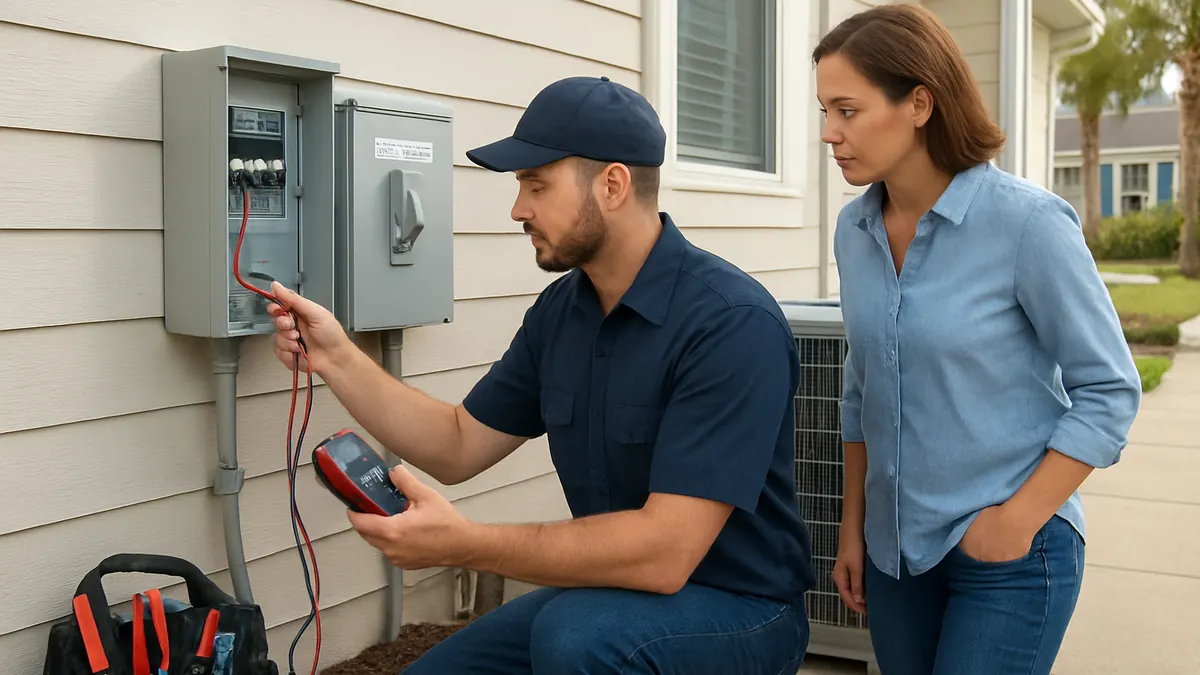
Before the storm, inspect visible exterior equipment without opening boxes or panels. Look for loose covers, cracked enclosures, damaged conduit, rust, hanging fixtures, or service equipment pulling away from the structure.
- Test accessible GFCI receptacles. GFCI means ground-fault circuit interrupter. It shuts off electricity when current leaks along an unsafe path.
- Test smoke and carbon-monoxide alarms and charge emergency devices. Unplug nonessential electronics.
- After the storm, begin outside. Look for downed lines, tree limbs touching wires, displaced meter equipment, or a bent service mast. Stay well back and report downed utility lines.
- Inside, smell and listen before touching switches. Buzzing, sizzling, popping, smoke, heat, or a burning odor means the affected equipment should remain off.
When a breaker is tripped, unplug loads from that circuit. If the panel and surrounding area are completely dry and no damage is visible, move the breaker fully to OFF and then to ON once. If it trips again, stop.
What You Should Not Try Yourself
- Do not remove the panel cover. The main breaker does not de-energize every component inside the panel.
- Do not replace a breaker simply because it trips. The breaker may be doing its job by responding to a dangerous fault.
- Do not use a larger breaker to stop nuisance tripping. Breaker size must match the conductor and circuit design. Oversizing can allow wiring to overheat without proper protection.
- Never connect a generator through a household receptacle. Use an approved transfer switch or listed interlock installed for the specific panel.
- Do not run a generator indoors, in a garage, or near windows, doors, vents, and air intakes.
Urgent Warning Signs
- Call for immediate help if you see smoke, sparks, melted insulation, glowing, exposed conductors, or water inside the panel.
- A breaker or outlet that feels hot, a panel that buzzes loudly, or repeated popping sounds requires prompt attention.
- Partial power is urgent when some lights are bright and others are dim. That pattern may indicate a damaged neutral connection and unsafe voltage.
- A shock or tingling sensation from a faucet, appliance, metal railing, outdoor fixture, or other conductive surface is an emergency warning. Keep everyone away.
How a Licensed Electrician Finds the Cause
A licensed electrician begins by determining whether the utility supply is complete and stable. Voltage measurements can reveal a missing power leg, low voltage, high voltage, or a loose neutral.
The electrician then inspects the service equipment, panel, grounding and bonding, affected breakers, branch circuits, outlets, and connected appliances.
A branch circuit is the wiring that carries power from a breaker to lights, receptacles, and equipment. The electrician may isolate sections of the branch circuit to locate a fault.
GFCI and AFCI devices may also be tested. AFCI stands for arc-fault circuit interrupter and helps detect dangerous arcing that an ordinary breaker may not recognize in the same way.
Repair Options Beginning With the Least Invasive
- The least invasive solution may be resetting an upstream GFCI, replacing a failed receptacle, changing a damaged weatherproof cover, or disconnecting one failed appliance.
- A localized wiring problem may require replacing a breaker, switch, junction box, section of cable, or damaged connection.
- Surge-damaged appliance controls may sometimes be repaired by replacing the affected component rather than the entire appliance.
More extensive repairs may involve damaged service conductors, the meter enclosure, service mast, panel components, or complete panel replacement. Replacement is considered when equipment is physically damaged, contaminated by water, severely corroded, obsolete, or no longer reliable.
Typical Factors That Affect Cost
Cost depends on whether the problem is a single device, concealed wiring fault, failed appliance, panel issue, or service-entrance problem.
Accessibility, diagnostic time, permits, utility coordination, panel type, and the need to open finished surfaces can also affect cost.
Prevention and Maintenance Guidance
- Correct recurring breaker trips, flickering lights, warm outlets, buzzing equipment, and loose exterior fixtures before hurricane season.
- Maintain working GFCI and AFCI protection. Replace damaged outdoor covers. Keep the panel area clear and dry.
- Consider whole-home surge protection for the electrical service and point-of-use protection for selected electronics.
Prepare a written generator load plan. Refrigerators, freezers, lights, fans, and selected outlets may be priorities, while electric water heating, ranges, dryers, and central air conditioning require much more capacity.
Continue monitoring the home after the storm for delayed corrosion, intermittent power, warm devices, and repeated tripping.
Homeowner FAQs
Why does the breaker trip immediately after I reset it?
A short circuit, ground fault, wet wiring, failed appliance, or damaged cable may still be present. Leave the breaker off and schedule an inspection.
Can one GFCI control several outlets?
Yes. One GFCI can protect additional downstream outlets, so the tripped device may be in another room or exterior location.
Why does half the house have power?
Possible causes include a tripped main component, loss of one utility power leg, damaged service equipment, or a loose connection. Professional testing is needed.
Can I use extension cords for several days?
Use only properly sized, undamaged cords rated for the environment and load. Extension cords are temporary and should not run under rugs, through water, or where they can be crushed.
Should I unplug appliances when power goes out?
Unplugging sensitive and nonessential equipment can reduce exposure to voltage changes when power returns. Leave one lamp on as an indicator.
Is a breaker safe if it stays on after resetting?
Not always. Continue watching for heat, odors, flickering, or unusual sounds. A successful reset does not explain why the breaker tripped.
Complete the Springfield Hurricane Electrical Checklist
A Northwest Florida hurricane electrical checklist in Springfield should include accurate breaker labels, working protective devices, safe generator procedures, surge protection, and a cautious process for restoring circuits after an outage.
When part of the home remains without power, do not assume the solution is repeated resetting. A breaker that continues to trip is warning you that a problem may still be present.
About this guide: This resource provides general homeowner education, not a remote diagnosis. Actual conditions, code requirements, equipment, and safe repair options must be evaluated at the property.