Do not remove an electrical panel cover, touch exposed conductors, bypass protection, or repeatedly reset a fault. Keep clear of smoke, sparks, burning odors, hot equipment, standing water near electricity, and downed lines, then call qualified help.
You are considering a home in Springfield when the general inspection report flags several electrical items for further review. A receptacle tester shows reversed polarity in one room, an attic junction box is missing a cover, and a breaker trips when two high-demand appliances are used at the same time. You may be wondering whether these are ordinary repair items or signs of a larger electrical problem.
The safest immediate action is to leave a repeatedly tripping breaker off, avoid any outlet that is hot, sparking, or visibly damaged, and do not touch exposed wiring. An electrical inspection checklist before buying a Northwest Florida home in Springfield should answer three questions: what is unsafe now, what can be repaired reasonably, and whether the system can support the way you plan to use the home.
Begin With the Home Inspection Findings
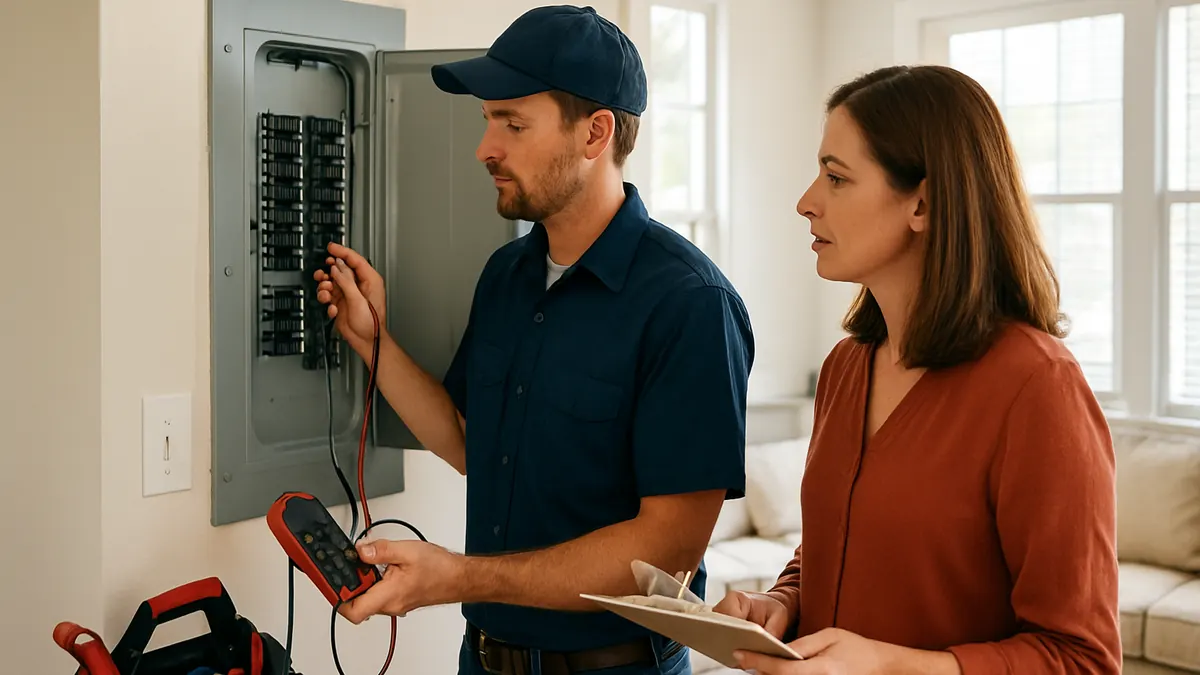
A general home inspection provides a useful overview, but it is not always designed to diagnose the exact cause of electrical defects. Give the electrician the inspection report, photographs, available repair records, and any seller disclosures that relate to electrical work.
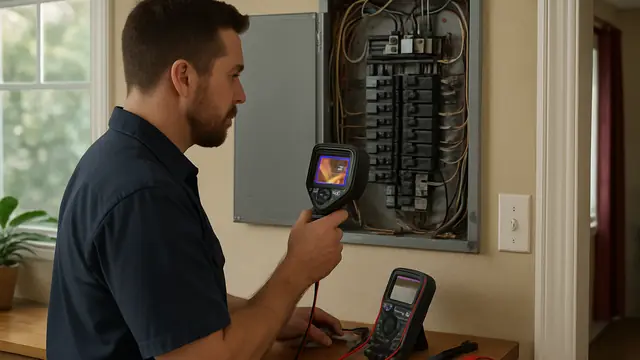
Evaluate the Main Electrical Panel
The main panel distributes electrical power through branch circuits that serve outlets, lights, appliances, and equipment. A licensed electrician should inspect the panel enclosure, breakers, conductor connections, grounding, bonding, labeling, and any visible signs of corrosion, moisture, or overheating.
The electrician should compare breaker ratings with conductor sizes and verify that installed breakers are compatible with the panel. A larger breaker should never be installed simply to stop tripping.
Review Grounding and Bonding
Grounding and bonding are related but different safety functions. Grounding connects the electrical system to earth. Bonding connects metal parts together so fault current has an effective path back to the source and can cause a breaker to trip.
Check Receptacles, Switches, and Fixtures
Operate accessible switches and lights and note any flickering, buzzing, crackling, delayed response, or unusual warmth. Receptacles should hold plugs securely and should not be cracked, discolored, loose, or melted.
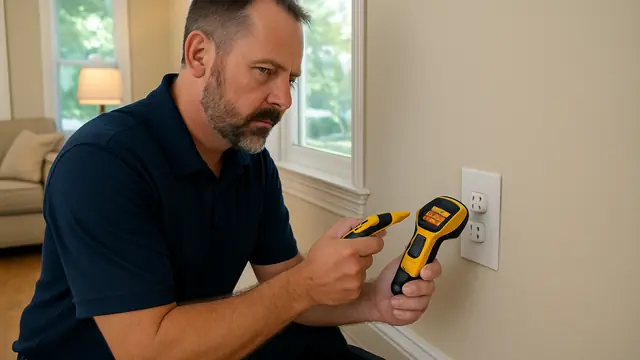
Reversed polarity means the hot and neutral conductors are connected to the wrong terminals. An outlet may still work, but the condition should be corrected.
Look Closely at Attics, Garages, and Utility Areas
When these areas are safely accessible, they can reveal electrical alterations that are not obvious in finished rooms. Look for open junction boxes, exposed splices, unsupported cable, extension cords serving permanent equipment, and wiring that is vulnerable to physical damage.
A junction box protects electrical connections. If a box is missing a cover but the conductors and connections are otherwise suitable, installing an approved cover may be enough. If the wiring is damaged or overcrowded, additional correction may be needed.
Verify GFCI and AFCI Protection
Ground-fault circuit interrupters, or GFCIs, reduce shock risk by shutting off power when current leaks through an unintended path. Arc-fault circuit interrupters, or AFCIs, detect certain dangerous electrical arcs.
A device that does not test or reset properly should be diagnosed. The cause may be a failed device, lost incoming power, incorrect wiring, or a downstream fault.
Safe Checks the Homebuyer Can Perform
A buyer can make several observations without opening electrical equipment:
- Turn lights and fans on and off.
- Note flickering, buzzing, or dead outlets.
- Look for broken covers, scorch marks, or loose devices.
- Review panel labels from the outside.
- Test GFCI buttons only with permission.
- Ask whether breakers have tripped repeatedly.
- Note where extension cords appear to be used permanently.
- Ask for records related to remodeling or electrical upgrades.
What You Should Not Attempt
- Do not remove the panel cover, meter enclosure, outlet, switch, fixture, or disconnect cover. Do not touch bare conductors or attempt to tighten electrical connections.
- Never replace a tripping breaker with a larger one. A breaker protects the wiring, and an oversized breaker can allow a conductor to overheat.
- Do not repeatedly reset a breaker or GFCI. If it trips again, leave it off until the cause is identified.
Signs That Make the Problem Urgent
Prompt professional evaluation is needed for:
- Smoke, active sparks, or burning odors
- Crackling or sizzling sounds
- Warm or melted receptacles and switches
- Repeated breaker trips
- Shocks from appliances or fixtures
- Water inside electrical equipment
- Exposed energized conductors
- A panel surface that becomes unusually hot
Keep people away from the affected area. If an active electrical hazard exists, qualified personnel may need to disconnect power before work begins.
How a Licensed Electrician Diagnoses the Problem
The electrician reviews the reported symptoms and then uses visual inspection and targeted testing to determine the cause.
Testing may include voltage, polarity, grounding continuity, GFCI function, circuit loading, and temperature differences at connections. Breaker ratings are compared with conductor sizes, and grounding and bonding are evaluated.
Repair Options Beginning With the Least Invasive
Not every electrical defect calls for replacement of the panel or extensive rewiring. The least invasive reasonable repair might be installing a missing box cover, securing a loose device, correcting polarity, replacing a failed GFCI, repairing an accessible connection, or updating circuit labels.
A damaged cable section may be replaced without rewiring the entire house. An overloaded circuit may be corrected by moving appropriate loads or installing a dedicated circuit.
Panel repairs may include replacing a compatible breaker or correcting a termination. Panel replacement or service upgrades should be based on documented damage, capacity limitations, or equipment that cannot be reasonably serviced.
Factors That Affect Cost
Electrical repair cost depends on the number of findings, diagnostic time, wiring accessibility, circuit length, panel type, equipment availability, permit requirements, utility coordination, and finish repair.
A written estimate should separate immediate hazards from reliability improvements and optional future upgrades. This helps you understand which items may affect the purchase agreement.
Prevention and Maintenance After You Buy
- Keep the panel accessible and labels current. Test GFCIs according to manufacturer instructions and replace damaged covers or loose devices promptly.
- Avoid relying on extension cords for permanent power. Before installing major electrical equipment, have the service capacity and circuit requirements evaluated.
- New buzzing, flickering, unusual heat, burning odors, or repeated trips should be investigated rather than ignored.
Use the Inspection to Understand the Scope Before You Buy
An electrical inspection checklist before buying a Northwest Florida home in Springfield should help you distinguish direct repair items from conditions that affect larger portions of the electrical system.
Do not treat every defect as a reason to walk away, but do not dismiss repeated breaker trips, exposed wiring, grounding problems, or damaged equipment. Obtain a licensed diagnosis, begin with the least invasive safe correction, and use the findings to make an informed purchase decision.
About this guide: This resource provides general homeowner education, not a remote diagnosis. Actual conditions, code requirements, equipment, and safe repair options must be evaluated at the property.