Do not remove an electrical panel cover, touch exposed conductors, bypass protection, or repeatedly reset a fault. Keep clear of smoke, sparks, burning odors, hot equipment, standing water near electricity, and downed lines, then call qualified help.
The first warning may seem minor. A bedroom outlet stops working, the breaker appears to be on, and power returns after you move the handle off and back on. A week later, the same circuit trips while only a lamp and television are operating. Then you hear light buzzing near the electrical panel. That sequence is among the seven signs your electrical panel needs an inspection in Springfield.
Turn off or unplug devices on the affected circuit and leave a breaker off if it trips again after one reset. Do not remove the panel cover or tighten anything inside. If the cabinet is hot, wet, smoking, sparking, or producing a strong burned odor, stay away and contact a licensed electrician. Call emergency services for an active electrical fire.
What Electrical Panel Symptoms Can Mean
The panel distributes power through breakers that protect the wiring. A trip may be a correct response to an overload, damaged appliance, short circuit, ground fault, loose terminal, failing breaker, or service problem. Inspection separates those possibilities and does not automatically mean replacement.
Seven Signs Your Electrical Panel Needs an Inspection in Springfield
1. A Breaker Trips With Only a Small Load
A circuit that previously handled normal use should not begin tripping without explanation. A small load can conceal a failing device, damaged cord, loose connection, or wiring fault. Unplug portable devices, reset once, and leave the circuit off if it trips again.
2. The Breaker Handle Looks On, but the Circuit Has No Power
Some breaker handles move only slightly when they trip. Power loss with the handle apparently on can also result from a failed breaker, loose conductor, damaged bus connection, another tripped protective device, or downstream fault. Note every affected outlet or fixture and avoid repeated cycling.
3. Lights Flicker or Appliances Restart
Lights that flicker throughout several rooms, clocks that reset, or electronics that restart may indicate a loose neutral, service connection problem, voltage drop, or poor panel connection.
A loose neutral can create uneven voltage, causing one light to brighten while another dims. Unplug sensitive electronics and arrange prompt inspection.
4. The Panel Makes New or Changing Noises
A persistent buzz, sizzle, crackle, snap, or pop may indicate a loose breaker, deteriorated terminal, poor bus-bar connection, or arcing. Arcing crosses a gap and creates damaging heat. Do not open the cabinet.
5. The Cabinet Is Hot, Discolored, or Warped
The panel door should not be hot. A hot spot, blistered finish, darkened metal, warped material, or melted plastic can indicate overloaded conductors, loose terminals, failing breakers, or damaged bus connections. Stop using large loads if it is safe to do so away from the panel.
6. There Is Rust, Residue, or Evidence of Water
Rust, water staining, white or green residue, or dampness around the panel requires attention. Moisture may enter from a leak, condensation, or a pathway along wiring or conduit.
Corrosion can weaken connections and create heat even after the panel dries. Do not wipe, sand, spray, or paint over it. Correct both the moisture source and electrical damage.
7. The Panel Contains Questionable Additions or Has No Room Left
Missing filler plates, unclear labels, breakers that do not align, multiple conductors under an unsuitable terminal, or signs of repeated modification should be inspected.
No open spaces do not necessarily mean no options, and more spaces do not equal more capacity. An electrician must verify compatibility and complete a load calculation. The solution may be a dedicated circuit, subpanel, panel replacement, or service upgrade.
Safe Checks the Homeowner Can Make
Keep the cover closed. Record the breaker, devices operating, and rooms involved. Look for external rust, stains, discoloration, a damaged latch, missing blanks, or blocked access. Inspect accessible plugs and cords. Unplug portable loads before one reset, and stop after another trip or any heat, odor, moisture, or smoke.
What You Should Not Attempt
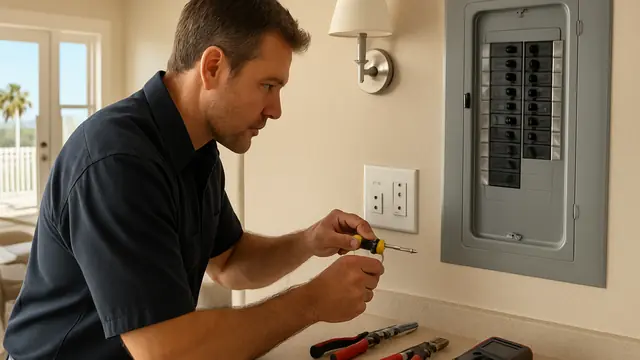
Do not remove the dead-front cover, probe inside with a tester, tighten terminals, move conductors, or replace service wiring. Incoming service terminals may remain energized even when the main breaker is off.
Do not install a larger breaker to prevent tripping. The breaker protects conductors of a specific capacity. Oversizing it can allow wiring to overheat.
Never tape a breaker on, bypass a protective device, use an unapproved breaker, or apply cleaners inside electrical equipment.
Signs That Require Urgent Action
Call promptly for smoke, visible sparks, a strong burning odor, active crackling, melted material, a hot cabinet, water inside the panel, repeated main-breaker trips, or an electrical shock from an appliance, switch, or metal fixture.
Lights becoming extremely bright and dim can indicate unstable voltage. A partial outage affecting major areas may involve the service connection.
For an active fire, evacuate and call emergency services. Do not use water on energized equipment.
How a Licensed Electrician Diagnoses the Cause
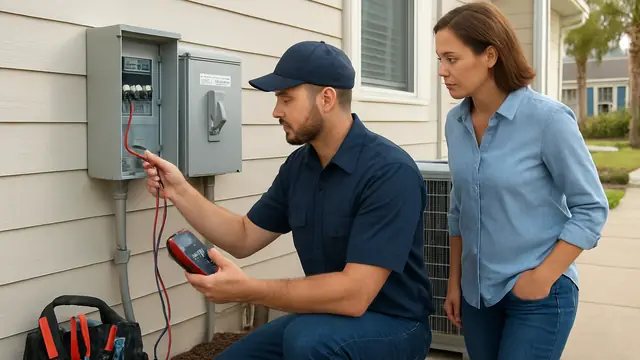
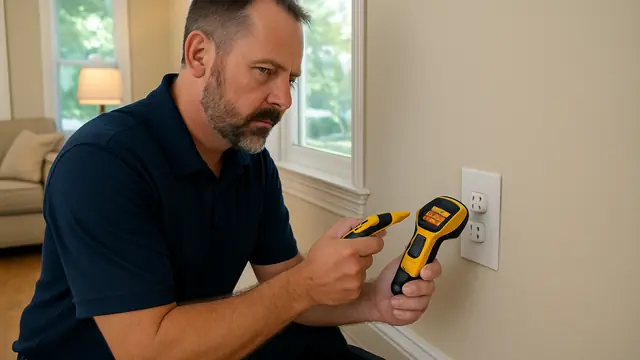
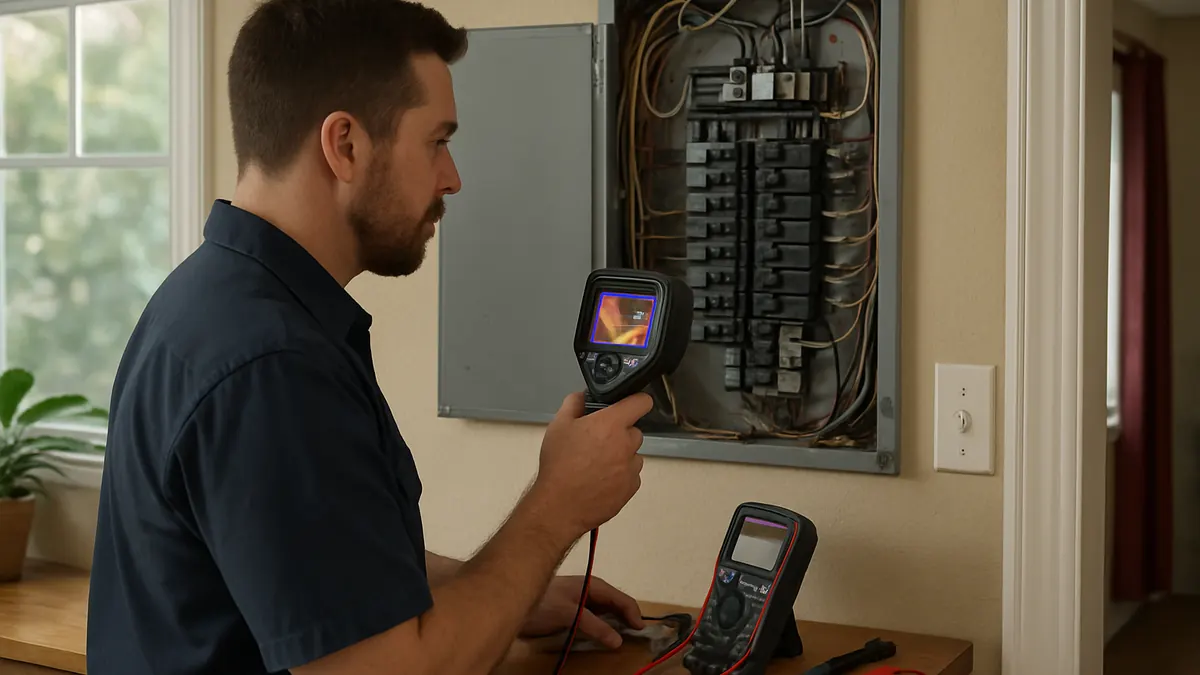
The electrician reviews the symptom history and checks panel rating, breaker compatibility, conductor sizing, terminals, loading, bus bars, grounding, moisture, corrosion, heat damage, and prior modifications. Voltage, current, and thermal tests help distinguish a panel problem from an outlet, appliance, branch-circuit, or service fault.
Repair Options From Least to Most Invasive
A targeted correction may involve replacing one compatible breaker, repairing a loose branch-circuit conductor, correcting damaged wiring at an outlet or appliance, or installing a dedicated circuit for equipment that is overloading a shared circuit.
Additional repairs may include replacing heat-damaged conductors, correcting grounding and bonding, stopping moisture entry, or installing a properly designed subpanel.
Panel replacement may be appropriate when bus bars are damaged, corrosion is widespread, heat damage is extensive, compatible parts are unavailable, or unsafe modifications cannot be corrected. A service upgrade is considered when a load calculation shows inadequate capacity.
What Affects the Cost
Cost depends on the defect, panel type, breaker availability, accessibility, circuits involved, conductor damage, service size, grounding corrections, permits, and necessary finish work.
Intermittent problems can require more diagnostic time because the symptom may not be present continuously. A clear estimate should connect each recommendation to a documented finding.
Prevention and Maintenance Guidance
Keep the panel dry, unobstructed, and accurately labeled. Do not store tools, boxes, or household items in front of it.
Have added circuits and major appliance connections installed by qualified professionals. Request a load evaluation before adding high-demand equipment.
After leaks, remodeling, or unexplained power events, watch for tripping, odors, sounds, heat, or flickering. Surge protection may reduce damage from certain voltage spikes, but it cannot correct loose connections, overloads, corrosion, or defective breakers.
Homeowner FAQs
Why does my breaker look on when it has tripped?
Some breaker handles move to a middle position that is difficult to see. Move the handle fully off before one reset, but do not keep resetting it if the problem returns.
Can one bad outlet cause a breaker to trip?
Yes. A damaged receptacle, loose connection, or fault in equipment plugged into it can cause the breaker to operate.
Is buzzing always caused by a bad breaker?
No. Buzzing may come from a loose terminal, arcing connection, overloaded component, transformer, or nearby equipment. The source should be tested.
Can a panel inspection find hidden overheating?
Yes. Visual inspection, electrical measurements, and thermal imaging can help locate abnormal heat.
Is adding a subpanel the same as upgrading service capacity?
No. A subpanel may add circuit spaces, but it does not increase the amount of incoming power.
Should I schedule an inspection before buying a large appliance?
It is wise when the appliance requires a new dedicated circuit or significantly increases electrical demand.
Take the Next Safe Step
Seven signs your electrical panel needs an inspection in Springfield include unexplained tripping, power loss with a breaker that appears on, multi-room flickering, abnormal sounds, excessive heat, moisture damage, and questionable additions or crowding. The problem may be limited to one circuit or component, but a licensed diagnosis is needed before the correct repair can be chosen.
About this guide: This resource provides general homeowner education, not a remote diagnosis. Actual conditions, code requirements, equipment, and safe repair options must be evaluated at the property.