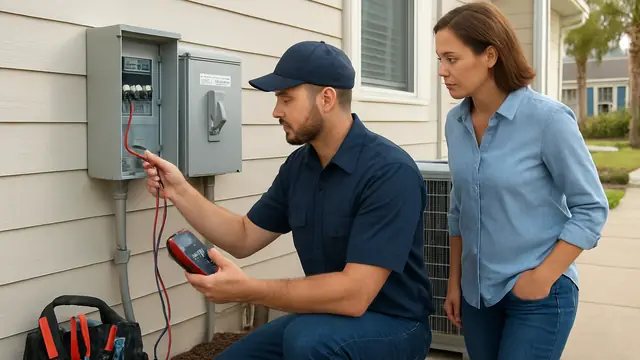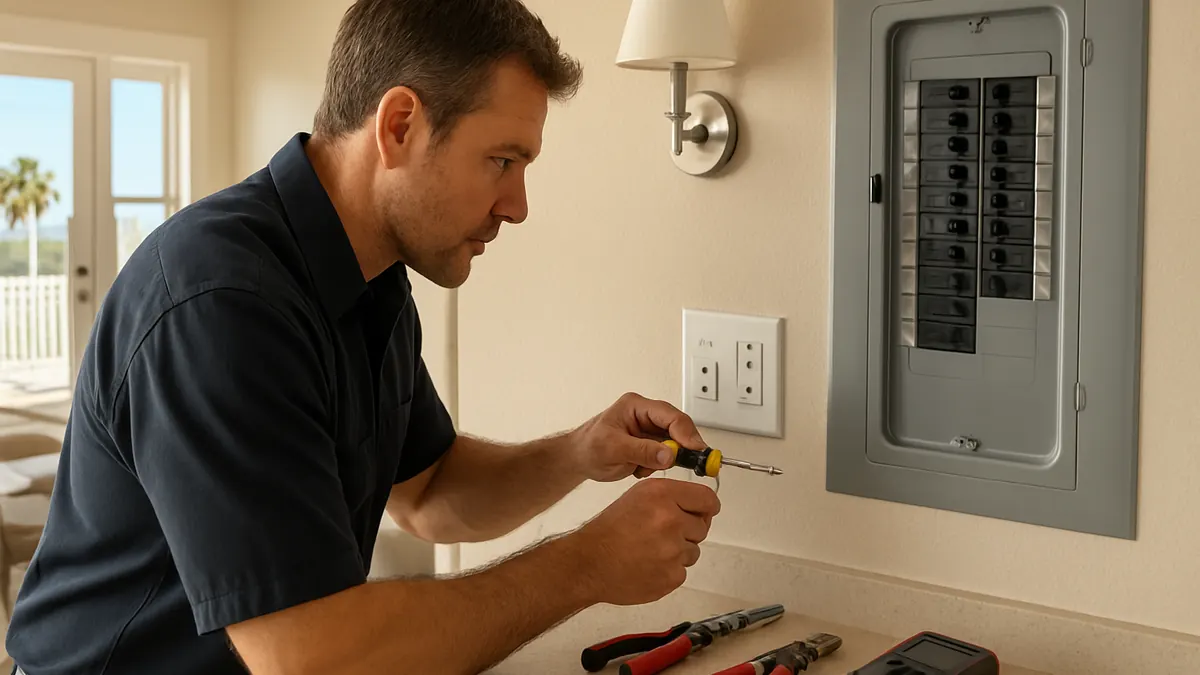
Do not remove an electrical panel cover, touch exposed conductors, bypass protection, or repeatedly reset a fault. Keep clear of smoke, sparks, burning odors, hot equipment, standing water near electricity, and downed lines, then call qualified help.
A guest at your Springfield vacation rental reports that the bathroom outlet stopped working after a hair dryer was plugged in, the bedroom television went off at the same time, and a breaker now trips whenever it is reset. The guest may assume the breaker is defective, but the problem could be elsewhere on the circuit.
A repeated trip can indicate an overload, short circuit, ground fault, damaged appliance, loose connection, or failing protective device. The safest immediate action is to unplug portable equipment from the affected area and attempt only one reset when there is no water, heat, smoke, or visible damage. If the breaker trips again, leave it off. Do not move appliances to another circuit as a workaround until the cause is understood.
The most common electrical problems on vacation rentals in Springfield often become visible during periods of heavier guest use. A circuit that seems fine during a quick turnover may react differently when several people are using hair dryers, kitchen appliances, laundry equipment, chargers, and entertainment devices at the same time.
Most Common Electrical Problems on Vacation Rentals in Springfield
Breakers That Will Not Stay On
A circuit breaker opens when electrical current becomes unsafe. Too many devices may overload the circuit, but a short circuit, ground fault, damaged appliance, loose connection, or failing breaker can cause the same symptom. If it trips again after one safe reset, leave it off and have the circuit diagnosed.
GFCI Outlets That Suddenly Lose Power
Bathrooms, kitchens, exterior areas, and other locations may use GFCI protection to reduce shock risk. One GFCI can protect several downstream receptacles.
If a guest says several outlets are dead, the cause may be one tripped GFCI. If it will not reset, there may be no incoming power, a downstream fault, moisture, or a failed device.
Overloaded Receptacles and Power Strips
Guests may bring multiple chargers, gaming systems, hair tools, small appliances, or other electronics. A power strip does not increase the capacity of the circuit supplying it.
Overloaded or damaged strips can become warm, discolor, or fail. Extension cords and power strips should not be used as permanent substitutes for enough properly installed receptacles.
Loose Electrical Connections
A loose connection can create intermittent operation, flickering, heat, or arcing. The problem may be at a receptacle, switch, fixture, junction, breaker, or other connection point.
Because the circuit may work again after cooling or being disturbed, intermittent electrical complaints should still be documented and investigated.
Flickering Lights
A single flickering light may come from a loose bulb, worn socket, or failing switch. Flickering across several rooms can point to voltage drop, loose wiring, a neutral problem, or an incoming power issue.
Strong brightness changes, especially when some lights brighten while others dim, should be evaluated promptly.
Smoke and Carbon Monoxide Alarm Problems
Alarms may chirp because of a low battery, end-of-life warning, contamination, or loss of normal power. Do not disconnect a hardwired alarm simply to stop a complaint; identify the warning and restore proper protection.
Safe Checks a Homeowner or Property Manager Can Perform
Ask the guest what was plugged in immediately before the failure and which rooms lost power. Ask whether there was buzzing, heat, odor, sparks, or water nearby.
Unplug portable appliances from the affected circuit. If a GFCI is dry, intact, and cool, press reset once. At the electrical panel, a visibly tripped breaker can be moved fully off and then back on once.
Inspect visible cords, plugs, power strips, and covers. Remove equipment with melted insulation, scorch marks, bent plug blades, or damaged cords from service. Stop troubleshooting if there is repeated tripping or overheating.
What the Homeowner Should Not Attempt
Do not remove the panel cover, open receptacles, or attempt internal wiring repairs. Never install a higher-amperage breaker simply to stop tripping; it can leave the wiring underprotected. Do not bypass GFCI or AFCI devices, tape breakers on, use oversized fuses, or keep using hot or damaged equipment.
Signs That Make the Problem Urgent
Smoke, a burning odor, visible arcing, melted plastic, repeated shocks, crackling, or significant heat require immediate attention.
A breaker that trips instantly with portable loads unplugged may indicate a wiring fault. Keep guests away from wet electrical equipment, and do not operate the panel from a wet surface. Call emergency services for active fire or smoke.
How a Licensed Electrician Diagnoses the Problem
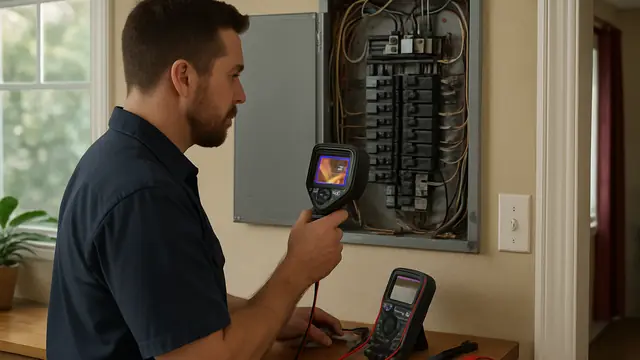
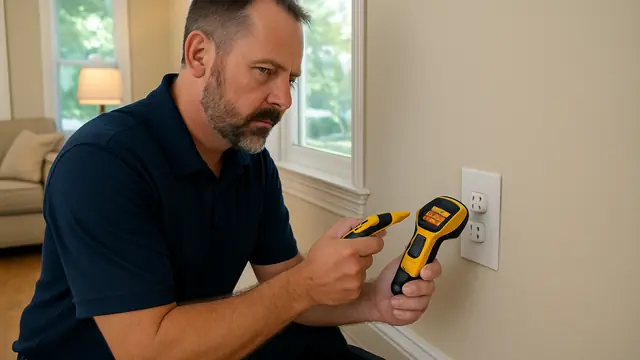
The electrician starts by determining which loads and devices are connected to the affected breaker. Voltage and current measurements can help identify lost power, excessive load, abnormal voltage, or faults.
The circuit may be isolated in sections. Receptacles, switches, GFCIs, breakers, fixtures, and accessible connections can be checked for looseness, heat damage, wiring errors, or failure. Appliances may be disconnected individually, while widespread flickering may require panel and neutral checks.
Repair Options Beginning With the Least Invasive
The simplest repair may be removing a defective appliance, correcting a loose connection, or replacing one failed receptacle, switch, GFCI, control, or properly diagnosed breaker.
If routine guest use exceeds a circuit's capacity, the electrician may recommend changing appliance use or adding a dedicated circuit. Damaged wiring may require limited wall, ceiling, or attic access. More extensive panel work or rewiring should follow broader inspection findings, not one isolated trip.
Factors That Affect Cost
Cost depends on the time required to locate the fault, how accessible the wiring is, the number of affected devices, panel condition, and whether the failure is intermittent.
Other factors include permit requirements, circuit length, replacement components, and any wall or ceiling access needed to reach damaged wiring.
Prevention and Maintenance Guidance
Use a turnover checklist for representative outlets, GFCIs, lights, fans, alarms, and appliances. Ask staff to document trips instead of simply resetting breakers. Replace loose receptacles, damaged cords, and worn controls promptly, keep the panel directory legible, and avoid permanent extension-cord use. Track recurring complaints by room.
Solve the Electrical Problem Instead of Repeatedly Resetting It
The most common electrical problems on vacation rentals in Springfield include repeated breaker trips, GFCI outages, overloaded receptacles, loose connections, flickering lights, and alarm issues.
When a protective device trips repeatedly, assume it is responding to a condition that needs diagnosis. Unplug portable equipment, perform only safe external checks, and leave the circuit off if the problem returns. A licensed electrician can identify the cause and begin with the least invasive reasonable repair.
About this guide: This resource provides general homeowner education, not a remote diagnosis. Actual conditions, code requirements, equipment, and safe repair options must be evaluated at the property.