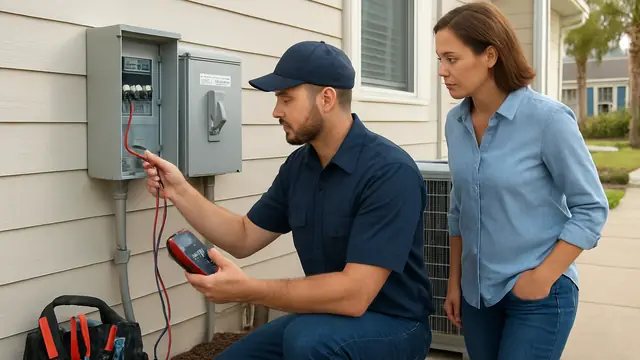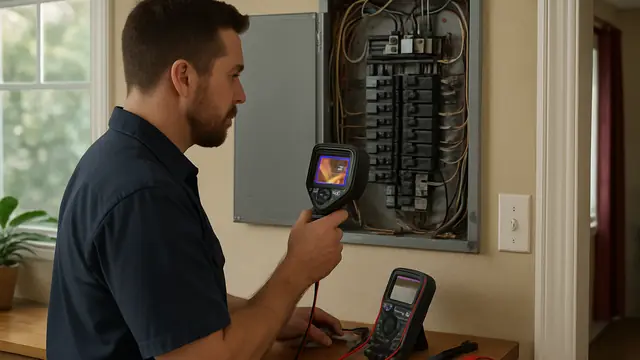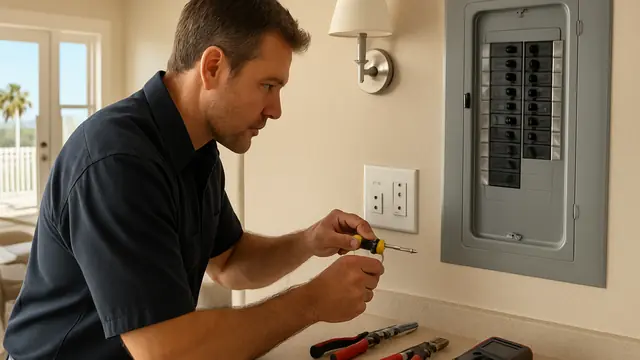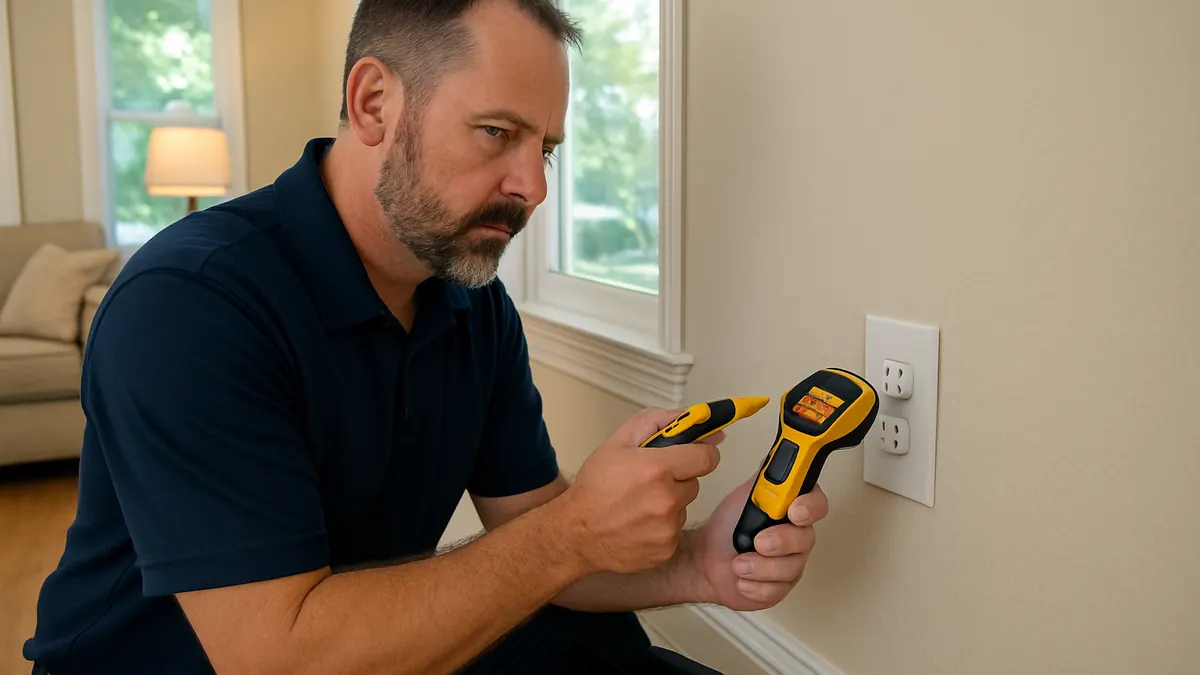
Do not remove an electrical panel cover, touch exposed conductors, bypass protection, or repeatedly reset a fault. Keep clear of smoke, sparks, burning odors, hot equipment, standing water near electricity, and downed lines, then call qualified help.
You finish ironing clothes, unplug a vacuum, or turn off a portable heater and notice that the outlet plate feels warm. Maybe the plug is unusually hot, the receptacle no longer grips it tightly, or the warmth returns whenever the same appliance runs. Even though power is still available, the heat may be warning you that electricity is meeting resistance somewhere in the connection.
Stop using the outlet and unplug the equipment. If the receptacle is hot rather than mildly warm, smells burned, makes noise, shows discoloration, sparks, or smokes, turn off the circuit breaker if you can safely reach the panel. Leave the breaker off and contact a licensed electrician. Repeatedly testing a warm outlet can increase the damage.
Why an Electrical Outlet May Feel Warm in Springfield
A household receptacle should remain close to the temperature of the surrounding wall. Persistent warmth can indicate a problem in the outlet, wiring, or circuit.
A Plug Is Not Making Firm Contact
The internal contacts of a receptacle clamp around the plug blades. With repeated use, those contacts can weaken. The plug may move easily, sit at an angle, or fall out when the cord is bumped.
Loose contact can cause arcing and concentrated heat at the plug blades.
A Wire Terminal Has Loosened
A wire connected to the side or back of the receptacle can loosen over time or may not have been secured correctly. Electricity still passes through the connection, but the added resistance produces heat.
The Circuit Is Carrying a Heavy Load
A portable heater, hair dryer, iron, vacuum, microwave, or countertop cooker can draw substantial current. If several high-demand devices share a circuit, the total load may approach or exceed what the circuit is intended to carry.
A Charger or Appliance Is Producing the Heat
Electronic chargers and power supplies often generate some heat during normal operation. A defective plug, cord, or appliance can produce much more.
Unplug the equipment and let everything cool. A device that is very hot, discolored, cracked, or giving off an odor should remain out of service.
There Is a Hidden Splice or Neutral Problem
The receptacle box may contain splices connecting multiple outlets. A loose connector or neutral can heat while another device on the circuit is operating. This is one reason an apparently unused outlet may still become warm.
Safe Checks You Can Make Without Opening Anything
- Begin by disconnecting all equipment from the outlet. Pull from the plug body, not the cord.
- After it cools, look for dark marks, warped plastic, cracks, melted areas, or a loose plug fit.
- Inspect the plug and cord for blackened blades, bent metal, softened plastic, cuts, or crushing.
Listen for buzzing, sizzling, or crackling. Note any flickering lights, intermittent power, or breaker trips. Write down what was operating and approximately how long it had been running.
You may inspect the breaker handle from outside the panel. Do not remove the panel cover. If the breaker trips a second time after the appliance is disconnected, leave it off.
What the Homeowner Should Not Attempt
Do not remove the outlet cover and pull the receptacle from the box. Turning off one breaker does not always remove every possible source of voltage, especially when circuits are mislabeled or conductors are shared.
- Do not tighten terminals while the wiring is energized. Do not replace the receptacle based only on appearance, because damaged wire or a loose splice may remain behind it.
- Never install a higher-amperage breaker to stop nuisance tripping. Breakers protect the conductors from carrying more current than they are designed to handle.
- Do not use water, a wet cloth, or household spray on a warm outlet. Avoid taping a plug in place, bending plug blades, or relying on an extension cord to bypass the problem.
When a Warm Outlet Becomes Urgent
Turn off the circuit and arrange prompt service if the outlet is too hot to touch comfortably, produces a burning smell, crackles, pops, sparks, or shows melted or blackened plastic.
A stuck plug, heat spreading into the wall, repeated breaker trips, or widespread flickering also require prompt attention.
If you see smoke or active fire, leave the building and call emergency services. Do not attempt to unplug equipment or reach the electrical panel through smoke.
How a Licensed Electrician Diagnoses the Cause
The electrician begins with the history of the problem: what was plugged in, when the warmth appears, and whether other devices are affected.
The circuit is de-energized and tested before the receptacle is removed. The electrician examines the device, terminal connections, conductor ends, wire connectors, insulation, grounding, and box.
Testing may include voltage, polarity, grounding, circuit tracing, load evaluation, and voltage-drop measurement. The appliance may also be checked because replacing the outlet will not solve an equipment defect.
Repair Options Starting With the Least Disruptive
If the appliance, plug, or charger is defective, taking that equipment out of service may resolve the source of the heat.
When the receptacle is worn but the conductors are undamaged, the electrician may replace the outlet and make secure terminal connections. A failed wire connector can often be replaced without opening the wall.
Damaged conductor ends may sometimes be trimmed and reterminated when enough safe wire remains.
If heat has damaged cable insulation beyond the box, a section of wiring may need replacement. When a high-demand appliance is regularly used on an unsuitable shared circuit, adding a dedicated circuit may be the practical long-term repair.
Panel or breaker work may be necessary if testing identifies a loose neutral, defective breaker, damaged termination, or load-distribution problem. Complete rewiring is not normally the first recommendation for one warm outlet.
Factors That Affect the Cost
Cost depends on whether the fault is limited to one accessible receptacle or extends to a hidden splice, damaged cable, or panel connection. Box condition, wall access, circuit routing, and the number of affected devices also influence the scope.
How to Prevent Future Outlet Heating
Replace outlets that no longer grip plugs securely. Remove damaged cords, chargers, power strips, and adapters from service rather than continuing to use them.
Avoid running multiple high-wattage appliances on the same circuit. Portable heaters and other heavy loads should be connected directly to suitable wall outlets, not lightweight extension cords.
Keep cords out from under rugs and away from furniture that pinches plugs sideways.
Take hot smells, flickering, loose plugs, and repeated breaker trips seriously.
Make the Outlet Safe Before Using It Again
What causes an electrical outlet to feel warm in Springfield may be a loose plug connection, worn receptacle, heavy circuit load, defective appliance, damaged splice, or wiring problem. Stop using the outlet and have a licensed electrician identify the cause rather than relying on the fact that power is still available.
About this guide: This resource provides general homeowner education, not a remote diagnosis. Actual conditions, code requirements, equipment, and safe repair options must be evaluated at the property.