Stop and call for qualified help when plumbing water is near electrical equipment, sewage is entering occupied space, gas or burning odors are present, or a repair would require opening pressurized piping.
You unload the dishwasher and find cloudy glasses even though you used rinse aid. At the same time, the refrigerator water tastes different from what you expect. Those symptoms may have different causes, which is the central issue when comparing a water softener versus whole house filtration in Fort Walton Beach, FL.
A safe immediate step is to document the symptoms before purchasing equipment. Check whether spotting appears after hand washing and machine washing, whether taste or odor occurs at every cold-water faucet, and whether hot water behaves differently. Then have the water tested. Treatment should be selected for measured conditions, not for the appearance of a tank or the strength of a sales claim.
What Each Type of System Is Designed to Do
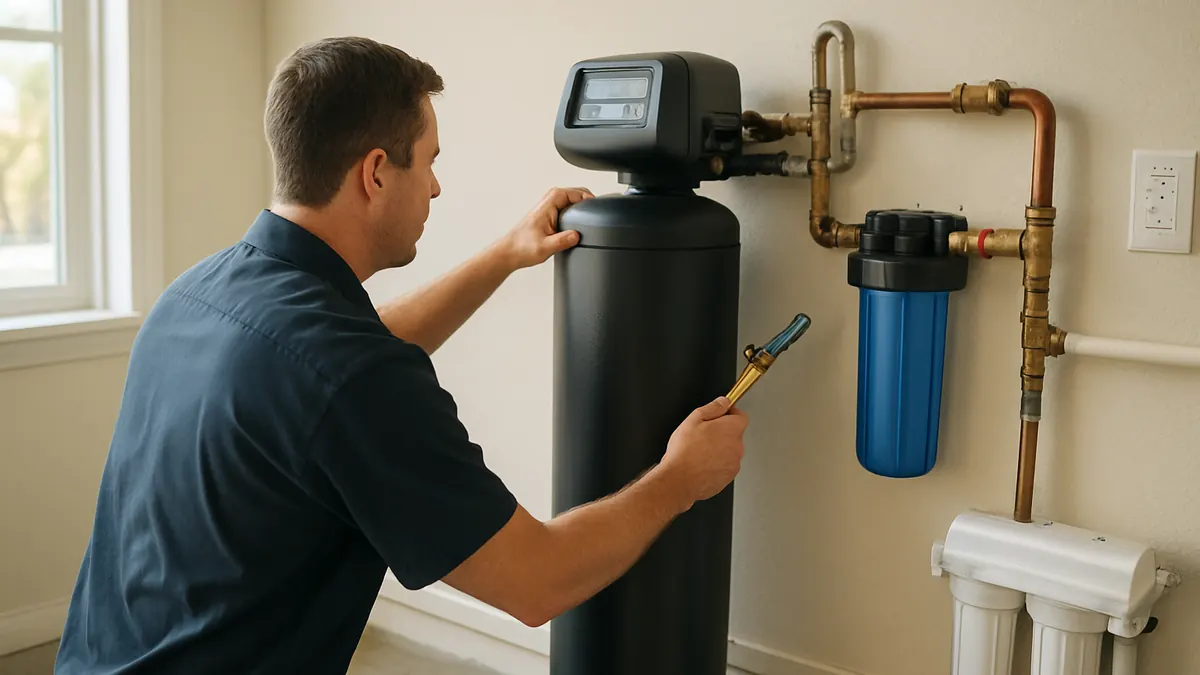
A water softener reduces hardness minerals through ion exchange. In plain English, the system trades calcium and magnesium for ions held by softening resin. This can limit scale, improve soap performance, and help protect fixtures and equipment.
A whole-house filter treats water as it enters the home. Sediment filters capture particles. Activated carbon can reduce certain tastes, odors, and chemicals. Other media target specific substances.
A standard softener does not remove every unwanted substance, and a general filter does not necessarily reduce hardness.
Match the Symptom to the Most Likely Treatment Need
Chalky Deposits and Cloudy Glassware
Scale on faucets, showerheads, glass, and heating elements commonly points toward hardness. The deposits return because dissolved minerals remain in the water.
Soap Residue and Dull Laundry
When soap reacts with hardness minerals, homeowners may use more detergent and still notice stiff towels or film on tubs and sinks. Softening may be appropriate when testing confirms hardness.
Taste or Odor at Every Fixture
A consistent taste or odor may suggest filtration, but the correct media depends on the cause. A sediment filter will not necessarily correct an odor, and carbon is not designed for every concern.
Particles or Discoloration
Visible particles may come from incoming water, plumbing components, a water heater, or another source. Inspection should identify where the material appears before whole-house equipment is selected.
A Problem at Only One Faucet
A local aerator, faucet supply, drain, refrigerator filter, or nearby component may be responsible. Whole-house treatment may be unnecessary.
Safe Checks the Homeowner Can Perform
- Compare water from several cold-water faucets in clear glasses. Note differences in color, particles, taste, or odor.
- Check showerheads, faucet outlets, and the dishwasher for deposits. White crust may be consistent with mineral scale, although testing is still needed.
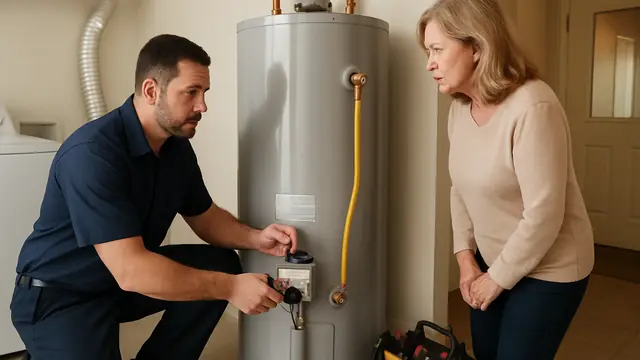
- Inspect the water heater area for sediment discharge, leaking valves, or corrosion. Do not open the tank or operate unfamiliar valves.
- Inspect existing treatment equipment. Record model numbers, cartridge dates, salt level, bypass position, and leaks. Do not turn unfamiliar valves.
- Ask whether the problem began suddenly or developed gradually. A sudden change deserves investigation before equipment is added.
What You Should Not Do
- Do not select a system from a generic hardness map or a neighbor's equipment list. Nearby homes can have different plumbing, usage, maintenance history, or water sources.
- Do not assume a cartridge that turns brown is removing a dangerous contaminant. Color shows collected material, but only appropriate testing identifies it.
- Do not connect a softener drain incorrectly, eliminate the air gap, or create a cross-connection. Drainage must be installed safely.
- Do not set a softener to an arbitrary high hardness level. Incorrect programming can waste salt and water or provide inconsistent treatment.
- Do not stack filters without checking flow capacity. Excessive restriction can cause poor pressure when several fixtures operate together.
When Water Symptoms Need Prompt Attention
Gradual scale normally allows time for testing. A sudden color change, chemical or sewage-like odor, oily appearance, or suspected contamination needs prompt evaluation.
Follow any official water-use notice that applies to your supply. Do not rely on household equipment unless the system is specifically designed and maintained for the concern.
Call promptly if treatment equipment is leaking, a softener will not stop regenerating, the drain is overflowing, or pressure drops sharply after a filter change. Water around electrical controls requires extra caution.
How a Licensed Plumber Determines the Correct Solution
The plumber asks where symptoms occur, when they began, whether hot and cold water differ, and what demand the system must serve.
The inspection includes pressure, flow, pipe condition, the water heater, fixture aerators, existing filters, softener settings, bypass valves, and drainage. This helps separate an equipment need from maintenance or a plumbing problem.
Testing should measure the conditions relevant to the complaint. Hardness results guide softener sizing and settings. Other tests may be recommended for sediment, iron, pH, taste, odor, or additional concerns.
The plumber then calculates service flow. Capacity, regeneration frequency, filter size, available space, drain location, and electrical access all matter.
Solutions Beginning With the Simplest Reasonable Option
Service a Local Fixture or Existing Filter
Replacing an overdue refrigerator cartridge, cleaning an aerator, or correcting a local plumbing issue may solve an isolated complaint.
Maintain or Reprogram Existing Equipment
A softener may need corrected settings, salt-bridge removal, cleaning, or repair. A filter may need a new cartridge or media service.
Add Point-of-Use Filtration
When the concern is limited to drinking and cooking water, a selected point-of-use system may be more practical than treating every gallon entering the home.
Install Whole-House Filtration
When testing confirms a concern that should be treated throughout the home, a correctly sized whole-house filter may be recommended. Filter media must match the objective.
Install a Water Softener
When hardness is the primary issue, softening may reduce scale and improve cleaning performance. System size and programming should reflect test results and household demand.
Use a Combined Treatment Plan
When the water contains hardness and a separate filtration concern, treatment may use more than one stage. The order of sediment filtration, carbon or specialty media, and softening should be deliberately designed.
What Affects the Cost
Cost is influenced by testing, treatment type, capacity, flow requirements, media, installation space, plumbing changes, drainage, electrical access, and existing equipment.
Maintenance costs include salt, cartridges, replacement media, service, and regeneration water. Compare total ownership and expected performance, not just the number of tanks.
Prevention and Maintenance
- Keep a written record of water-test results and settings. Label bypass valves and leave access around tanks and filter housings.
- Check salt according to manufacturer instructions and watch for a hardened salt bridge. Replace cartridges before they become severely restricted.
- Inspect connections and drain tubing for leaks. Monitor pressure and retest after major plumbing changes or a significant change in water appearance, taste, or odor.
Make the Decision From Testing, Not Guesswork
The choice between a water softener versus whole house filtration in Fort Walton Beach, FL should begin with the symptom and end with a system matched to verified conditions. Scale, spotting, and poor soap performance often point toward hardness. Taste, odor, sediment, or selected substances may require filtration. An isolated fixture problem may need neither.
A licensed evaluation can identify the cause, check whether existing equipment works, and explain the least invasive effective option. The goal is not to install the most equipment. It is to provide the treatment the home needs while preserving usable pressure and manageable maintenance.
About this guide: This resource provides general homeowner education, not a remote diagnosis. Actual conditions, code requirements, equipment, and safe repair options must be evaluated at the property.