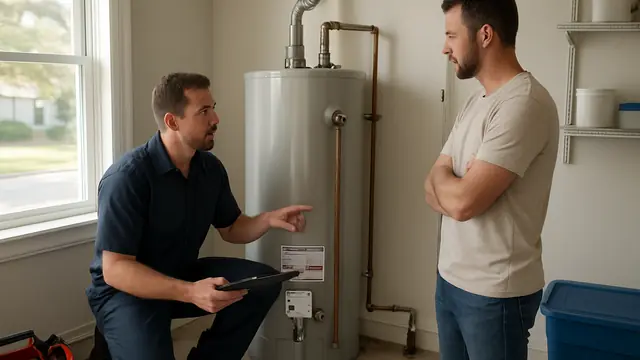
Stop and call for qualified help when plumbing water is near electrical equipment, sewage is entering occupied space, gas or burning odors are present, or a repair would require opening pressurized piping.
You may discover the leak while moving laundry, checking the garage, or opening a utility closet. The water heater may be sitting in a shallow puddle, the drain pan may be wet, or water may be running down a nearby pipe.
If your water heater is leaking in Freeport, take the situation seriously even if the flow is slow. Stop using hot water and keep the wet area clear. If the cold-water shutoff valve can be reached without stepping through water, close it. Do not touch electrical wiring, access panels, or breakers from a wet surface. If the heater uses gas and you smell gas, leave the building and contact the gas utility or emergency services.
The key question is whether water is escaping from a serviceable component, another plumbing source, or the internal tank.
Why Is My Water Heater Leaking in Freeport?
The most common causes include loose connections, leaking valves, excessive pressure, condensation, and internal corrosion. The appearance of the puddle alone cannot confirm which one is responsible.
Water Leaking From the Top
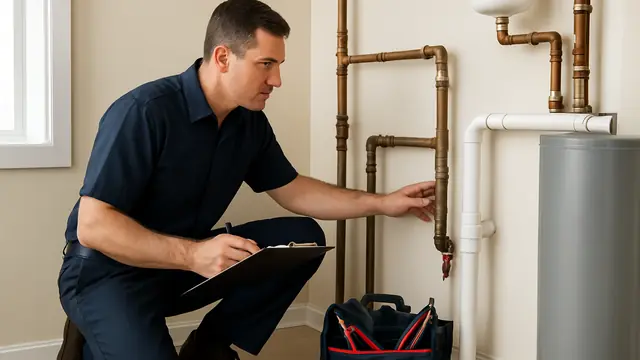
Hot- and cold-water pipes connect at the top of most tank-style heaters. A connector, threaded nipple, union, or shutoff valve may begin leaking as a seal wears or a metal component corrodes.
A top leak can travel down the jacket and collect in the pan, making it appear that the tank bottom failed.
Water From the Relief-Valve Discharge Pipe
The temperature and pressure relief valve, or T&P valve, is designed to release water if the tank becomes too hot or pressurized.
Dripping may result from a worn valve, high incoming pressure, a thermostat problem, or thermal expansion. Thermal expansion occurs when heated water increases in volume and the plumbing system cannot accommodate it.
Drain Valve Drips
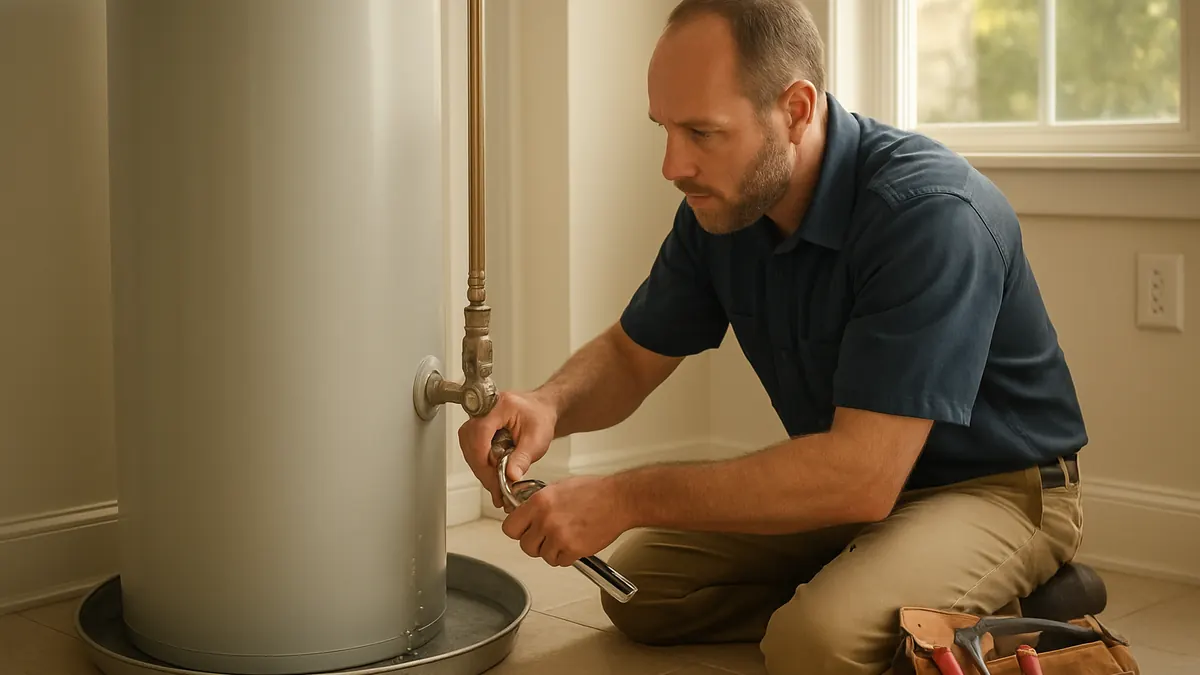
The drain valve is installed near the bottom of the tank for flushing and service. It may leak around the handle, outlet, or threaded tank connection.
Sediment can prevent sealing, while an older valve may crack or deteriorate.
Condensation and Misidentified Leaks
Condensation can form on cold piping or certain heater components. A nearby pipe, appliance hose, condensate drain, or water-treatment connection may also direct water toward the heater.
A Leaking Inner Tank
A steel storage tank is protected by an internal lining and a sacrificial anode rod, but those protections eventually deteriorate. Water appearing beneath the outer jacket or from a tank seam, especially with rust staining, often indicates internal tank failure. The steel vessel cannot usually be repaired reliably once it has perforated.
Safe Checks You Can Make
Use a flashlight and inspect the heater without removing covers.
Check the top fittings, the cold-water shutoff, the visible end of the relief discharge pipe, the drain valve, and the pan. Look for active droplets, mineral buildup, rust streaks, wet insulation, or water tracks.
Dry the outside of the heater and nearby floor if it is safe. Then watch for the first place moisture returns. A dry tissue wrapped loosely around a fitting can reveal a very slow seep.
Note whether the leak is constant or appears during reheating, along with changes in temperature, capacity, noise, or water color.
What Homeowners Should Not Try
- Do not block the relief discharge pipe. The valve is part of the heater's safety system and must remain able to open.
- Do not loosen a fitting or valve while the tank is pressurized. Hot water can escape quickly and cause burns.
- Do not open electric access panels or handle wiring in a wet area. Do not repeatedly reset a tripped breaker when the heater is leaking.
- Do not adjust gas controls, disconnect venting, or attempt to repair a gas line without the required qualifications.
- Do not patch a corroded tank with tape, sealant, or epoxy. A surface patch does not restore the strength of the inner tank.
Urgent Warning Signs
Call for urgent service when the leak is increasing, water cannot be stopped, or building materials are becoming wet.
Repeated release from the T&P pipe, steam, unusually hot tap water, or a swollen tank can indicate unsafe temperature or pressure.
Electrical arcing, sizzling, burning odors, or water near wiring require immediate caution. Keep away from the area and have power disconnected only from a safe, dry location by someone qualified to do so.
If you smell gas, leave the property. Do not operate switches or use a phone inside the building.
A leaking heater located where water can enter walls, ceilings, cabinets, or occupied rooms should also be addressed promptly.
How a Licensed Plumber Finds the Source
- A plumber starts by drying the area and tracing new moisture upward. Each visible connection and valve is examined.
- The plumber may measure static water pressure and pressure while the heater operates. The pressure regulator and expansion tank are inspected when present.
- The relief valve, pressure, and temperature are evaluated together. After the energy source is made safe, electric elements or gas controls and venting may also be inspected.
The tank jacket, seams, and pan are checked for signs of internal corrosion. The plumber then explains whether the problem can be corrected with a component repair or whether the tank has failed.
Repair Options Beginning With the Least Invasive
A loose threaded joint may need proper tightening or resealing. A worn supply connector, union, or shutoff valve can often be replaced.
A leaking drain valve may be serviced if the tank connection remains solid. A failed heating-element gasket on an electric heater may be replaceable.
A defective T&P valve can be replaced after the reason for discharge is identified. High pressure or failed expansion control may require service to the regulator or expansion tank.
If the inner tank leaks, replacement is the dependable solution. The choices may include a similar storage heater, a higher-efficiency tank, a heat-pump model where appropriate, or a properly sized tankless system. Selection should reflect household demand, available utilities, space, and maintenance needs.
Typical Factors Affecting Cost
The source and accessibility of the leak are major cost factors. A visible connector replacement usually requires less work than removing and replacing a tank.
Heater capacity, fuel type, venting, electrical service, gas-line requirements, drain-pan condition, shutoff accessibility, pressure-control components, and piping modifications can affect the final scope.
If water has damaged walls, flooring, cabinetry, or framing, repairing those materials is separate from fixing the heater.
Prevention and Maintenance Guidance
Inspect around the heater regularly. Early mineral buildup, rust, or dampness can reveal a problem before a larger leak develops.
Keep stored items away from the pan and shutoff valve. Have water pressure checked when plumbing components fail repeatedly or the relief valve drips.
Ask a licensed plumber whether flushing, anode-rod evaluation, or expansion-tank service is appropriate. The correct maintenance schedule depends on the type, age, and condition of the heater.
A water alarm or automatic shutoff system may provide additional protection when the property is unattended.
Do Not Wait for a Small Leak to Become a Large One
If you are wondering, "Why is my water heater leaking in Freeport?" have the source identified before deciding between repair and replacement. Many fitting and valve leaks can be corrected without replacing the entire heater. A corroded inner tank cannot be restored with an exterior patch. Prompt diagnosis gives you a clearer decision and helps prevent avoidable property damage.
About this guide: This resource provides general homeowner education, not a remote diagnosis. Actual conditions, code requirements, equipment, and safe repair options must be evaluated at the property.