Stop and call for qualified help when plumbing water is near electrical equipment, sewage is entering occupied space, gas or burning odors are present, or a repair would require opening pressurized piping.
You walk past the hallway bathroom and hear the tank filling even though no one has flushed. Later, the sound stops, only to return again. Another clue is a handle that must be held down or jiggled before the toilet becomes quiet. In a Freeport home, this may seem minor, but the toilet is telling you that water is not being controlled correctly inside the tank.
Remove the tank lid carefully and watch one flush cycle. If the water keeps rising, gently turn the shutoff valve clockwise. Do not force a valve that is difficult to move. A running toilet is usually caused by a worn seal, poor adjustment, or failing fill component. The fixture often can be repaired without replacement, but the cause should be identified before parts are changed.
The Two Basic Types of Running-Toilet Problems
- A toilet can run because water is leaving the tank when it should not, or because water keeps entering after the tank should be full.
- When water leaks into the bowl, the tank level drops and the fill valve turns on again. This creates intermittent refilling, sometimes called phantom or ghost flushing.
- When incoming water does not shut off, you may hear a continuous hiss or see water flowing into the overflow tube. This vertical pipe directs excess water into the bowl.
Why Does My Toilet Keep Running in Freeport?
The flapper no longer seals
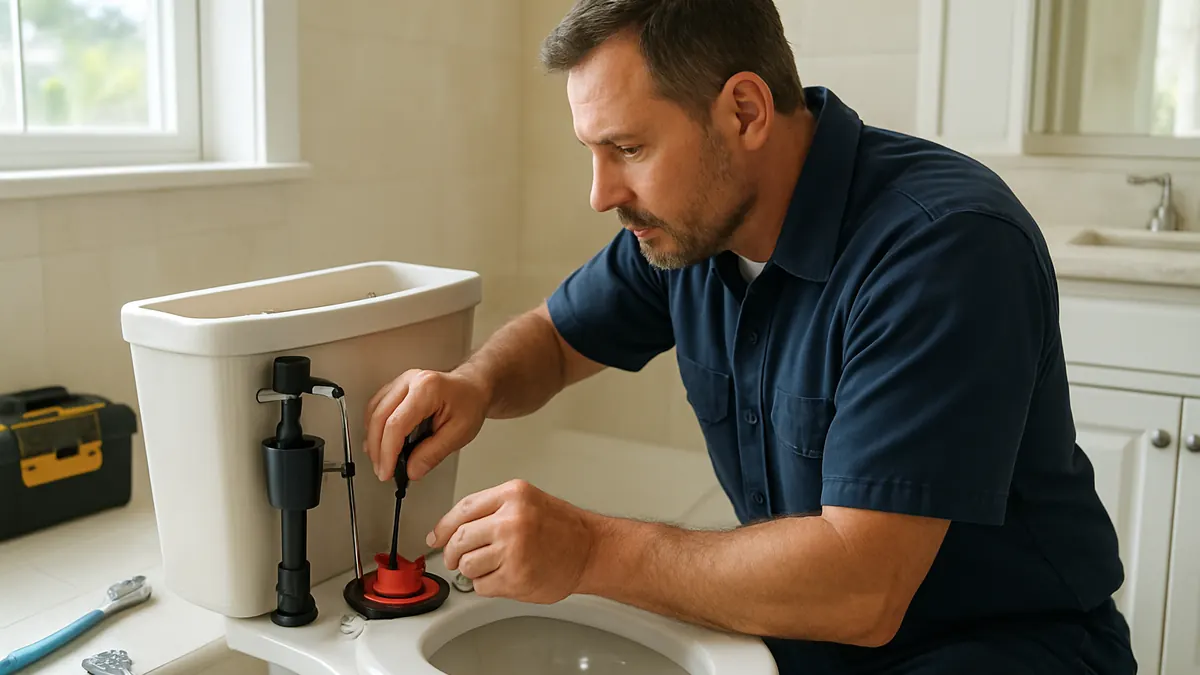
Many toilets use a rubber flapper over the flush opening. It lifts during a flush and should settle flat afterward. A warped, hardened, dirty, or incorrectly sized flapper can leave a gap.
Even a narrow opening can allow a leak that is difficult to see.
The canister seal is worn
Some toilets use a tower or canister instead of a flapper. A circular rubber seal at the bottom performs the same function. It may deteriorate, stretch, or slip out of position.
The handle or chain is binding
A short chain can hold the seal open. A long chain can become trapped underneath it. The handle may also stick because it is loose, bent, or rubbing against the tank.
The float is not controlling the water level
The float rises as the tank fills and tells the fill valve to stop. If it is set too high, caught against another part, or damaged, water may continue into the overflow tube.
The fill valve is worn
A fill valve contains moving components that can wear out. It may hiss, chatter, refill slowly, or fail to close completely. Debris can create similar symptoms.
The overflow tube or flush valve has failed
A crack in the overflow tube or damage around the flush-valve seat can cause water loss that is not corrected by a basic flapper replacement.
A Step-by-Step Safe Inspection
Place the tank lid on a towel. Flush and watch the handle, chain, seal, float, and fill valve.
The handle should return by itself. The chain should have slight slack after the seal closes. The flapper or canister should sit evenly, and the float should move freely.
Examine the water level. It should stop near the marked fill line and below the overflow tube. If water continues flowing into the tube, the float setting or fill valve is likely involved.
For a dye test, add food coloring to the filled tank and wait fifteen to twenty minutes without flushing. Colored water in the bowl confirms leakage past the tank seal.
Inspect the floor, shutoff valve, supply line, tank bolts, and toilet base for moisture. A running sound and an external leak can occur together.
Repairs You Should Not Attempt
- Do not use chemical drain cleaner. Running is generally unrelated to a clog, and chemicals will not repair tank hardware.
- Do not force the shutoff valve with pliers. If it breaks, water may continue flowing until the home's main supply is shut off.
- Do not overtighten bolts between the tank and bowl. Uneven pressure can crack porcelain. Plastic parts can also split when tightened excessively.
- Avoid cutting chains, bending parts sharply, or installing a replacement simply because it appears close in size. Components must match and move correctly.
When the Situation Is Urgent
Call promptly when the water approaches the tank rim, the fill valve sprays, or the shutoff valve cannot isolate the toilet.
Water around the base, behind the bowl, or beneath the tank is also urgent. The source could be the supply connection, shutoff valve, tank bolts, tank-to-bowl gasket, cracked porcelain, or seal beneath the toilet.
Stop using a toilet that rocks, has a visible crack, repeatedly overflows, or causes wastewater to appear in another fixture.
How a Licensed Plumber Diagnoses the Cause
A plumber observes the full operating cycle to determine whether the tank is overfilling or leaking into the bowl.
The technician checks the handle, chain, flapper or canister, sealing surface, fill valve, float, refill tube, overflow tube, flush valve, tank hardware, shutoff valve, and supply line.
A dye test can confirm a slow leak. The toilet model may be identified to locate the correct seal or assembly. The plumber also checks whether multiple components are worn.
Repair Choices From Least Invasive to Most Extensive
- A minor adjustment to the chain, handle, float, or refill tube may be enough. A dirty sealing surface may be cleaned when the seal remains usable.
- The next option is replacing the failed component, such as a flapper, canister seal, fill valve, handle, supply line, or shutoff valve.
- When several internal parts are unreliable, rebuilding the tank may provide better value than replacing parts one at a time.
- A new toilet is generally considered when the fixture is cracked, unstable, repeatedly failing, difficult to obtain parts for, or no longer practical to repair.
What Influences the Cost?
Cost depends on the toilet design, failed part, access, and availability of compatible components. A basic flapper repair differs from work involving a specialty canister or flush-valve assembly.
The condition of the shutoff valve and supply connection also matters. Corroded bolts, broken hardware, difficult tank removal, or the need to reset the toilet can add labor.
Damage to flooring or nearby materials is separate from correcting the tank mechanism.
Preventing a Repeat Problem
- Stay in the bathroom long enough to hear the tank stop after flushing. Periodic refilling, hissing, or trickling deserves attention even when the toilet still flushes.
- Avoid harsh in-tank tablets unless approved by the manufacturer. They can deteriorate seals and plastic parts.
- Do not continue jiggling a sticking handle for weeks. Correcting the handle or chain early can prevent uneven wear.
- Inspect less-used bathrooms regularly. Look for moisture, operate the toilet, and confirm the tank fills once and stays quiet.
Take the Next Appropriate Step
If you are asking, "Why does my toilet keep running in Freeport?" determine whether water is spilling into the overflow tube or leaking quietly into the bowl. That distinction points toward the fill system or tank seal.
Safe observation can provide useful information, but persistent running, rising water, a failed shutoff valve, or moisture on the floor requires professional attention. A targeted repair can restore reliable operation without replacing more than necessary.
About this guide: This resource provides general homeowner education, not a remote diagnosis. Actual conditions, code requirements, equipment, and safe repair options must be evaluated at the property.