Stop and call for qualified help when plumbing water is near electrical equipment, sewage is entering occupied space, gas or burning odors are present, or a repair would require opening pressurized piping.
A toilet that never seems to finish filling can be easy to dismiss at first. You may hear a faint hiss while getting ready in the morning, notice the toilet refilling between uses, or realize the handle must be lifted slightly before the sound stops. In a Lynn Haven home, those symptoms usually mean water is escaping from the tank into the bowl or the fill valve is continuing to let water in after the tank should be full.
The safest immediate response is to remove the tank lid carefully and observe the water level and moving parts. If water is leaking onto the floor, overflowing, or flowing continuously, turn the toilet's shutoff valve clockwise. Apply only gentle pressure. A stuck valve should be left for a plumber rather than forced.
Why Does My Toilet Keep Running in Lynn Haven?
Every flush begins when the handle lifts a flapper or canister seal. Water leaves the tank and enters the bowl. As the tank empties, the float drops and opens the fill valve. The valve should close when the tank reaches the correct level.
If the seal leaks, the tank slowly loses water and refills again. If the float is set too high or the fill valve does not close, water can continue into the overflow tube.
Recognizing the Most Common Causes
A deteriorated flush seal
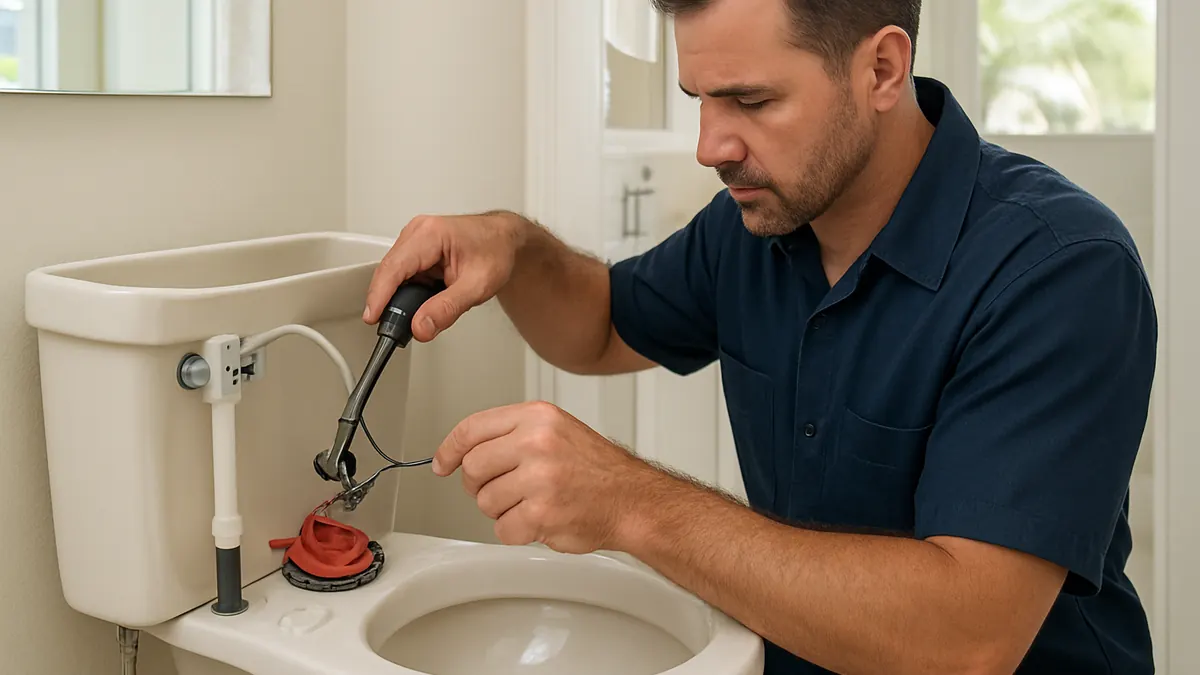
A flapper or canister gasket can harden, warp, swell, crack, or collect residue. The seal may look acceptable from above but still allow a thin stream of water to pass into the bowl.
A chain that interferes with closing
A chain with no slack can hold the flapper open. A chain with too much slack may become trapped beneath the seal or wrapped around another component.
A float that cannot move correctly
The float may be adjusted too high or may rub against the tank wall. If it cannot rise freely, the fill valve may remain open.
A fill valve that no longer shuts off
A worn fill valve may produce a steady hiss, refill very slowly, or continue flowing after the float reaches the top. Internal seals can fail even when the outside of the valve looks normal.
A damaged flush-valve seat or overflow tube
If the surface beneath the flapper is rough, cracked, or loose, replacing only the rubber seal may not stop the leak. A crack in the overflow tube can produce a similar symptom.
A handle that binds
A loose nut, bent lever, or sticking handle can prevent the flush mechanism from returning to its resting position.
Safe Checks to Perform at Home
Take off the tank lid with both hands and place it on a protected surface. Watch the toilet through one flush and refill.
Look at how the seal lifts and closes. Check whether the chain catches, whether the handle returns smoothly, and whether the float moves without touching another part. The final water level should remain below the top of the overflow tube.
Perform a dye test for a suspected silent leak. Put several drops of food coloring in the tank and wait 15 to 20 minutes without flushing. If color appears in the bowl, water is bypassing the flush seal.
If water is continuously entering the tank, lift the float gently. If the flow stops, the float may need adjustment. If it continues, the fill valve is likely failing internally.
Inspect the supply line, shutoff valve, tank bolts, and floor with a dry tissue. A damp connection or wet floor indicates an external leak that should not be ignored.
What Not to Attempt
Do not force the shutoff valve if it resists movement. The valve or attached piping may break.
Do not overtighten tank bolts. Tightening one side more than the other can stress and crack the porcelain.
Do not pour chemical drain cleaner into the toilet. A running toilet usually involves the tank, while drain cleaner is intended for certain blockages and can create additional hazards.
Do not glue, tape, or weight the flapper. A flush seal must move freely and close against a clean, compatible surface.
Urgent Warning Signs
Shut off the water immediately if the tank is overflowing, the supply line is spraying, or water is spreading across the floor.
A visible crack in the tank or bowl requires prompt action. Toilet porcelain can fail suddenly once cracked.
Call for service quickly when the shutoff valve cannot control the water, the toilet rocks, the bowl rises abnormally, or the fixture clogs repeatedly. Sewage odor, gurgling, or slow drainage may point to a separate drain problem rather than a simple tank repair.
How a Licensed Plumber Diagnoses the Problem
A plumber checks the flush cycle from start to finish. The technician observes the handle and trip lever, chain movement, flapper or canister seal, float position, fill-valve shutoff, refill-tube placement, and overflow level.
A dye test can verify a hidden tank-to-bowl leak. The plumber may clean and inspect the flush-valve seat, test the shutoff valve, and check the supply line and tank hardware.
If the toilet moves, flushes weakly, or clogs, the diagnosis may expand to the wax seal, flange, trapway, and drain connection. This prevents a tank symptom from distracting from a second problem.
Repair Options in the Correct Order
- A minor adjustment may solve the problem. The plumber may correct chain tension, align the handle, lower the float, or reposition the refill tube.
- If the flush seal is worn, replacing the flapper or canister gasket is usually the next step. A faulty fill valve can also be replaced independently.
- When several components show wear, a complete tank rebuild may be more reliable than replacing individual parts over time.
A damaged flush-valve assembly may require removing the tank. Toilet replacement is considered when the porcelain is cracked, the fixture is unstable, compatible parts are unavailable, or repeated repairs have not restored dependable operation.
Typical Factors Affecting Cost
The cost depends on the exact failure and the work required to reach it. A handle adjustment takes less labor and material than tank removal or fixture replacement.
Additional cost factors include corroded bolts, an inaccessible or failed shutoff valve, a deteriorated supply line, leakage at the base, and any drainage problem discovered during diagnosis.
Preventing Future Running Problems
- Listen after flushing and investigate changes early. Hissing, longer fill times, repeated refills, weak handle movement, or water entering the overflow tube are useful warnings.
- Inspect the tank periodically and remove debris that interferes with moving parts. Make sure the chain is not tangled and the float can travel freely.
- Avoid in-tank cleaners unless the toilet manufacturer states they are compatible. Some chemical tablets shorten the life of flappers and gaskets.
- Keep the floor around the toilet dry, replace damaged supply lines, and ensure the shutoff valve is visible and reachable.
Make a Decision Based on the Actual Cause
If you are asking, "Why does my toilet keep running in Lynn Haven?" the cause is likely a worn flush seal, faulty fill valve, incorrect float setting, chain problem, sticking handle, or damaged flush-valve component.
You can safely observe the tank and perform a dye test. However, floor leakage, uncontrolled water, cracked porcelain, a failed shutoff valve, or recurring drainage symptoms should be evaluated promptly.
About this guide: This resource provides general homeowner education, not a remote diagnosis. Actual conditions, code requirements, equipment, and safe repair options must be evaluated at the property.