Stop and call for qualified help when plumbing water is near electrical equipment, sewage is entering occupied space, gas or burning odors are present, or a repair would require opening pressurized piping.
The laundry feels stiff, soap leaves a film in the tub, and the coffee tastes different even though the machine is clean. At another faucet, you may see tiny particles in the aerator or notice reduced flow. These symptoms can make a Lynn Haven homeowner wonder whether to install a water softener, a whole-house filter, or both.
Start by documenting the problem instead of guessing at the equipment. Determine whether it affects hot water, cold water, one room, or the entire home. A sudden strong odor, unusual color, or oily appearance should be treated cautiously, and the water should not be used for drinking or cooking until guidance is obtained. For ordinary spotting, taste, or residue, professional testing can identify the right next step.
The Direct Answer: Softening Treats Hardness; Filtration Treats Other Concerns
A water softener reduces dissolved calcium and magnesium. These hardness minerals can leave white scale, interfere with soap, spot dishes, and build up inside water heaters, valves, and appliances.
Traditional softeners use ion exchange. Resin captures hardness minerals and is periodically cleaned with brine during regeneration.
Whole-house filtration covers several technologies. Sediment filters trap particles, while activated carbon may reduce certain tastes and odors. Other media target specific verified conditions.
Each system must be chosen for the condition it is designed to address.
Begin With the Pattern of the Problem
Residue on Dishes, Fixtures, and Laundry
Recurring white deposits, soap scum, spotting, and stiff-feeling laundry may indicate hardness. A hardness test can confirm whether softening is reasonable.
Not every white mark is scale. Detergent, rinse-aid settings, and etched glass can look similar, so testing should guide the decision.
Taste or Odor From Every Cold Tap
When the same taste or odor appears at multiple cold-water fixtures, whole-house filtration may be considered. Carbon is commonly used for some taste and odor concerns, but no filter should be selected from a vague description such as "the water seems off."
The technician needs to know whether the odor resembles chlorine, sulfur, metal, sewage, or chemicals because different descriptions require different responses.
Sediment or Specks
Particles caught in several aerators may be entering with the main supply, but debris can also come from pipes, a water heater, faucet components, or flexible connectors.
White flakes, black specks, and rust-colored particles have several possible sources. Whole-house equipment will not fix a component shedding material downstream.
Low Pressure After a Filter
If pressure gradually declined after filtration was installed, the cartridge may be clogged. A housing that is too small or media that is too restrictive can also limit flow.
If pressure is low even when treatment equipment is bypassed, the cause may be elsewhere in the plumbing and should be investigated separately.
Safe Checks You Can Perform
- Compare cold-water samples from several fixtures in clean, clear containers. Let them stand and observe color, cloudiness, and settled material.
- Run hot and cold water separately. A problem limited to the hot side may involve the water heater rather than the incoming water.
- Inspect faucet aerators for mineral crust or debris. Clean them only when they can be removed and reinstalled without damage.
- For existing equipment, check power, salt level, error messages, bypass position, and the cartridge date. Never open a pressurized housing or valve.
- Note whether the symptom began after plumbing work, a long vacancy, or a filter change.
What You Should Not Attempt
- Do not install treatment solely from an online water-quality map or a neighbor's recommendation. Two homes can have different plumbing conditions and treatment goals.
- Do not assume a very low micron rating is always better. Finer cartridges capture smaller particles but may clog faster and reduce flow.
- Do not add bleach, acids, descalers, or household cleaners to a treatment tank without an approved procedure.
- Do not create an improvised connection for a softener drain. Regeneration discharge must be routed properly to avoid flooding and backflow concerns.
- Do not partially close bypass valves to change water feel or taste. Treatment valves should be placed in their intended service or bypass position.
Urgent Signs That Need Professional Attention
Call promptly if water changes suddenly throughout the home, develops an oily sheen, or has an intense sewage, solvent, petroleum, or chemical odor.
A leaking tank, overflowing brine tank, repeated regeneration, constant drain flow, or abrupt pressure loss also deserves quick service. Turn off water to leaking equipment only when you know the correct shutoff and can do so safely.
Follow any official boil-water or do-not-use notice. A residential softener or filter does not override those instructions.
How a Licensed Plumber Determines the Correct Treatment
- Diagnosis starts with the symptom history and fixture pattern. The plumber compares hot and cold water and inspects relevant plumbing.
- Testing may include hardness, pH, total dissolved solids, chlorine-related measurements, and sediment or staining indicators. Some concerns require a certified laboratory.
- System sizing also considers pipe size, pressure, flow, fixture use, and peak demand. Equipment must treat water without creating poor pressure.
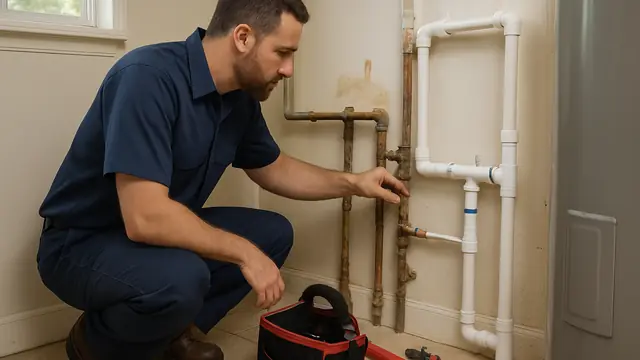
- The plumber checks the main line, drainage, electrical supply, bypass, service access, programming, media, seals, and cartridges.
Reasonable Options From the Least Invasive Upward
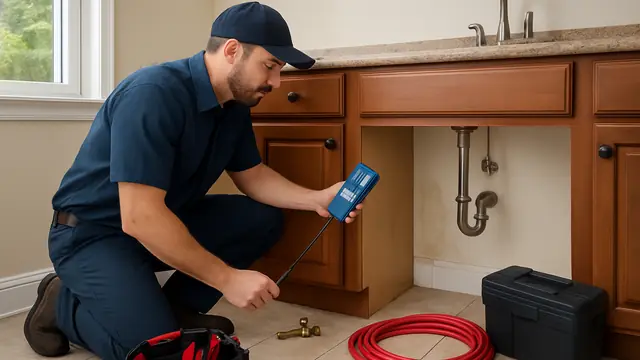
- A simple fixture repair may solve a localized complaint. Aerators, supply connectors, washers, and faucet parts can release debris or restrict flow.
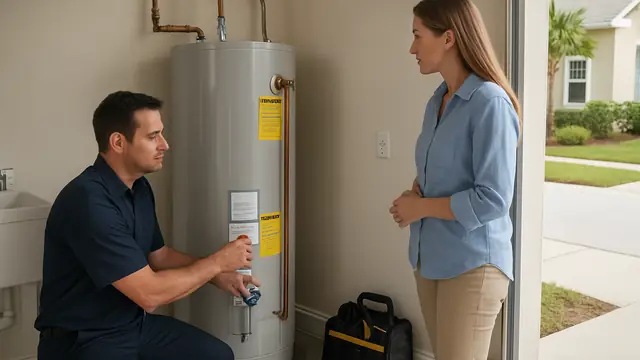
- If the concern appears only in hot water, water-heater inspection and service may come before any main-line treatment.
- For drinking and cooking water at one sink, an under-sink carbon filter or reverse-osmosis system may satisfy the goal with less equipment and maintenance.
- For verified particles entering the home, a sediment filter may be installed. The housing and cartridge must be sized for the expected flow and particle load.
- For a taste or odor concern throughout the home, a properly selected carbon system may be appropriate. Cartridge and backwashing designs offer different capacities.
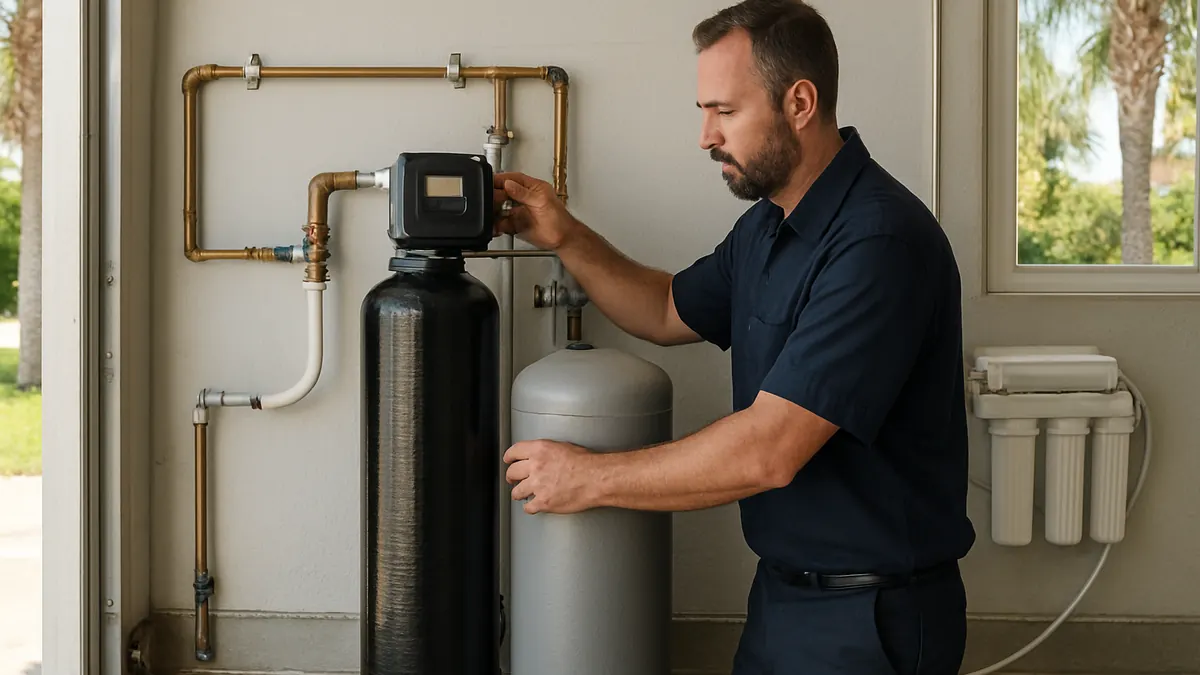
For confirmed hardness, a traditional softener can reduce scale and improve soap performance. When testing identifies both hardness and filtration needs, systems may be installed in sequence.
An existing unit may need only cleaning, adjustment, valve repair, seals, a new cartridge, or replacement media. Diagnosis should come before complete replacement.
Typical Factors Affecting Cost
Cost depends on test results, system capacity, media, pipe size, flow, access, drainage, and electrical needs.
Old shutoffs, plumbing changes, a new bypass, or equipment removal can increase the scope.
Ownership cost includes salt, cartridges, replacement media, regeneration water, sanitizing, and scheduled service. Maintenance requirements should be understood before selecting a system.
Prevention and Maintenance Guidance
- Keep the original test results and record equipment settings, cartridge changes, and service dates.
- Check softener salt regularly and break up salt bridging only according to manufacturer instructions. Replace filter cartridges before they create major pressure loss.
- Inspect tanks, fittings, bypass valves, and drain tubing for leakage. Retest after major plumbing work or when water taste, odor, scale, staining, or flow changes.
Choosing Water Softener Versus Whole-House Filtration in Lynn Haven
The best decision is based on the actual symptom. Use softening for confirmed hardness. Use filtration for a verified taste, odor, or particle concern. Repair the plumbing when the source is a fixture, connector, pipe, or water heater. Testing first protects both water quality and your investment.
About this guide: This resource provides general homeowner education, not a remote diagnosis. Actual conditions, code requirements, equipment, and safe repair options must be evaluated at the property.