Stop and call for qualified help when plumbing water is near electrical equipment, sewage is entering occupied space, gas or burning odors are present, or a repair would require opening pressurized piping.
When several drains back up in an Ocean City home, the cause is often located beyond a single sink or toilet. Toilets may bubble, tubs may fill with dirty water, sinks may drain slowly, or the washing machine may cause a shower to overflow.
These symptoms indicate that wastewater cannot move normally through a shared branch, main sewer, or septic connection. Water follows the path of least resistance and can return through the lowest fixture.
Multiple-drain backups should be treated as a sanitation problem. Sewage can damage the building and expose occupants to harmful organisms.
A licensed plumber can restore flow and determine whether the line contains grease, roots, wipes, scale, structural damage, or a septic-system problem.
The Most Common Possible Causes
- A main sewer obstruction can form from waste, paper, wipes, grease, and debris.
- Grease can coat the pipe and catch food particles.
- Wipes and hygiene products can lodge at joints or existing restrictions.
- Roots may enter through cracks and separated connections.
- Older cast iron may narrow internally because of corrosion and scale.
- Pipes may shift, crack, sag, or collapse. A sewer belly can retain solids.
- Construction debris and foreign objects may obstruct the drainage path.
- Heavy household or rental use can expose a line that was already partially restricted.
- Septic issues may include a full tank, clogged filter, failed pump, blocked pipe, or drain-field problem.
Safe Checks the Homeowner Can Perform
- Stop using all fixtures.
- Identify whether one room or the whole property is affected.
- Observe lower drains without adding water.
- Listen for gurgling or bubbling.
- Note whether laundry or toilet use triggers the backup.
- Look outside for sewage near the cleanout or septic area.
- Keep people and animals away from contaminated water.
- Notify a building manager when shared drainage may be involved.
What the Homeowner Should Not Attempt
- Do not continue flushing.
- Avoid chemical drain cleaners and never mix chemicals.
- Do not use a small hand snake to reach a main-line blockage.
- Do not open a cleanout that may contain pressurized sewage.
- Avoid rented sewer machines and improvised hydro jetting.
- Do not climb onto the roof to inspect vents.
- Do not excavate without locating the line and utilities.
- Never enter a septic tank.
Signs That Make the Problem Urgent
Urgent signs include:
- Sewage entering living areas
- Multiple unusable toilets
- Wastewater reaching electricity
- Overflow beneath flooring or into walls
- Strong sewer odors
- Backup affecting neighboring property
- Sewage surfacing outside
- Septic alarm activation
- Repeat backups after recent cleaning
- Vulnerable occupants or active guests
How a Licensed Plumber Diagnoses It
- The plumber reviews the pattern of affected fixtures.
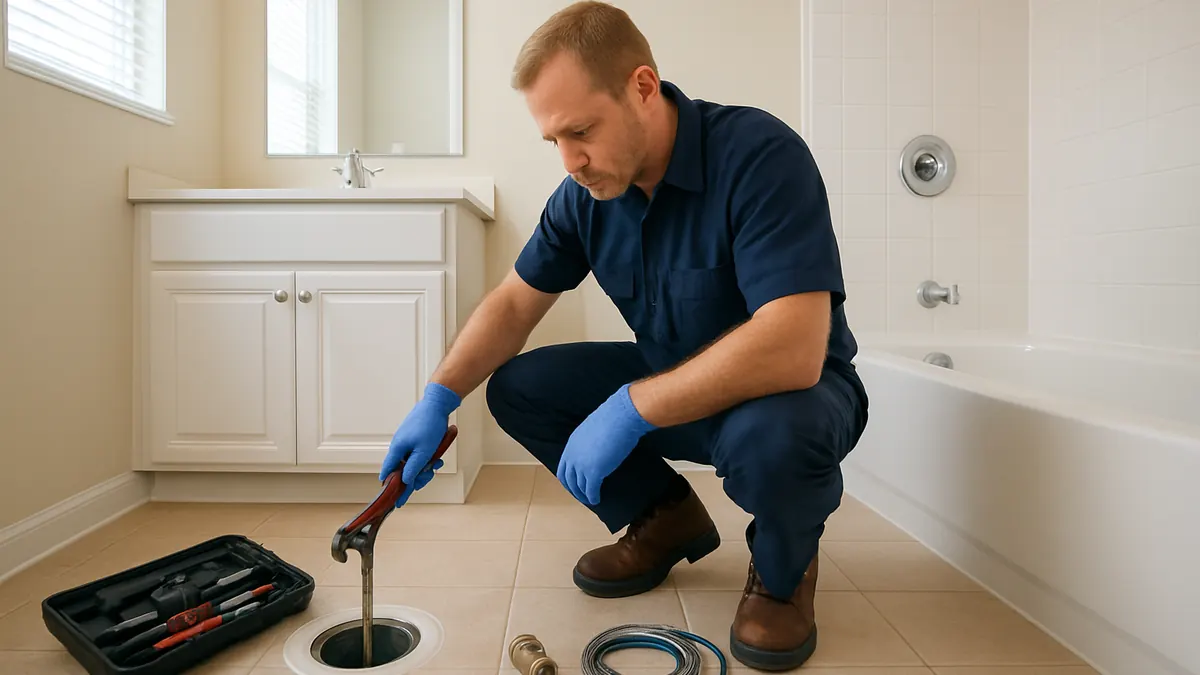
- A sewer cleanout provides access when available. Professional cabling may open the line and identify the approximate obstruction distance.
- A camera inspection can reveal roots, scale, grease, cracks, offsets, bellies, and collapse.
- A locator determines the damaged section's position and depth.
- Branch lines may be tested when the backup affects only part of the building.
- Septic diagnosis may include the tank, filter, pump, and drain field.
Repair Options
- Basic cabling may clear a paper or waste obstruction.
- Root cutting may restore flow, though damaged piping may require repair.
- Hydro jetting may clean grease and sludge from suitable lines.
- Descaling can improve some cast-iron piping.
- Spot repair may correct one failure.
- Trenchless lining or pipe bursting may reduce excavation in appropriate situations.
- Traditional excavation remains necessary for certain collapsed or badly shifted pipes.
- Septic service may involve pumping, cleaning filters, repairing pumps, or clearing connecting lines.
Typical Factors Affecting Cost
Factors include:
- Cleanout availability
- Obstruction location
- Pipe length and depth
- Type of blockage
- Pipe material
- Camera inspection
- Jetting or descaling
- Structural repair
- Surface restoration
- Septic involvement
- Permits
- Emergency timing
- Sanitation cleanup
A targeted cleaning is less costly than repairing a collapsed line beneath concrete or landscaping.
Prevention and Maintenance Guidance
- Keep grease out of drains.
- Flush only toilet paper and human waste.
- Use strainers in sinks, tubs, and showers.
- Do not wash sand, grout, paint, or renovation debris into fixtures.
- Keep cleanouts accessible.
- Investigate recurring backups with a camera.
- Address root entry points when repeated growth is found.
- Maintain septic tanks and filters.
- Provide drainage guidelines to tenants and guests.
- Act on gurgling and slow lower drains before sewage enters the property.
About this guide: This resource provides general homeowner education, not a remote diagnosis. Actual conditions, code requirements, equipment, and safe repair options must be evaluated at the property.