Stop and call for qualified help when plumbing water is near electrical equipment, sewage is entering occupied space, gas or burning odors are present, or a repair would require opening pressurized piping.
A guest in your Ocean City vacation rental notices a brown mark spreading across the ceiling below an upstairs bathroom. The floor above may look dry, and the guest may assume the stain is old. However, moisture can travel along framing and drywall before it becomes visible, so the safest response is to stop using the bathroom above the stain until the source is identified.
If water is actively dripping, move people and belongings away from the area. Do not touch light fixtures, fans, or wiring near moisture. An accessible fixture shutoff may be closed gently if the leaking fixture is known, but a stiff valve should never be forced. A bulging ceiling, active leak, sewage, or water near electrical equipment requires prompt professional attention.
The most common plumbing problems for vacation rentals in Ocean City, FL, include concealed leaks, clogged drains, toilet failures, water-heater problems, and leaking appliance connections. Early action can limit damage and reduce disruption for the guest.
Why Small Plumbing Symptoms Deserve Attention
Vacation-rental plumbing problems do not always begin with a flooded room. A faint ceiling stain, musty cabinet, occasional toilet refill, or shower that drains slowly may be the first evidence.
Common Plumbing Problems in Ocean City Vacation Rentals
Ceiling Stains and Concealed Leaks
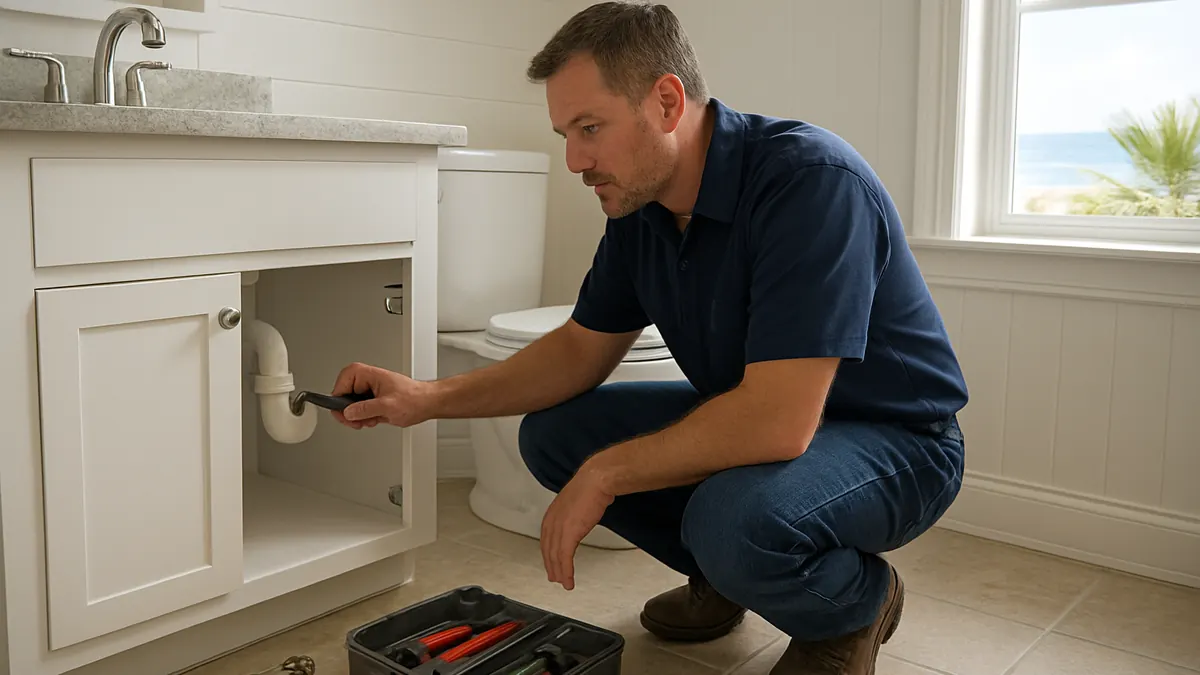
Moisture appearing below a bathroom may come from a toilet seal, tub or shower drain, supply connection, shower valve, enclosure, or concealed pipe. The visible stain may not be directly beneath the source because water can travel before reaching the ceiling.
Shower, Tub, and Sink Drain Clogs
Hair, soap residue, grease, food, and debris gradually restrict drains. A shower may empty normally during a short cleaning check but fill during a longer guest use.
One slow fixture may have a nearby clog. Several slow fixtures, gurgling, or water rising in another drain may indicate a blockage in a shared line.
Toilets That Run, Clog, or Leak
A toilet that runs continuously may have a worn flapper, failing fill valve, caught chain, or incorrect water level. A toilet that refills by itself is often losing water slowly from the tank into the bowl.
Clogs may be caused by excess paper, wipes, hygiene products, or foreign objects. Water around the toilet may come from the supply line, tank hardware, condensation, a crack, or the seal beneath the base.
Faucet and Shower-Valve Problems
A dripping faucet may have a worn cartridge, seal, seat, or internal component. A shower that changes temperature unexpectedly may have a cartridge or mixing problem.
Water outside the shower can come from the enclosure, door, valve, showerhead connection, drain, or piping inside the wall. Repeated caulking without locating the source can delay the correct repair.
Kitchen Sink and Garbage Disposal Failures
Grease, food scraps, coffee grounds, fibrous waste, and small objects can restrict the kitchen drain or jam the disposal. The disposal may hum, trip its reset, leak, or run while water remains in the sink.
Guests should turn the switch off and keep hands and utensils out of the unit. Repeated resetting is not appropriate when the motor smells hot or the unit will not turn.
Water-Heater Performance Problems
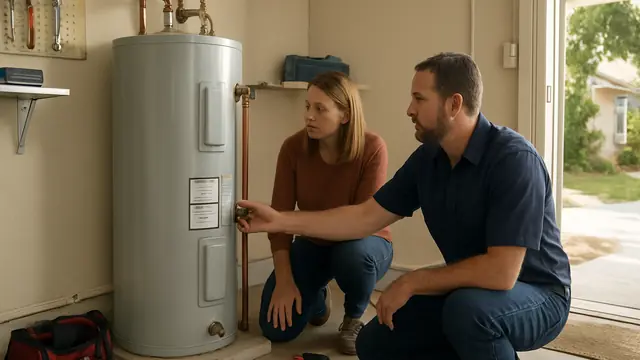
Guests may report no hot water, short hot-water duration, temperature swings, noise, or visible leakage. Possible causes include a breaker, thermostat, heating element, burner, control, valve, sediment, or demand that exceeds normal recovery.
If only one shower is affected, the fixture may be responsible. If no fixture has hot water, the water heater or its energy supply is more likely involved.
Appliance Supply and Drain Leaks
Dishwashers, washing machines, refrigerators, and ice makers can leak at supply hoses, valves, drain connections, or internal components. Water may appear only while the appliance is filling or draining.
A guest should not pull an appliance away from the wall. Movement can worsen a damaged connection, scratch flooring, or expose electrical hazards.
Sewer or Drain Odors
A dry trap can allow sewer gas into a room when a drain has not been used. Persistent odor can also come from buildup, a loose toilet seal, venting trouble, concealed moisture, or a drainage failure.
Safe Checks Before the Plumber Arrives
Ask when the symptom appears and which fixtures were operating. Request photographs of the stain, wet area, fixture, and nearby surfaces.
A dry paper towel can help confirm whether an accessible connection is dripping, but no fitting should be loosened. For a running toilet, lift the tank lid and check for a caught chain, raised flapper, or water entering the overflow tube.
Visible hair may be removed from an accessible stopper. A toilet plunger may be used for a simple isolated clog when no chemical cleaner is present and the bowl is not overflowing.
An accessible valve may be closed gently. Stop if it is stiff, corroded, or begins leaking.
What the Owner or Guest Should Not Attempt
Do not cut into a ceiling or wall without first addressing electrical and structural risks. A wet ceiling can release water and damaged material unexpectedly.
Do not mix drain chemicals or pour them into standing water. Do not ask guests to remove toilets, disconnect appliances, open water-heater panels, or service gas controls.
Signs That Make the Problem Urgent
Active ceiling leakage, a bulging ceiling, uncontrolled water, sewage, or moisture near electrical fixtures requires prompt action. Keep people away from the affected area.
Gas odors, burning smells, repeated breaker trips, or a leaking water-heater tank should never be treated as routine inconvenience.
How a Licensed Plumber Diagnoses the Problem
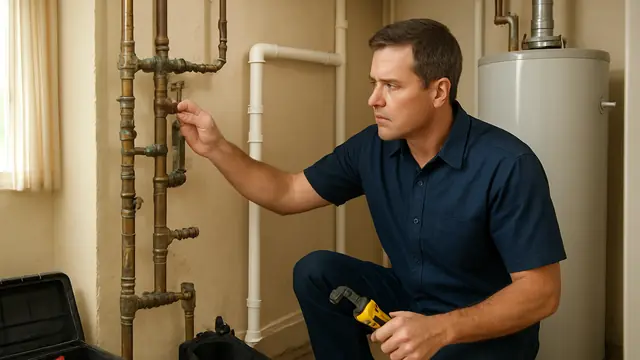
A plumber compares the moisture pattern with the fixtures and piping above it. Controlled testing may isolate the toilet, sink, tub, shower, appliance, or supply system.
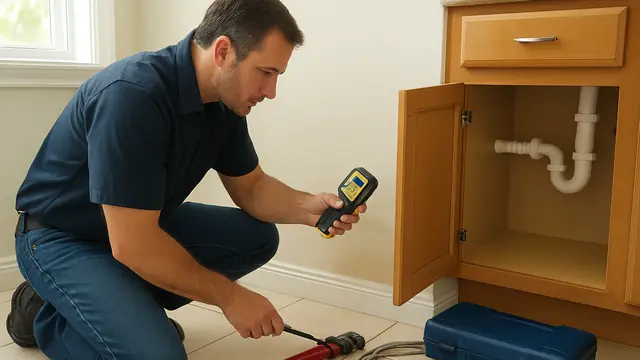
Moisture meters and visual inspection can help identify affected areas. Pressure testing may be used when a supply leak is suspected. Drain testing can show whether leakage occurs only while water is discharged.
For clogs, the plumber may use professional clearing equipment, cleanout access, or camera inspection when the problem is repeated or deeper in the line. Water-heater testing may cover components, controls, valves, temperature, recovery, and tank condition.
Repair Options Beginning With the Least Invasive
A focused repair may involve tightening or replacing an accessible connection, installing a supply line, replacing a toilet flapper or fill valve, resealing a drain, or repairing a faucet cartridge.
A localized clog may be professionally cleared. Repeated blockages may require deeper cleaning or camera inspection. A toilet leak may require a supply repair, tank hardware, base seal, flange repair, or mounting correction.
A shower or tub leak may be corrected at the drain, valve, connection, enclosure, or damaged pipe section after testing identifies the source.
Water-heater repairs may include a thermostat, element, valve, ignition component, or maintenance. Replacement is reasonable when the tank leaks, safety is compromised, or repair is no longer dependable.
Factors That Affect Repair Cost
Cost depends on the source, access, diagnostic time, parts, equipment, and whether finished surfaces must be opened. A visible connection usually requires less work than an intermittent concealed leak.
Prevention and Maintenance Guidance
During every turnover, run each sink, shower, tub, toilet, and appliance connection long enough to reveal slow drainage or leakage. Inspect ceilings below plumbing areas and check cabinets, baseboards, and flooring for stains or swelling.
Confirm that toilets stop refilling and that hot water reaches each fixture normally. Ask cleaners to report musty odors, loose fixtures, unusual sounds, and new discoloration.
Label shutoff valves and document the main water shutoff.
Act Before a Small Stain Becomes a Larger Problem
The most common plumbing problems for vacation rentals in Ocean City, FL, often provide warning signs before major damage occurs. Stop using the suspected fixture, control water only when safe, document the symptoms, and avoid opening wet surfaces or handling electrical equipment. A licensed plumber can isolate the source and recommend the least invasive reasonable repair.
About this guide: This resource provides general homeowner education, not a remote diagnosis. Actual conditions, code requirements, equipment, and safe repair options must be evaluated at the property.