Stop and call for qualified help when plumbing water is near electrical equipment, sewage is entering occupied space, gas or burning odors are present, or a repair would require opening pressurized piping.
You fill an ice tray and notice cloudy cubes, then see white residue around the bathroom faucet and an unwanted taste at the kitchen sink. It is tempting to assume one treatment tank will fix everything. In reality, comparing a water softener versus whole house filtration in Ocean City, FL requires separating dissolved hardness from particles, tastes, odors, and fixture-specific problems.
The safest immediate action is to avoid buying equipment before testing. Compare water from several fixtures, note whether the issue affects hot water, cold water, or both, and inspect any existing filters or softeners without changing unfamiliar settings. The solution may be a softener, filtration, equipment service, or a smaller local correction.
Water Softener Versus Whole House Filtration: Which Problem Does Each Solve?
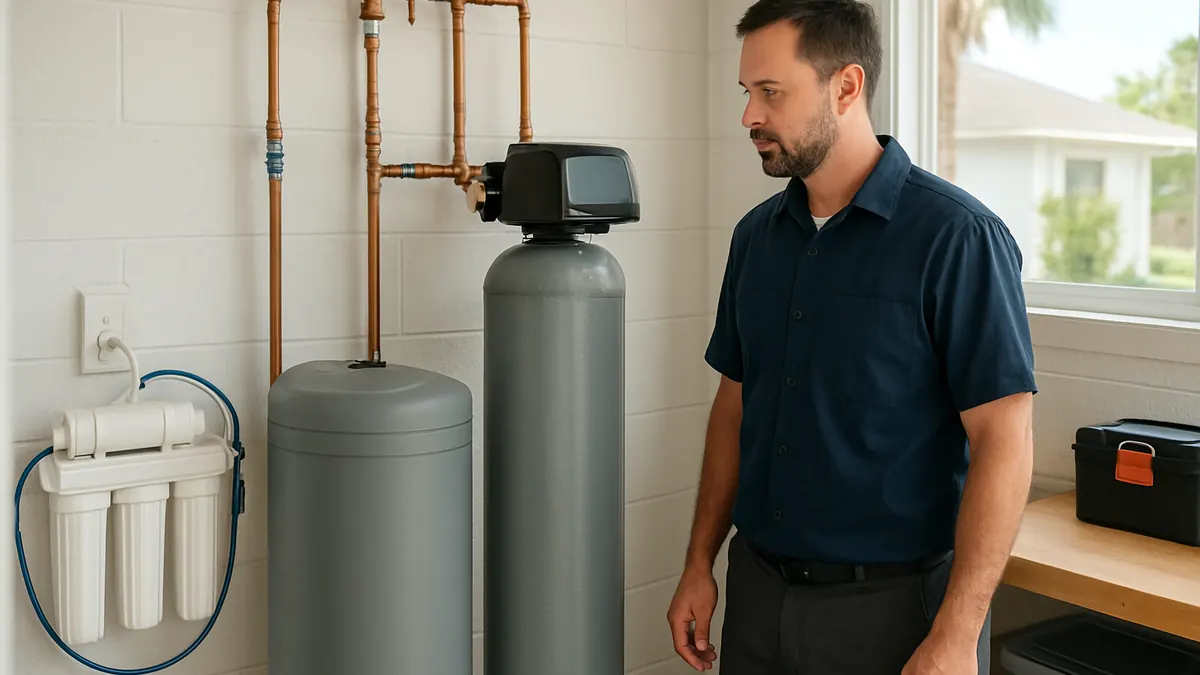
A water softener is primarily designed to reduce calcium and magnesium, the minerals associated with hard water. These minerals are dissolved, so they often pass through ordinary sediment and carbon filters. Softening can reduce scale, improve soap performance, and help protect water-using equipment from mineral accumulation.
A whole-house filter treats water before it reaches fixtures, but its performance depends on the media. Sediment filtration captures particles. Activated carbon may reduce selected tastes and odors. Specialty media can be used for other confirmed concerns.
Neither category is automatically a complete solution. A standard filter may leave hardness unchanged, while a conventional softener may do little for a taste or odor caused by another source.
What Common Household Symptoms May Indicate
Cloudy Glassware and White Spots
Cloudiness that wipes away or leaves chalky residue often suggests hardness. The minerals remain after droplets evaporate and may collect on dishes, shower doors, and fixtures.
Soap Film, Dry Feeling, or Extra Detergent Use
Hardness can interfere with soap and detergent. Homeowners may use more product and still see film on tubs, sinks, laundry, or glassware.
Water That Tastes or Smells Different
A whole-house taste or odor may support a filtration evaluation, but the source must first be identified. A water heater, drain, faucet component, old cartridge, or incoming water can create different symptoms.
Particles in Aerators or Toilet Tanks
Visible particles may indicate sediment, pipe debris, or scale released from a water heater. A sediment filter may help when the source and particle size are confirmed.
Safe Checks You Can Perform Before Scheduling Service
Fill clear glasses from several cold-water faucets. Compare color, particles, taste, and odor. Then compare hot water. If only hot water is affected, the water heater deserves attention.
Look at showerheads, faucets, coffee makers, kettles, and clear glassware for recurring scale. Record how quickly deposits return after cleaning.
Remove a faucet aerator only if it comes apart normally. Look for trapped debris and clean it according to the manufacturer's instructions.
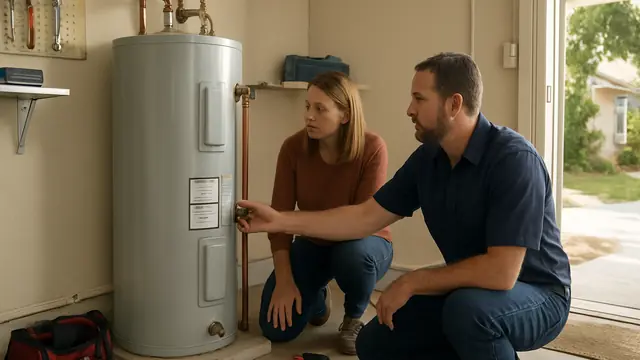
If a treatment system is installed, record model numbers, control messages, salt level, cartridge date, pressure readings if present, bypass position, and visible leaks. Avoid turning unfamiliar valves.
What the Homeowner Should Not Attempt
- Do not pour bleach, acid, vinegar, descaler, or other household chemicals into treatment tanks or plumbing without a qualified procedure.
- Do not guess at softener hardness settings, salt dosage, or regeneration frequency. Incorrect programming can waste salt and water while allowing hardness through.
- Do not remove the air gap from a softener drain or create a direct connection to a waste line.
- Do not install several small cartridges in series without checking peak flow. Excessive restriction can cause weak showers and slow appliance filling.
Signs That Make the Problem More Urgent
Gradual scale and spotting usually allow time for a measured evaluation. A sudden change in color, odor, taste, or clarity across multiple fixtures deserves prompt attention.
Avoid drinking or cooking with water that has an unexplained chemical, fuel-like, sewage-like, or oily characteristic until appropriate guidance is obtained.
Call promptly if a filter housing cracks, a tank leaks, a softener continually sends water to the drain, or pressure drops sharply throughout the home. Water near electrical controls, wiring, or appliances creates an added hazard.
How a Licensed Plumber Diagnoses the Water Concern
A plumber first determines whether symptoms occur at one fixture or throughout the home, on hot water or cold water, and continuously or only after periods of nonuse.
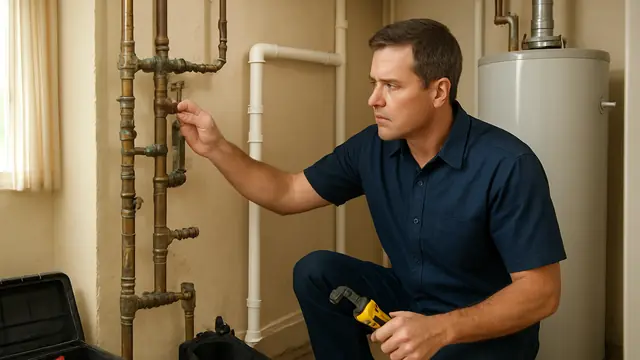
The inspection may include water pressure, flow, scale, sediment, faucet aerators, plumbing materials, the water heater, existing filter housings, softener controls, bypass valves, and drain connections.
Water testing confirms the conditions relevant to the complaint. Hardness results guide softener sizing and programming. Additional testing may be recommended for iron, pH, sediment, taste, odor, or another specific concern.
Repair and Treatment Options From Least Invasive to Most Complete
Correct a Local Fixture or Appliance Issue
If only one faucet, refrigerator dispenser, or hot-water fixture is affected, cleaning an aerator, replacing a local cartridge, servicing a faucet, or addressing the water heater may solve the issue.
Service Existing Treatment Equipment
A softener may need salt, corrected settings, salt-bridge removal, or control-valve repair. A filter may require a new cartridge or replacement media.
Use Point-of-Use Filtration
When only drinking and cooking water need improvement, a selected point-of-use system may meet the goal without treating every gallon used for bathing, laundry, and irrigation.
Install Whole-House Filtration
When testing confirms a concern that should be treated throughout the home, the media and housing should be selected for the specific objective and required flow.
Install a Water Softener
When measured hardness is causing scale and soap problems, a softener can reduce those minerals. Capacity and settings should reflect actual water conditions and household demand.
Combine Filtration and Softening
If testing confirms hardness plus a separate filtration concern, a staged system may be appropriate. The order of sediment protection, carbon or specialty media, and softening should be deliberately designed.
Typical Factors That Affect Cost
Cost depends on the testing required, treatment goal, equipment capacity, flow rating, media, controls, installation space, plumbing modifications, drainage, electrical access, and condition of existing equipment.
Ongoing expenses may include salt, cartridges, media replacement, regeneration water, and periodic service.
Prevention and Maintenance Guidance
Keep water-test results, model numbers, settings, and service records together. Label bypass valves and maintain clear access around tanks and housings.
Check salt levels and watch for bridging. Replace cartridges before severe restriction develops, using service conditions and manufacturer instructions rather than appearance alone.
Inspect valves, housings, connections, and drain tubing for leaks. Retest when symptoms change, plumbing is altered, or treatment performance declines.
Choose Treatment for the Cause, Not Just the Symptom
The comparison between a water softener versus whole house filtration in Ocean City, FL should end with a clear explanation of what the water contains and what each system will do. Hardness-related scale, spotting, and poor soap performance point toward softening. Sediment, taste, odor, or another confirmed condition may require filtration. A local problem may require neither.
A plumber can test the water, evaluate existing equipment, measure pressure and flow, and recommend the least invasive effective solution. That approach protects the home from unnecessary equipment, avoidable maintenance, and unresolved symptoms.
About this guide: This resource provides general homeowner education, not a remote diagnosis. Actual conditions, code requirements, equipment, and safe repair options must be evaluated at the property.