Stop and call for qualified help when plumbing water is near electrical equipment, sewage is entering occupied space, gas or burning odors are present, or a repair would require opening pressurized piping.
You may be wiping white residue from faucets every few days, noticing that soap does not rinse the way you expect, or wondering why the water at the kitchen sink has a taste your family dislikes. When several symptoms appear together, it is tempting to buy one "whole-house" product and hope it handles everything.
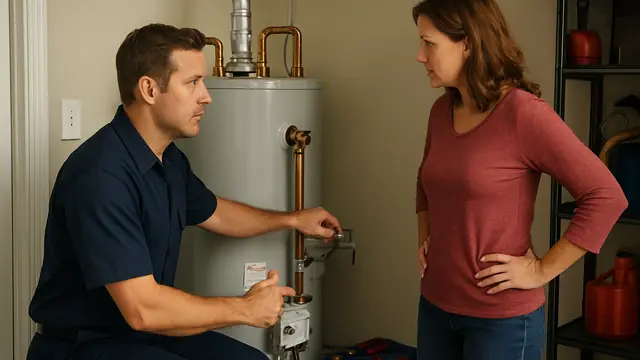
First, separate the symptoms. Check whether the concern appears everywhere, only in hot water, or at one sink. Do not open pressurized tanks or pour chemicals into treatment equipment. Testing and inspection can show whether the home needs softening, filtration, point-of-use treatment, or plumbing repair.
Water Softener Versus Whole-House Filtration: The Essential Difference
A water softener is designed primarily to reduce hardness minerals, especially calcium and magnesium. These dissolved minerals can create scale on fixtures, shower glass, water-heater components, and appliances. They may also contribute to soap scum and spotting.
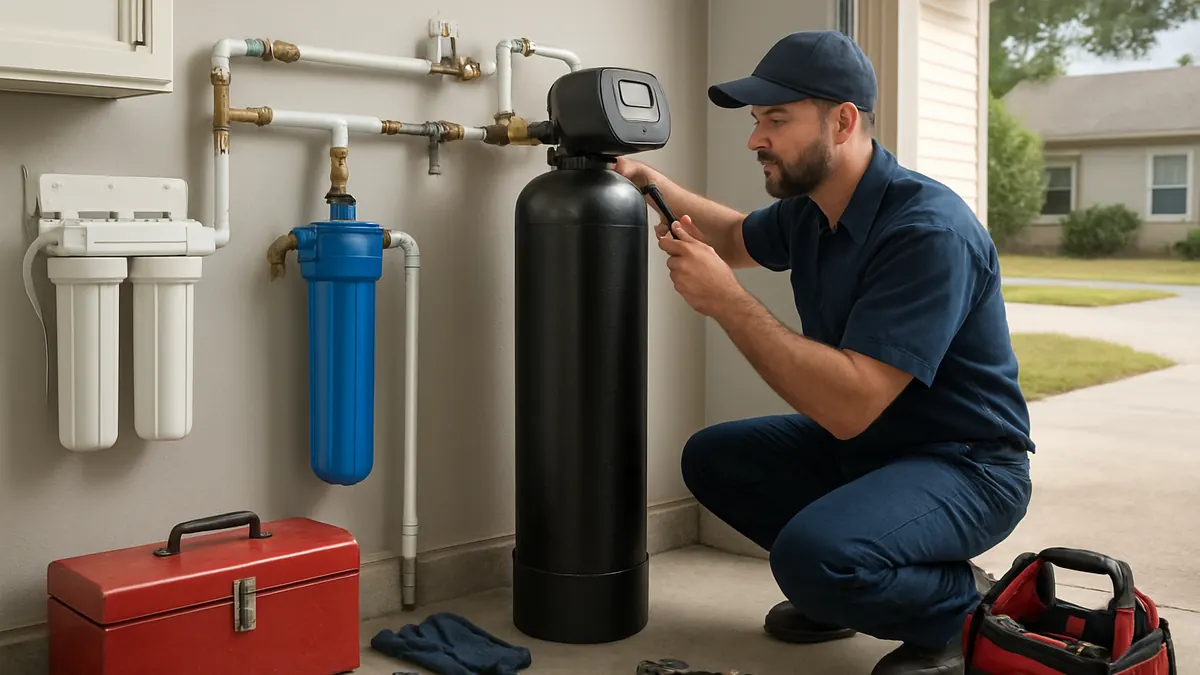
Most conventional softeners use ion exchange. Resin captures hardness minerals and periodically regenerates with brine.
Whole-house filtration is broader. Sediment filters capture particles, while activated carbon may reduce certain tastes and odors. Specialty media must be selected for a verified condition.
A standard sediment or carbon filter does not remove dissolved hardness. A softener does not automatically remove particles, unpleasant taste, odor, or every substance a homeowner may be worried about.
What Your Water Symptoms May Be Telling You
White Scale and Repeated Spotting
Chalky deposits around faucet outlets, crust on showerheads, and film on glass often suggest hardness. Hardness can also contribute to buildup inside water heaters and appliances.
Testing matters because detergent residue, etched glass, and cleaning-product film can resemble mineral spotting. A softener should be selected from measured hardness and household demand, not appearance alone.
Taste or Odor at Several Fixtures
A consistent taste or odor in cold water throughout the home may justify evaluating filtration. Carbon is often considered for some taste and odor concerns, but the source must be understood. A sewage, solvent, petroleum, or chemical odor requires immediate guidance, not routine filter selection.
Sediment, Flakes, or Black Specks
Particles may come from the incoming supply or from an aerator, connector, water heater, or plumbing component. If debris appears only at one fixture, a whole-house filter may not solve it. Widespread cold-water sediment may justify a properly sized filter after evaluation.
Problems Limited to Hot Water
Odor, discoloration, or white flakes that appear only when hot water runs can point toward the water heater. The heater may need inspection or service before main-line treatment is considered.
Safe Checks a Homeowner Can Perform
Compare clear samples from several cold-water faucets. Observe whether cloudiness disappears, particles settle, or color remains. Then compare hot and cold water at the same fixture.
Inspect a faucet aerator for mineral crust or trapped debris if it can be removed without damaging the finish. Clean and reinstall it carefully.
For existing equipment, check power, salt, bypass position, error codes, continuous drain flow, and cartridge dates. Do not disassemble the control head.
What Homeowners Should Not Attempt
- Do not purchase equipment based only on a neighbor's system or a sales demonstration.
- Do not install the finest cartridge available without considering flow. A restrictive or undersized filter can create weak showers and slow appliance filling.
- Do not add household chemicals to treatment tanks without an approved procedure.
Do not improvise a drain connection for a softener or backwashing filter. Regeneration discharge must be routed properly to prevent flooding, backflow concerns, and sanitation problems.
Do not open a pressurized filter housing or media tank. Trapped pressure can release water and components forcefully.
Signs That Make the Problem Urgent
- Call for prompt help if water changes suddenly throughout the home, pressure drops sharply, or a treatment tank begins leaking.
- Repeated regeneration, an overflowing brine tank, or continuous drain flow indicates a system problem.
- Stop using the water for consumption if it has an oily appearance, unusual widespread color, material that appears biological, or a strong sewage, fuel, solvent, or chemical odor.
- Follow any official boil-water or do-not-use notice exactly. Household filtration and softening do not replace public-health instructions.
How a Licensed Plumber Diagnoses the Right Solution
A plumber starts by asking when the problem began, which fixtures are affected, whether it involves hot or cold water, and whether flushing changes the symptom.
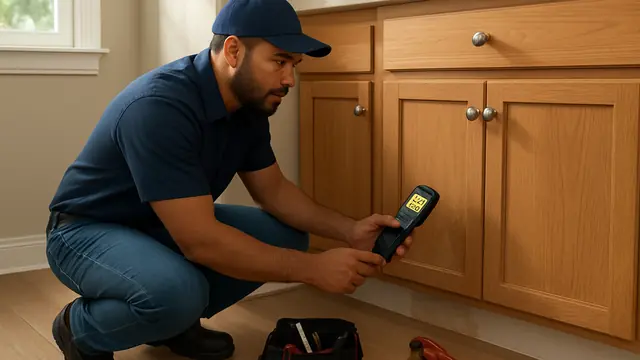
Testing may include hardness, pH, total dissolved solids, chlorine-related measurements, and observations related to sediment or staining. A certified laboratory may be recommended for unusual or health-related concerns.
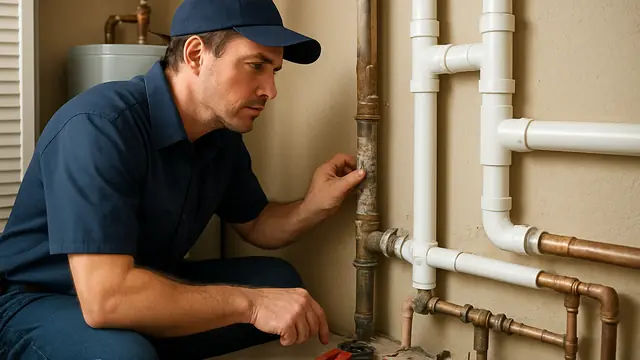
The plumber measures pressure, flow, pipe size, and peak demand so treatment does not starve fixtures. The main shutoff, bypass, drain, electrical access, water heater, and accessible plumbing are also evaluated.
Existing equipment is checked for programming, media condition, cartridge restriction, valve operation, leaks, and pressure loss before replacement is considered.
Treatment and Repair Options From Least Invasive Upward
A simple fixture repair may be enough when the problem is localized. Replacing an aerator, washer, faucet component, or deteriorated supply connector may stop debris or restore flow.
- Water-heater service may correct hot-water-only odor, discoloration, or flakes.
- For taste at one sink, under-sink carbon or reverse osmosis may be more practical than whole-house treatment.
- For verified incoming particles, a sediment filter must balance capture with acceptable flow.
- For whole-home taste or odor, carbon filtration may be considered in cartridge or backwashing form.
For confirmed hardness, a conventional water softener can reduce scale and improve soap performance. Homes with separate hardness and filtration concerns may use treatment stages in sequence.
Existing equipment may need only cleaning, reprogramming, valve repair, seals, a cartridge, or replacement media rather than complete replacement.
Typical Factors Affecting Cost
Cost depends on test results, system capacity, pipe size, flow requirements, number of treatment stages, installation access, drainage, electrical needs, and the condition of existing plumbing.
Old shutoffs, bypass piping, rerouting, or equipment removal can increase the scope. Ongoing costs include salt, cartridges, regeneration water, replacement media, and service.
Prevention and Maintenance Guidance
- Keep copies of water-test results and record system settings, cartridge changes, salt additions, and service dates.
- Check softener salt and watch for salt bridging. Replace cartridges before severe pressure loss and inspect tanks, fittings, valves, and drain tubing for leaks.
- Retest the water after major plumbing work or when taste, odor, scale, staining, or flow changes noticeably.
Choosing Water Softener Versus Whole-House Filtration in Panama City
The correct choice starts with the actual symptom. Confirmed hardness and scale point toward softening. Verified taste, odor, or incoming particles point toward appropriate filtration. A one-fixture or hot-water-only issue may require plumbing or water-heater repair instead.
.
About this guide: This resource provides general homeowner education, not a remote diagnosis. Actual conditions, code requirements, equipment, and safe repair options must be evaluated at the property.