Stop and call for qualified help when plumbing water is near electrical equipment, sewage is entering occupied space, gas or burning odors are present, or a repair would require opening pressurized piping.
During a water-heater or shutoff-valve repair, a flexible gray line is found disappearing into the wall. The visible connection may be new, but you need to know whether older polybutylene remains elsewhere.
Polybutylene, commonly called PB, was used for residential water-supply piping mainly from the late 1970s through the mid-1990s. It is often gray, but other materials can look similar.
Do not twist the line, scrape it, or pull it away from the wall. Take photographs of the pipe, markings, fittings, and nearby surfaces. Check for moisture and locate the main water shutoff. If the pipe is actively leaking, shut off the water when safe and call a licensed plumber.
The Markings That Help Identify Polybutylene Plumbing in Parker
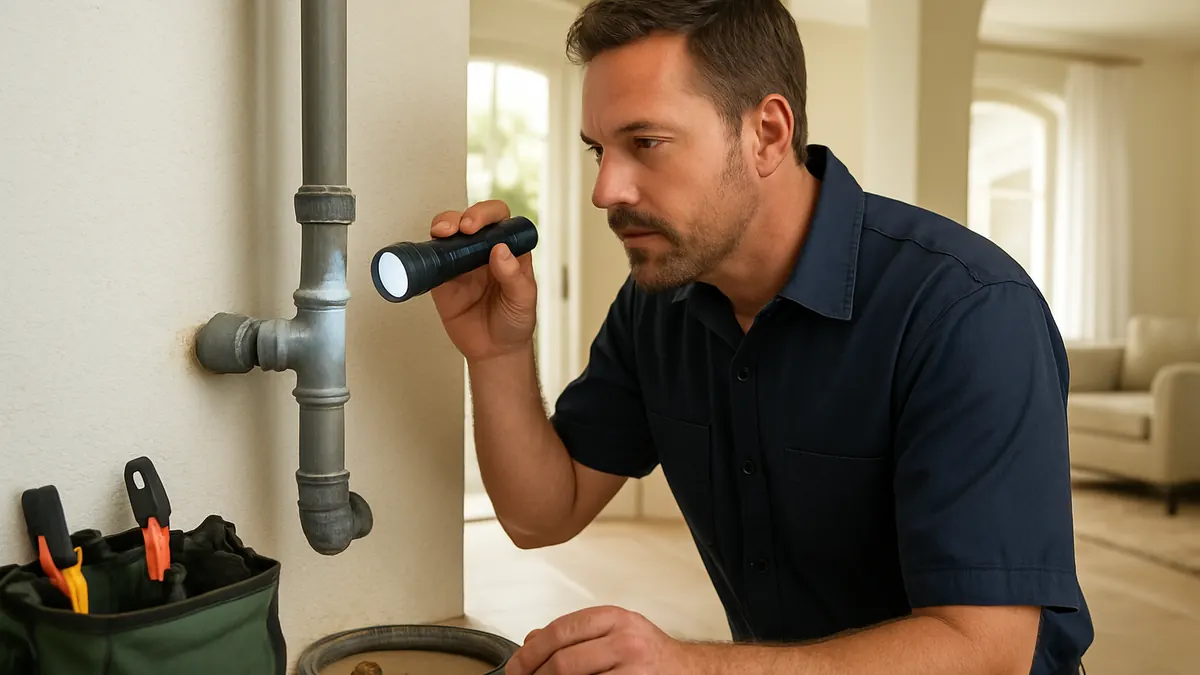
The most useful marking is "PB" or "PB2110" printed along the tubing. You may also see a manufacturer's name or pipe size. Printing can fade or face the wall, so use a flashlight and mirror instead of rotating the pipe.
Many PB systems use plastic or metal fittings secured by copper-colored or aluminum crimp rings. A plumber evaluates the lettering, fittings, rings, and installation style together.
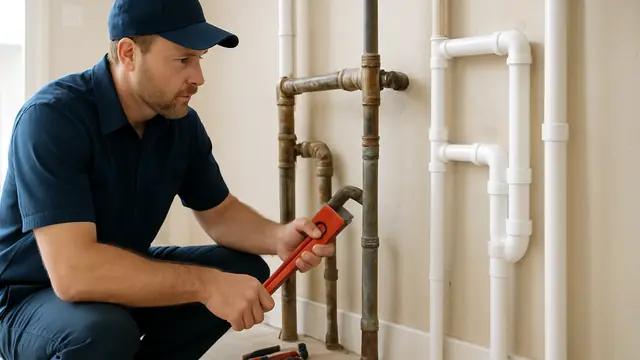
Color alone is not enough. PEX, fixture connectors, and other plastic products may also be gray, black, or white.
Follow the Water-Supply Line, Not the Drain
- Under a sink, the large pipe is the drain. The smaller lines feeding shutoff valves deliver pressurized water and are the lines to examine for PB.
- Braided faucet and toilet connectors are replaceable parts and may not match the permanent pipe concealed inside the wall.
- A flexible appliance connector can be new while PB remains farther back in the system.
Inspect Multiple Accessible Locations
- Look beneath sinks, behind toilets, near the washing-machine box, around the water heater, and in safely accessible utility areas.
- Do not move insulation, wiring, or structural materials. Leave finished surfaces intact until a plumber determines whether controlled access is needed.
- One PEX line does not prove the entire home was repiped. Past repairs may have replaced only one branch or failed section.
Why Polybutylene Can Be Difficult to Evaluate Visually
A PB pipe can appear dry, smooth, and undamaged while deterioration develops inside. Age, heat, stress, movement, fitting quality, and water exposure can influence performance.
Leaks may begin at a fitting, along a stressed area, or through the pipe wall. A small leak can dampen cabinets or drywall before becoming obvious. A larger opening can release water quickly because the line remains pressurized.
Finding PB does not prove that a leak will happen immediately. It does mean the system should be identified accurately and evaluated as a whole.
Safe Checks for a Parker Homeowner
Use a dry paper towel around a visible fitting without moving it. Dampness warrants service.
Inspect nearby surfaces for staining, swelling, softness, peeling finishes, musty odors, corrosion, or dried residue.
When every faucet and water-using device is off, observe the water meter. Toilets, irrigation, ice makers, appliances, and filtration equipment must not be operating. Continued movement can indicate hidden water use or leakage, although it cannot identify the source.
Keep the main shutoff unobstructed. Do not force a valve that is corroded, damaged, or difficult to turn.
What You Should Never Do to Suspected PB
Do not cut, bend, squeeze, heat, sand, scrape, or drill near suspected PB.
Do not tighten a crimp ring with pliers. Do not install a hose clamp, tape, glue, epoxy, or a fitting that has not been approved for the materials being joined. An improvised repair on a pressurized line can fail without warning.
Do not assume a wall stain is harmless because it has dried. The source should be confirmed before the surface is painted or covered.
Signs That Require Immediate or Prompt Attention
An active spray, steady drip, spreading stain, wet flooring, or sudden loss of water pressure requires prompt service. Shut off the nearest fixture valve or main water supply if it is safe.
- A bulging or sagging ceiling may contain water and damaged material. Keep people and pets away and do not stand underneath it or puncture it.
- Water near outlets, light fixtures, appliances, or an electrical panel creates an electrical hazard. Do not touch wet equipment or enter standing water to operate a switch.
- Several supply leaks in different rooms may make planned repiping more practical than repeated spot repairs.
How a Licensed Plumber Confirms the Extent of PB
A licensed plumber inspects several accessible lines, checks markings and fittings, and traces likely hot- and cold-water branches. The plumber looks for transitions that show where repairs or partial repiping have occurred.
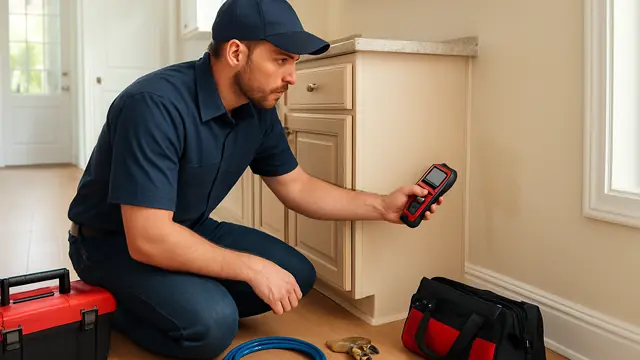
When moisture is suspected, appropriate detection methods may help locate it. The plumber should explain whether PB is confirmed, how much remains, and whether leakage is active.
A clear diagnosis allows the homeowner to separate an immediate repair from a long-term replacement decision.
Repair Options Starting With the Smallest Reasonable Solution
If the pipe is confirmed as another material and no defect exists, no PB-specific repair is needed.
If a connector, fixture, appliance hose, or shutoff valve is leaking, replacing that component may solve the problem without replacing permanent piping.
For one accessible PB leak, a localized repair may remove the damaged section and install suitable replacement pipe with an approved transition. This addresses the immediate failure but leaves the rest of the PB system in service.
A partial repipe replaces a defined branch or fixture group. A whole-home repipe removes the remaining PB and may be appropriate when the material is extensive, leaks have repeated, or the homeowner wants a coordinated long-term solution.
Typical Factors That Affect Cost
- Cost is influenced by the amount of PB, number of fixtures, pipe routes, accessibility, replacement material, and number of finish openings.
- Cabinets, tile, finished ceilings, and mixed piping can add labor. Permits when required and finish restoration may be separate.
- Ask for a written scope identifying what will be replaced, what will remain, how transitions will be made, and who handles restoration.
Prevention and Maintenance Guidance
Label the main water shutoff and keep it accessible. Make sure responsible household members know how to stop the water.
Install leak alarms beneath sinks, near the washing machine, and around the water heater. A professionally selected automatic shutoff can provide additional protection when the property is unattended.
Inspect visible piping periodically and investigate new stains or moisture. Maintain fixture connectors and appliance hoses, but remember that replacing those parts does not remove concealed PB. Keep records of confirmed PB locations and repairs.
Homeowner FAQs
Can polybutylene be connected to newer PEX?
Yes. Repairs and partial repipes often create transitions between materials. The transition should use approved components and installation methods.
Is black plastic pipe always PB?
No. Polybutylene can be black, but other materials may also be dark. Markings and fittings are needed for confirmation.
Can a plumber identify PB without opening walls?
Often, enough exposed piping is available to make an initial identification. Limited controlled access may be needed to determine the full extent.
Does a dry fitting mean there is no problem?
It means no moisture is visible at that moment. It does not establish the internal condition of the pipe or concealed connections.
Can I replace PB one section at a time?
Sometimes. Staged repiping may be practical when branches are clearly separated and approved transitions can be installed.
Confirm What Is Present Before Deciding What to Replace
How to identify polybutylene plumbing in a Parker home requires more than recognizing a gray pipe. Look for PB or PB2110 markings, characteristic crimp rings, and permanent supply lines in several locations. Avoid disturbing the tubing, document what you find, and have a licensed plumber determine how much PB remains. That information will help you choose the least invasive reasonable repair while planning responsibly for the rest of the system.
About this guide: This resource provides general homeowner education, not a remote diagnosis. Actual conditions, code requirements, equipment, and safe repair options must be evaluated at the property.