Stop and call for qualified help when plumbing water is near electrical equipment, sewage is entering occupied space, gas or burning odors are present, or a repair would require opening pressurized piping.
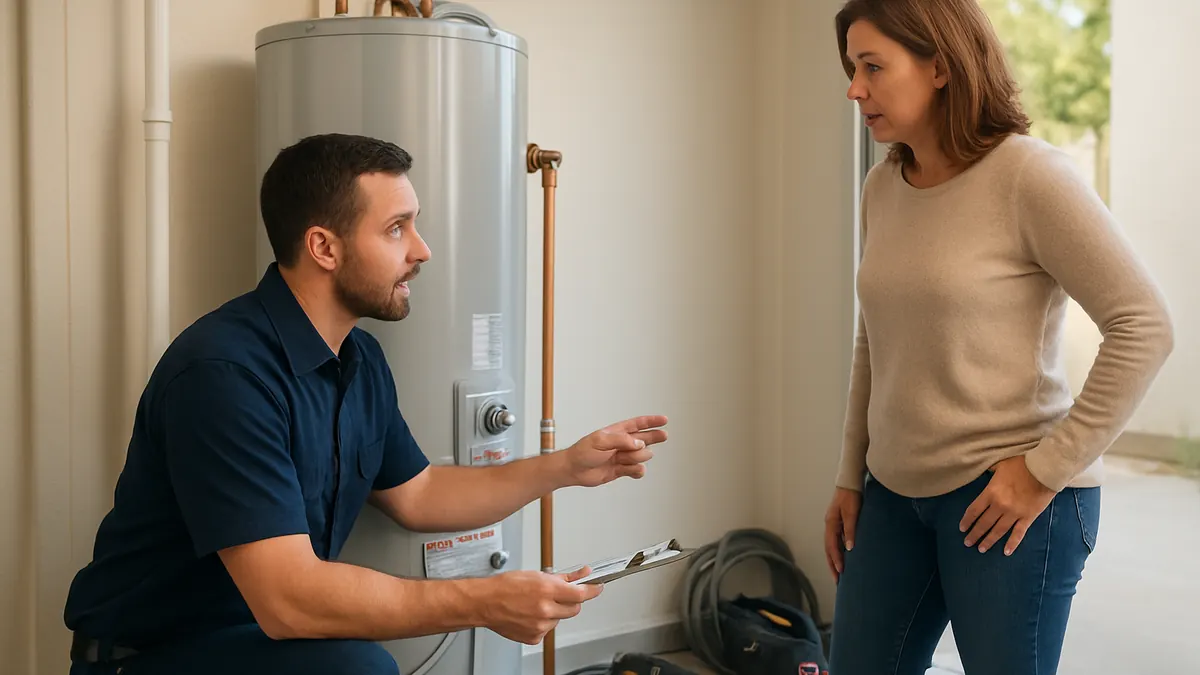
You hear water running even though every faucet is off. In the utility area, water is dripping from the pipe connected to the water heater's temperature-and-pressure relief valve. The heater still makes hot water, but the discharge has happened more than once. If you are deciding whether to repair or replace a water heater in Parker, do not simply cap the pipe or replace the valve without finding out why it opened.
The relief valve may be responding to excessive temperature, high pressure, thermal expansion, or a defect. Keep people away because the water may be extremely hot. If steam is present, the tank bulges, or water is dangerously hot, stop using the heater and request urgent service.
A Safety Valve Problem Does Not Automatically Mean Tank Failure
A dripping relief valve may be corrected without replacing the heater. It may be worn or doing exactly what it was designed to do.
Heated water expands. In a closed system, an expansion tank commonly absorbs the added volume. If it has failed, is incorrectly charged, or is missing where needed, pressure can rise during each heating cycle.
High incoming pressure or thermostat trouble can also cause discharge. The cause should be identified before parts are replaced.
Common Problems That May Be Repairable
A Failed Expansion Tank
An expansion tank uses an air cushion to absorb increased water volume. If its charge or internal membrane fails, replacing it may stop recurring pressure-related discharge when the heater tank remains sound.
A Defective Relief Valve
Relief valves can wear, collect debris, or fail to reseal. Replacement may be appropriate after temperature and pressure are verified.
Thermostat or Heating-Control Trouble
A thermostat that does not shut the heater off can cause excessive temperature. Electric elements or controls and gas controls or burners require qualified testing.
Leaking External Connections
A connector, fitting, drain valve, or nearby pipe may leak while the tank remains intact. Water can travel downward and imitate tank leakage.
Problems That Usually Favor Replacement
A confirmed leak through the tank body generally requires replacement. The inner tank stores hot water under pressure, and a corroded opening cannot be restored safely with an exterior patch.
Replacement may also be justified when corrosion is extensive, parts are unavailable, or breakdowns are frequent.
If a correctly operating heater cannot meet demand, a properly sized replacement may help. Short hot-water time should still be diagnosed because failed components or sediment can imitate insufficient capacity.
Age should be considered with condition and repair history.
Safe Checks a Parker Homeowner Can Perform
- Observe whether the relief pipe drips only while the water heats. Do not touch the water or cover the pipe.
- Notice whether multiple fixtures have unusually hot water. Keep occupants away if scalding is possible.
- Look for moisture at connections, valves, the expansion tank, and base without touching wiring or covers.
- Record breaker trips, sounds, odors, or pressure changes. Photograph the model and serial number.
- If water is spreading and the cold-water shutoff is dry and safely accessible, close it. Do not reach through standing water or approach wet electrical components.
What the Homeowner Should Not Attempt
- Never cap, plug, crimp, or block a relief discharge pipe.
- Do not repeatedly operate the test lever to stop a drip. The valve may not reseal, and the cause remains.
- Do not adjust expansion pressure or alter controls without proper tools and knowledge.
- Do not remove electrical panels, bypass controls, repeatedly reset trips, or install a larger breaker.
- Do not modify gas valves, burners, ignition systems, combustion air, or vents.
- Never patch a leaking tank with epoxy, tape, screws, clamps, or sealant.
Urgent Signs That Require Immediate Attention
- Steam, a bulging tank, boiling sounds, or dangerously hot water may indicate severe overheating. Stop using the heater and call for help.
- A growing leak or water contacting electrical equipment is urgent. Avoid the wet area.
- Leave if you smell gas. Soot, scorching, delayed ignition, unstable flames, or damaged venting also require prompt attention.
- Repeated relief-valve discharge can indicate pressure or temperature conditions that stress the heater and plumbing system.
How a Licensed Plumber Diagnoses the Cause
- The plumber identifies the heater type, capacity, age, installation, and discharge pattern.
- Water pressure may be measured while the heater operates. The pressure regulator and expansion tank may also be tested.
- Temperature is checked for overheating, and the relief valve is inspected for condition and installation.
- Electric diagnosis may include elements, thermostats, wiring, and safety controls. Gas diagnosis may include ignition, burner operation, gas control, combustion air, and venting.
- The tank and connections are examined for corrosion or leakage. The findings show whether repair can restore safe operation.
Repair Options Beginning With the Least Invasive
- The smallest correction may be adjusting a setting, repairing nearby piping, or replacing a connector.
- Pressure-related repairs may include replacing an expansion tank, correcting a regulator problem, or replacing a defective relief valve after addressing the cause.
- Heating repairs may include a thermostat, element, ignition part, burner part, or control. Sediment maintenance may be considered when the tank is suitable.
- Other corrections can include venting, wiring, drainage protection, or piping changes.
Replacement is appropriate when the tank leaks, corrosion is advanced, safety cannot be restored economically, capacity is inadequate, or reliability is poor. A tank model may be most direct. Tankless can be evaluated after reviewing demand, utilities, venting, and maintenance.
Typical Factors Affecting Cost
- Repair cost depends on the cause of the discharge or performance problem, the failed component, heater type, access, diagnostic time, and parts availability.
- Cost may also reflect pressure regulation, expansion control, electrical, gas, venting, drainage, or nearby plumbing work.
- Replacement cost varies with capacity, efficiency, fuel source, location, removal, permits, connection changes, expansion control, venting, and safety corrections.
- A clear estimate should explain whether the work corrects the root cause and the reliability expected afterward.
Prevention and Maintenance Guidance
- Inspect periodically for moisture, corrosion, noise, or temperature changes. Keep the area accessible.
- Do not ignore intermittent relief discharge. Early testing may reduce stress on the heater, fixtures, and piping.
- Ask whether the expansion tank, regulator, relief valve, anode rod, and flushing should be included in maintenance.
- Keep gas-heater combustion and vent areas unobstructed. Report repeated shutdowns, soot, or odors instead of restarting it.
Repair or Replace a Water Heater in Parker: Correct the Cause
When deciding whether to repair or replace a water heater in Parker, a dripping relief valve, overheating, or pressure problem must be evaluated as a system issue. A failed valve, thermostat, connector, pressure control, or expansion tank may be repairable when the heater tank remains sound. A leaking pressure vessel, major corrosion, repeated breakdowns, or an unsafe and unreliable system usually points to replacement.
Correcting the cause also reduces stress on valves, fixtures, and piping.
About this guide: This resource provides general homeowner education, not a remote diagnosis. Actual conditions, code requirements, equipment, and safe repair options must be evaluated at the property.