Stop and call for qualified help when plumbing water is near electrical equipment, sewage is entering occupied space, gas or burning odors are present, or a repair would require opening pressurized piping.
You flush the toilet before leaving the bathroom, but the tank never becomes completely quiet. Sometimes the sound is a constant hiss. Sometimes the toilet refills for a few seconds long after the last use. In a Parker home, that usually means the tank is losing water or the refill system is failing to shut off.
Begin with a safe visual check. Remove the tank lid, place it on a towel, and watch the water level after a flush. If water is leaking outside the toilet, rising over the tank edge, or continuing to flow without control, turn the shutoff valve clockwise. Stop if the valve will not move easily.
First Identify What Kind of Running You Hear
- A steady stream into the overflow tube points toward an excessive water level, obstructed float, or defective fill valve.
- A toilet that refills every few minutes is more likely losing water through the flapper, canister gasket, or flush-valve assembly.
- A toilet that stops after the handle is moved may have a chain or handle that is preventing the seal from closing.
Why Does My Toilet Keep Running in Parker?
A normal toilet completes three basic actions: it releases tank water, refills the tank, and shuts off. The handle lifts a seal. The falling water level lowers a float and opens the fill valve. As the tank fills, the float rises until the valve closes.
The toilet keeps running when water escapes after the seal should close or when incoming water continues after the tank reaches the intended level.
Common Possible Causes
The flapper has lost its shape
A flapper can harden, warp, crack, or collect residue, leaving a path for water into the bowl.
The canister gasket is leaking
A canister gasket can wear, shift, or fold and allow a slow leak.
The chain is interfering with the seal
A tight chain holds the flapper open; an overly loose chain can catch beneath it.
The handle does not return fully
A loose or sticking handle can keep tension on the chain until it is moved.
The float is set incorrectly
A float set too high or rubbing the tank wall can keep water entering the overflow tube.
The fill valve has internal wear
A worn valve may hiss, pulse, fill slowly, or continue passing water.
The flush-valve seat or overflow tube is damaged
A damaged valve seat, loose valve body, or cracked overflow tube can leak despite a new seal.
Safe Checks You Can Perform
- Watch one complete flush. The chain should lift and relax, the seal should close squarely, and the handle should return by itself.
- The float should move freely and stop water below the overflow tube.
- If water enters the overflow tube, raise the float gently. Stopped flow suggests adjustment or binding; continued flow suggests a failed fill valve.
- For silent leakage, add food coloring to the tank and wait 15 to 20 minutes without flushing. Color in the bowl confirms water loss.
- Check the shutoff valve, supply line, tank bolts, tank bottom, and floor with a dry paper towel. Any outside moisture matters.
What the Homeowner Should Not Attempt
- Do not force the shutoff valve. A broken or leaking valve may require shutting off the home's main supply.
- Do not overtighten tank bolts; uneven pressure can crack porcelain.
- Do not use drain cleaner. Tank controls are separate from the drain path.
- Do not bend parts sharply, glue seals, wedge valves, or shorten the overflow tube.
Signs That Make the Problem Urgent
- Turn off the supply immediately if water reaches the floor, flows over the tank, sprays from a connection, or continues despite lifting the float.
- Service is urgent when the shutoff fails, the toilet rocks, the bowl rises toward the rim, or wastewater appears at the base.
- Repeated clogs, slow drainage, gurgling, or sewage odors may indicate a separate drain issue.
How a Licensed Plumber Diagnoses It
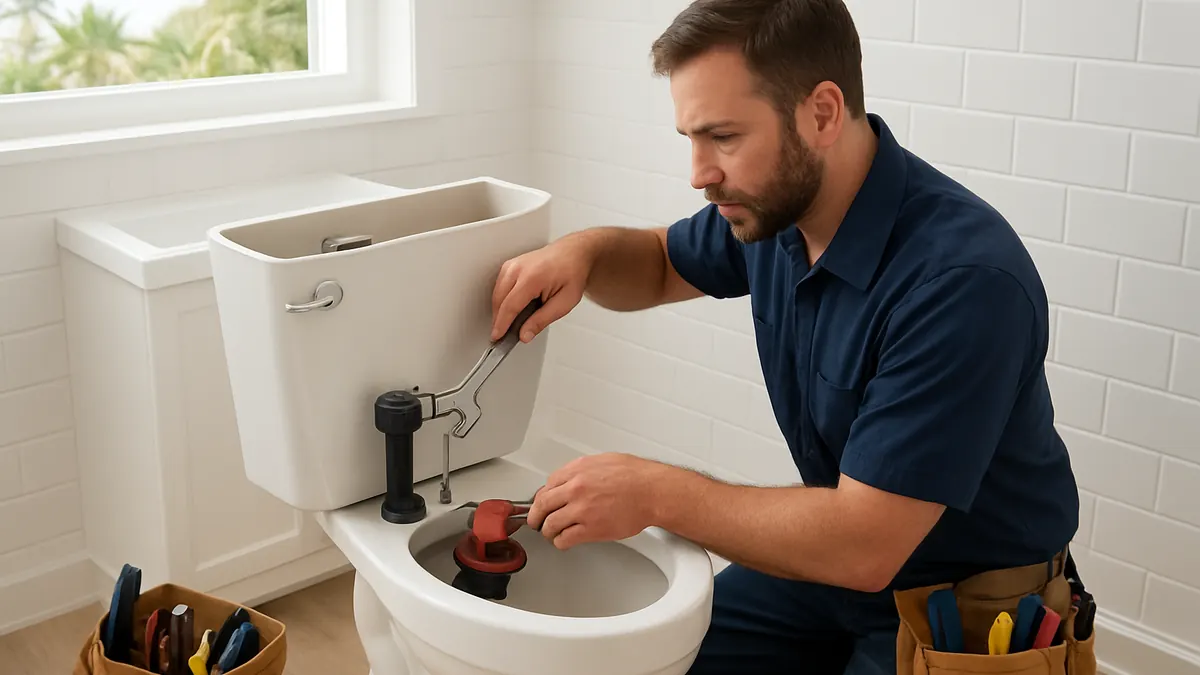
- The plumber watches the flush mechanism operate and checks whether the seal closes, the float moves, and the fill valve shuts off at the proper level.
- The technician checks the chain, handle, seal, valve seat, refill tube, overflow tube, fill valve, and water level. A dye test can confirm silent leakage.
- The plumber also examines the shutoff valve, supply line, bolts, and porcelain. Movement or poor drainage may require checking the flange, base seal, trapway, and drain.
Repair Options Beginning With the Least Invasive
- The first repair may be adjusting the chain, handle, refill tube, or float.
- A worn flapper, canister gasket, or fill valve can often be replaced individually.
- When several parts are worn, a tank rebuild can replace the fill valve, flush seal, handle mechanism, and hardware together.
- A damaged flush valve may require tank removal. Replacement is considered for cracked porcelain, instability, unavailable parts, poor condition, or recurring failures.
Typical Factors Affecting Cost
Cost depends on the diagnosis and the amount of labor required. Adjusting a chain or float is different from replacing a valve, rebuilding a tank, or installing a new fixture.
Design and parts availability matter. Corroded hardware, difficult access, a failed shutoff valve, damaged supply line, or base leak can increase the scope.
Prevention and Maintenance Guidance
- Investigate new hissing, longer fill times, unexpected cycling, or a handle that needs jiggling.
- Periodically confirm that the chain has slack, the seal closes evenly, the float moves freely, and water stops below the overflow tube.
- Avoid in-tank tablets unless the manufacturer approves them; some cleaners damage rubber and plastic.
- Keep the shutoff accessible and replace a supply line showing rust, cracking, swelling, or moisture.
Correct the Failure Before It Wastes More Water
If you are asking, "Why does my toilet keep running in Parker?" the cause is usually a leaking flush seal, faulty fill valve, incorrect float setting, chain or handle problem, or damage within the flush-valve assembly.
A safe visual inspection and dye test can help you recognize the pattern. Outside leakage, uncontrolled filling, cracked porcelain, a failed shutoff valve, or drainage symptoms should be handled promptly by a licensed plumber.
About this guide: This resource provides general homeowner education, not a remote diagnosis. Actual conditions, code requirements, equipment, and safe repair options must be evaluated at the property.