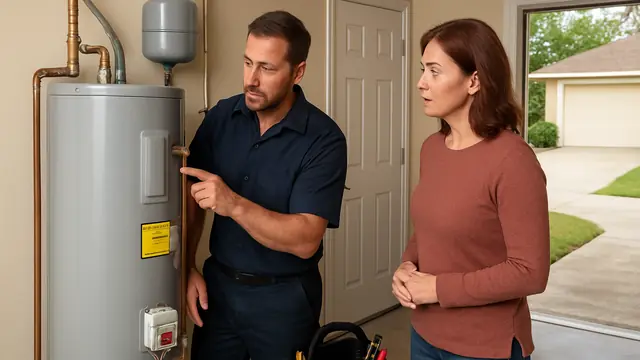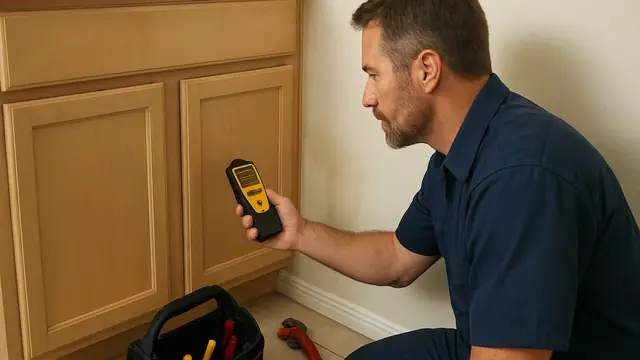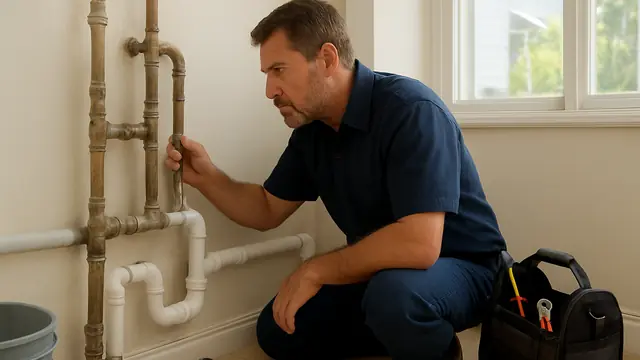
Stop and call for qualified help when plumbing water is near electrical equipment, sewage is entering occupied space, gas or burning odors are present, or a repair would require opening pressurized piping.
A Pretty Bayou homeowner may first notice that the shower drains slowly after the washing machine runs, the toilet makes a bubbling sound, or water appears in a tub that no one is using. When several fixtures react to one another, the problem is often farther down the drainage system than a simple sink or toilet clog. A shared branch drain or the main sewer line may be partially blocked.
The safest immediate action is to reduce water use. Stop running the washing machine, dishwasher, and other high-volume fixtures. If sewage is already backing up through a shower, tub, toilet, or floor drain, stop using the plumbing system completely. Continuing to add water can force more wastewater into the lowest fixture and increase contamination inside the home.
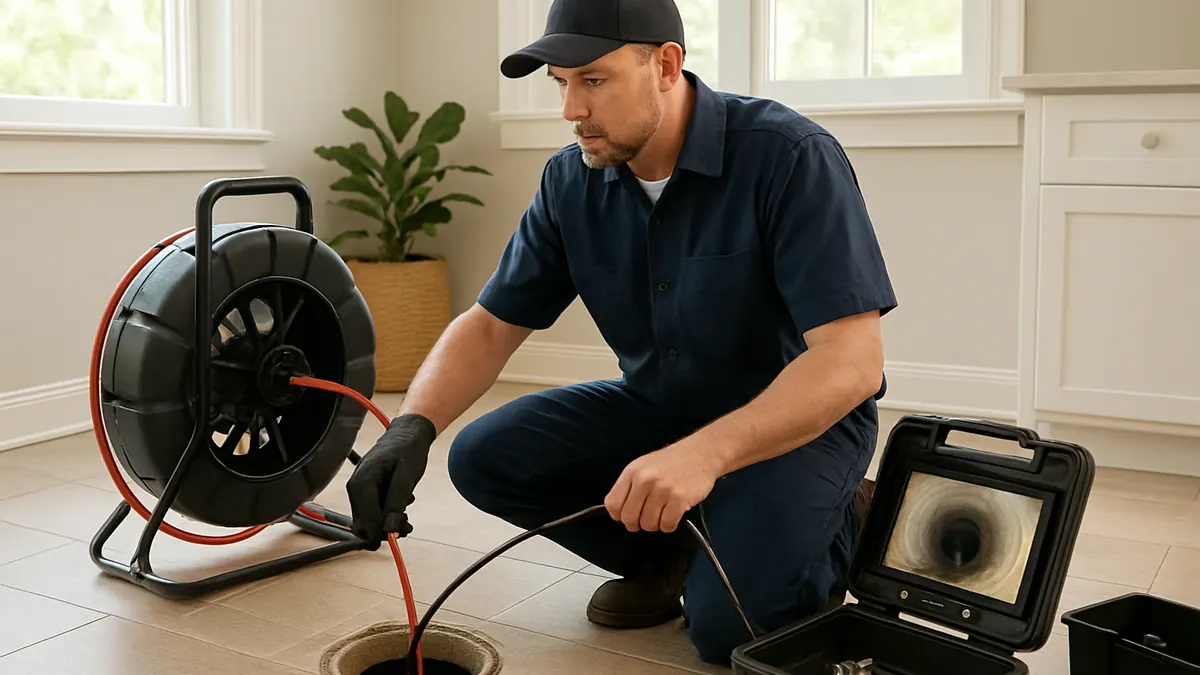
A sewer camera inspection gives a licensed plumber a direct view of the accessible interior of the pipe. It helps determine whether the line contains removable debris, heavy buildup, roots, standing water, a damaged joint, or a structural failure that needs repair.
Why a Sewer Camera Inspection May Be Recommended
A camera inspection is especially useful when a clog keeps returning, several fixtures are slow, toilets gurgle, or sewage odors remain after basic cleaning. It may also be recommended when a homeowner wants to understand the condition of a sewer line before approving a major repair.
Possible causes include grease, wipes, foreign objects, roots entering through a joint, separated pipe connections, cracks, deformation, collapse, or a low section of pipe that holds water and allows waste to collect.
What Happens During a Sewer Camera Inspection in Pretty Bayou?
The plumber begins by reviewing the symptoms. You may be asked which fixture showed trouble first, whether the problem happens only during heavy water use, and whether the line has been cleaned before. The plumber may also ask how long any earlier improvement lasted.
The preferred entry point is usually a cleanout. A cleanout is a capped fitting designed to give service equipment access to the drain or sewer line. If a usable cleanout is not available, another approved opening may be needed. In some situations, a toilet may have to be removed to provide access.
The plumber inserts a waterproof camera mounted on a flexible push cable. As the camera travels through the pipe, it sends a live image to a monitor. The plumber watches the pipe walls, joints, bends, water level, and any material that narrows or blocks the flow path.
The inspection may reveal grease, soap residue, wipes, scale, roots, a cracked fitting, an open joint, offset pipe sections, standing water, deformation, or collapse. The camera may also show where one pipe material changes to another or where a repair was previously made.
Distance markings on the cable help estimate how far the camera has traveled. Many systems also include a transmitter that can be located from above ground. This helps the plumber estimate where a defect is positioned and how deep the pipe may be.
Why the Line May Need Cleaning Before Inspection
A sewer camera cannot see through a solid blockage. Heavy grease, dirty standing water, or compacted debris can also cover the lens and hide the pipe wall. If visibility is poor, the plumber may need to clean the line before completing the inspection.
A drain-cleaning cable or controlled water-jetting equipment may be used, depending on the type of obstruction and the condition of the pipe. After the line is opened, the camera can be sent through again to confirm flow and determine whether damage contributed to the clog.
Safe Checks the Homeowner Can Perform
You can note whether the problem affects one fixture, one bathroom, or the entire home. Pay attention to whether the symptoms appear after laundry, several showers, or repeated toilet flushing.
Look for a visible cleanout, but do not remove the cap. Report any moisture, wastewater, or strong sewage odor around it.
What the Homeowner Should Not Attempt
- Do not keep running water to test an active blockage. Every test adds more wastewater behind the restriction.
- Avoid repeated chemical drain cleaners. These products may not reach a main-line obstruction and can leave hazardous liquid inside the pipe where a plumber must later work.
- Do not operate a powered sewer machine unless you are trained. Rotating cables can cause serious injury, damage fittings, become trapped, or break inside the line.
- Never remove a cleanout cap when sewage may be pressing against it. The cap can release suddenly and expose you to contaminated wastewater.
Signs That Make the Problem Urgent
Prompt service is needed when sewage enters the home, several fixtures stop draining, or wastewater rises through the lowest shower, tub, or floor drain. Water escaping around a cleanout is another urgent warning.
How a Licensed Plumber Diagnoses the Cause
A plumber does not rely on one image alone. The camera footage is compared with the symptoms, the measured distance, the behavior of water, and any resistance encountered during cleaning.
The plumber should explain what was found, where it is located, whether the line is currently open, and why the proposed repair fits the evidence.
Repair Options From Least Invasive to Most Extensive
If the problem is removable debris or buildup, professional cleaning may restore normal flow. Root cutting may reopen a restricted line, although the point where roots entered may still require repair.
A localized crack, offset joint, or damaged fitting may qualify for a spot repair. This limits excavation to the affected section when access and pipe condition allow.
Trenchless rehabilitation may be considered when the existing pipe is suitable. It can reduce surface disruption, but it is not appropriate for every collapse, severe offset, or badly deformed section.
Traditional excavation may be necessary when the pipe has failed structurally. Complete replacement is generally considered when damage is widespread or smaller repairs would not provide a reliable result.
Factors That Affect Cost
Cost depends on access, pipe length, cleaning needs, blockage severity, pipe depth, material, and the location and extent of damage.
Work beneath concrete, flooring, landscaping, or a driveway may require added access and restoration. Permits, excavation, materials, and surface repairs can also affect the scope.
Prevention and Maintenance Guidance
Keep grease, wipes, paper towels, hygiene products, food scraps, and other non-dissolving materials out of drains. Products labeled flushable may not break apart quickly enough to pass through every sewer line.
Address recurring slow drains before a complete blockage occurs. If the camera documents roots, heavy buildup, or a low area, ask whether periodic cleaning or a follow-up inspection is appropriate.
Pretty Bayou Homeowner FAQs
Does the camera itself clear the clog?
No. The camera is used for diagnosis. Separate cleaning equipment removes the obstruction.
Can a camera inspect the entire sewer line?
It can inspect the portion that is accessible and open enough for the camera to pass. A solid blockage, sharp transition, or collapse may stop further travel.
Can the plumber locate the defect from above ground?
Often, yes. A transmitter and locator can help estimate the defect's location and depth, although site conditions may affect precision.
Does standing water always mean the pipe is broken?
No. A small amount may not be significant. A longer or deeper section can suggest poor slope or a low spot and should be evaluated with the symptoms.
Does one crack mean the whole line must be replaced?
No. The size, location, severity, and overall pipe condition determine whether cleaning, a spot repair, rehabilitation, or replacement is appropriate.
Schedule a Sewer Camera Inspection in Pretty Bayou
What happens during a sewer camera inspection in Pretty Bayou is a careful process of reviewing the symptoms, obtaining safe access, examining the pipe, locating meaningful defects, and matching the findings to the least invasive reasonable repair. The purpose is to replace guesswork with evidence.
If several fixtures are backing up or sewage is entering the home, stop using water and arrange professional diagnosis promptly. Early action can reduce contamination, limit property damage, and help direct the repair to the correct location.
About this guide: This resource provides general homeowner education, not a remote diagnosis. Actual conditions, code requirements, equipment, and safe repair options must be evaluated at the property.