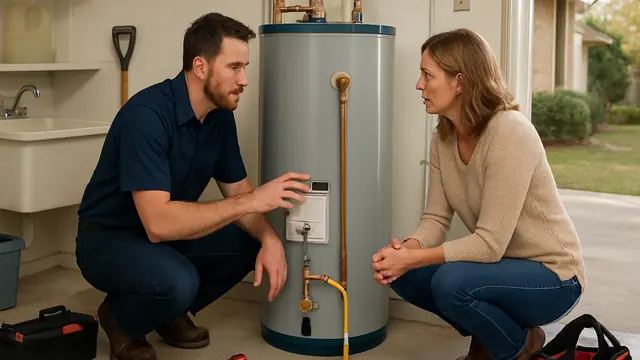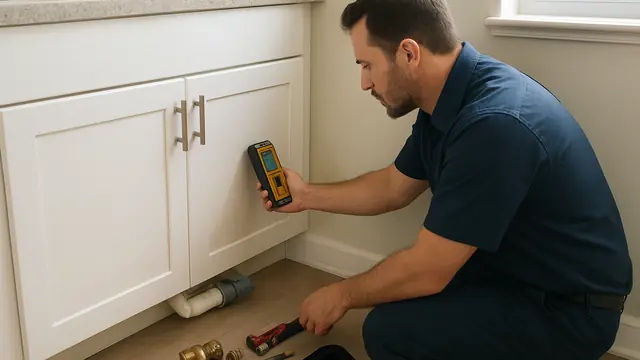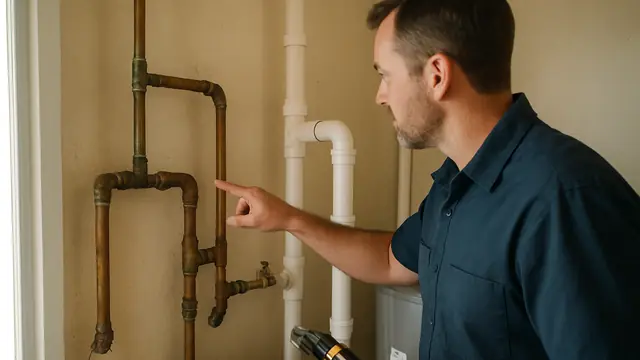
Stop and call for qualified help when plumbing water is near electrical equipment, sewage is entering occupied space, gas or burning odors are present, or a repair would require opening pressurized piping.
The bathroom sink drains, but the toilet beside it bubbles. When the dishwasher finishes, water appears in the shower, and later a second toilet becomes slow. Those connected symptoms suggest the problem is not inside one fixture. Multiple drains backing up in a Springfield home mean a shared pipe cannot carry wastewater away fast enough.
Stop using water immediately. Do not flush toilets, run appliances, shower, or empty sinks during a backup. A partial blockage can become a full overflow when another large volume of water enters the drain. If sewage is already present, keep people and pets out of the affected area and avoid contact with the water.
Why Several Drains React at the Same Time
Fixtures use separate branch drains that join larger shared pipes before wastewater leaves the property. A clog inside one sink trap normally affects only that sink. When a toilet, shower, and appliance affect one another, the restriction is usually after their branches connect.
The elevation of each fixture also matters. A low shower, tub, or floor drain may become the first overflow point because blocked wastewater moves toward the easiest available opening.
Common Reasons Multiple Drains Back Up
A Blockage in the Building Drain or Sewer Line
Paper, waste, hair, soap film, grease, food particles, and other debris can reduce the usable opening inside a shared pipe. Light sink use may not reveal the problem, but laundry, bathing, or simultaneous flushing can overwhelm the restricted line.
Wipes, Paper Towels, and Hygiene Products
These materials may disappear from the bowl yet remain intact inside the system. They can catch at bends or joints and collect additional waste.
Grease Buildup From the Kitchen
Warm grease can cool farther inside the piping, creating a sticky layer that holds food and detergent residue until the line becomes restricted.
Roots Inside Underground Piping
Roots can enter an underground pipe through an existing crack, gap, or separated connection. The growth catches paper and forms a dense obstruction. Mechanical cutting can restore flow, but roots may return if the opening remains.
Structural Pipe Problems
A cracked, crushed, shifted, or sagging pipe can interrupt the normal downhill movement of wastewater. A low section holds water and solids, while a shifted joint creates an edge that catches debris. These defects often explain recurring backups.
A Septic or Downstream System Issue
With septic service, a full tank or restricted outlet can slow several drains. With sewer service, the restriction may be in the private lateral or farther downstream. Diagnosis should identify the location before repairs begin.
Safe Observations You Can Make
Note every affected fixture and the order of symptoms. Tell the plumber whether the washer bubbles the toilet, flushing raises shower water, or the problem is limited to one area.
Check the lowest accessible drain for standing water without running more water. Notice whether there is leakage at a toilet base or a strong sewage odor.
You may locate the sewer cleanout if it is already visible. Do not remove its cap from a backed-up line because wastewater may be waiting behind it. Gather earlier drain-cleaning invoices or camera reports if the property has a history of stoppages.
What You Should Not Try
Do not add chemical cleaner to several fixtures. It cannot repair roots, collapse, an offset joint, or a distant object and may remain trapped behind the blockage.
Do not keep testing the system by flushing and running faucets. Water that slowly disappears may have passed through a small opening while the obstruction remains.
Do not operate a large sewer cable without training. The cable can bind, whip, damage the pipe, or injure the operator. Avoid removing toilets, opening a full cleanout, or climbing onto the roof to inspect a vent.
Signs That Require Urgent Plumbing Service
Seek prompt help when raw sewage enters a shower, bathtub, floor drain, or occupied room. The problem is also urgent if no toilet can be used or wastewater is moving toward drywall, flooring, cabinets, electrical outlets, appliances, or HVAC equipment.
Dark water from a drain, strong sewer odors, or wastewater surfacing outside also require attention. Recurring backups create repeated risks of contamination and property damage.
How a Licensed Plumber Finds the Cause
The plumber studies the affected fixtures and lowest backup point to determine which branches join before the obstruction.
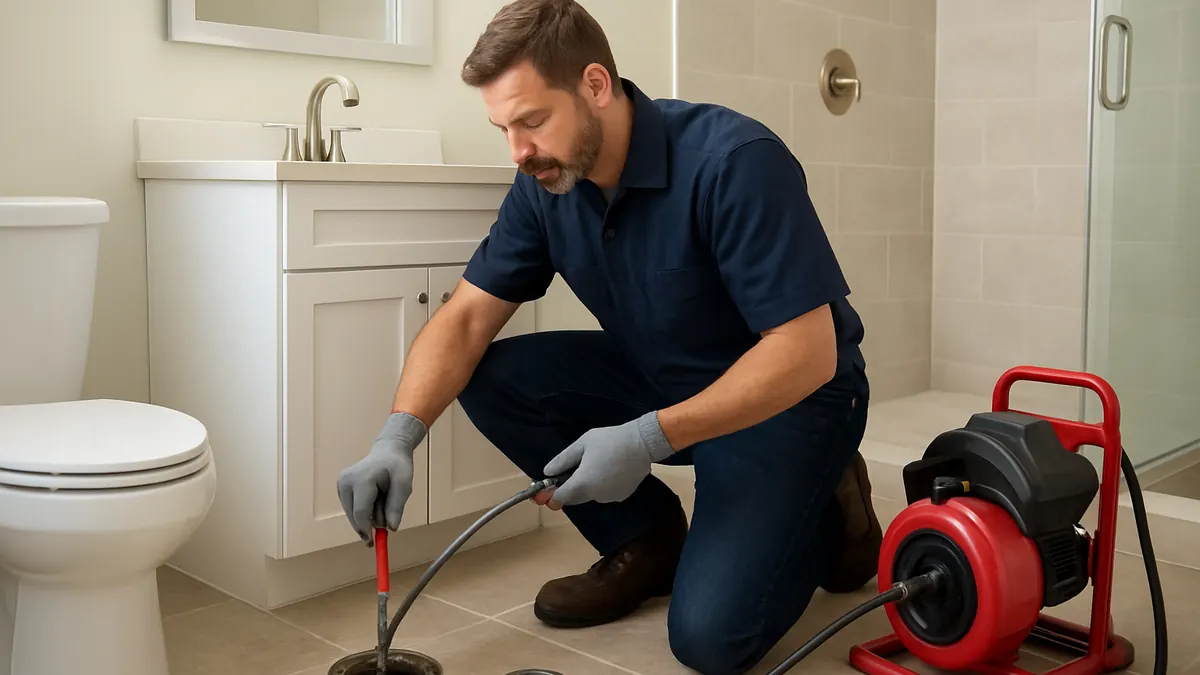
Accessible cleanouts are inspected, and professional cable equipment may be used to establish flow. The cable and cutting head are selected for the pipe size and suspected material.
Hydro jetting may be considered when grease or residue coats a long section. Controlled high-pressure water cleans the interior rather than opening only a narrow channel.
After the line drains, a sewer camera can document roots, cracks, separated joints, offsets, low areas, objects, or standing water. That evidence helps determine whether cleaning is a complete solution or only temporary relief.
Repair Options Beginning With the Least Invasive
For a removable obstruction, professional cabling is often the first repair. If the pipe is sound and the blockage is fully cleared, no digging may be necessary.
Hydro jetting can remove widespread buildup that a cable may only pierce. Root cutting can restore flow through root intrusion, although follow-up repair or maintenance may be appropriate.
A spot repair may correct one cracked or offset section. In suitable conditions, a trenchless method may reduce excavation.
Complete replacement is generally reserved for a collapsed line, extensive deterioration, severe misalignment, or repeated failures along multiple sections. The least expensive initial service is not always the least expensive long-term choice, but replacement should still be supported by clear diagnostic findings.
Typical Factors That Affect Cost
Cost depends on obstruction location, pipe length and diameter, cleanout access, equipment, and labor. Access through a cleanout is different from reaching piping beneath a slab.
Camera inspection, jetting, root removal, locating, excavation, permits, materials, and restoration can affect cost. The estimate should distinguish flow restoration, diagnosis, and permanent repair.
Preventing Future Whole-Home Backups
Flush only toilet paper and human waste. Put wipes, paper towels, hygiene products, cotton items, and other trash in a wastebasket. Keep grease and cooking oil out of drains, and use screens to catch hair and food particles.
Watch for connected symptoms. A toilet that bubbles during laundry or a shower that slows during flushing may warn of a shared restriction.
Where inspection confirms roots, grease buildup, or a structural problem, follow a maintenance or repair plan based on the evidence. Early attention is generally easier than responding after sewage reaches finished areas.
Respond Before Another Drain Overflows
Multiple drains backing up in Springfield mean wastewater is meeting resistance in a shared drainage path. Stop using water, avoid chemical cleaners and unsafe equipment, and arrange a professional diagnosis. The appropriate response may be ordinary clearing, thorough cleaning, root management, a focused repair, or replacement when the line is extensively damaged.
About this guide: This resource provides general homeowner education, not a remote diagnosis. Actual conditions, code requirements, equipment, and safe repair options must be evaluated at the property.