Stop and call for qualified help when plumbing water is near electrical equipment, sewage is entering occupied space, gas or burning odors are present, or a repair would require opening pressurized piping.
You may notice that shower glass becomes cloudy soon after cleaning, the dishwasher leaves spots, or the kitchen water has a taste you would like to improve.
The safest immediate action is to identify where each symptom appears. Compare several cold-water fixtures, then compare hot and cold water at the same faucet. Do not drink water with a sudden strong odor, unusual color, or oily appearance. Do not open pressurized treatment equipment or add household chemicals to it. Testing and inspection should determine whether the home needs softening, filtration, a smaller point-of-use system, or plumbing repair.
Water Softener Versus Whole-House Filtration: Why the Difference Matters
A water softener reduces dissolved hardness minerals, primarily calcium and magnesium. Hardness can leave white scale on faucets and showerheads, form deposits inside water heaters and appliances, and interfere with soap.
Whole-house filtration addresses other concerns. Sediment filters collect suspended particles. Activated carbon may reduce certain tastes and odors. Other media are designed for specific verified conditions.
A standard sediment or carbon filter does not remove dissolved hardness. A softener is not a universal contaminant filter. One system should not be expected to perform the other system's job.
Identify the Pattern Before Selecting Equipment
Scale Throughout the Home
White crust around several fixtures, repeated film on shower doors, poor soap performance, and spots on dishes can suggest hardness. A measured hardness level helps a plumber size a softener correctly.
Taste or Odor in Cold Water
When the same taste or odor appears at several cold-water faucets, whole-house filtration may be evaluated. Carbon can be appropriate for certain concerns, but the odor or taste must be described and investigated.
Sediment or Specks
Particles found in multiple aerators may be entering through the main water line, but they can also be released by plumbing components. Black specks may come from deteriorating rubber, while white flakes on the hot side may come from a water heater.
The source determines whether sediment filtration, fixture repair, or water-heater service is appropriate.
Reduced Flow or Pressure
A filter cartridge can become clogged. A housing may also be too small for household demand. If pressure remains poor when treatment equipment is correctly bypassed, another plumbing issue may be responsible.
Safe Checks You Can Perform
- Fill clear glasses from several cold-water faucets and compare them. Let each sample sit and observe whether cloudiness clears or particles settle.
- Run hot and cold water separately at one fixture. Record whether odor, discoloration, or flakes appear on one side only.
- Inspect a removable faucet aerator for debris or scale. Reinstall it carefully to prevent leaks or thread damage.
If a softener is present, check power, display messages, salt level, and bypass position. If filtration is present, note the cartridge replacement date and whether pressure has gradually declined. Do not disassemble the equipment.
What Homeowners Should Not Attempt
- Do not buy treatment equipment solely because a sample looks cloudy or produces a reaction during a sales demonstration.
- Do not install a fine-micron cartridge without checking the home's flow requirement. A restrictive filter can produce weak showers and slow appliance filling.
- Do not pour bleach, acid, vinegar, descaler, or pool chemicals into treatment tanks unless an approved procedure is being performed by a qualified person.
- Do not attempt internal softener-valve repairs or remove media from a tank that may remain pressurized.
- Do not improvise the drain for a softener or backwashing filter. Regeneration and backwash water must discharge through a suitable connection.
Signs That Require Prompt Attention
Stop using the water for consumption if it develops a sudden strong sewage, fuel, solvent, or chemical odor. An oily sheen, widespread unexplained discoloration, or suspected contamination also requires immediate guidance.
- Call a plumber promptly when a tank, valve, or connection leaks; a brine tank overflows; a softener repeatedly regenerates; or water flows continuously to a drain.
- Sudden pressure loss may indicate a blocked cartridge, failed control valve, closed shutoff, or plumbing restriction.
- Follow official boil-water and do-not-use notices exactly. Household treatment equipment does not override those instructions.
How a Licensed Plumber Diagnoses the Right Treatment
The plumber begins with the complaint history: when it started, which fixtures are affected, whether it involves hot or cold water, and whether flushing changes it.
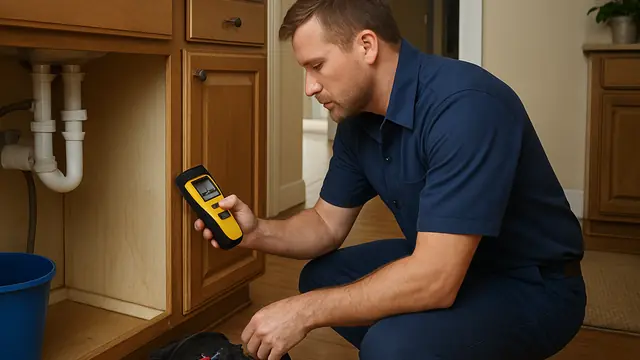
Testing may include hardness, pH, total dissolved solids, chlorine-related measurements, and indicators related to sediment or staining. A certified laboratory may be needed for unusual or health-related concerns.
The plumber measures static pressure, operating pressure, flow, pipe size, and likely peak demand. Equipment must treat the water without creating unacceptable pressure loss.
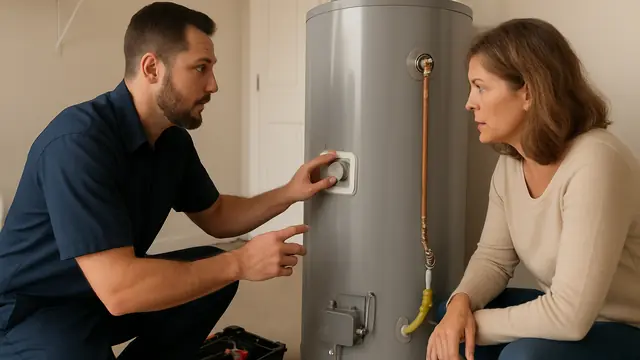
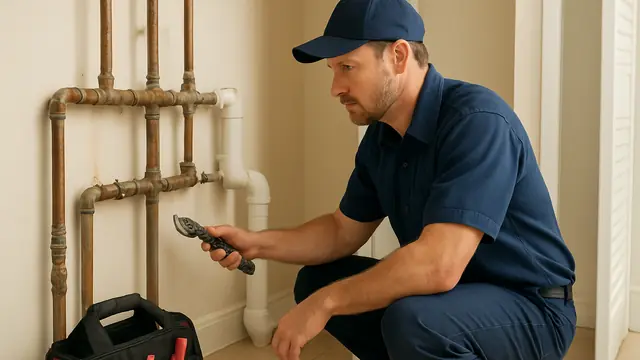
The inspection may include the main shutoff, bypass arrangement, drain access, electrical supply, water heater, aerators, flexible connectors, and visible plumbing. Existing treatment equipment is checked for programming, media condition, cartridge restriction, valve operation, and leaks.
Treatment Options Beginning With the Least Invasive
- For a localized concern, cleaning or replacing an aerator, faucet cartridge, washer, or supply connector may solve the problem.
- For odor, discoloration, or flakes limited to hot water, water-heater inspection and service may come before any whole-house treatment.
- For better drinking water at one sink, point-of-use carbon filtration or reverse osmosis may meet the goal more efficiently.
- For verified particles entering the home, a properly sized sediment filter may be appropriate. The selected micron rating must balance particle capture and flow.
- For a whole-home taste or odor issue, carbon filtration may use replaceable cartridges or a backwashing media tank.
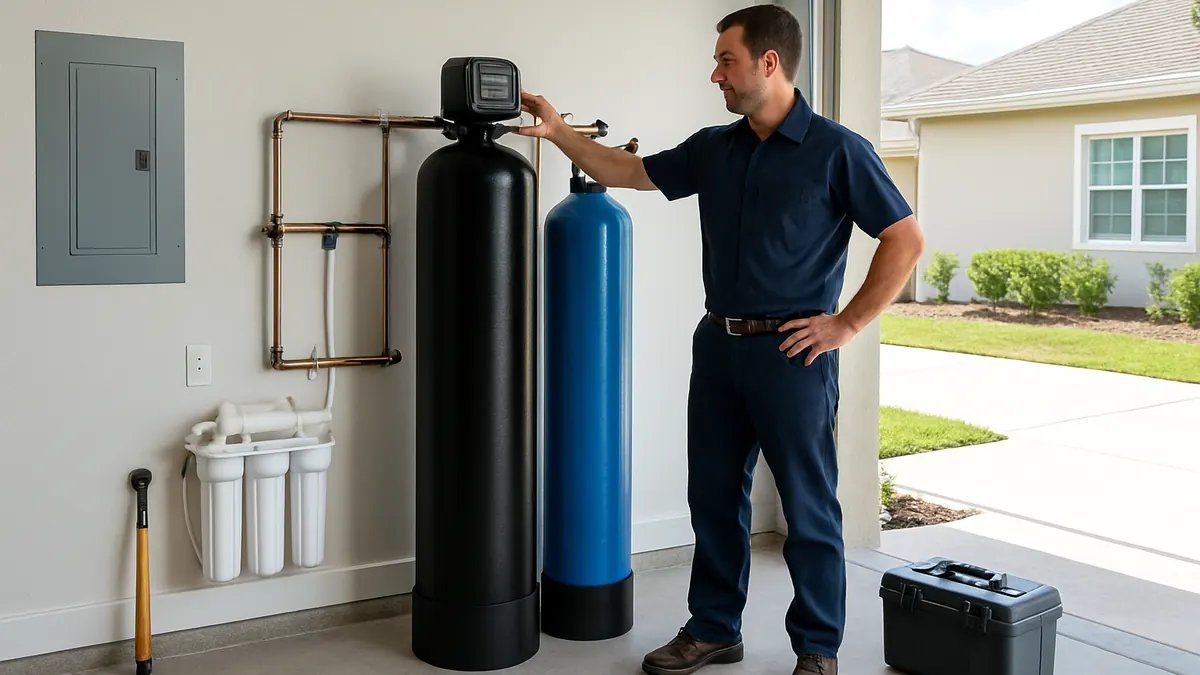
For confirmed hardness, a conventional softener can reduce scale and improve soap performance. When hardness and filtration concerns are both verified, separate stages may be installed in the proper sequence.
Existing equipment may only need programming, cleaning, seal replacement, control-valve service, a new cartridge, or fresh media rather than full replacement.
Typical Factors Affecting Cost
Cost depends on test results, treatment goals, system capacity, pipe size, peak flow, number of treatment stages, installation access, drainage, electrical requirements, and the condition of existing valves and piping.
Additional work may be needed to replace an unreliable shutoff, create a service bypass, reroute pipe, or remove old equipment.
Ongoing costs include salt, cartridges, regeneration water, replacement media, sanitizing, and maintenance. The least expensive purchase is not always the lowest-cost system to own if it is undersized or difficult to service.
Prevention and Maintenance Guidance
Keep records of test results, equipment model numbers, settings, salt additions, filter changes, and service visits.
Replace cartridges before flow becomes severely restricted. Check the softener salt level and look for salt bridging, a hard crust that prevents proper brine production.
Inspect tanks, fittings, bypass valves, and drain tubing periodically for leakage. Retest after major plumbing work or any noticeable change in taste, odor, scale, staining, or pressure.
Choosing Water Softener Versus Whole-House Filtration in Upper Grand Lagoon
The right system is the one that matches the confirmed condition. Hardness, scale, and poor soap performance point toward softening. Verified whole-home taste, odor, or incoming particles point toward filtration. A localized or hot-water-only complaint may require repair instead. Testing first protects your water pressure, plumbing, appliances, and treatment investment.
About this guide: This resource provides general homeowner education, not a remote diagnosis. Actual conditions, code requirements, equipment, and safe repair options must be evaluated at the property.