Stop and call for qualified help when plumbing water is near electrical equipment, sewage is entering occupied space, gas or burning odors are present, or a repair would require opening pressurized piping.
When multiple drains back up in a Wright home, the problem often lies in a shared portion of the drainage system. Toilets may gurgle, showers may fill, sinks may drain slowly, or washing-machine water may return through a tub or floor drain.
One slow fixture usually suggests a local clog. Several affected fixtures suggest a branch-line, main-sewer, or septic restriction.
The problem should be addressed promptly because backed-up wastewater can contain harmful contaminants. It can damage flooring, drywall, cabinetry, furnishings, and electrical equipment.
A licensed plumber can identify whether the issue is a removable blockage, recurring buildup, root intrusion, pipe failure, or septic condition.
The Most Common Possible Causes
- A main sewer obstruction may consist of paper, waste, wipes, grease, and debris.
- Kitchen grease can harden and narrow pipes.
- Wipes and hygiene products can collect inside the line.
- Tree roots may enter cracks and separated joints.
- Cast-iron piping can corrode and scale internally.
- Pipes can shift, crack, sag, or collapse.
- A sewer belly can retain wastewater and solids.
- Foreign objects can become lodged in the system.
- Heavy household use can overwhelm a partially blocked pipe.
- Septic components may be full, clogged, damaged, or unable to discharge properly.
Safe Checks the Homeowner Can Perform
- Stop using water throughout the property.
- Determine whether one fixture group or the entire home is affected.
- Observe the lowest drains.
- Listen for toilet bubbling or drain gurgling.
- Note whether laundry discharge triggers the backup.
- Look outside for sewage near the cleanout or septic area.
- Keep people and pets away from wastewater.
- Contact property management when shared drainage may be involved.
What the Homeowner Should Not Attempt
- Do not repeatedly flush toilets.
- Avoid chemical drain cleaners and never mix chemicals.
- Do not insert a small cable into several fixtures.
- Do not open a cleanout that may be pressurized.
- Avoid rented sewer machines and improvised jetting tools.
- Do not climb onto the roof to investigate vents.
- Do not excavate before locating utilities.
- Never enter a septic tank.
Signs That Make the Problem Urgent
Immediate service is appropriate when:
- Raw sewage enters the building
- Several toilets cannot be used
- Wastewater reaches wiring or appliances
- Contaminated water spreads under flooring
- Strong sewer odors persist
- Sewage appears outside
- A septic alarm is active
- The backup returns after recent cleaning
- Vulnerable occupants are present
- The problem affects adjacent property
How a Licensed Plumber Diagnoses It
- The plumber studies which fixtures are affected and identifies the likely drainage zone.
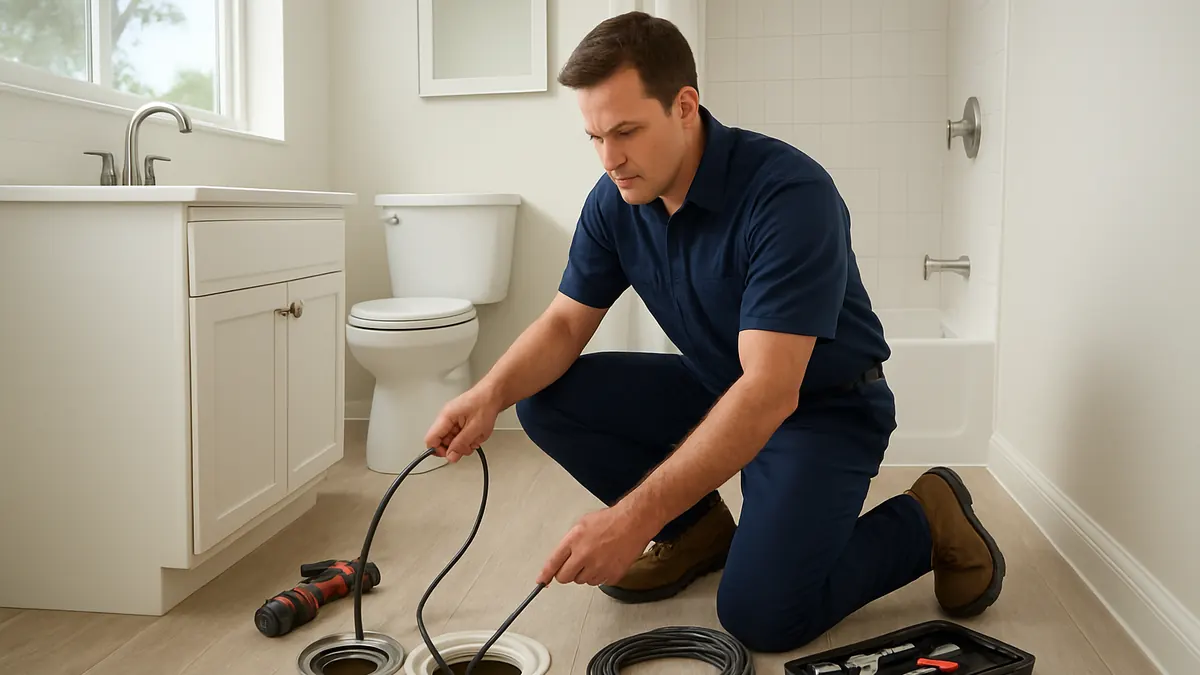
- A cleanout may be used for professional cabling.
- The obstruction's distance and resistance provide diagnostic clues.
- A camera inspection can reveal roots, grease, scale, cracks, offsets, bellies, and collapse.
- Locating equipment identifies the affected section from above ground.
- For septic properties, diagnosis may include the tank, outlet filter, pump system, piping, and drain field.
Repair Options
- Mechanical cabling may clear paper and waste.
- Root cutting can restore flow.
- Hydro jetting may clean grease and sludge from appropriate pipes.
- Descaling can improve some cast-iron lines.
- A spot repair may correct isolated structural damage.
- Pipe lining or bursting may provide trenchless alternatives.
- Traditional excavation may be necessary for collapse or severe displacement.
- Septic work may include pumping, filter cleaning, pump repair, line clearing, or drainage evaluation.
Typical Factors Affecting Cost
Factors include:
- Cleanout availability
- Location and depth
- Type of blockage
- Pipe length and diameter
- Pipe material
- Root severity
- Camera and locating
- Hydro jetting
- Structural repair
- Concrete or landscaping
- Septic involvement
- Permits
- Emergency service
- Cleanup and restoration
Prevention and Maintenance Guidance
- Keep cooking grease and oil out of drains.
- Flush only toilet paper and human waste.
- Use sink and shower strainers.
- Do not wash paint, grout, plaster, or construction material into fixtures.
- Keep sewer cleanouts accessible.
- Investigate recurring backups with a sewer camera.
- Repair damaged piping when roots or offsets repeatedly cause trouble.
- Maintain septic tanks, filters, pumps, and drain fields.
- Teach household members, tenants, and guests what should not be flushed.
- Gurgling toilets and slow lower drains are early warnings. Addressing them before sewage enters the home can reduce repair costs and property damage.
About this guide: This resource provides general homeowner education, not a remote diagnosis. Actual conditions, code requirements, equipment, and safe repair options must be evaluated at the property.