Stop and call for qualified help when plumbing water is near electrical equipment, sewage is entering occupied space, gas or burning odors are present, or a repair would require opening pressurized piping.
You already have a tank and filter housing near the main water line, yet spots still appear on dishes and the water pressure seems lower than before. You may not know whether the equipment is a softener, a whole-house filter, or a combination that is no longer working correctly. This is a common reason homeowners ask about water softener versus whole house filtration in Wright, FL.
The safest immediate step is to leave unfamiliar bypass valves and control settings alone. Photograph the equipment labels, note when cartridges or salt were last serviced, and compare symptoms at several fixtures. Existing equipment may need maintenance, different programming, better sizing, or replacement. Adding another tank without diagnosing the current system can increase cost and reduce flow without solving the problem.
First Identify What Equipment Is Already Installed
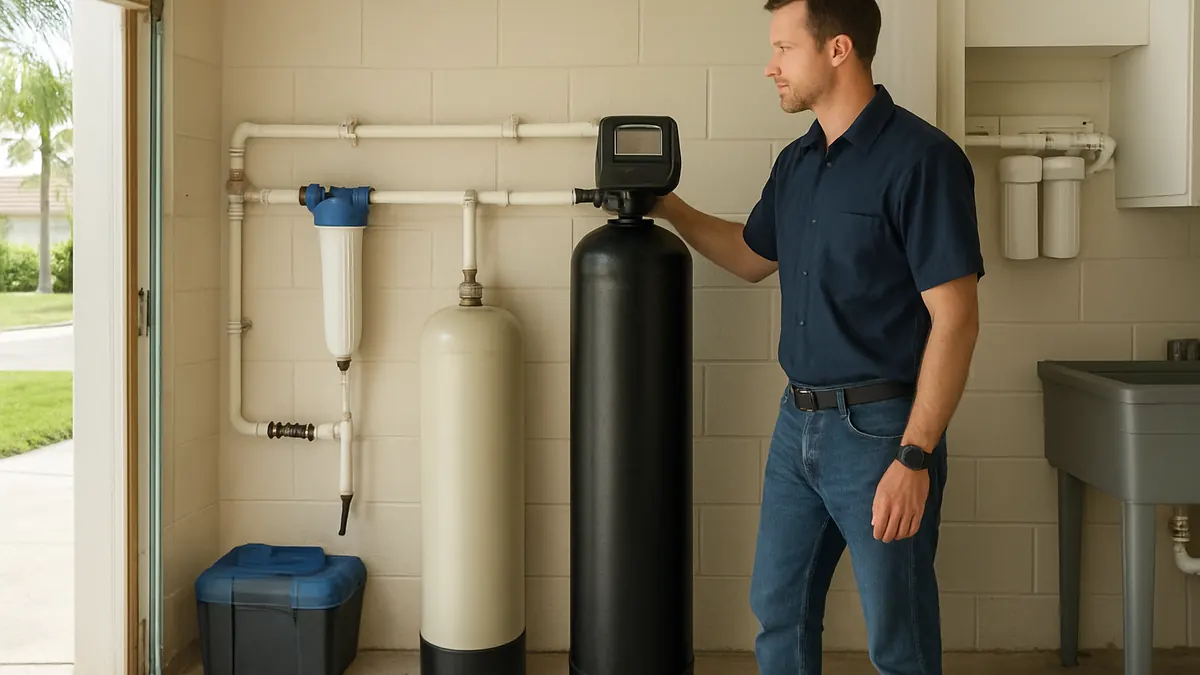
A water softener typically includes a resin tank, a control valve, and a separate brine tank that holds salt. During regeneration, the system uses brine to restore the resin's ability to reduce hardness minerals.
A whole-house cartridge filter often has a removable housing containing a replaceable element. Larger media filters may resemble softener tanks but use different internal material and controls. Equipment labels, plumbing connections, drain lines, and service records help identify the system.
Water Softener Versus Whole House Filtration: What Each Should Accomplish
A water softener primarily reduces calcium and magnesium. These dissolved minerals contribute to scale, cloudy glassware, poor soap performance, and buildup in fixtures or water-heating equipment.
A whole-house filter is selected for a particular filtration goal. Sediment cartridges capture particles. Activated carbon may reduce certain tastes and odors. Specialty media may address another tested condition.
A standard filter normally does not remove hardness, and a conventional softener is not a complete filtration system. When both concerns are confirmed, the equipment must be sized and arranged to work together.
Why Water Can Remain Spotty or Pressure Can Decline
The Softener Is Bypassed or Improperly Programmed
A valve left in bypass allows untreated water around the unit. Incorrect hardness, capacity, or regeneration settings can also allow hardness through or waste salt and water.
A Salt Bridge Has Formed
Salt can harden into a crust inside the brine tank, leaving an empty space below. The tank may appear full even though the system cannot make the brine it needs.
The Filter Cartridge Is Restricted
A loaded cartridge creates resistance. Pressure may seem normal at one faucet but fall sharply when several fixtures operate.
The Equipment Is Undersized
The Wrong Media Was Chosen
A sediment filter will not correct dissolved hardness, and a softener will not necessarily correct an unwanted taste or odor. Equipment can operate mechanically while failing to address the actual concern.
Safe Checks a Homeowner Can Perform
Check the date written on the filter housing or service record. A cartridge overdue for replacement may be restricted.
Compare cold water from several fixtures in clear glasses. Look for particles, color, taste, or odor. Then compare hot water, because a hot-side-only problem may involve the water heater.
Observe water pressure with one fixture running and again with several fixtures operating. Record whether the reduction occurs throughout the home.
What Homeowners Should Not Attempt
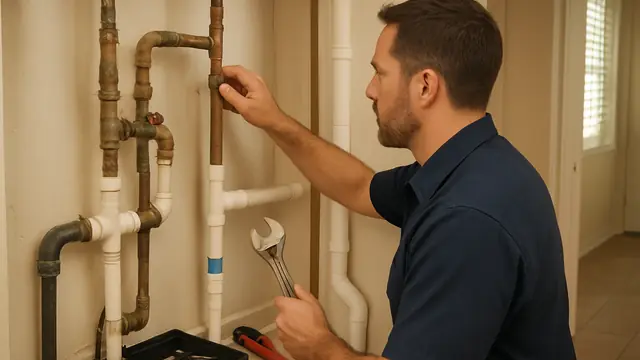
- Do not force a bypass valve that is stuck, corroded, or unlabeled. An incorrect valve position can shut off water, bypass treatment, or create a leak.
- Do not open a pressurized filter housing without shutting off water and relieving pressure according to the equipment instructions. A housing can release water forcefully.
- Do not pour cleaners, bleach, acid, or descaler into a resin or media tank without an approved procedure.
- Do not guess at programming values or repeatedly start manual regeneration. This can waste water and salt without correcting the underlying problem.
Signs That Make the Problem Urgent
- Routine spotting usually allows time for testing. A sudden change in water color, taste, odor, or clarity at multiple fixtures deserves prompt attention.
- Avoid drinking or cooking with water that has an unexplained chemical, fuel-like, sewage-like, or oily characteristic until appropriate guidance is obtained.
- Call promptly if a filter housing cracks, a tank leaks, a control valve will not stop discharging to the drain, or pressure drops suddenly throughout the home.
Water around electrical controls, receptacles, wiring, or appliances creates an added hazard. Stay away from wet electrical equipment. Follow any official water-use advisory that applies to the property instead of assuming installed treatment provides protection.
How a Licensed Plumber Diagnoses the Existing System
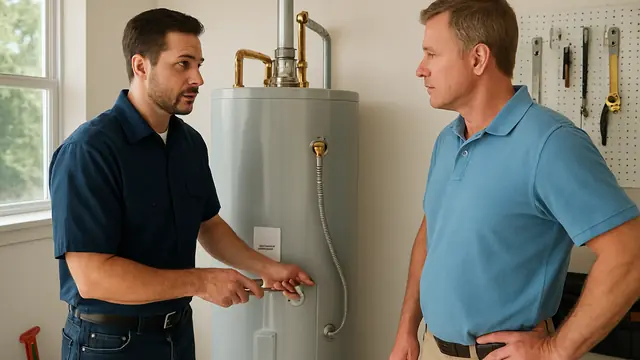
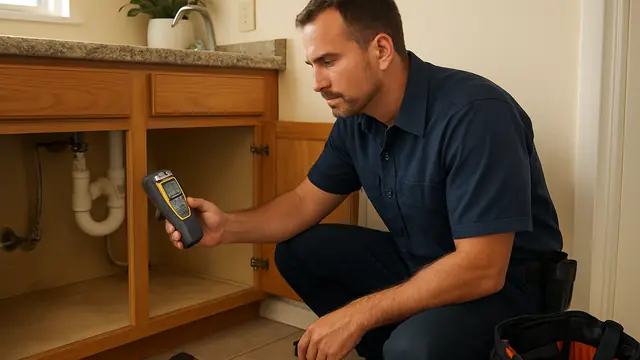
A licensed plumber identifies each component and traces the order in which water flows through it. The plumber checks bypass positions, pressure before and after equipment, flow capacity, drain connections, control programming, salt condition, cartridge restriction, and visible leaks.
Water testing determines whether hardness is passing through the softener and whether another concern requires filtration. Depending on the symptoms, testing may evaluate hardness, iron, pH, sediment, taste, odor, or another condition.
Repair and Treatment Options From Least Invasive to Most Complete
Correct Valve Position or Programming
When the equipment is sound, restoring the correct bypass position or control settings may solve the problem with minimal work.
Replace a Cartridge or Correct a Salt Bridge
Routine service may restore pressure or softening performance.
Repair the Control Valve or Other Components
Seals, injectors, motors, meters, or other serviceable parts may be repaired when the equipment is appropriately sized and otherwise in usable condition.
Upgrade One Inadequate Stage
An undersized filter housing, exhausted media tank, or inadequate softener may be replaced while useful existing components remain in service.
Install a Coordinated Softening and Filtration System
When testing confirms hardness and a separate filtration need, the full system may be redesigned. The order, flow capacity, bypasses, drainage, and maintenance access should be planned together.
Typical Factors Affecting Cost
Cost depends on whether the need is maintenance, repair, media replacement, equipment resizing, or complete redesign. Testing, capacity, flow rating, controls, plumbing modifications, drain access, electrical needs, and installation space also affect the scope.
Long-term expenses include salt, cartridges, replacement media, regeneration water, and periodic service.
Prevention and Maintenance Guidance
- Keep model numbers, manuals, water-test results, settings, and service records together. Mark cartridge replacement dates and label bypass valves.
- Check salt according to manufacturer instructions and watch for bridging. Monitor pressure before waiting for flow to become severely restricted.
- Inspect housings, tanks, valves, connections, and drain tubing for leaks. Retest when symptoms change, plumbing is modified, or equipment performance declines.
Diagnose the Existing System Before Adding More Equipment
The answer to water softener versus whole house filtration in Wright, FL may begin with equipment already installed. Persistent spotting can mean hardness is still passing through. Low pressure can indicate a restricted filter or undersized system. Taste, odor, or particles may require a separate filtration response.
A licensed plumber can identify the equipment, test the water, measure pressure and flow, and determine whether service, repair, resizing, or redesign is appropriate. The least invasive effective correction is better than adding equipment without knowing why the current system is underperforming.
About this guide: This resource provides general homeowner education, not a remote diagnosis. Actual conditions, code requirements, equipment, and safe repair options must be evaluated at the property.