You fill a pot for supper, pour a glass for a child, and notice that the water smells a little like the pool. Later, unloading the dishwasher, you find white spots on the glasses again. It is tempting to connect the two and look for one filter that fixes both. But the taste in the glass and the spots on its surface can have quite different causes.
For many Panama City households, the kitchen is the most useful place to start. An under-sink reverse osmosis system can provide better water for drinking and cooking without treating every gallon used for laundry or bathing. The key is knowing which problems belong at the kitchen tap and which ones need attention where water enters the house.
What a reverse osmosis faucet changes in the kitchen
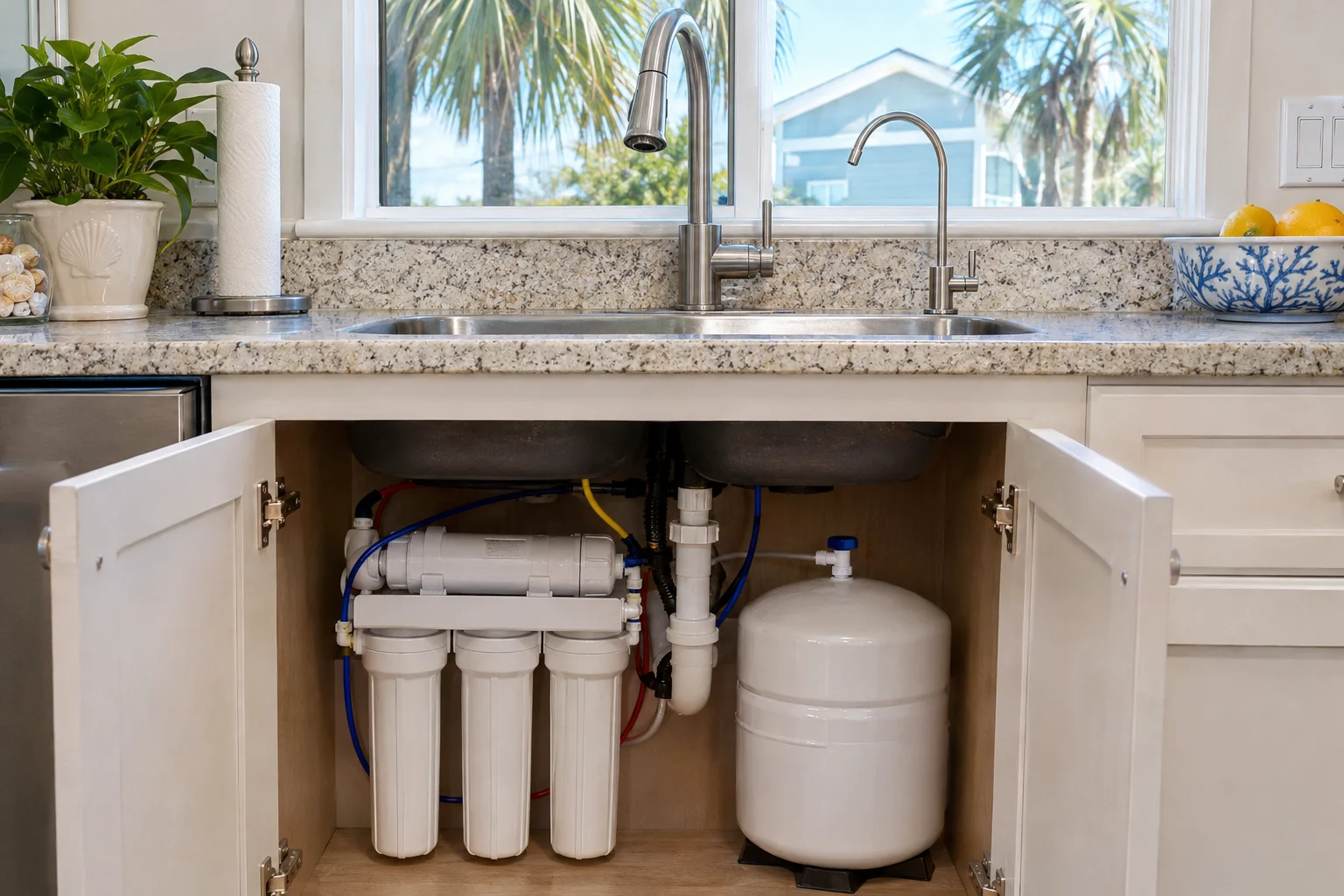
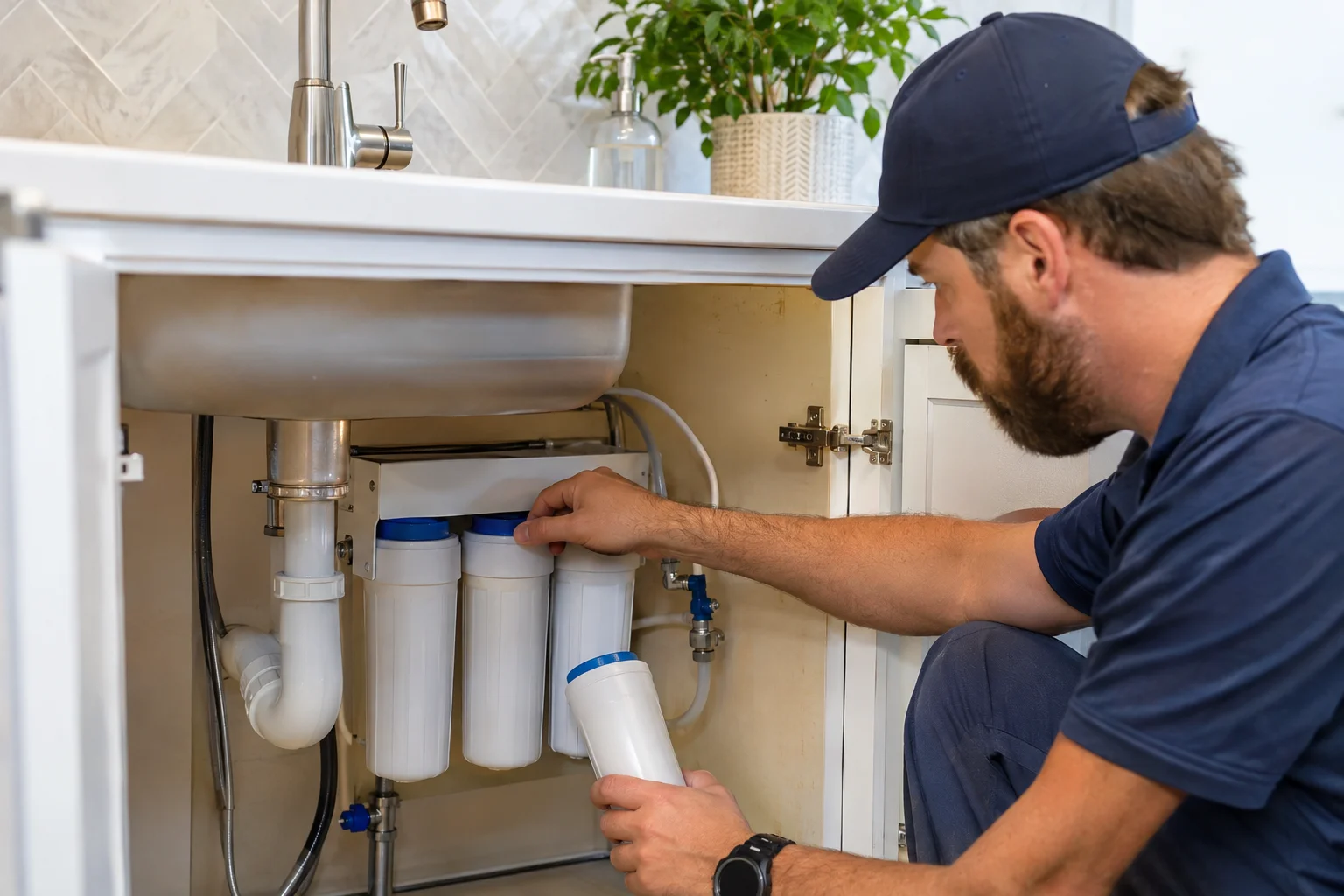
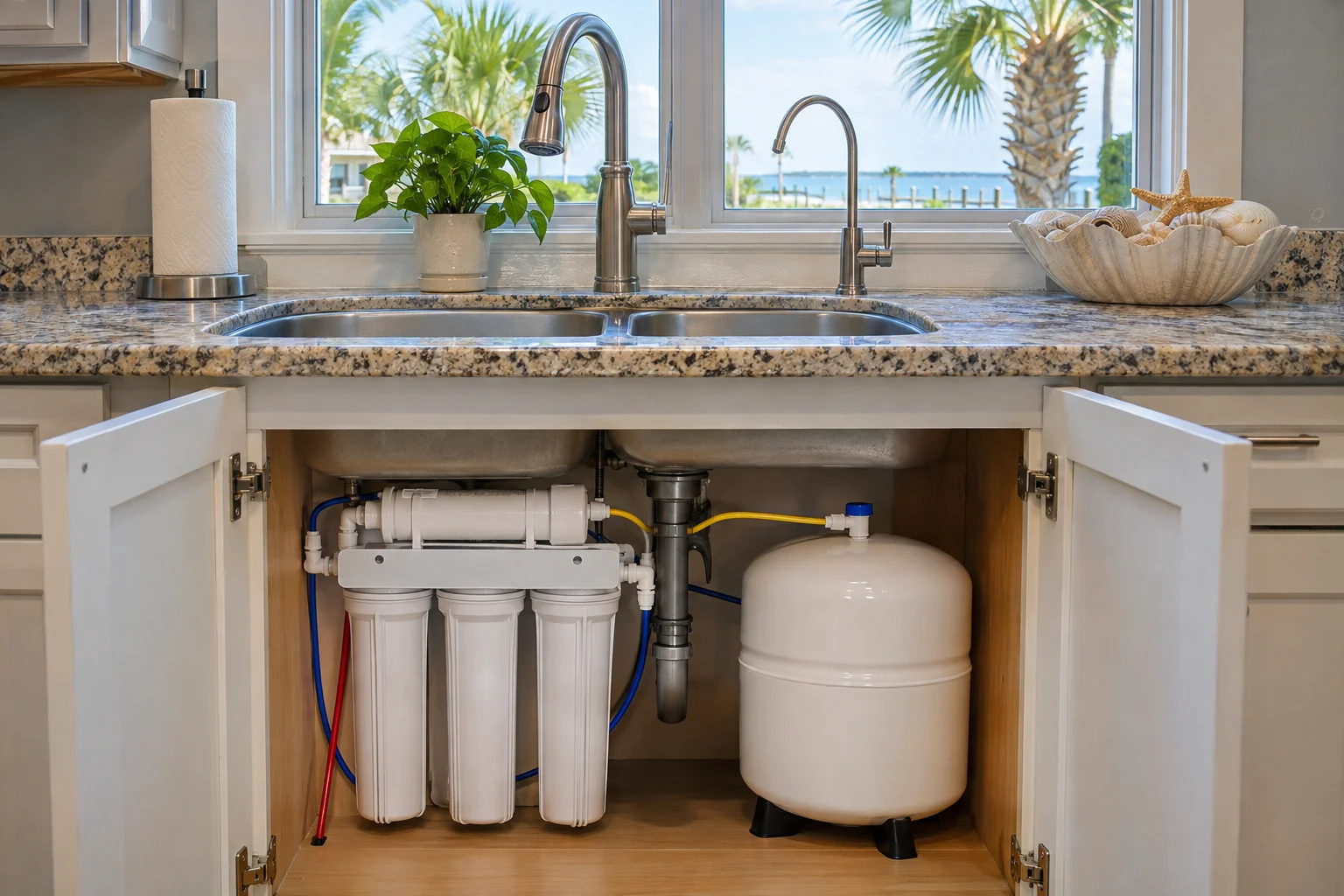
A reverse osmosis system, often called RO, uses water pressure to move part of the incoming water through a membrane. The membrane reduces many dissolved substances that pass through an ordinary sediment filter. A separate stream carries the concentrated material to the drain. Most kitchen systems also include a sediment filter and a carbon stage that helps reduce disinfectant taste and protects the membrane. Exactly what a unit reduces depends on its design and tested performance.
At breakfast, the difference may be easiest to notice in a plain glass of cold water, before ice or lemon masks the flavor. At dinner, it might be the absence of an unpleasant taste in broth or rice. If chlorine comes through in iced tea, using filtered water for both the tea and the ice makes more sense than brewing with treated water and then adding a tray of cubes made from the regular tap.
Size the system for the way your family cooks
Think about the busiest fifteen minutes at your sink. On a warm, humid Panama City morning, that might mean filling three sports bottles, starting coffee, and topping off a pitcher for the refrigerator. A compact storage tank may suit a couple who mostly drink by the glass but run low when a larger family fills a pasta pot. Ask about usable tank capacity and refill time, not just the daily production number printed on the box.
If cloudy ice cubes are the main concern, keep expectations modest. Dissolved minerals can contribute to cloudiness, but so can air trapped during freezing. RO water may make ice taste better without making it perfectly clear. Likewise, filtered water for coffee and cooking can remove a distracting tap flavor, but a coffee maker with old mineral deposits still needs cleaning according to its instructions.
Read the spots on the glass before choosing a treatment
When a droplet dries on a shower door, the water evaporates and its dissolved minerals stay behind. Repeated wetting and drying can leave pale rings on glass, dishes, and chrome fixtures. On a faucet aerator or showerhead, those deposits can narrow the openings until the spray comes out sideways. If a mark wipes away with a cleaner approved for that finish, it is more likely a surface deposit. Permanent haze on dishwasher glassware can be etching instead.
Hardness comes mainly from calcium and magnesium. An RO membrane reduces those minerals in the water it produces, which can mean less residue in a kettle filled from the RO faucet. It will not prevent scale buildup on faucets in the bathrooms, in hot water plumbing, or inside a dishwasher connected to the untreated supply. For deposits throughout the house, a hardness measurement is more useful than guessing from the worst-looking fixture.
Bathing, laundry, and appliances tell a different story
Notice whether soap does not lather well, leaves a film that seems difficult to rinse, or collects on the tub after a bath. Towels that feel stiff and dark laundry that looks dull may be other clues. Some people also notice dry skin or dull hair after bathing. None of those experiences alone proves hard water: detergent dose, shower temperature, and cleaning products matter too. A test can tell you whether hard water treatment is a reasonable investment.
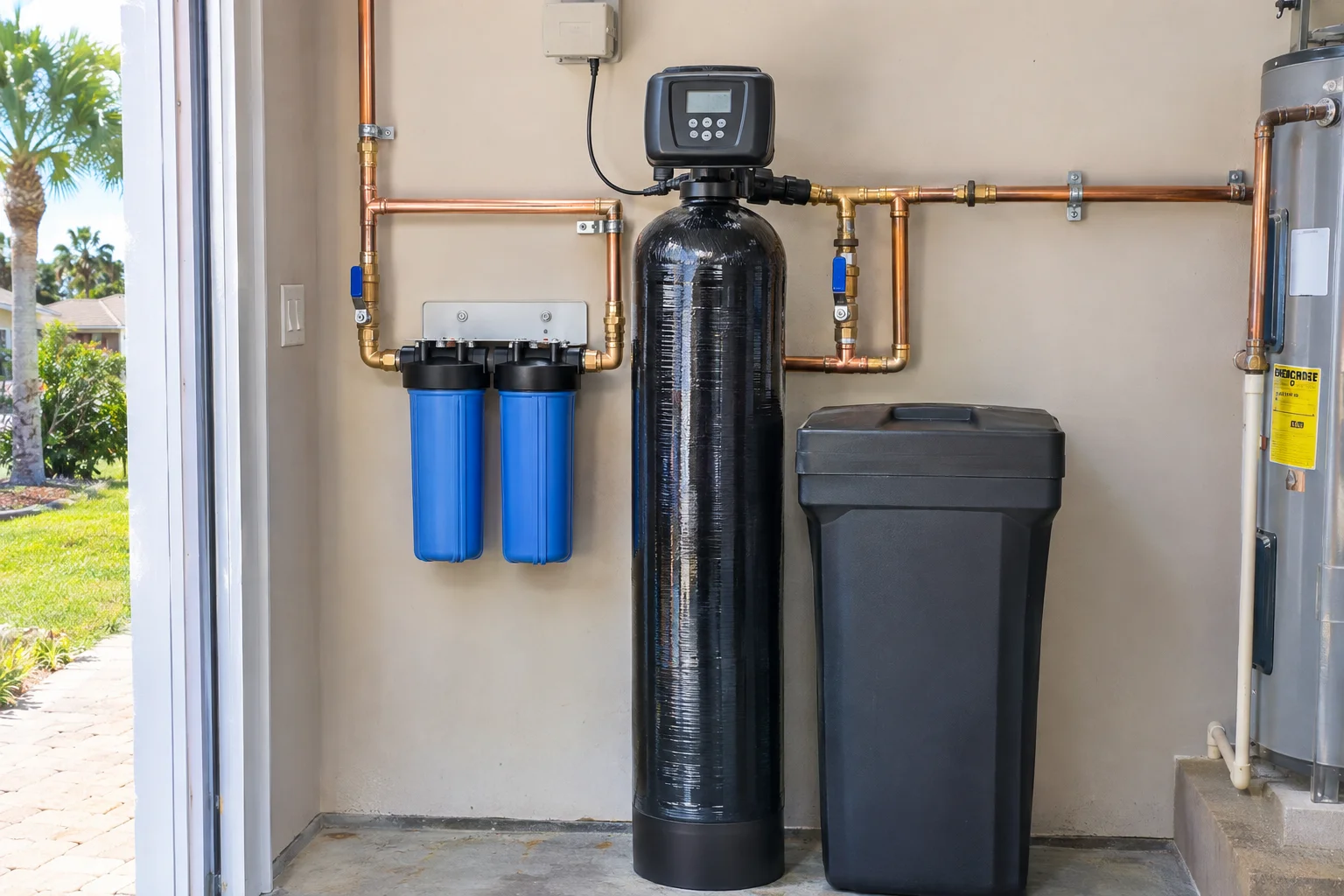
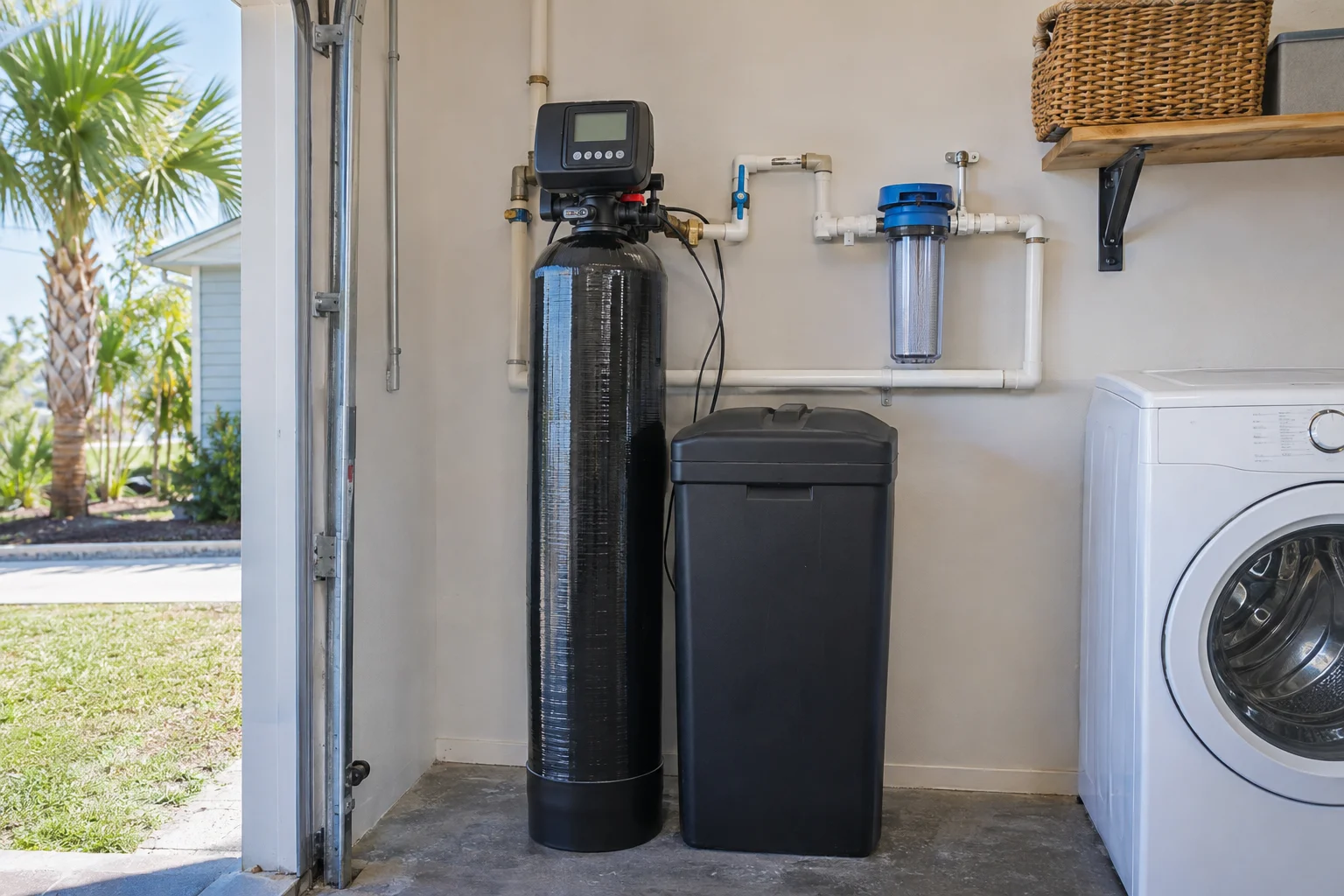
Where hardness is substantial, a properly sized ion exchange softener treats the supply to selected household fixtures by exchanging hardness minerals for sodium or potassium. That can reduce new scale in appliances and help soap work with less product. If appliances seem to be wearing out faster than expected, have the actual fault checked as well. Scale on a heating element is relevant; a failed control board is not evidence that you need a softener.
Trace taste, color, and odor to their source
Bay County's public water system draws on Deer Point Lake, but not every home in the county has the same supplier or even a public connection. Check the name on your water bill and read that utility's current water quality report. A private well needs its own testing. The report gives useful context for treated utility water, but it cannot tell you what happens in the line between the street and your kitchen.
For a familiar chlorine taste in water that otherwise looks normal, a carbon filter rated for the disinfectant your supplier uses may be enough. If you also want to reduce dissolved minerals or a specific substance identified by testing, compare the reduction claims for the complete RO system. A rating for chlorine taste and odor is not a rating for lead, for example. Neither a pleasant taste nor a low dissolved solids reading establishes that water is safe.
Check whether the change affects one tap or the house
Metallic tasting water first thing in the morning deserves a closer look, particularly in an older home. Note whether it comes from one fixture, whether it persists after normal use, and whether the cold supply and hot supply differ. Visible sediment in a single aerator points the investigation in a different direction from rusty discoloration at every cold tap. In a remodeled kitchen, it is worth checking which older supply lines still serve the new fixtures.
Odor can be misleading at a sink. Fill a clean glass, step away from the drain, and check whether the smell travels with the water. If it does, note whether it occurs with cold water or only with hot. For an abrupt or unexplained change in color or odor, contact the supplier or a qualified well professional before buying treatment equipment. Follow any public advisory. An ordinary household RO unit is not a substitute for the directions in a boil water notice.
Where whole home filtration fits alongside RO
Picture three separate jobs: catching particles, controlling hardness, and improving drinking water. A sediment filter can intercept grit but cannot catch dissolved hardness minerals. Whole home water filtration with suitable carbon media can address certain taste and odor issues at multiple taps but generally does not soften water. An under-sink RO system concentrates treatment on the small share of household water you actually drink or cook with.
There is no need to buy all three. A household happy with its showers and laundry may get exactly what it wants from a dedicated drinking faucet. Another home with measured hardness and recurring scale may benefit from softening first, then RO for the kitchen. When comparing AO Smith water filtration equipment or another brand, ask which job the particular model does, what its replacement cartridges cost, and how much water it can deliver as those cartridges approach the end of their service life.
A Superior Mechanical's guide to water filtration, reverse osmosis, and water softeners is a useful starting point for comparing those options. For a whole home unit, ask about flow while a shower and washing machine are running together. For a drinking water unit, ask how long it will take to refill the pitcher you use every day.
Plan the installation around the sink you already have
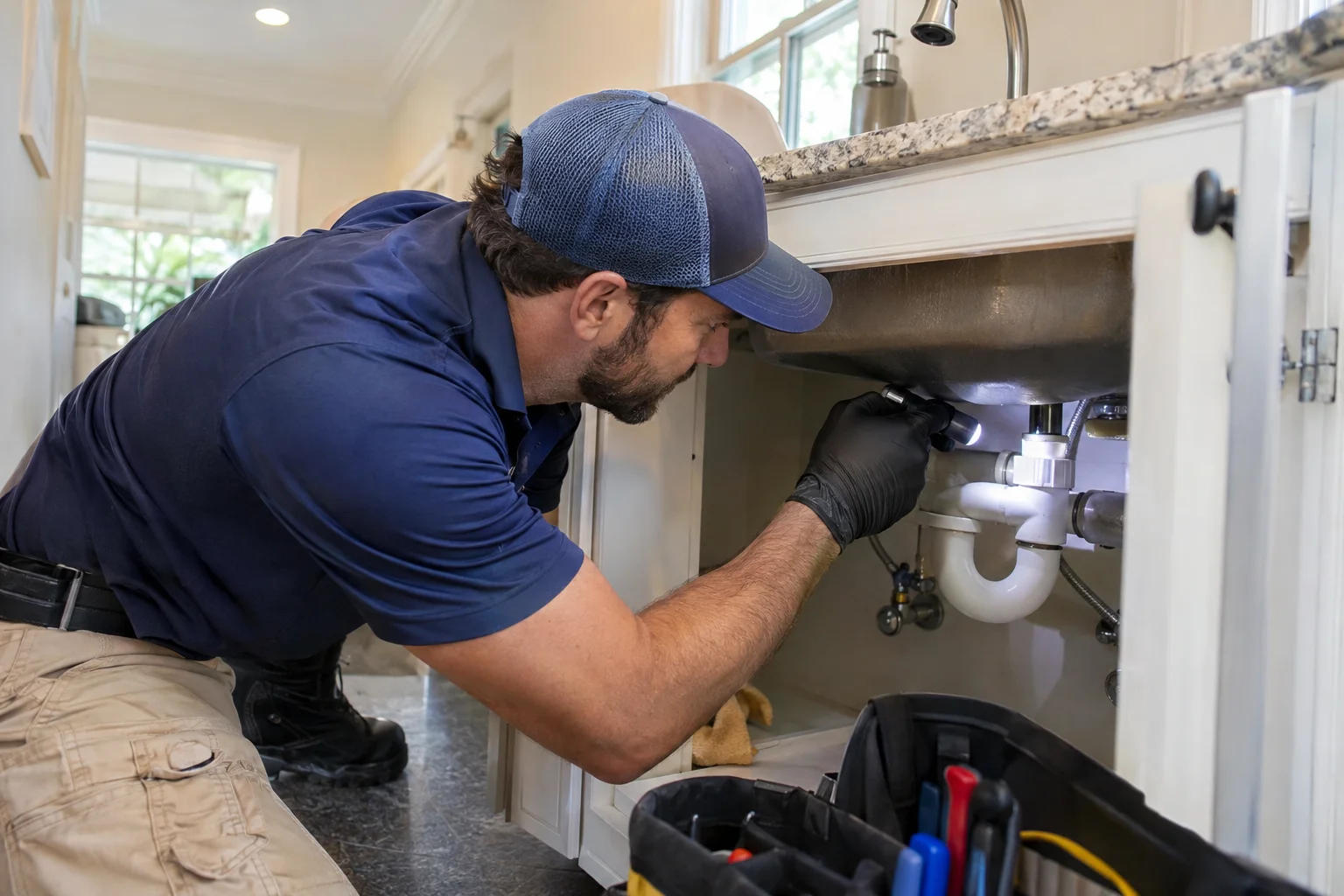
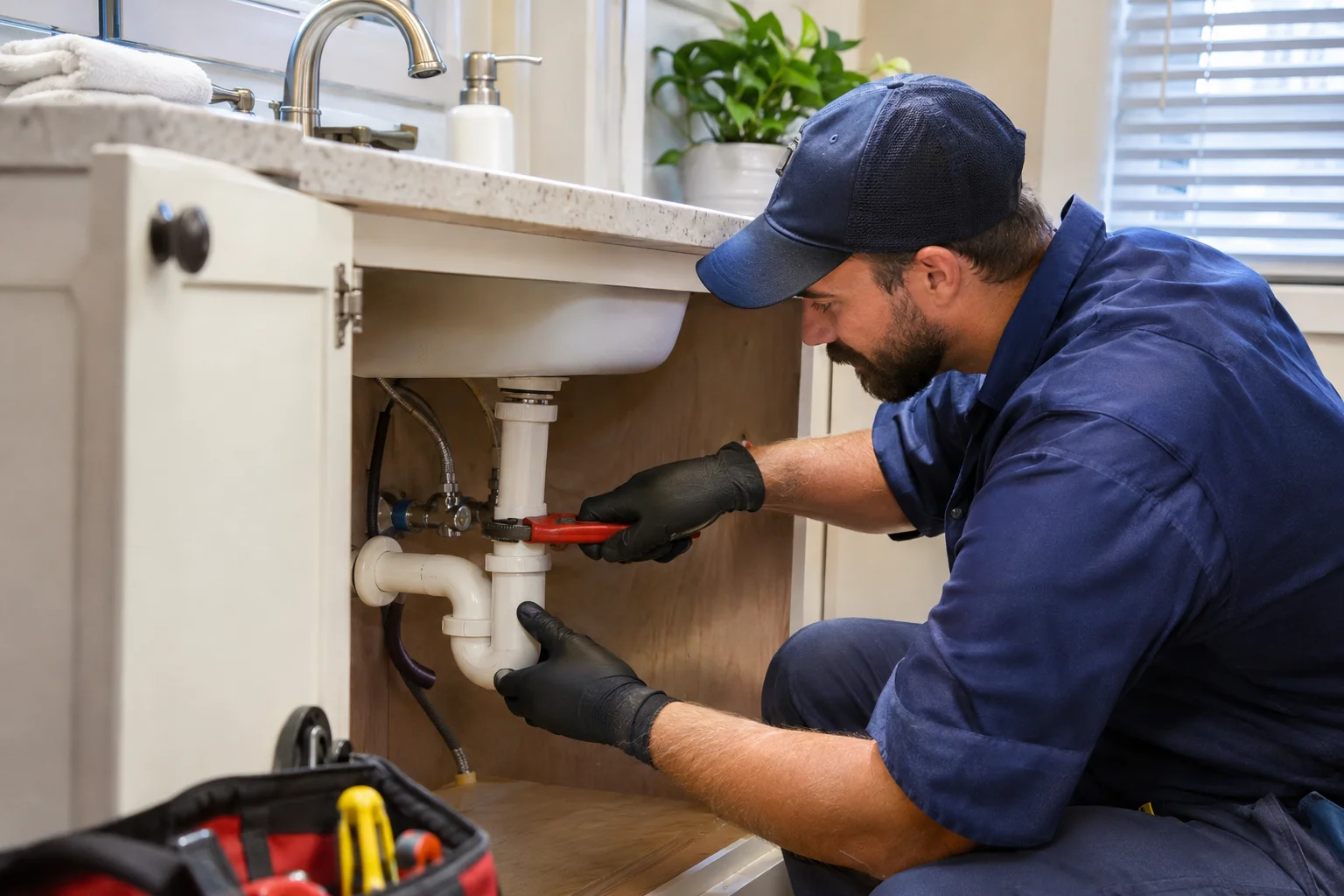
Before ordering equipment, open the sink cabinet. A disposal, pullout trash bin, deep sink bowl, or shelf may occupy the space shown as empty in a product illustration. Leave enough room to remove filter housings as well as to install them. The installer should check incoming pressure, the cold water connection, a suitable drain connection, and a location for the drinking faucet. A tankless model may save storage space but require a nearby power outlet.
If you want filtered water at the refrigerator, mention that before installation day. The length of the tubing run and the pressure needed by the ice maker can affect the result. For a kitchen renovation, coordinate the faucet opening before the countertop is cut. This overview of plumbing installation in Panama City covers related supply planning that is easier to handle while cabinets are accessible.
Keep the first good glass from being the last
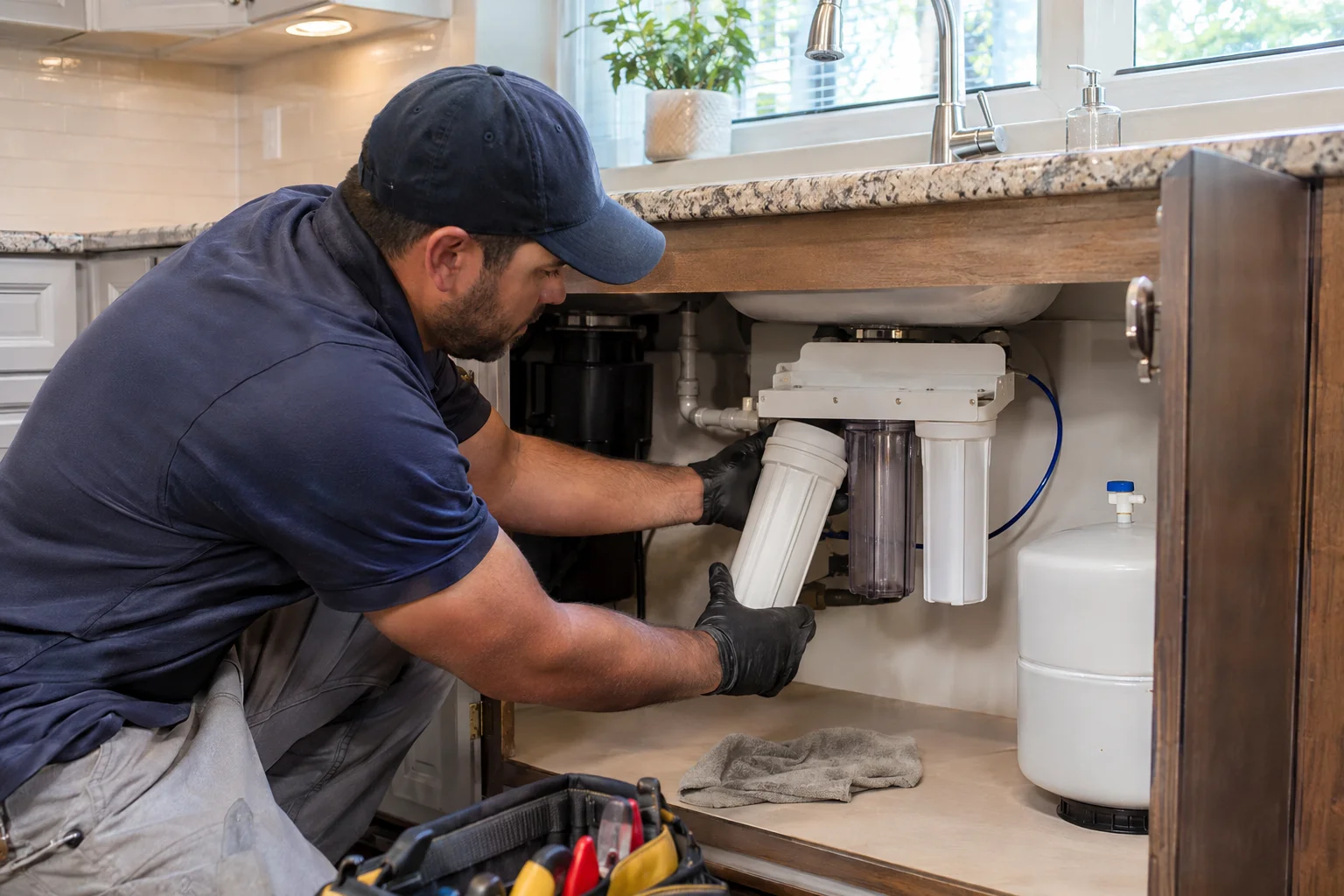
At installation, record the model, cartridge numbers, service date, and recommended replacement schedule inside the cabinet. Ask the installer to show you the shutoff and explain the flushing procedure after a filter change. A seasonal home that sits unused between visits may need different restart care from a busy household filling bottles every morning. Follow the manufacturer's instructions for periods of nonuse, sanitizing, and membrane replacement.
Slower dispensing, a tank that no longer fills as it used to, or a familiar taste returning are reasons to arrange service. A slow stream does not automatically mean the membrane has failed. The cause could be a loaded prefilter, low feed pressure, or a storage tank problem. If you find moisture under the unit, shut off its supply if you can do so safely and have the leak checked rather than waiting for the next scheduled cartridge change.
For help choosing or servicing reverse osmosis systems in Panama City, FL, tell A Superior Mechanical what you notice and where you notice it. A photo of faucet deposits, the name of your water supplier, and a rough count of the bottles or pitchers you fill make a useful starting point. The team serves Panama City homes and the surrounding Bay County service area. A local visit lets a technician check the water, pressure, and cabinet in your own kitchen before recommending equipment to put there.
Find Reverse Osmosis Systems in Panama City, FL
If you need Reverse Osmosis Systems in Panama City, FL, visit our local service page or contact A Superior Mechanical today.
For a broader look at whole-home water filtration, reverse osmosis, and water softener options, visit our water filtration, RO, and water softener page.
Map of Panama City, FL
Frequently Asked Questions
Will an under-sink reverse osmosis system stop spots on my dishes?
Not if your dishwasher uses untreated water. RO reduces minerals at its dedicated faucet, so it can help with residue in a kettle filled there. For recurring spots on machine-washed dishes and bathroom fixtures, start with a hardness test.
Do I need reverse osmosis if chlorine is the only taste I dislike?
Not necessarily. A carbon filter rated for the disinfectant in your water may address that taste on its own. RO is worth comparing if you also want to reduce dissolved minerals or another substance for which the specific system has a verified reduction claim.
Can a Panama City homeowner use a softener and reverse osmosis together?
Yes. A softener can reduce hardness in the household supply, while an RO unit treats a portion of that water for drinking and cooking. An installer can check hardness, supply pressure, and kitchen demand to determine whether both systems would be useful.
Related Articles
Photo Gallery