A thermostat can say 74 degrees while the house still feels sticky, a back bedroom stays warm, or the air conditioner runs longer than expected. In Panama City, comfort depends on more than a temperature setting. Coastal humidity, ductwork, equipment condition, and control settings all affect how a home feels.
Smart thermostats can make daily adjustments easier and help homeowners notice trouble sooner. But the best upgrade starts with an HVAC plan, not just a new screen. Here is how to approach smart thermostats in Panama City, FL with comfort, airflow, humidity, and prevention in mind.
Start with the house, not the thermostat display
Panama City's long cooling season puts substantial demands on air conditioners and heat pumps. Warm, moisture-heavy outdoor air enters through doors, gaps, and leaky building assemblies. Salt air can accelerate corrosion on exposed outdoor equipment, while storms can interrupt power and internet connections.
The house itself matters just as much. Older homes may have aging ductwork, limited return airflow, or thermostat wiring that needs attention. Newer homes may have variable-capacity equipment that requires a specific communicating control. Remodels and additions can change cooling needs without a matching adjustment to ducts or equipment.
Before replacing a thermostat, note which rooms feel uncomfortable, when the problem occurs, and whether indoor humidity rises during mild weather. These details help a local HVAC contractor distinguish a control problem from an airflow, sizing, or maintenance issue.
Match smart controls to the equipment you already own
Heat pumps, furnaces, and air handlers need different settings
A thermostat must support the type of equipment it controls, including the number of heating and cooling stages. Heat pumps also need correct reversing-valve settings and appropriate control of auxiliary heat. Incorrect configuration can cause poor heating performance or unnecessary electric resistance heating.
Homes with gas furnaces, electric furnaces, or separate air handlers need their own compatibility checks. Some systems use proprietary communication rather than conventional thermostat terminals. Replacing those controls with a generic device may remove useful functions or simply not work.
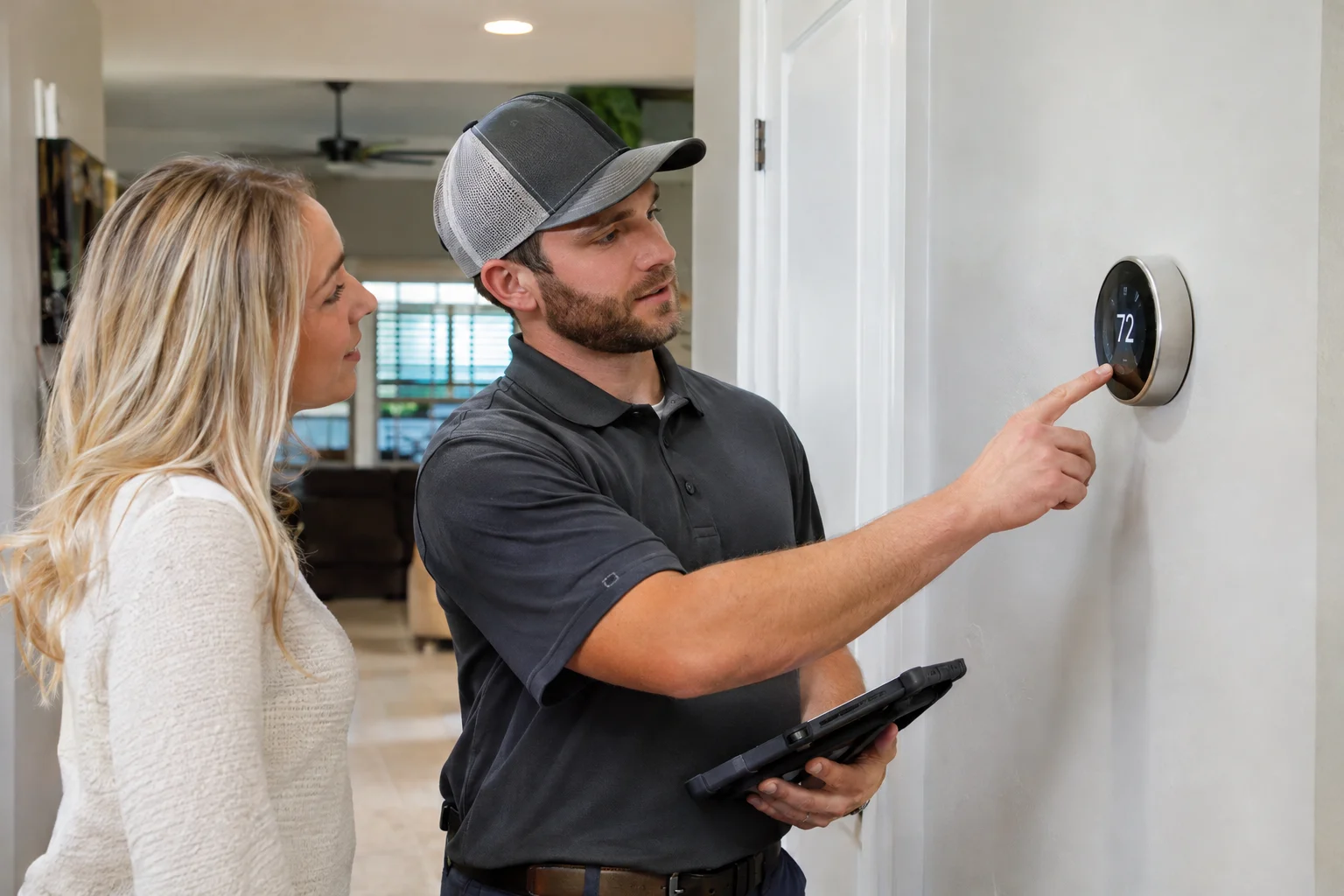
Homeowners searching for thermostat installation near me should look for an installation process that includes equipment identification, wiring verification, and operational testing. Wire color alone does not establish a wire's function, and not every smart thermostat power adapter fits every system.
Ductless systems require a separate compatibility conversation
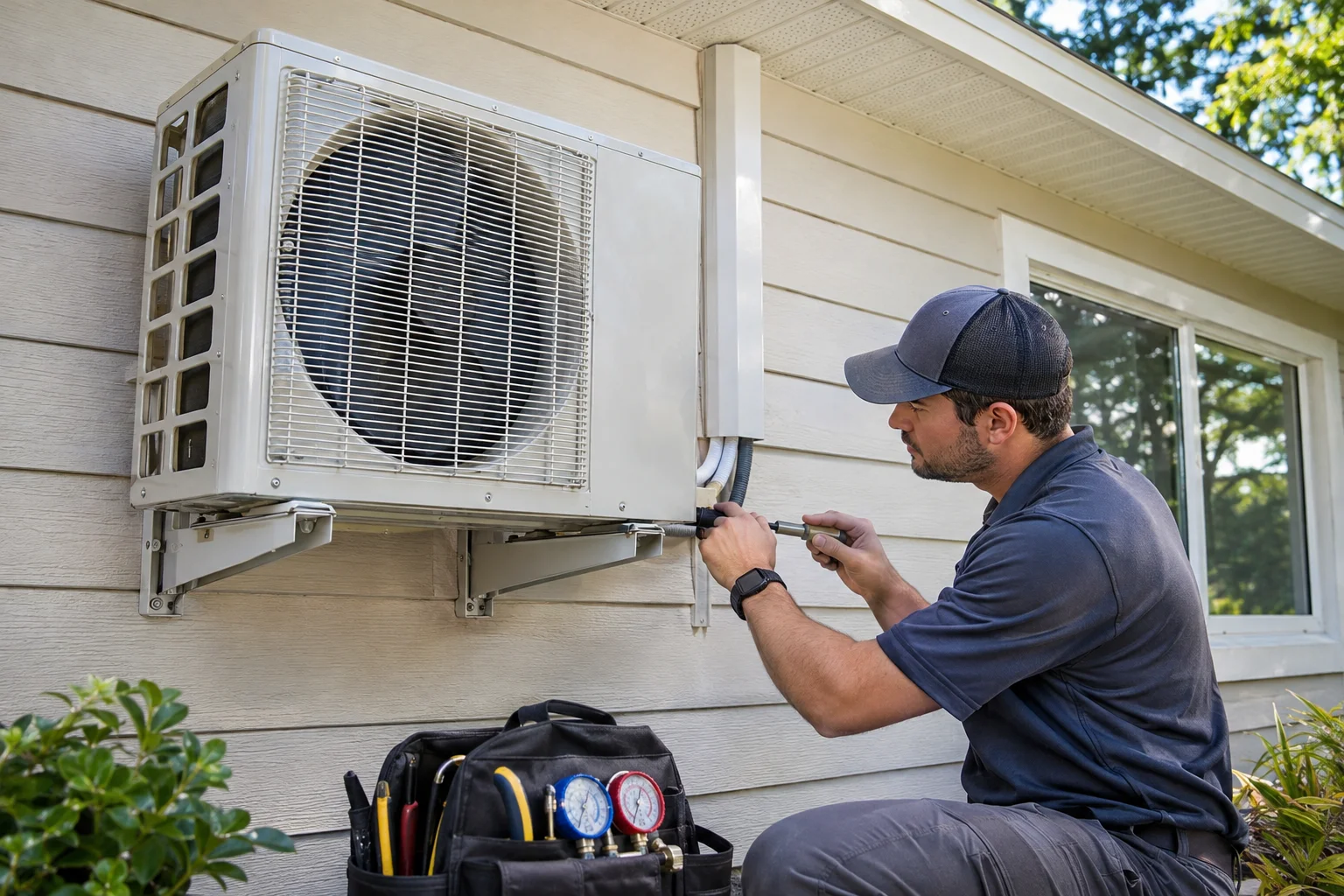
Ductless mini splits commonly use manufacturer controls. Some accept approved smart interfaces, while others work with compatible remote-control bridges. Ask whether the proposed setup preserves fan settings, operating modes, and modulation. A convenient app is not an improvement if it limits the equipment's intended performance.
A thermostat location can help or hurt the whole house
A thermostat reads conditions where it is installed, not throughout every room. Direct sunlight, a nearby supply vent, kitchen heat, or drafts around a wall opening can distort its reading. That can lead to short cycles, unnecessary cooling, or rooms that never feel right.
Remote room sensors can help compatible thermostats prioritize occupied areas. For example, a bedroom sensor may improve overnight temperature control when the main thermostat sits in a warmer hallway. Scheduling sensor participation can be more useful than averaging every room all day.
However, sensors do not create zoning or move additional air into a room. If a converted garage or new addition lacks enough supply and return airflow, the solution may involve ductwork repair, balancing, or a dedicated mini split rather than another sensor.
Humidity deserves its own place in the plan
Cooling removes moisture when warm indoor air passes over a cold evaporator coil and water drains away. In humid Bay County weather, temperature can reach the setpoint before enough moisture has been removed, especially with oversized equipment or during mild, damp conditions.
A practical indoor relative humidity range is often around 40 to 55 percent, with a goal of staying below 60 percent. Comfort, condensation, and the home's construction should guide the final target. A thermostat humidity reading is useful, but a separate hygrometer can help verify questionable readings.
Choose features that actually control moisture
Some smart thermostats only display humidity. Others can operate compatible dehumidification equipment or adjust cooling within a limited temperature range. Confirm what the thermostat can control before paying for a humidity feature.
For many conventional systems, leaving the fan on Auto rather than continuously On helps reduce the re-evaporation of moisture from a wet coil after cooling stops. Persistent humidity may require air sealing, duct sealing, equipment adjustments, or a properly sized whole-home dehumidifier. Repeatedly lowering the temperature is not a complete moisture-control strategy.
Airflow problems can look like thermostat problems
A warm room, weak vent airflow, or long cooling cycles may make the thermostat seem unreliable. Yet the actual cause can be a clogged filter, dirty evaporator coil, restricted return, leaking duct, or blower problem inside the air handler.
Check that furniture and rugs are not blocking vents or return grilles. Use the correct filter size and a filtration level the system can support. A highly restrictive filter can reduce airflow if the equipment and filter cabinet were not designed for it.
Closing many supply vents to redirect cooling can increase duct pressure and worsen performance. Have a technician evaluate balancing and duct condition instead. In homes with attic ductwork, leaks can waste cooled air or draw hot, humid air into return ducts.
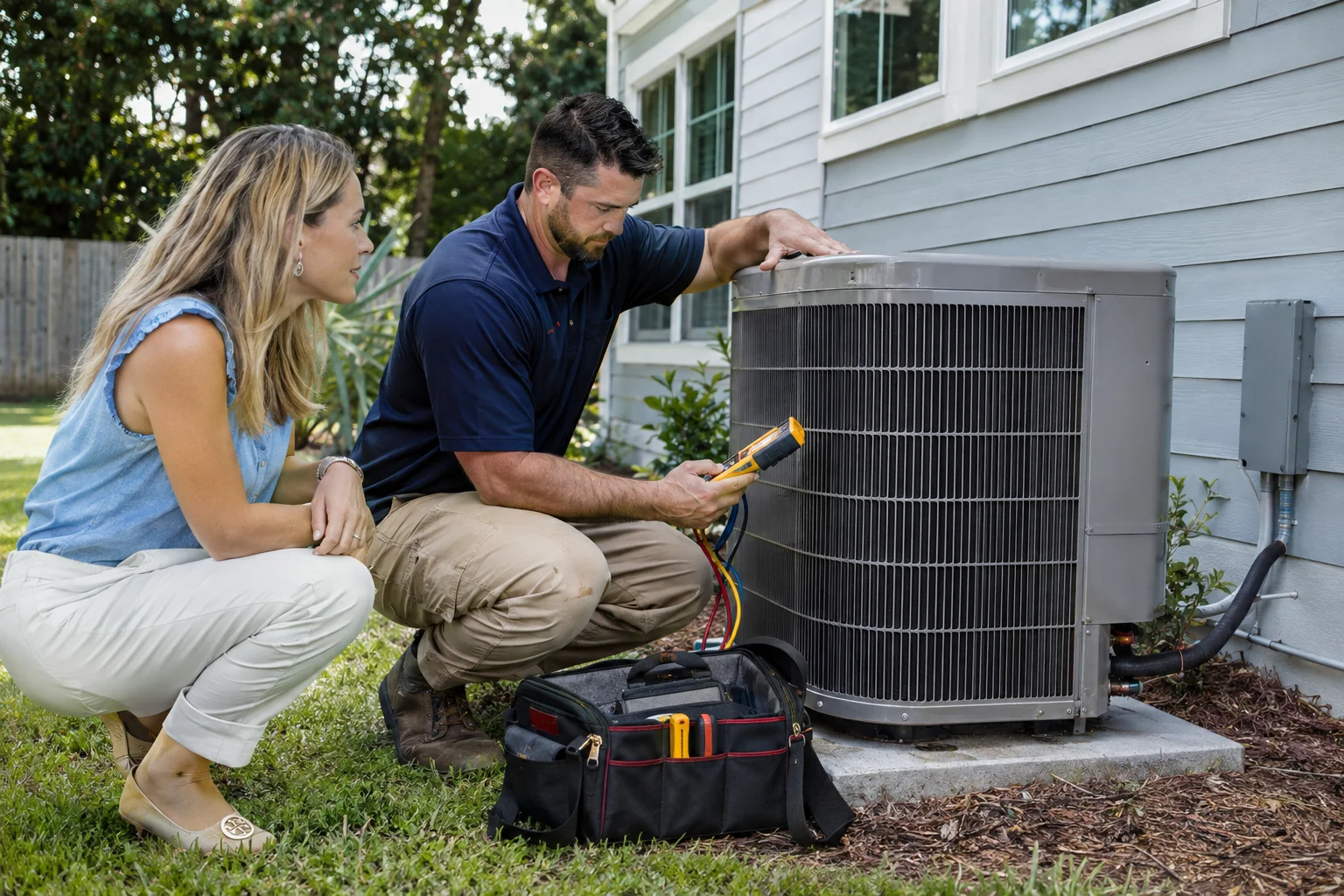
If a thermostat repair near me search began because one room stays uncomfortable, describe the room pattern to the technician. A control test alone may miss the underlying air distribution problem.
Use schedules that fit coastal living
Smart scheduling works best when it reflects actual occupancy. Start with modest temperature adjustments while the home is empty, then review comfort and humidity before increasing the setback. Large cooling setbacks may allow moisture to accumulate and require lengthy recovery during the hottest afternoon hours.
Heat pump heating schedules also deserve care. A large temperature increase can trigger auxiliary heat on some systems. Proper recovery settings and staging controls can help avoid unnecessary resistance heating without sacrificing comfort.
For vacation rentals, remote access and temperature alerts can help owners notice unusual conditions between stays. Use reasonable guest limits, explain the controls clearly, and avoid settings that leave an empty property damp. Remote monitoring is useful, but it does not replace an on-site inspection when something looks wrong.
Energy efficiency gains depend on the previous schedule, equipment condition, weather, and occupant behavior. A smart thermostat cannot guarantee a specific reduction in utility bills.
Know when the app is reporting an HVAC failure
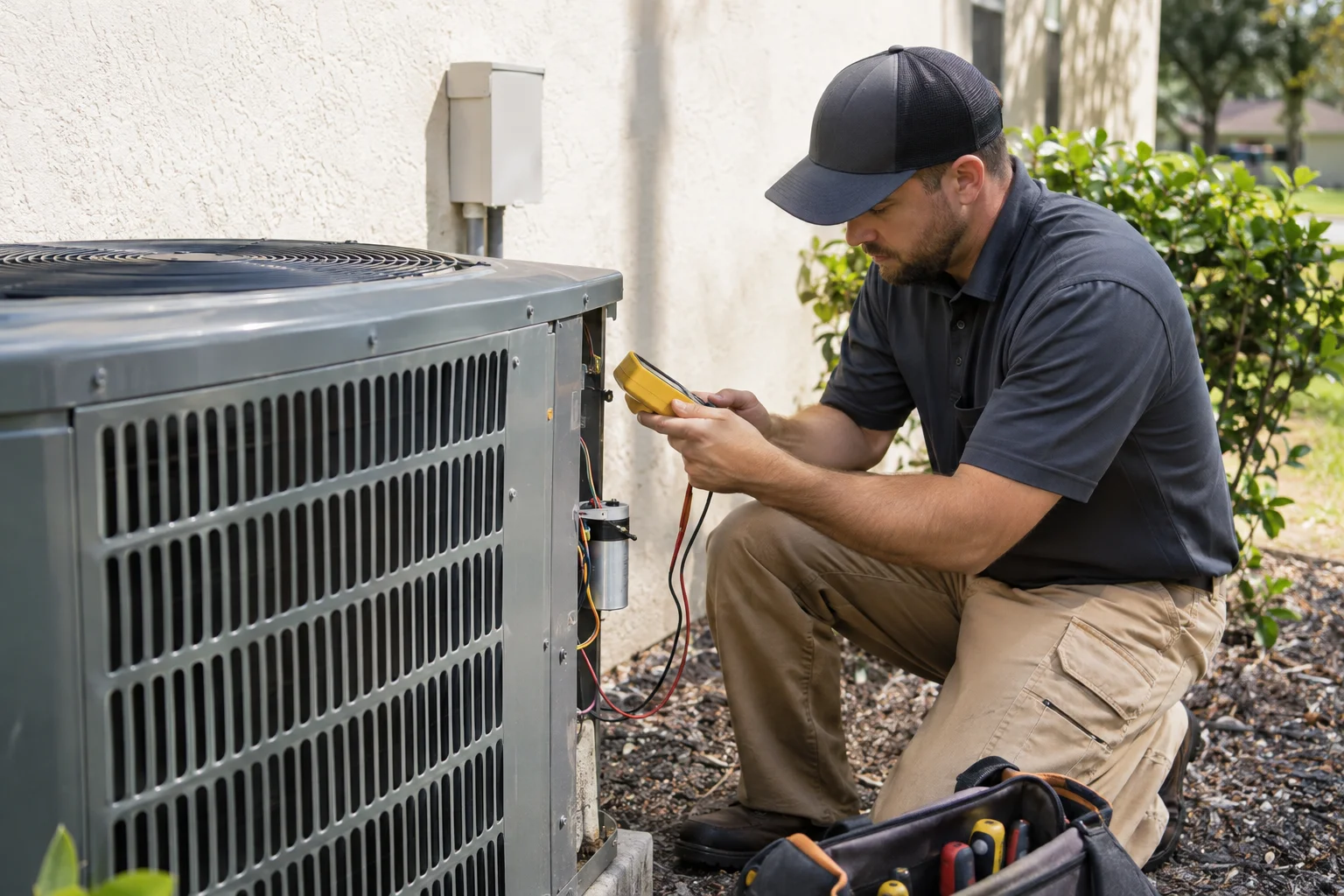
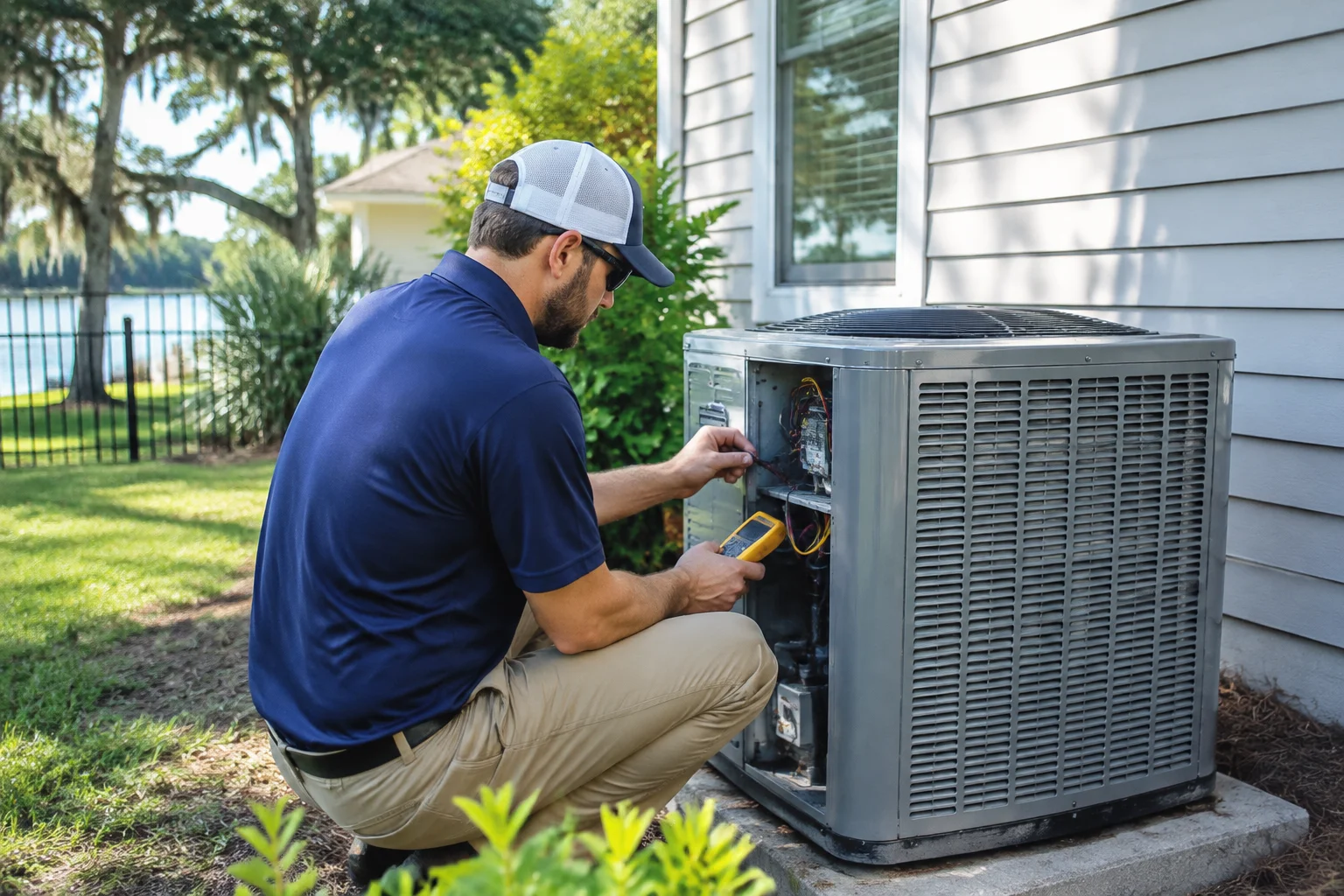
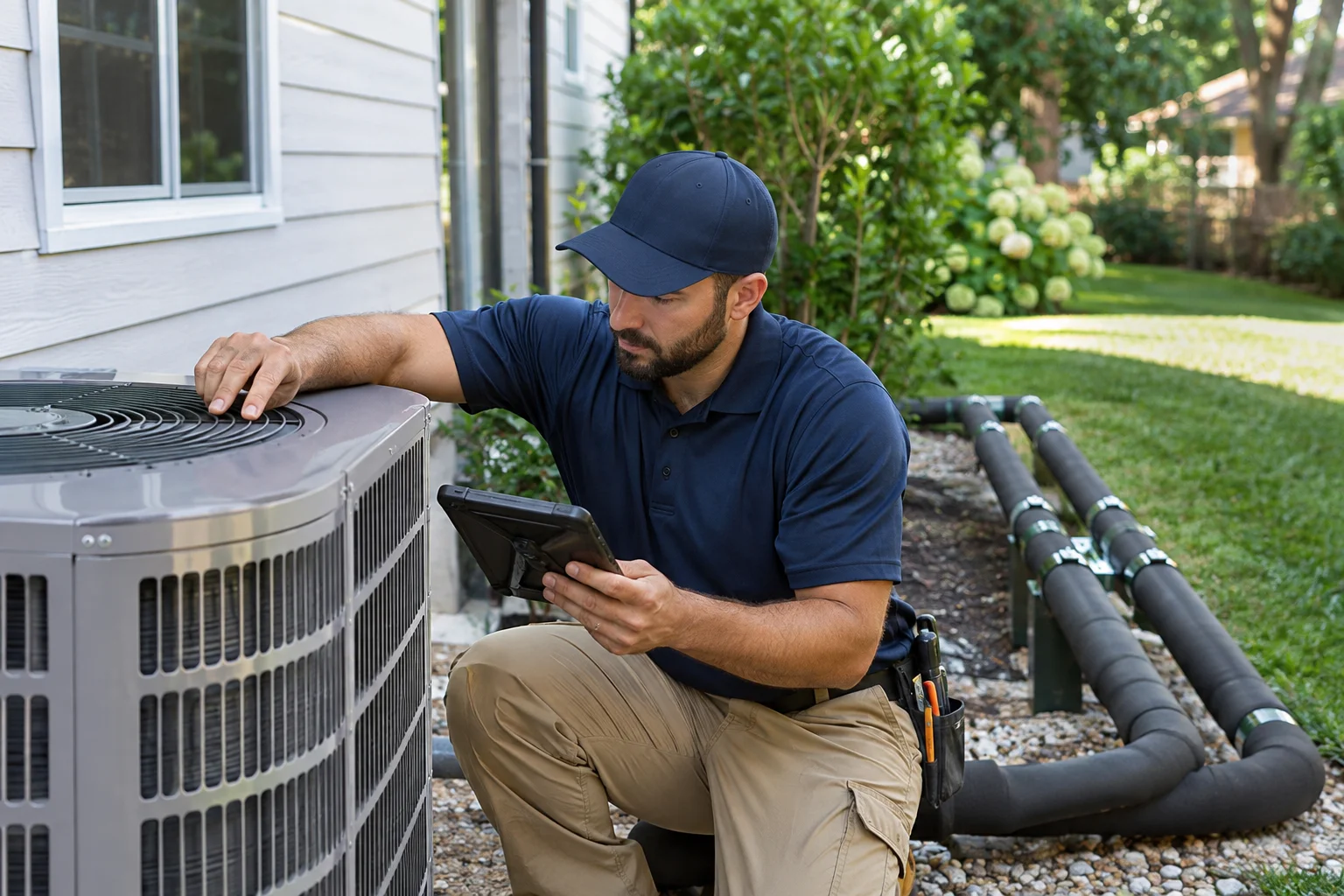
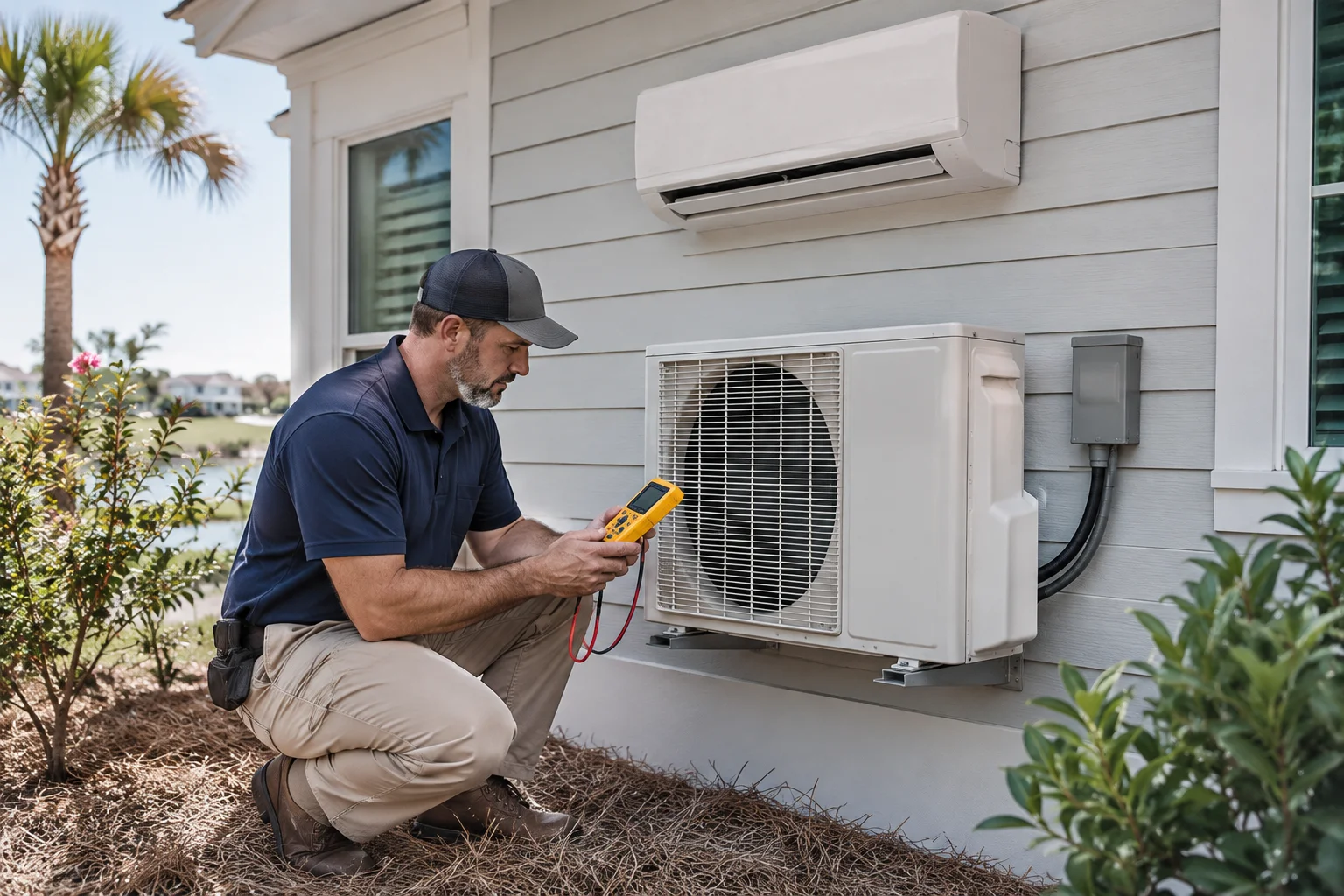
A rising indoor temperature despite a cooling call can indicate a problem beyond the thermostat. Outdoor units, including condensers and heat pump units, depend on working fans, compressors, clean coils, and proper refrigerant charge. Refrigerant leaks, electrical component failures, and restricted airflow can all reduce cooling.
If you are searching for ac not cooling repair near me, check the operating mode, setpoint, and filter first. Do not repeatedly reset a tripping breaker or chip ice off a coil. Turn cooling off if ice is visible and arrange air conditioning repair. Low refrigerant is not normal consumption; a suspected leak needs diagnosis rather than repeated topping off.
A blank thermostat can also result from a power issue or a condensate safety switch shutting the system down because a drain line is blocked. Never bypass that switch. Water near the air handler needs prompt attention to prevent property damage.
Smoke, burning odors, sparking equipment, or a gas odor are urgent concerns. Leave the area if gas is suspected and contact emergency services or the gas utility from a safe location. Loss of cooling during extreme heat can also become urgent for vulnerable occupants.
Build prevention into the thermostat upgrade
A useful maintenance plan covers the equipment behind the controls. During air conditioning service, a technician can inspect coils, blower operation, electrical connections, drainage, and system performance. Heating checks should address heat pump operation or furnace safety and function, depending on the home.
Inspect filters regularly and replace them according to their condition and manufacturer guidance. Keep vegetation and debris away from outdoor units while maintaining specified clearances. Coastal exposure makes inspection for corrosion especially worthwhile, but avoid pressure washing coils or applying cleaners without manufacturer guidance.
Set filter reminders thoughtfully. A calendar alert does not measure actual dirt buildup, and a runtime reminder cannot identify every airflow restriction. Drain lines, drain pans, and safety switches still need routine attention.
Scheduling seasonal hvac maintenance near me before peak summer demand can make it easier to address small problems before service schedules become crowded. Smart alerts are most useful when paired with a plan for responding to them.
Plan for storms, outages, and indoor air quality
Before storm season, learn what your thermostat does when Wi-Fi drops or power returns. Many models retain local temperature control without internet access, but remote alerts and app commands may be unavailable. Battery behavior, stored schedules, and restart settings vary by model.
After a storm, do not operate equipment that has been flooded or visibly damaged. Have it inspected first. Never rely on an app's normal-looking display as proof that the outdoor unit is safe to run.
Indoor air quality also deserves a broader approach. Filtration, moisture control, source control, and appropriate ventilation work together. Smart thermostats may manage compatible ventilation or filtration accessories, but they do not remove pollutants themselves. Discuss filter upgrades and air purifier options alongside airflow measurements so cleaner air does not come at the expense of system performance.
Make installation part of a longer HVAC plan
A Superior Mechanical's smart thermostat installation in Panama City gives homeowners a starting point for discussing compatible controls, remote access, and comfort goals. Bring the equipment model numbers, details about uneven temperatures, and any recent humidity concerns to that conversation.
If equipment replacement is already approaching, coordinate the controls with the new system. Reviewing air conditioning installation options before buying a thermostat can help avoid paying twice for controls that do not match future equipment. Proper sizing and duct evaluation remain essential.
Owners who also manage a small office or storefront can find related planning considerations in Comfort That Holds Up: Commercial HVAC Planning in Panama City, FL. Commercial occupancy patterns and ventilation needs require a different approach from a house.
Explore A Superior Mechanical's Panama City HVAC service information and broader Bay County service area when planning an upgrade. Local HVAC service matters because coastal exposure, seasonal humidity, and summer demand shape the work. The goal is a thermostat that fits the system, settings that fit the household, and equipment capable of delivering the comfort requested.
Find Smart Thermostats in Panama City, FL
If you need Smart Thermostats in Panama City, FL, visit our local service page or contact A Superior Mechanical today.
Map of Panama City, FL
Frequently Asked Questions
Will a smart thermostat work with my existing heat pump in Panama City?
Many smart thermostats support heat pumps, but compatibility depends on the equipment's stages, auxiliary heat, wiring, and control requirements. Communicating systems may require manufacturer-specific controls. Have the equipment and thermostat specifications checked before purchasing.
Can a smart thermostat fix high indoor humidity?
Not by itself. Some models can operate compatible dehumidifiers or use limited cooling adjustments to help manage moisture. Persistent humidity may also require airflow corrections, duct sealing, drainage service, or dedicated dehumidification. A humidity display alone does not provide humidity control.
Will my smart thermostat keep working if a storm knocks out Wi-Fi?
Many models continue controlling temperature locally when internet service is unavailable, but remote access and alerts may stop. A power outage can disable the HVAC system regardless of thermostat battery backup. Check the specific model's offline behavior and have flooded or storm-damaged equipment inspected before restarting it.
Related Articles
Photo Gallery