At bedtime, the hallway thermostat reads 74, but the back bedroom still feels warm enough to kick off the covers. Lowering the setting makes the hallway colder. It does surprisingly little for the bedroom. Before spending money on a new thermostat or a bigger AC, it helps to find out how much conditioned air actually reaches that room and whether it has a path back out.
In Panama City Beach, the answer matters for more than temperature. A leak can send cool air into a hot attic or pull humid air into the system every time the blower runs. A Superior Mechanical offers duct sealing and Aeroseal services in Panama City Beach. The useful starting point is a diagnosis: which part of the ductwork is leaking, and does that explain what you feel indoors?
Two sides of the duct system, two different problems
Supply ducts carry conditioned air from the air handler to the vents. If a branch comes loose at the metal box behind a bedroom grille, some of the air intended for the bedroom escapes behind the ceiling. You may feel a cool breeze at the vent, but there may not be enough of it to keep up with afternoon sun. Running the AC longer costs money without fixing the split in delivery.
Return ducts bring room air back to the equipment. A gap on this side can draw in air from wherever the duct passes. In a vented attic near the coast, that air can be both hot and damp. If it enters downstream of the filter, it can also carry dust straight to the blower and evaporator coil. Sealing that opening addresses a source of moisture and debris that buying a finer filter would miss.
Location changes the value of a repair. Air leaking from a supply joint inside a conditioned closet is not the same energy loss as air escaping into an attic. But even a leak inside the house can leave the intended room short of airflow. Ask the contractor to distinguish between leakage that affects room comfort and leakage that sends conditioned air outside the living space.
Read the room before booking AC repair
For a few days, note the room, time, thermostat setting, and whether the door was open. In a west-facing bedroom, trouble that starts late in the afternoon may point to window heat gain as well as limited supply air. If the room is comfortable until someone closes the door, the better lead may be a missing return path. That detail can save a technician a fair amount of guesswork.
Checks you can make from the living space
Make sure furniture hasn't covered a return grille and the problem room's supply register is open. Check that the filter is the specified size, fits without gaps, and isn't loaded with dust. Don't close several vents elsewhere to force air into one room. That can increase resistance to airflow throughout the system. If a grille rattles, mention whether the noise comes from its face or from farther behind it.
A small humidity monitor adds useful information. Place it away from supply air and direct sun, and take readings in the hallway and bedroom at similar times. Indoor relative humidity that regularly exceeds 60 percent merits attention, especially if bedding feels damp or condensation forms on vents. A single high reading after a shower is less useful than a pattern that persists through several cooling cycles.
Know when the equipment needs attention first
If every vent suddenly blows warm air, the outdoor unit won't start, or ice forms on the refrigerant line, don't book sealing as the first remedy. A dirty coil, inadequate blower airflow, or a refrigerant leak can produce overlapping symptoms. Switch cooling off if ice is visible and arrange air conditioning service. Water spreading from the air handler also deserves prompt attention: a blocked condensate drain line can damage a ceiling even while the AC still cools.
What a useful duct assessment measures
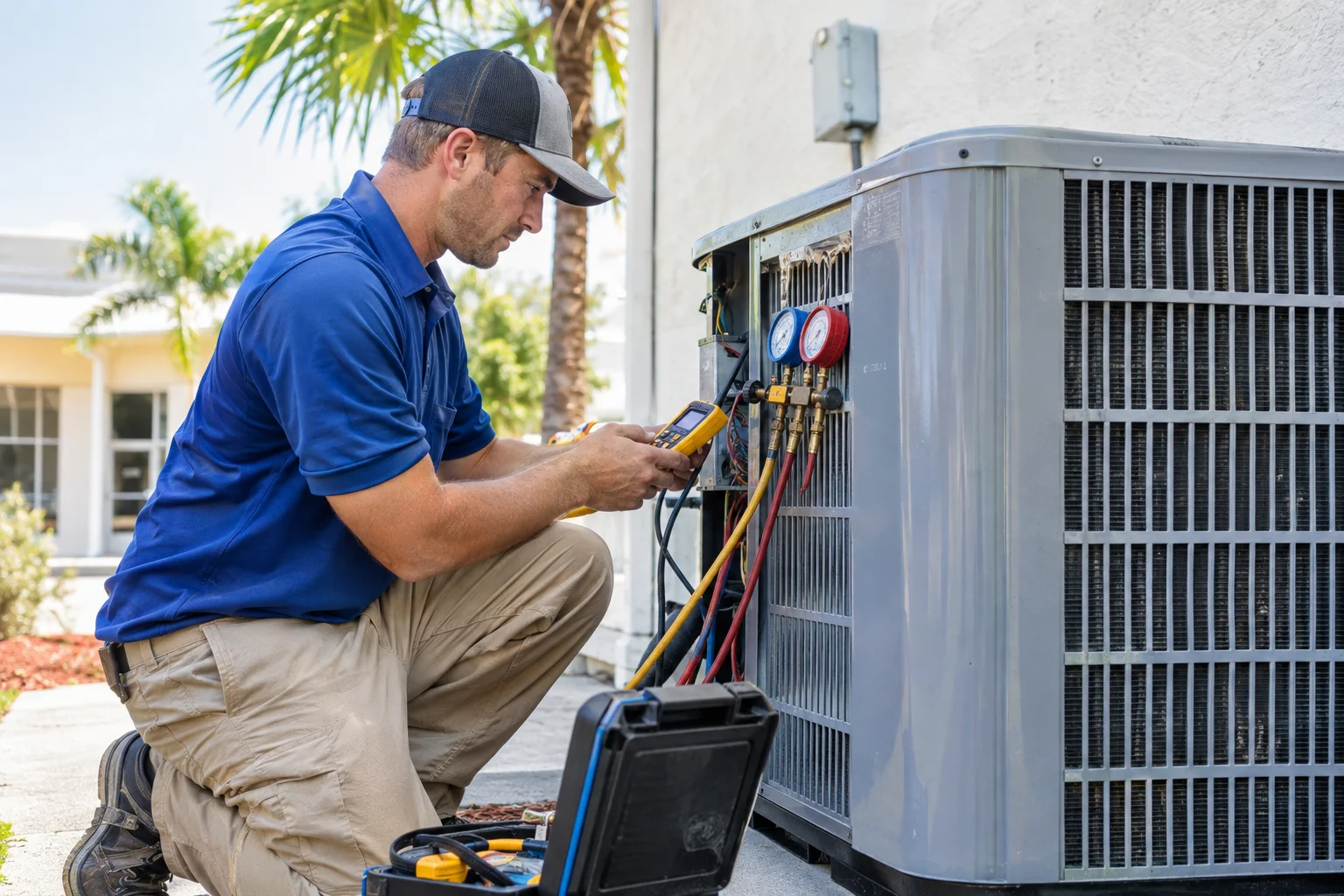
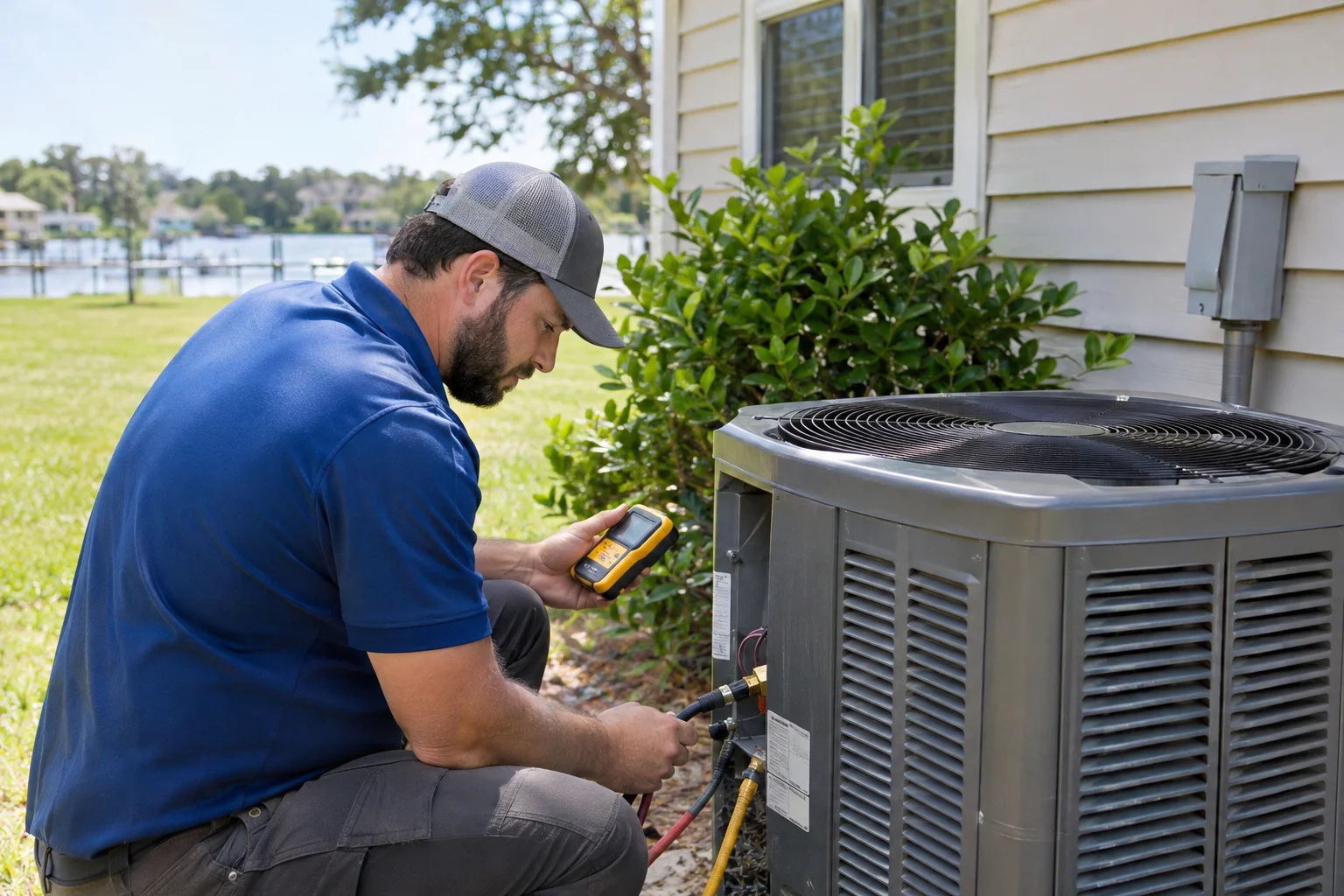
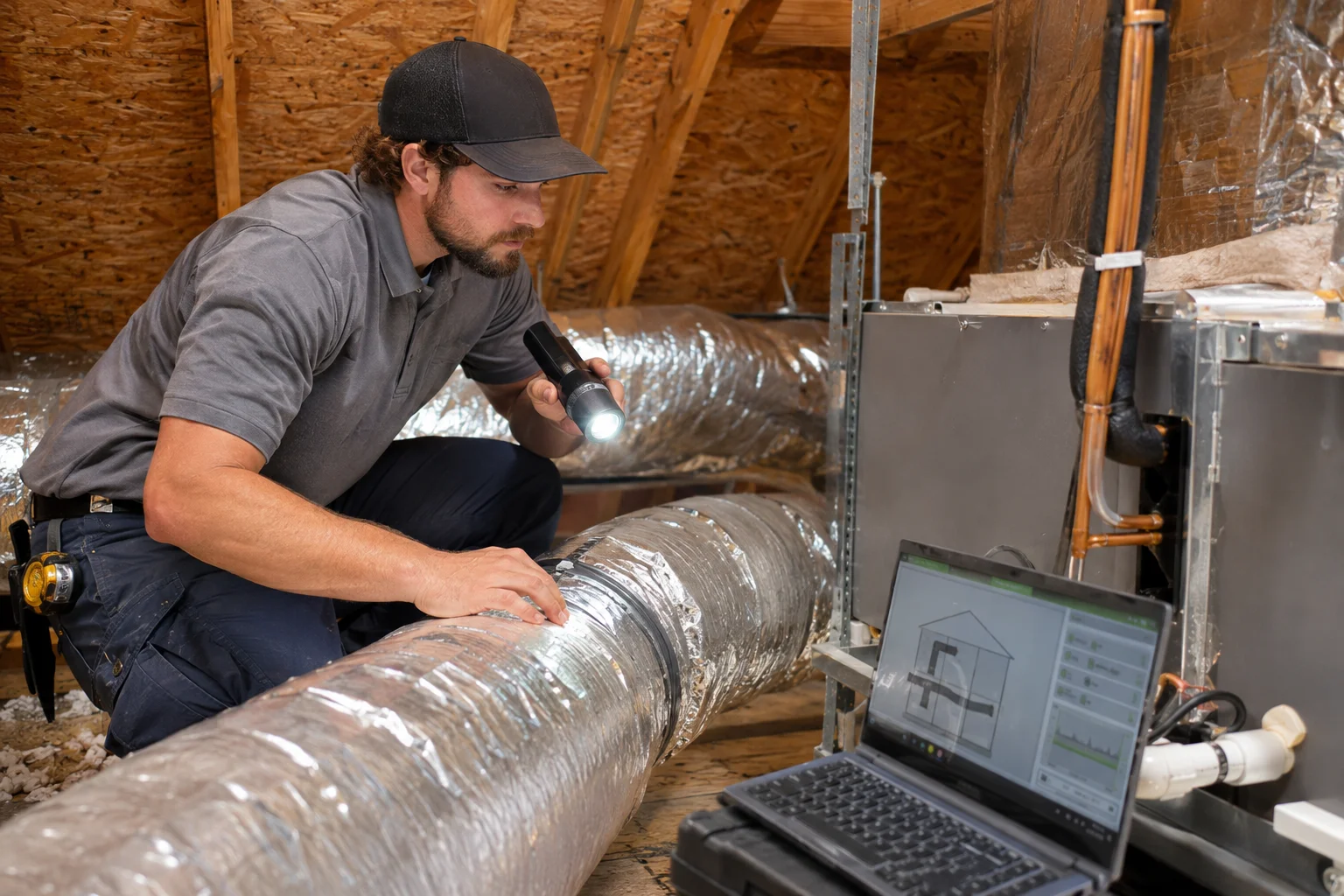
If you're searching for duct sealing near me, ask whether the visit includes leakage testing and room airflow checks. They answer different questions. A technician can temporarily close off the registers and use a calibrated fan to measure how much air escapes at a known test pressure. A separate measurement at the bedroom register, with the HVAC system running normally, indicates how much air the room receives in use.
Neither measurement replaces an inspection. An older beach home may have a return cavity that was never fully sealed. A newer home can have tight joints but a flexible branch bent sharply around a framing member. During a remodel, a crew may move a register without resizing the run serving it. Sealing alone won't straighten the bend or add capacity for a newly enclosed porch.
Ask the technician to check static pressure, the resistance the blower works against, and compare it with the equipment specifications. A duct system with an undersized return can be leaky and restrictive at the same time. Finding that restriction before sealing gives you a chance to address both problems rather than paying for tighter ducts and still living with a noisy return.
Choosing between hands-on repair and Aeroseal
Repair what is broken or accessible
A disconnected branch needs to be reattached and secured. Crushed, torn, or badly deteriorated flexible duct may need replacement. For accessible sound joints, a contractor can often apply duct mastic or a listed sealing tape appropriate for the material. The insulation and its outer vapor barrier need attention too. Warm coastal air meeting an exposed cold duct surface can produce condensation even after the air leak is fixed.
Use Aeroseal for small leaks that are hard to reach
Aeroseal can make sense when testing finds leakage distributed along otherwise serviceable ductwork, particularly above finished ceilings. The crew temporarily blocks the registers, isolates the equipment, and pressurizes the duct system with air carrying sealant particles. As air escapes through small openings, particles collect at their edges and gradually close them. The process targets leak paths rather than filling the duct interior.
Ask how the crew will protect the air handler and evaporator coil, which sections are included, and how long the system will be unavailable. A large opening or failed connection needs mechanical repair first. After sealing, request the before and after leakage figures at the same test pressure. Then revisit the original complaint: did airflow improve at the bedroom vent, and does the room stay comfortable with the door in its usual position?
Humidity control after the leaks are sealed
On a gray, muggy Panama City Beach afternoon, the house may need little cooling but still need moisture removal. An oversized AC can satisfy the thermostat quickly and stop before the evaporator coil has removed enough water. Sealing a humid attic return leak removes one burden; it doesn't change the equipment's cooling capacity. Track indoor humidity once repairs are complete before deciding what to do next.
For many conventional systems, setting the thermostat fan to Auto rather than On helps limit moisture blowing back off the wet coil between cooling cycles. Follow the guidance for your particular air handler and controls. If humidity remains high, have a technician check cycle length, ventilation, and drainage. A whole home dehumidifier may be useful when the remaining moisture load is real but the rooms are already cool enough.
Plan duct work around replacements and additions
Before replacing a heat pump, find out whether leakage helped make the old unit seem too small. Once ducts are repaired, a room-by-room load calculation gives the contractor a better basis for sizing equipment. That matters for energy efficiency and for summer run times. A Superior Mechanical's guide to planning AC replacement beyond the equipment explains why the distribution system belongs in the same conversation as the outdoor unit.
An addition deserves its own assessment. Extending the nearest branch is tempting, but that branch may barely serve the original room. Depending on access, load, and the existing blower, a dedicated run or one of today's ductless mini splits may fit better. If the house uses a furnace or a ducted heat pump, the same delivery problem may show up on cold mornings. Tell the technician if the room struggles in both seasons before scheduling heating system repair.
Keep coastal conditions in the maintenance plan
Salt air takes a toll on outdoor condenser fins and cabinets, while wind-driven rain can wet attic insulation through a roof opening. Neither problem is cured by sealing ducts. After a storm, look from a safe location for debris around the outdoor unit and new ceiling stains near vents. Leave wet equipment off and have it inspected. Water-damaged duct insulation needs evaluation, not just a fresh layer of tape.
During routine HVAC maintenance, ask the technician to inspect accessible supports, the filter rack, the condensate drain, and any connections disturbed by attic work. A photograph of a repaired joint can make later changes easier to spot. Schedule nonurgent testing before peak summer demand if possible. An HVAC contractor serving Panama City Beach can help plan around occupancy, attic access, and the hours your home can reasonably go without cooling.
If a search for AC repair near me or vent repair near me starts with one uncomfortable room, describe that room rather than requesting a particular product. Tell A Superior Mechanical when the problem occurs, what changed after any remodel, and whether the rest of the house cools normally. For another property nearby, check the company's Bay County service area. The most useful proposal identifies what needs physical repair, what can be sealed, and how you'll know the work helped where it matters: at the vent in the room you actually use.
Find Duct Sealing & Aeroseal Services in Panama City Beach, FL
If you need Duct Sealing & Aeroseal Services in Panama City Beach, FL, visit our local service page or contact A Superior Mechanical today.
Map of Panama City Beach, FL
Frequently Asked Questions
Can Aeroseal fix a disconnected duct above my ceiling?
No. A disconnected duct needs to be located, reattached, and secured. Aeroseal is an option for smaller leaks in otherwise sound ductwork. Ask the contractor to identify major openings before planning an aerosol treatment.
Why is my bedroom still warm if the duct leakage test looks good?
A tight duct can still be too small, kinked, or poorly balanced. The bedroom may also lack a return air path when the door is shut. Measuring supply airflow and checking the pressure difference across the closed door can narrow down the cause.
Should I seal my ducts before installing a whole home dehumidifier?
If a return duct is pulling in humid attic air, repair that leak and track indoor humidity before sizing a dehumidifier. If humidity stays high even with sound ducts, a contractor can assess moisture coming from ventilation, air entering around the building, and everyday activities such as cooking and showering.
Related Articles
- Less Scale, Better Taste: Clean Water Services in Panama City Beach, FL
- Fewer Spots, Fresher Taste: Water Purification for Panama City Beach Homes
- A Better Water Heater Replacement Starts with Your Panama City Beach Plumbing
- A Better Cooling Plan for Panama City Beach: AC Replacement Beyond the Equipment
Photo Gallery