Grayton Beach homes live close to the water, and that is a big part of the charm. The flip side is that local water conditions can be tough on plumbing, fixtures, and the everyday routines you rely on. When water quality dips, the symptoms often show up in small, familiar places: a film on glassware, scale around faucets, dry skin after showers, or cloudy ice cubes in the freezer. Those clues are useful because they can help you choose the right water purification approach before the problem spreads to appliances and plumbing.
This guide walks you through common water quality symptoms in Grayton Beach, FL and Walton County, what they usually indicate, and how homeowners use water filtration, water softening, reverse osmosis, and whole home water filtration to get cleaner, better drinking water and water for cooking, bathing, and laundry. If you are searching for water filtration and RO water softeners or water purification in Grayton Beach, the details below can help you talk with a professional and make a smarter decision.
Why Grayton Beach water quality can feel “off”
In coastal areas, water treatment needs can vary because of source water characteristics, seasonal changes, and how water moves through local infrastructure. Even when water is treated at the municipal level, it may still carry minerals, sediment, or taste and odor compounds that become more noticeable at the tap. Over time, those issues can show up as hard water scale, visible discoloration, and sediment in household water.
Grayton Beach also has a mix of full time homes and vacation rentals. That matters because water quality complaints can be inconsistent when systems sit unused, then refill after gaps. A properly designed clean water system can stabilize results for every guest and every household routine, from drinking water filter needs to how showers feel and how laundry comes out.
Small symptoms that often reveal bigger water treatment problems
Water problems usually do not announce themselves all at once. Homeowners tend to notice them during everyday tasks like loading the dishwasher, making coffee, or rinsing shampoo out of hair. Here are common symptoms in Grayton Beach homes and what they can point to.
Hard water spots on glass, dishes, and fixtures
If you wipe a drinking glass and still see streaks, or if dishes come out with a faint cloudy film, hard water is often the culprit. You may also see scale buildup around faucets, showerheads, and plumbing connections. Over time, that mineral scale can reduce water flow and make fixtures look older than they should.
Hard water is typically linked to elevated hardness minerals, most commonly calcium and magnesium. When you are dealing with scale, water softening and whole home water filtration are common solutions. Many homeowners pair a softener strategy with filtration to address both mineral buildup and sediment or taste issues.
Scale buildup around faucets, showerheads, and plumbing
Scale is not just cosmetic. When mineral deposits build up inside plumbing and at showerheads, it can affect performance. You might notice weaker flow, more frequent cleaning, or a shower that never feels quite as strong as it used to. Scale can also contribute to how quickly water-using appliances wear out.
When hard water treatment becomes part of protecting fixtures and appliances, the payoff shows up in maintenance savings. If you are looking for water softener service near me, it helps to have a technician evaluate your specific household water and recommend the right softening and filtration combination.
Dry skin or dull hair after bathing
One of the most common “I did not think it was the water” complaints is how skin and hair feel after a shower. Dry skin from hard water can leave hair looking dull and harder to manage. Soap can also feel like it does not rinse well, and you may notice that towels feel rougher than expected.
This symptom often points to hardness minerals interfering with how soap and shampoo work. Water softening is a frequent solution, and some households add additional filtration to reduce other irritants or taste and odor compounds that make water feel less clean.
Metallic, chlorinated, or unpleasant taste
If your tap water has a metallic note, strong chlorine taste, or an unpleasant odor, it can affect everything from drinking water to cooking water. People often notice it most when making coffee, filling a kettle, or preparing baby formula.
These concerns are a strong reason to consider a targeted drinking water filter or a reverse osmosis system for the kitchen. Many homeowners choose reverse osmosis system near me services because RO is designed to reduce dissolved contaminants while improving taste. Whole home water filtration can also help if the odor or sediment is present beyond the kitchen.
Cloudy ice cubes
Cloudy ice cubes can be surprising, especially when the water looks clear in the sink. Cloudiness in ice often suggests dissolved solids, air bubbles, or mineral content that becomes more visible as water freezes. It can also point to sediment in household water.
If your ice turns cloudy quickly or tastes off, it is a practical cue to investigate your water quality. Many families address this with drinking water filtration at the tap, and some choose reverse osmosis for consistent clarity and better flavor.
Poor tasting coffee and cooking water
Kitchen routines are a real test of water quality. Poor tasting coffee water can happen when hardness is high, when taste and odor compounds are present, or when sediment builds up over time. Even if you use good beans, the water can make the final cup taste flat or harsh.
Cooking water quality also affects rice, pasta, and soups. If you are trying to make consistent meals for family dinners or a vacation rental kitchen, a home water purification approach can help keep results predictable for every batch.
Appliances wearing out faster
When water is hard or contains scale-forming minerals, appliances can experience shortened lifespans. Water heaters, dishwashers, and clothes washers may develop efficiency problems or require more frequent maintenance. You might also notice more buildup on heating elements or filters.
Homeowners often start by cleaning and descaling, then realize they need a long term solution. Whole house water filter options and water softening can help reduce mineral scale that drives wear.
Soap that does not lather or rinse well
If soap does not lather well in the shower or laundry and leaves residue, that is another common hard water symptom. It can also make towels feel less absorbent and skin feel coated. When soap does not rinse well, it usually means minerals are interfering with how the soap works.
This is a practical reason to consider water softening as part of clean water systems near me searches. Many households see improvement in both bathing and laundry once hardness is controlled.
Visible sediment, discoloration, and odor concerns
Sometimes the issue is not just taste or scale. You may see sediment, discoloration, or notice an odor that changes throughout the day. This can happen after plumbing disturbances, seasonal shifts, or when sediment accumulates in household lines.
Whole home water filtration can reduce sediment across the house, while a dedicated system for drinking water can address taste and odor where it matters most. If you are noticing these symptoms, it is worth scheduling testing or a professional evaluation rather than guessing.
How homeowners choose the right water purification setup
Different symptoms can point to different solutions. A practical plan is to match the system to the problem areas in your home: kitchen drinking water, bathing water, laundry water, and the plumbing system itself.
Whole home water filtration for consistent cleanliness
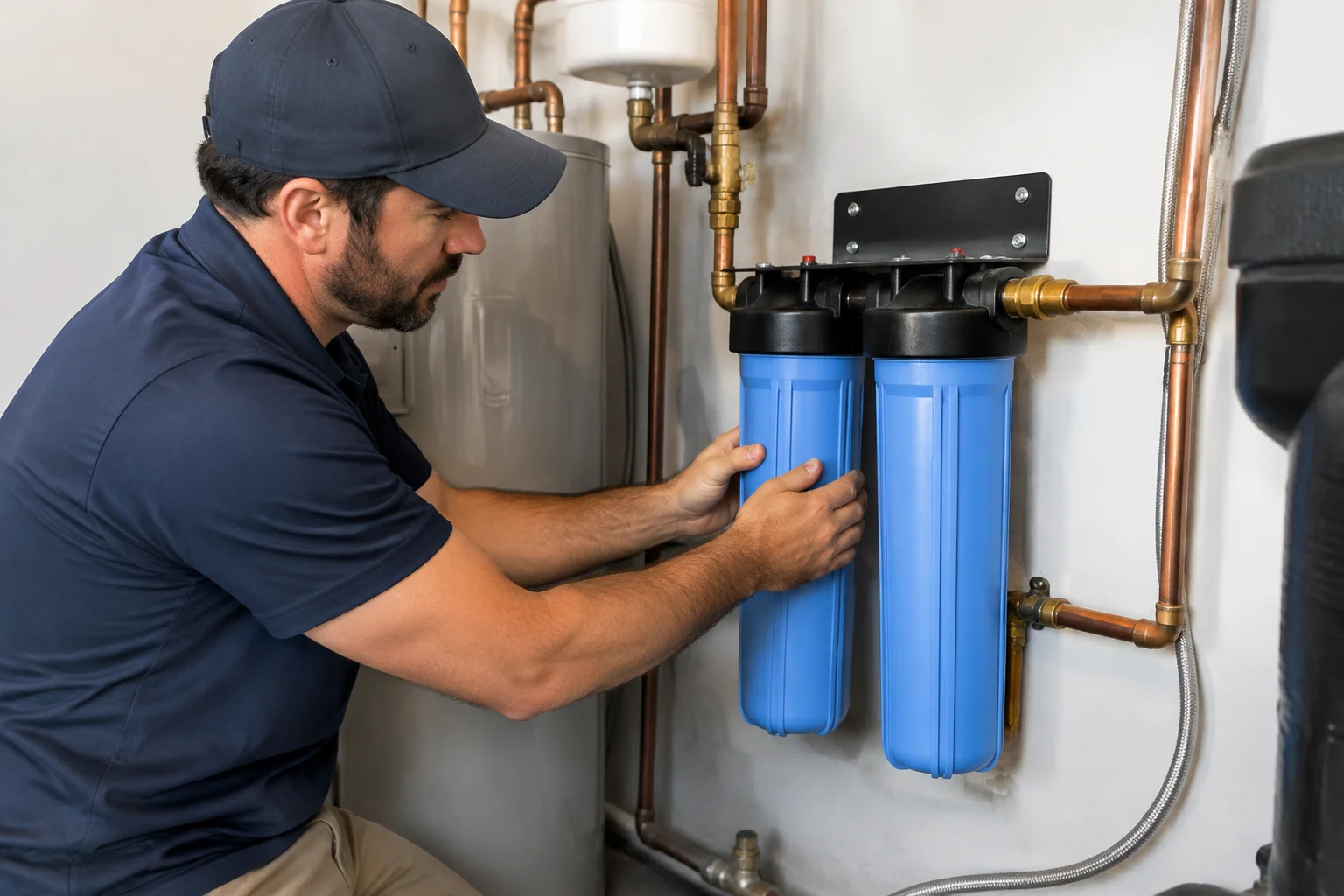
Whole home water filtration is designed to treat water as it enters your home. Homeowners often choose this when they want to reduce sediment in household water, improve water clarity, and protect fixtures and appliances throughout the house. It can also support better performance for other systems by reducing particles that wear components faster.
If you are seeing visible sediment, odor concerns, or scale forming in multiple bathrooms and at outdoor spigots, whole home filtration can be a strong foundation. For residents searching for water treatment near me in Grayton Beach, this approach is often recommended as part of a layered clean water system.
Water softeners to reduce scale and dry skin from hard water
Water softening targets hardness minerals that drive scale buildup around faucets, showerheads, and plumbing. When hardness is reduced, you typically see improvements in how soap lathers and rinses, and you may notice less dryness after bathing.
Many homeowners also notice that faucets, shower glass, and fixtures look cleaner longer. If you are dealing with hard water spots on glass and dishes, softening is often the most direct lever.
Homeowners who want a reliable option frequently ask about AO Smith water softener solutions. AO Smith is a well known brand in the water treatment world, and the right model depends on household size, water hardness levels, and your plumbing layout.
Reverse osmosis for drinking water and kitchen confidence
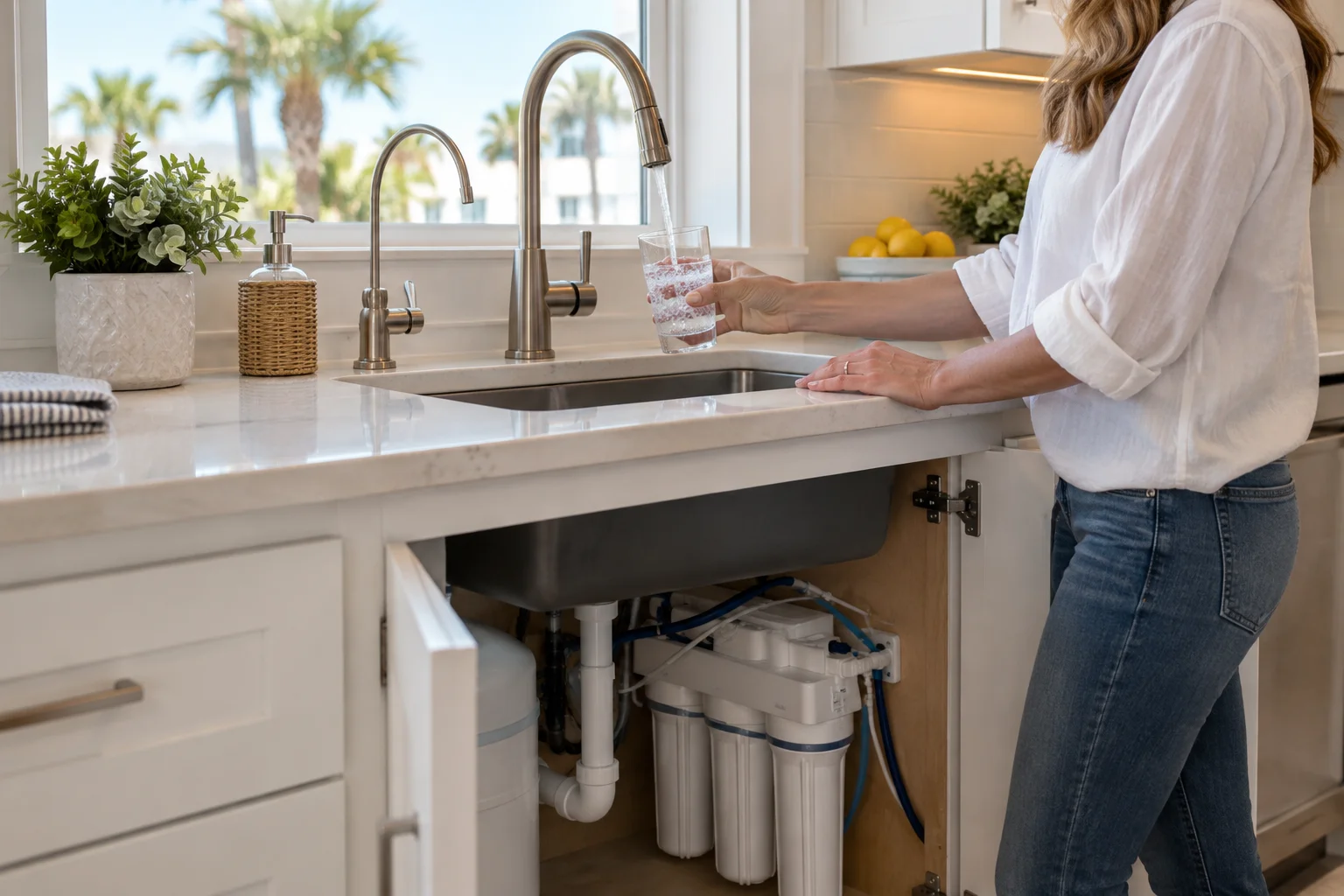
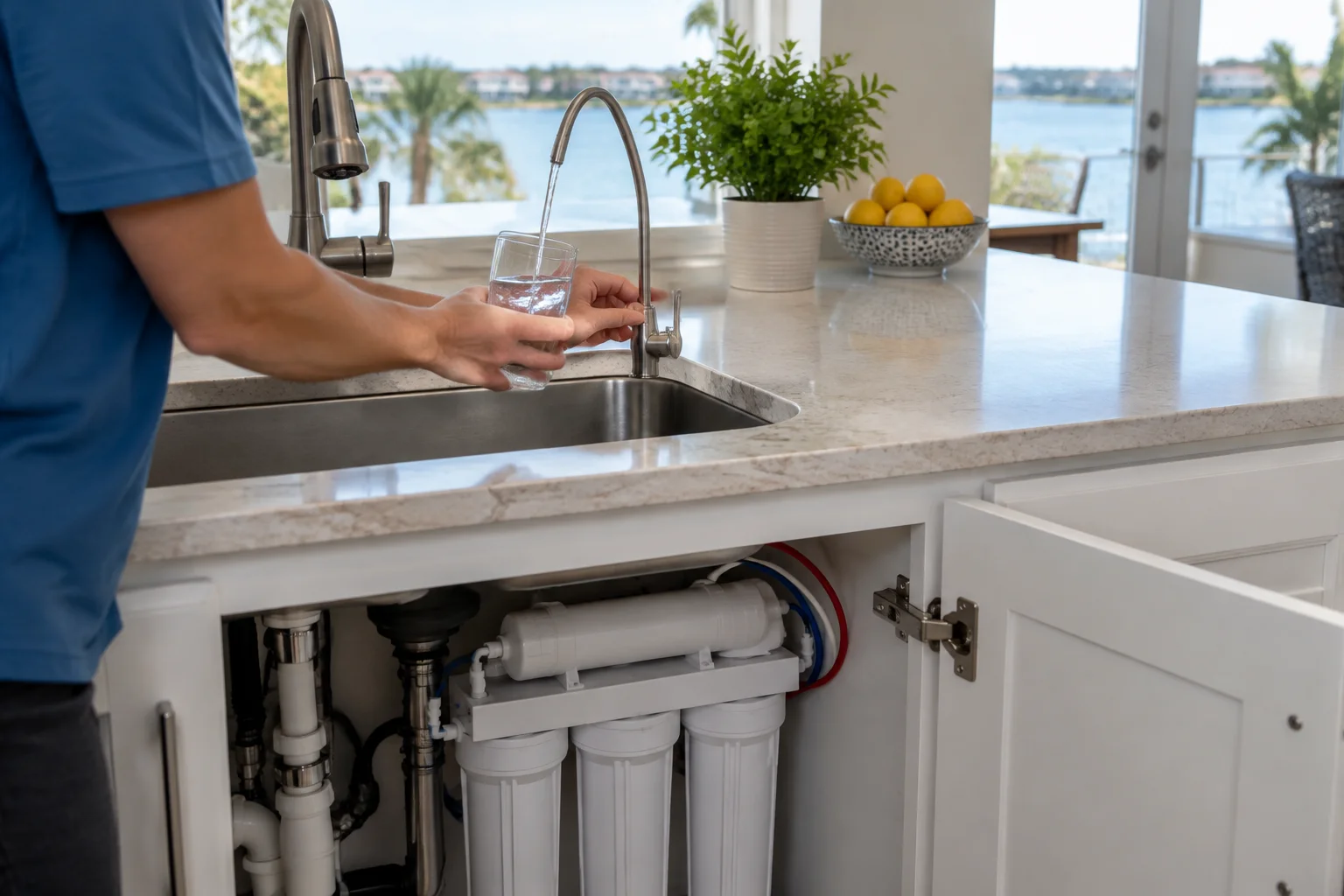
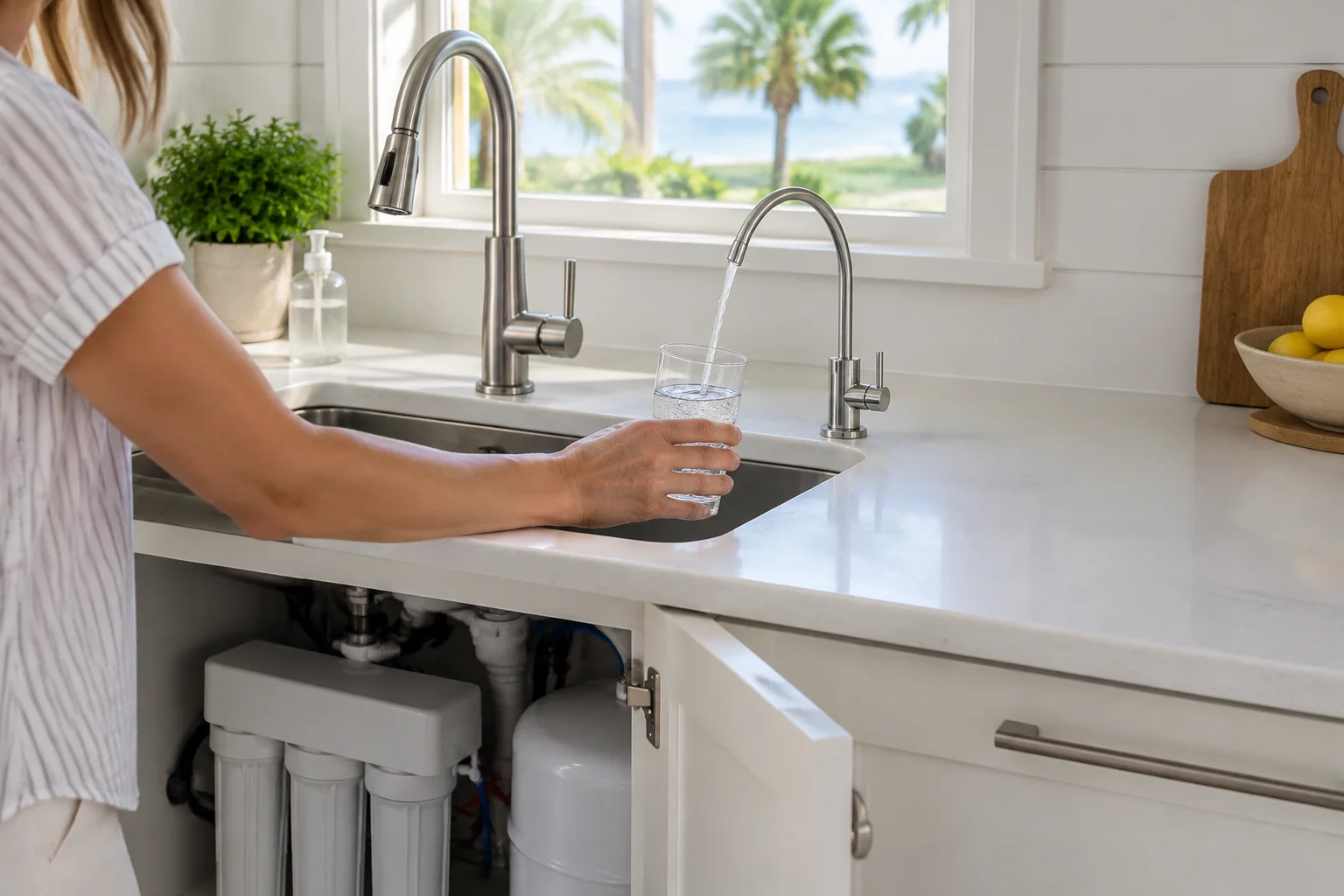
Reverse osmosis is a focused solution for the kitchen. It can help with chlorine taste in water, metallic or unpleasant taste, and concerns that show up most when drinking water or using cooking water. Many families notice better results with coffee, ice, and beverages when they install a reverse osmosis system.
If you are searching for reverse osmosis system near me or want clean drinking water without relying on bottled water, RO can be a practical choice. It is especially helpful when you want a dedicated drinking water filter for consistent taste and clarity.
A layered approach works well for Grayton Beach homes
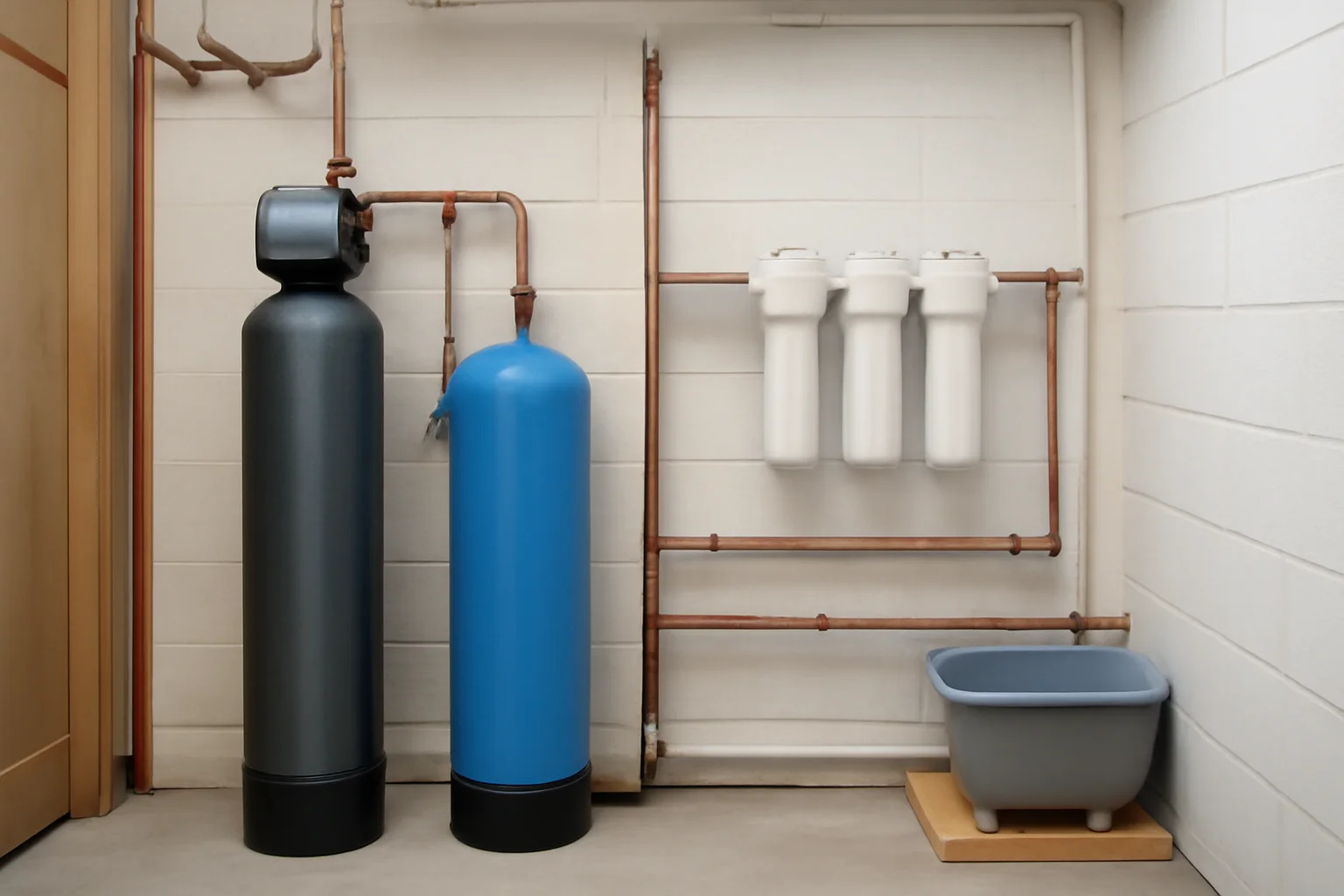
In many Grayton Beach households, the best results come from combining solutions. For example, a whole house water filter may reduce sediment, a water softener may control scale and improve bathing comfort, and reverse osmosis can provide top quality drinking water at the kitchen tap.
This layered setup is also helpful for vacation rentals. Guests notice water quality quickly, and you want the same clean water experience whether the home is occupied for weeks or just a weekend.
What to look for during water purification service and installation
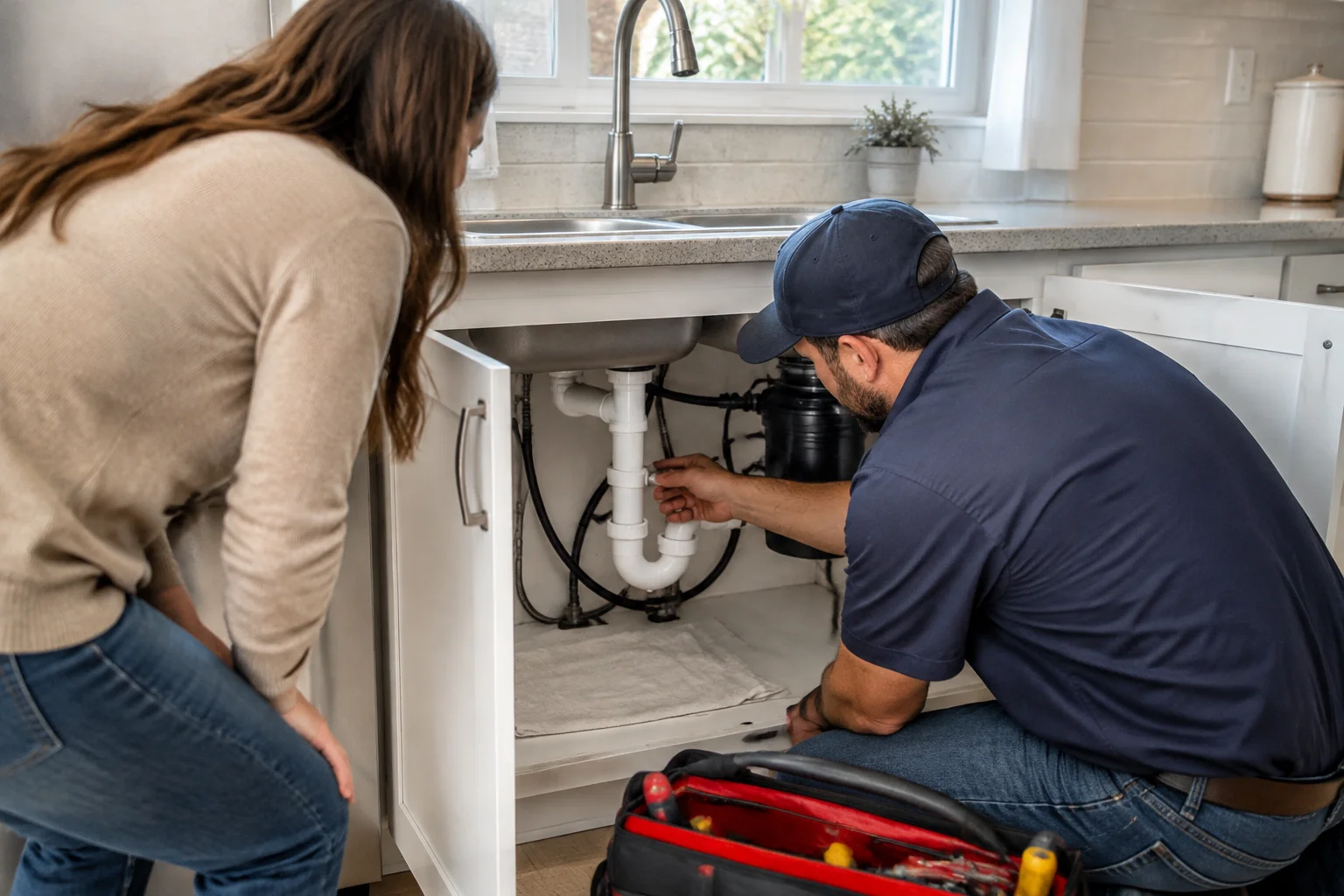
When you contact a local provider for water purification services, you want a process that is more than swapping out filters. A good evaluation includes understanding your household needs and the specific symptoms you are seeing.
Start with your symptoms, not guesswork
Tell the technician what you notice: hard water spots on glass, scale buildup around faucets and showerheads, dry skin or dull hair after bathing, metallic or chlorinated taste, cloudy ice cubes, poor tasting coffee water, and visible sediment or discoloration. These details help narrow down whether the main issue is hardness, sediment, taste and odor compounds, or a combination.
Ask about testing and system sizing
Water treatment systems are sized based on water quality and household usage. Proper sizing helps ensure performance and reduces the risk of overpaying for a system that is too large or too small. If you are considering an AO Smith water filtration or softener setup, sizing matters even more for efficiency.
Plan for maintenance and filter replacement schedules
Clean water systems only stay clean when components are maintained. Ask about replacement intervals, what to expect for salt or media regeneration on softeners, and how the service process works if you are busy or managing a rental property.
If you are searching for water treatment near me because you want ongoing support, look for a provider who explains maintenance in plain language and offers service reminders.
Prevention habits that help between service visits
Even with the right system, small habits can reduce buildup and help your water purification setup last longer.
Wipe shower glass and fixtures regularly to slow scale buildup around showerheads and faucets.
Clean aerators and showerheads periodically, especially if you notice reduced flow.
Use a dedicated drinking water filter for coffee, tea, and drinking water if you are not using reverse osmosis.
Keep an eye on ice clarity. If cloudy ice returns, it can be a clue that filtration needs attention.
For laundry and bathing, pay attention to how towels and skin feel after a few weeks of changes. Dry skin from hard water can improve once hardness is controlled.
These steps do not replace proper water treatment, but they can help you stay ahead of scale and taste issues.
Everyday life improvements Grayton Beach families actually notice
Water treatment is not only about lab results. It shows up in the routines that make home feel comfortable.
Kitchen scenes: better coffee, clearer ice, and cooking water that performs
Picture a slow morning where the kids grab breakfast and you brew coffee without wondering whether the taste is coming from the water. With reverse osmosis or an upgraded drinking water filter, poor tasting coffee water becomes less of a problem, and cloudy ice cubes are less likely to ruin a glass on the counter.
For families and vacation rentals, that consistency matters. Guests judge the stay quickly, and water quality is part of that first impression.
Bath time: less residue, softer feel, and hair that looks its best
When hardness is reduced, soap lathers better and rinses more cleanly. That can translate into dry skin from hard water becoming less noticeable and hair feeling less dull after bathing. Homeowners often report that shampoo rinses faster and towels feel better once scale is controlled.
Laundry and cleaning: fewer spots and less buildup on fixtures
When soap rinses well, laundry can feel fresher and less “stiff.” Meanwhile, better water reduces the mineral film that turns cleaning into an ongoing chore. Hard water spots on glass and dishes can become easier to manage, and you may find that fixtures look cleaner longer between deep cleanings.
Appliances: protection that adds up over time
Water heaters and other water-using appliances can last longer when scale-forming minerals are controlled. That matters in coastal homes where maintenance schedules are already busy. A water purification plan that includes whole home filtration and water softening can reduce the buildup that drives wear.
Where to start if you want cleaner water in Grayton Beach
If you are noticing the symptoms above, you do not have to live with them. A Superior Mechanical provides professional water purification services in Grayton Beach, FL with a focus on real household outcomes like better drinking water, improved bathing comfort, and reduced scale buildup around faucets and showerheads.
You can review the service details here: water purification in Grayton Beach. If you want to explore system options first, start with water filtration and RO water softeners. For broader area context, the local service overview is available at the Grayton Beach page and the Walton County page.
If you are also thinking about home maintenance beyond water, these reads can help connect the dots between water and plumbing performance: Keeping Grayton Beach Water Cleaner Before Plumbing Problems Start, Why Grayton Beach Homes Do Better With Updated Plumbing, and Keeping Grayton Beach Plumbing Ahead of the Next Emergency.
FAQs homeowners ask about water purification in Grayton Beach
Homeowners often have the same questions when they see hard water spots, chlorine taste in water, or dry skin from hard water. The answers below cover the most common concerns.
Find Water Purification in Grayton Beach, FL
If you need Water Purification in Grayton Beach, FL, visit our local service page or contact A Superior Mechanical today.
For a broader look at whole-home water filtration, reverse osmosis, and water softener options, visit our water filtration, RO, and water softener page.
Map of Grayton Beach, FL
Frequently Asked Questions
What does cloudy ice or a bad chlorine taste usually mean?
Cloudy ice can be caused by dissolved minerals or sediment that becomes more visible as water freezes. Chlorine taste in water usually indicates taste and odor compounds in the water. Many homeowners address this with a dedicated drinking water filter or a reverse osmosis system for kitchen use.
Will a water softener fix hard water spots on glass and dishes?
A water softener is designed to reduce hardness minerals that drive scale buildup around faucets, showerheads, and plumbing. That often improves hard water spots on glass and dishes and can also reduce dry skin from hard water by helping soap rinse more cleanly.
Is whole home water filtration the same as a drinking water filter?
No. Whole home water filtration treats water entering the house, which can help with sediment in household water and protect plumbing and appliances. Drinking water filters, including reverse osmosis, focus on the kitchen tap where taste and odor matter most for drinking and cooking.
How do I know if I need reverse osmosis or just a water filtration system?
If your biggest complaints are drinking water taste, metallic or unpleasant flavors, or cloudy ice cubes, reverse osmosis is often a strong option. If you are primarily dealing with sediment and whole house scale, whole home water filtration and water softening may be the better starting point, sometimes paired with RO for the kitchen.
Do AO Smith water filtration and water softeners work well in Grayton Beach homes?
AO Smith systems are widely used for water treatment, and they can be a good fit when sized correctly for your water conditions and household usage. A local water purification specialist can recommend the right model and configuration based on testing and your symptoms.
Related Articles
Photo Gallery