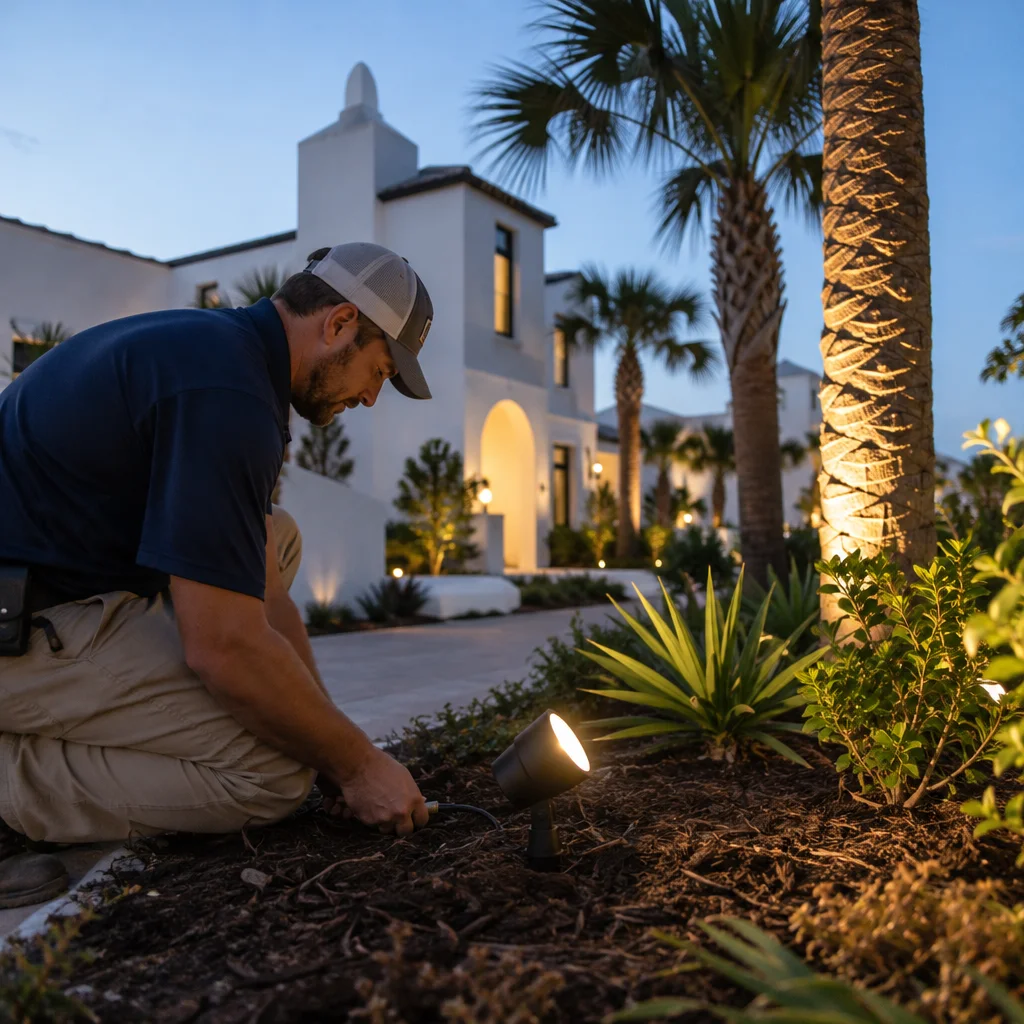
Landscape lighting should make an Alys Beach home easier to enjoy after sunset, not introduce another electrical problem to manage. A well-lit courtyard, visible entry steps, and softly illuminated planting beds depend on more than attractive fixtures. The panel, supply circuit, outdoor receptacle, transformer, wiring, and controls all need to work together.
For homeowners planning outdoor landscape lighting in Alys Beach, FL, coastal conditions make those details especially important. Salt exposure, humidity, heavy rain, and summer thunderstorms can reveal weaknesses that stay hidden during dry weather. Thoughtful electrical planning helps prevent nuisance trips, premature failures, and unsafe repairs.
Start with how the property works after dark
Before selecting fixtures, walk the property at dusk. Notice where guests hesitate, which steps disappear into shadow, and whether existing lights shine into windows. In Alys Beach, white exterior walls and enclosed courtyards can reflect light strongly. A lower-output fixture aimed carefully may work better than a brighter lamp.
Prioritize entrances, walkways, elevation changes, and routes between parking areas and doors. Then add accent lighting around trees, walls, or seating areas. Keep fixtures and cables clear of irrigation heads, drainage paths, and routine landscape maintenance.
A professional outdoor landscape lighting installation in Alys Beach should address both the nighttime appearance and the electrical supply behind it. Confirm any applicable community design requirements before installing visible fixtures or changing exterior lighting.
Check the panel before extending an outdoor circuit
LED landscape lights usually consume relatively little power, but that does not make every existing circuit suitable. A garage or patio circuit may already serve refrigerators, tools, ceiling fans, or other equipment. Adding a lighting transformer without checking the existing load can create avoidable problems.
Available breaker spaces are only part of the picture
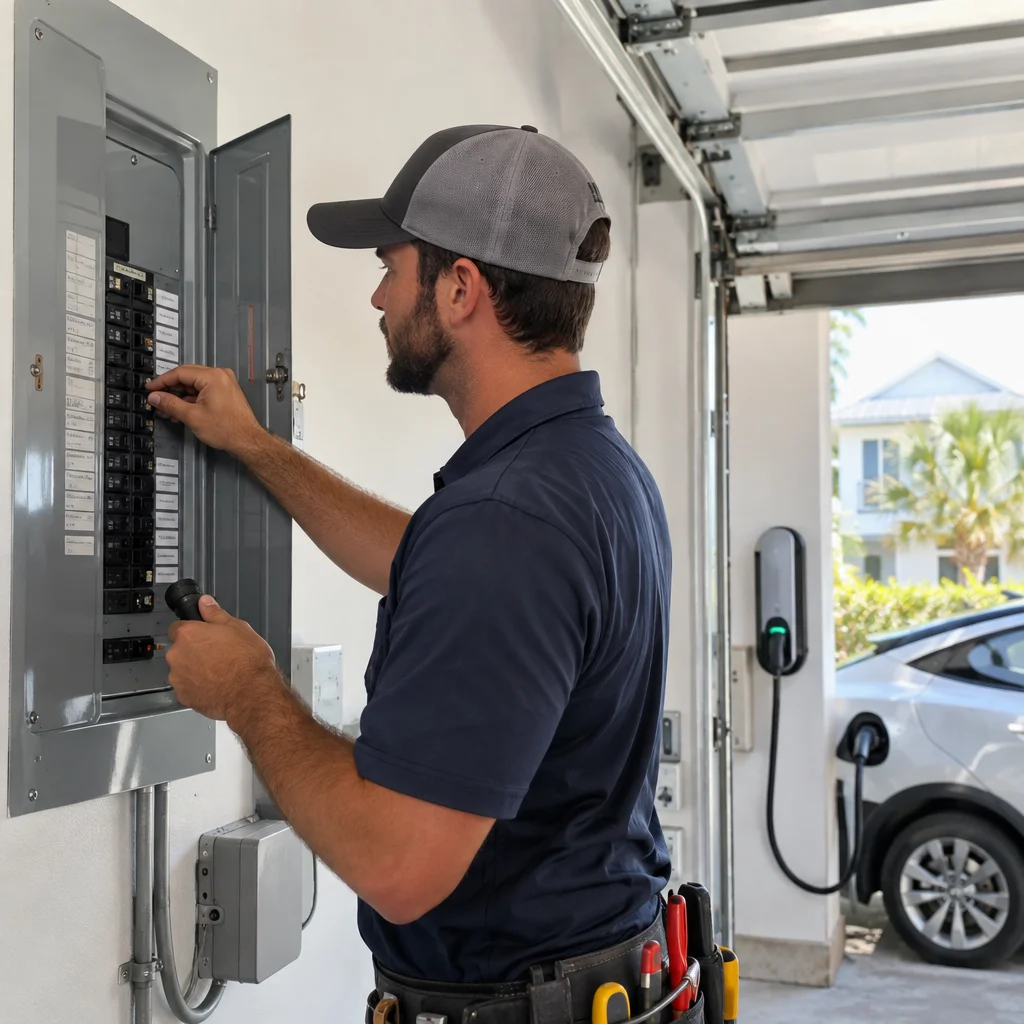
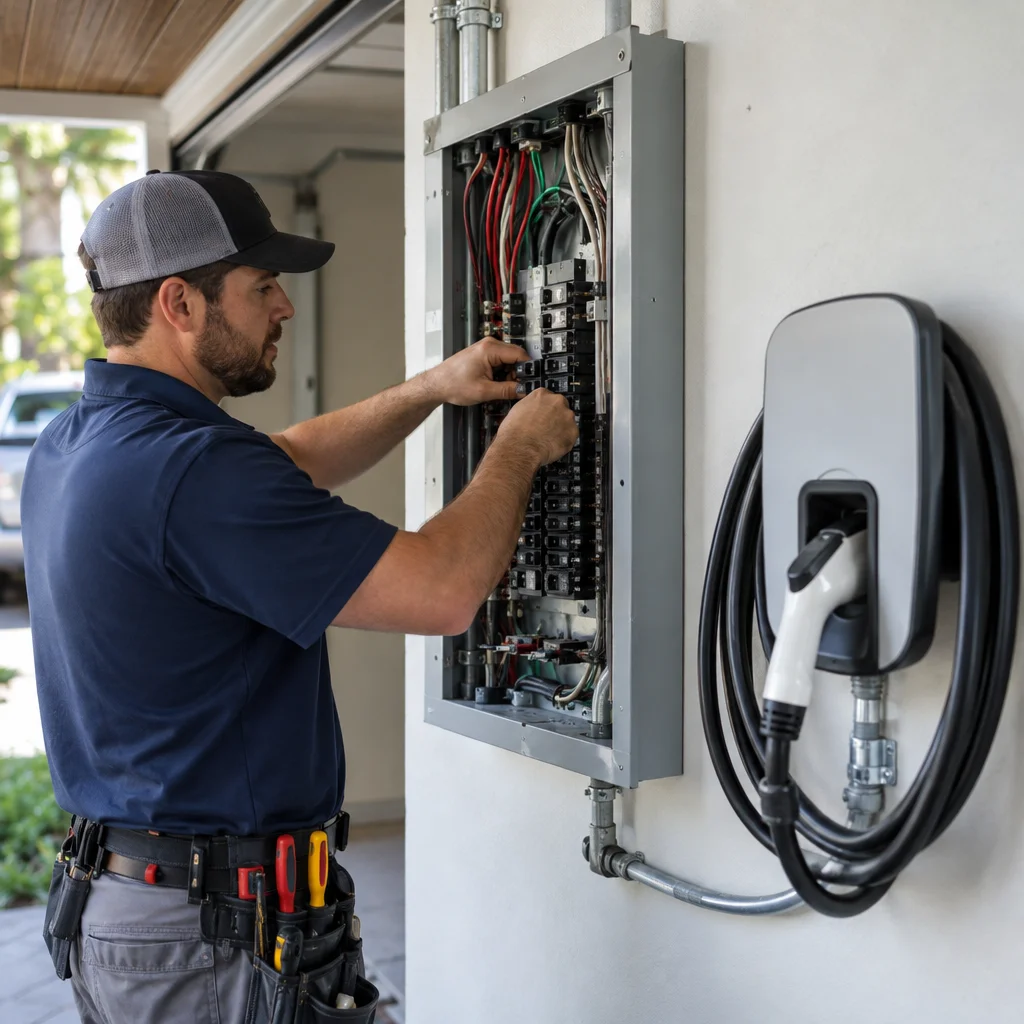
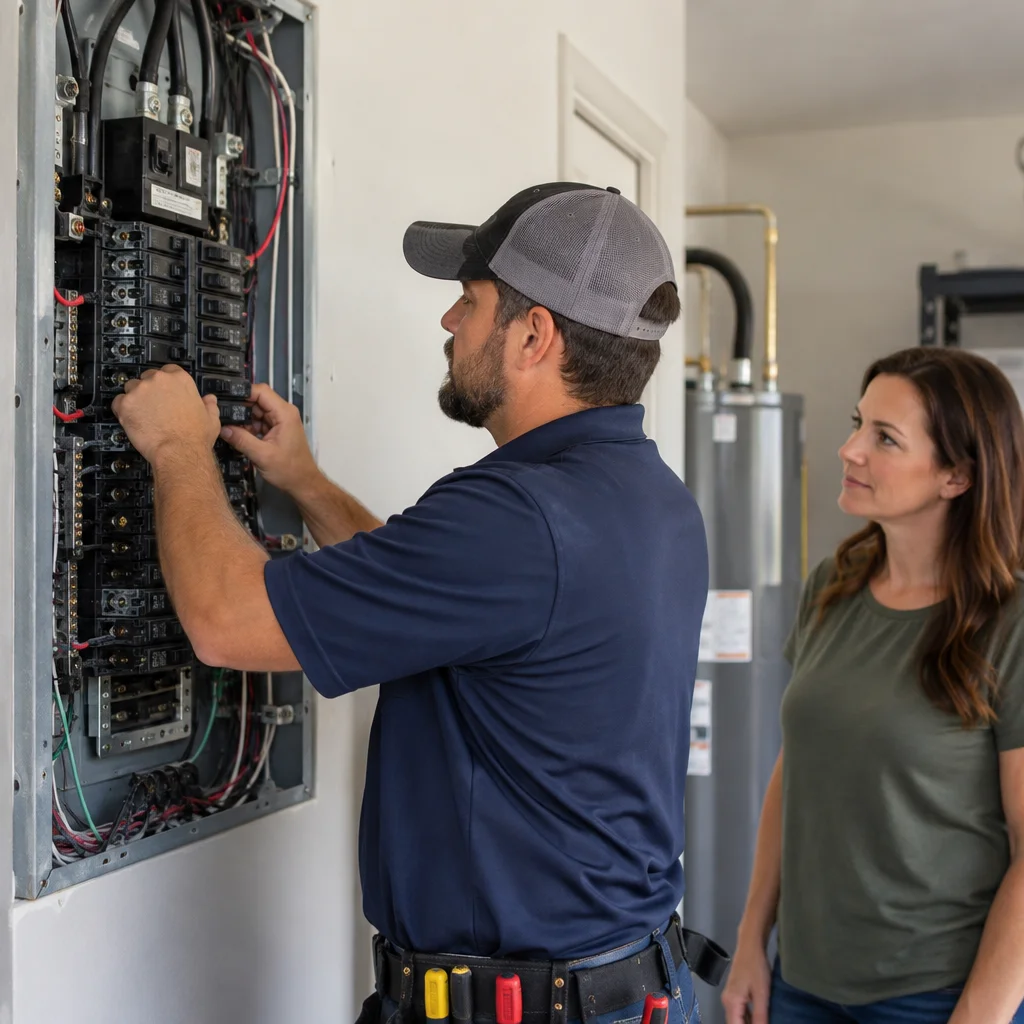
An electrician should review the panel rating, circuit loading, breaker compatibility, grounding and bonding, and evidence of moisture or overheating. An empty breaker position does not establish that the service can support every planned addition.
A panel upgrade is not automatically necessary for landscape lighting. However, a remodel that combines outdoor lighting, spa equipment, an addition, and EV charging may justify a broader load calculation. Homeowners interested in smart panels can also ask about monitoring and load management. Those features do not replace properly sized circuits or adequate service capacity.
Repeated breaker trips need diagnosis
A breaker that trips repeatedly may be responding to an overload, a short circuit, or another fault. Never install a larger breaker simply to stop the trips. Breaker repair or replacement should follow testing of the circuit, conductors, connections, and connected equipment. Any replacement must be approved for the panel and appropriate for the wiring.
Choose the right wiring system for the landscape
Many residential landscape lighting systems use a listed transformer to supply low-voltage fixtures. Others include line-voltage wall lights, posts, or lighting around outdoor structures. These systems have different installation requirements, and low voltage does not mean waterproof or maintenance-free.
Size conductors for the full lighting layout
Long cable runs can cause voltage drop, leaving distant fixtures dimmer or less reliable. Proper planning considers cable length, conductor size, total fixture load, transformer output, and manufacturer instructions. Separate runs or a different transformer location may solve problems more effectively than adding brighter lamps.
Leave reasonable capacity for future fixtures without oversizing components indiscriminately. Document the layout so later planting or hardscape work does not damage buried cables.
Protect wiring from water and physical damage
Cables, raceways, junction boxes, and connectors must suit their installation locations. Underground raceways are considered wet locations, so the conductors inside must be rated accordingly. Burial depth and physical protection depend on the wiring method, circuit characteristics, and applicable code requirements.
Twisted wires covered with ordinary tape are not an acceptable substitute for listed underground connections. Exposed cable, cracked insulation, and improvised splices call for wiring repair rather than another temporary patch.
Outdoor outlets need more than a weather cover
A plug-in lighting transformer needs an appropriate power source, not an indoor extension cord routed through a door. Applicable outdoor receptacles require GFCI protection, weather-resistant devices, and covers suitable for the location and use. Where required, an in-use cover protects the receptacle while a plug is connected.
GFCI protection reduces shock risk by detecting certain current imbalances. It does not make damaged cords safe or eliminate the need for grounding. Follow the device manufacturer's testing instructions and keep required GFCI devices accessible.
If a search for gfci outlet repair near me starts after every heavy rain, the problem may involve a leaking enclosure, damaged cable, wet connector, or failing transformer. Replacing the receptacle without investigating the cause can leave the underlying fault unresolved.
Loose plugs, broken covers, discoloration, and receptacles that no longer hold cords securely also deserve attention. An electrician can determine whether outlet repair, relocation, or a new circuit is the appropriate solution.
Build for salt air, rainfall, and storm exposure
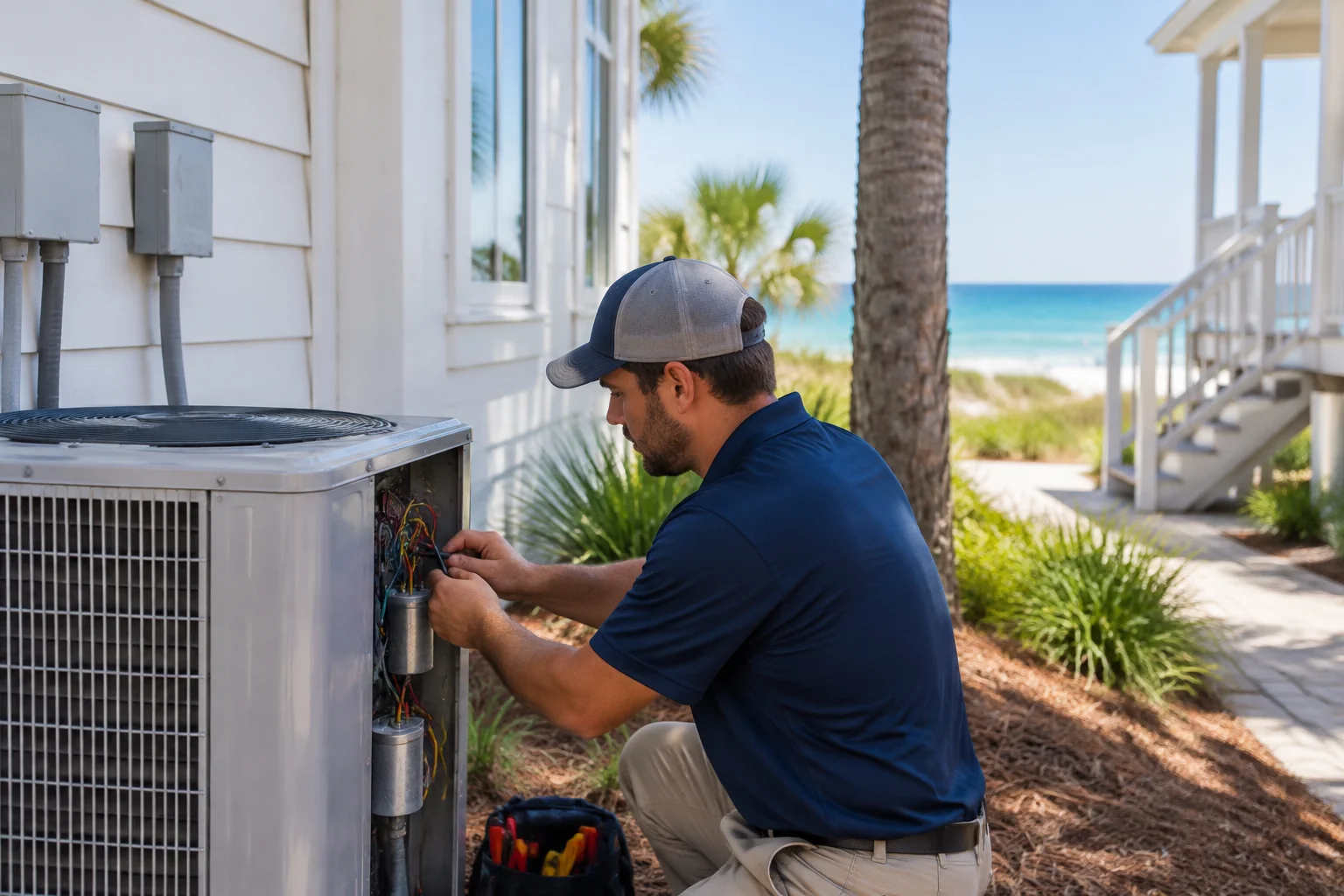
Alys Beach's coastal setting is demanding on electrical equipment. Salt deposits and moisture can accelerate corrosion at fixtures, fasteners, connections, and enclosures. Select equipment rated for the actual exposure and follow manufacturer guidance for coastal installations and cleaning.
Keep transformers and connections out of low spots where runoff collects. Equipment mounted outdoors still needs suitable drainage, clearances, and access. Avoid locations where irrigation repeatedly sprays electrical components or landscaping eventually buries them.
Storm damage is not always obvious from the driveway. Floodwater, wind-blown debris, and disturbed soil can compromise an otherwise working system. Water-damaged electrical equipment may require replacement rather than drying and restarting. Similar installation concerns appear in nearby communities, as discussed in our Seagrove Beach landscape lighting planning guide.
Make switches and controls easy to understand
Timers, photocells, and smart controls can reduce unnecessary lighting hours, but they should simplify operation. Divide lighting into useful zones, such as entry paths, courtyard accents, and outdoor entertaining areas. Essential walking routes may need different schedules from decorative uplighting.
Confirm that switches, dimmers, drivers, and lamps are compatible. Flickering or intermittent operation can result from mismatched components as well as damaged connections. A smart switch also needs the wiring and environmental rating required by its manufacturer.
For vacation rentals, clear labeling and an understandable manual override help guests and property managers. Coordinate outdoor controls with indoor lighting improvements so entry areas remain useful without leaving every exterior fixture on overnight.
Plan shared electrical improvements together
Outdoor lighting often becomes part of a larger project. Patio ceiling fans, kitchen lighting, spa wiring, garage outlets, and an EV charger can each affect circuit planning. Equipment that requires a dedicated circuit should not be added to a convenient lighting circuit.
If EV charger installation is on the horizon, discuss it before committing to panel changes or trenching. Coordinating work can reduce repeated disruption, although separate systems may require different raceways, clearances, or routing.
Older homes may have undocumented alterations or aging outdoor wiring. Newer homes can also have problems caused by later additions, irrigation changes, or rushed repairs. During remodels, broader electrical inspections can identify code corrections, grounding issues, and smoke detector installation needs without assuming the landscape system is the only concern.
Include surge protection and backup power in the discussion
Thunderstorms and utility disturbances can damage LED drivers, transformers, and electronic controls. Homeowners searching for a whole home surge protector near me should ask about a listed surge protective device appropriate for their service equipment and any additional protection recommended for sensitive components.
Surge protection reduces certain transient overvoltage risks, but it cannot guarantee protection from every lightning event. Correct installation, grounding, and bonding remain essential.
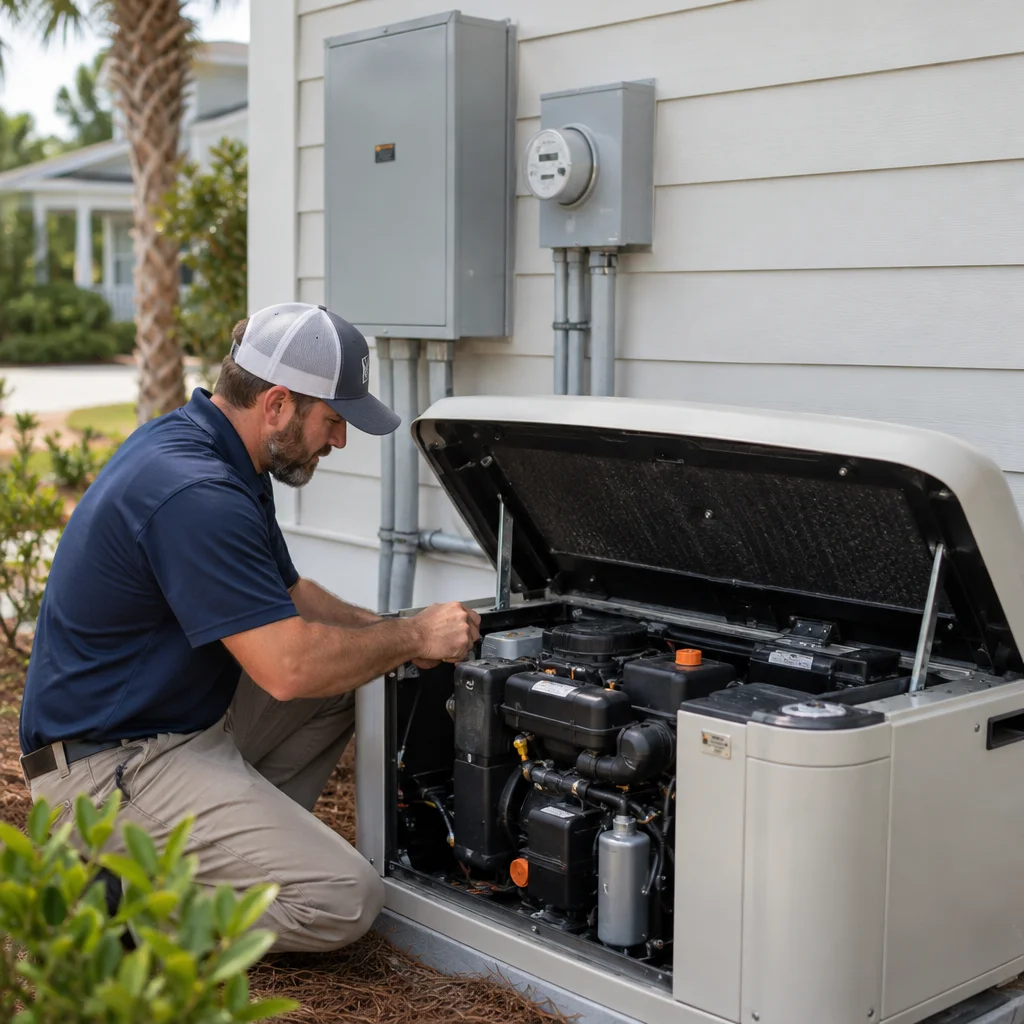
For generator installation or battery backup planning, decide whether selected entry and path lights belong among the backed-up loads. A permanently connected generator requires approved transfer equipment to prevent dangerous backfeeding. Backup systems also need capacity planning and compatible controls. Our article on electrical safety around battery backup systems in Alys Beach homes covers related warning clues.
Recognize problems that need prompt electrical service
A single dark fixture might have a failed lamp or driver. Several fixtures going dark together suggest checking shared components, such as the supply, transformer, controls, or cable run. Lights that flicker after rain, repeatedly trip protection, or change brightness unpredictably deserve professional troubleshooting.
Burning odors, smoke, sparks, unusually hot outlets, buzzing at the panel, or a shock from outdoor equipment are more serious. Keep people away and stop using the affected system. Shut off its circuit only if the panel is safely accessible and doing so does not expose you to water, heat, or arcing.
For fire, active smoke, downed utility wires, or immediate danger, call 911 or the utility as appropriate. Do not touch wet electrical equipment or approach a flooded panel. A same day electrician near me search should never delay emergency action. For urgent repairs without immediate danger, contact an electrical contractor and confirm availability directly.
A maintenance routine that catches trouble early
Walk the property after dark periodically and after significant storms, once conditions are safe. Look for leaning fixtures, exposed cable, missing covers, moisture inside lenses, and newly dark sections. Listen for unusual transformer noise without opening equipment.
Keep vegetation away from fixtures and maintain access to transformers, receptacles, and panels. Arrange irrigation so it does not spray electrical enclosures. Clean fixtures according to manufacturer instructions, and have damaged seals or corroded connections evaluated.
Test GFCI devices as directed, review timer settings after outages, and keep circuit labels current. Rental properties benefit from a simple reporting process so cleaners or managers can flag problems before another guest arrives. Local electrical maintenance should address the cause of recurring failures, not just replace the same lamp repeatedly.
Get a lighting plan that fits your Alys Beach home
When comparing results for electrical contractor near me, ask how the proposed work addresses circuit capacity, wet-location wiring, coastal exposure, permits, and inspections where required. A useful scope should identify fixture locations, controls, transformer capacity, and any needed outlet or panel corrections.
A Superior Mechanical provides electrical services in Alys Beach for homeowners planning improvements or addressing existing problems. Explore our Alys Beach service area and Walton County service information, or request an evaluation. Bring photos, a list of current issues, and plans for future additions so the lighting design starts with the right electrical foundation.
Find Outdoor Landscape Lighting in Alys Beach, FL
If you need Outdoor Landscape Lighting in Alys Beach, FL, visit our local service page or contact A Superior Mechanical today.
Map of Alys Beach, FL
Frequently Asked Questions
Does outdoor landscape lighting require a dedicated circuit?
Not always. A small LED system may be suitable for an existing circuit if its capacity, condition, protection, and equipment instructions allow it. An electrician should check the existing loads and installation requirements before deciding whether a dedicated circuit is needed.
Why does my landscape lighting trip the GFCI after rain?
Rain-related trips can indicate moisture entering an outlet enclosure, transformer, damaged cable, or connection. The GFCI may be responding to a ground fault. Do not bypass it or keep resetting it. Stop using the affected system and have an electrician locate the problem.
Do I need a panel upgrade before installing landscape lighting in Alys Beach?
Usually, landscape lighting alone does not establish a need for a panel upgrade. The decision depends on panel condition, circuit availability, calculated demand, and other planned equipment. An EV charger, spa, or home addition may make a broader electrical assessment worthwhile.
Related Articles
- Electrical Safety Clues Around Battery Backup Systems in Alys Beach Homes
- Smart Electrical Planning for Outdoor Landscape Lighting in Seagrove Beach, FL
- Smart Electrical Planning for Outdoor Landscape Lighting in Blue Mountain Beach, FL
- From Spotted Glass to Better Coffee: Water Purification in Alys Beach, FL
Photo Gallery