A chalky showerhead, cloudy glassware, and a faucet that never looks clean can make hard water frustrating. In a 30A home, those clues also raise practical plumbing questions: Is mineral buildup restricting flow? Does the water heater need service? Would a softener help, or is something else wrong?
Water softening in 30A, FL works best as part of a broader plumbing maintenance plan. It can reduce new mineral scale, but it cannot repair a leaking pipe or clear a sewer backup. For homeowners and vacation rental owners along this Walton County coastal corridor, understanding that distinction helps prevent unnecessary repairs and missed problems.
Start With a Water Test, Not an Assumption
Hard water contains dissolved calcium and magnesium. As water heats or evaporates, those minerals can leave deposits on fixtures and inside equipment. A conventional ion-exchange softener removes much of that hardness by exchanging calcium and magnesium for sodium or potassium.
Do not assume every property along 30A has the same water conditions. Your supply source, treatment arrangements, and existing equipment matter. A hardness test at the home gives a plumber a useful starting point. Testing other parameters may be appropriate if you notice staining, odor, or corrosion.
Separate hardness symptoms from other water problems
White crust around faucet outlets and persistent scale on shower glass can suggest hardness, but appearances alone are not a complete diagnosis. Rust-colored staining, unusual tastes, and blue-green marks deserve separate investigation. Softening is not disinfection, and a standard softener does not remove every contaminant.
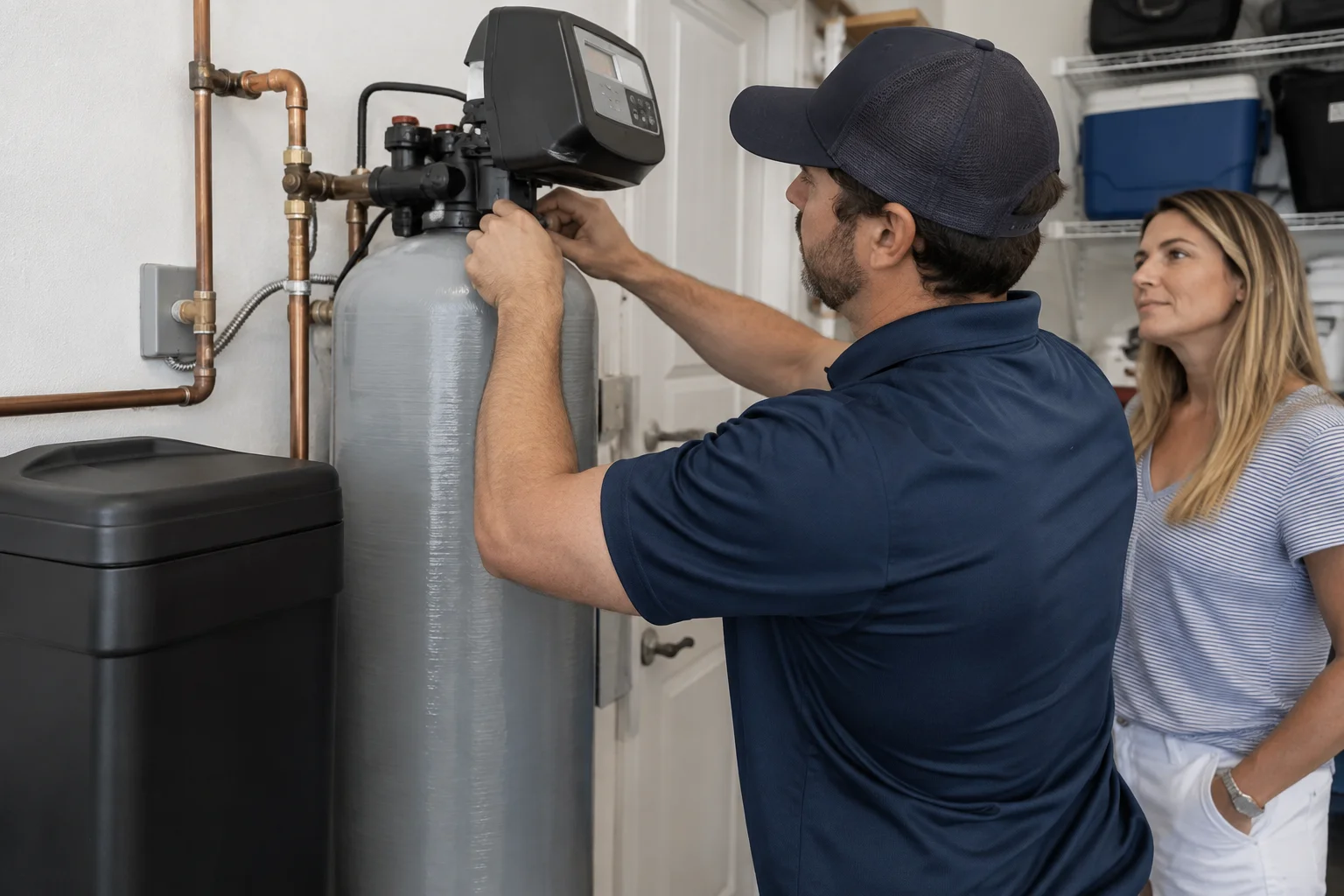
A Superior Mechanical offers professional water softening in 30A for homes, vacation rentals, and commercial properties. Testing, plumbing condition, and actual water demand should guide equipment selection.
Size the System for the Way Your 30A Home Uses Water
A full-time residence and a vacation rental with several occupied bathrooms can place very different demands on a softener. Summer visitors, laundry between guest stays, and simultaneous showers create peak flows that an undersized system may struggle to handle.
Capacity and flow rating are separate considerations. Capacity helps determine how much hardness a system can remove between regeneration cycles. Flow rating affects how well it serves multiple fixtures at once. Both should match the property, rather than simply its square footage.
Plan the installation around local conditions
30A's warm, humid coastal climate makes equipment location important. Components need protection from weather, direct sun where prohibited by the manufacturer, and flooding exposure. Outdoor-rated equipment still needs an approved installation. Occasional freezing weather also warrants protection for exposed pipes and treatment equipment.
Ask how the installation will handle bypass valves, service access, regeneration discharge, and outdoor hose connections. Irrigation generally does not need softened water. Keeping suitable outdoor uses separate can reduce unnecessary salt and water consumption.
Low Flow Does Not Always Mean Low Water Pressure
Homeowners often describe a weak shower as a pressure problem, but restricted flow and low supply pressure are different issues. Mineral deposits can clog a showerhead or faucet aerator even when incoming pressure is adequate. If only one fixture performs poorly, start by examining that fixture.
If several fixtures weaken together, the cause could involve a partly closed valve, a pressure regulator, a supply restriction, or treatment equipment. A softener that is undersized, fouled, or malfunctioning can contribute to pressure loss across the system.
A plumber can measure pressure and assess flow instead of guessing. Where safe and consistent with the manufacturer's instructions, briefly comparing performance with the softener bypassed may help isolate the problem. Do not force a stuck bypass valve.
When evaluating a plumber near me for this problem, look for someone who checks the entire water path. Installing a larger softener will not correct excessive incoming pressure or a deteriorated supply pipe.
Keep Leak Detection Separate From Scale Control
Softening may reduce new scale buildup, but it does not seal pinholes, restore corroded metal, or repair loose connections. A leak near a softener may involve its fittings, bypass assembly, tank, or discharge tubing. Water nearby can also originate from another appliance.
Check small leaks before they damage the home
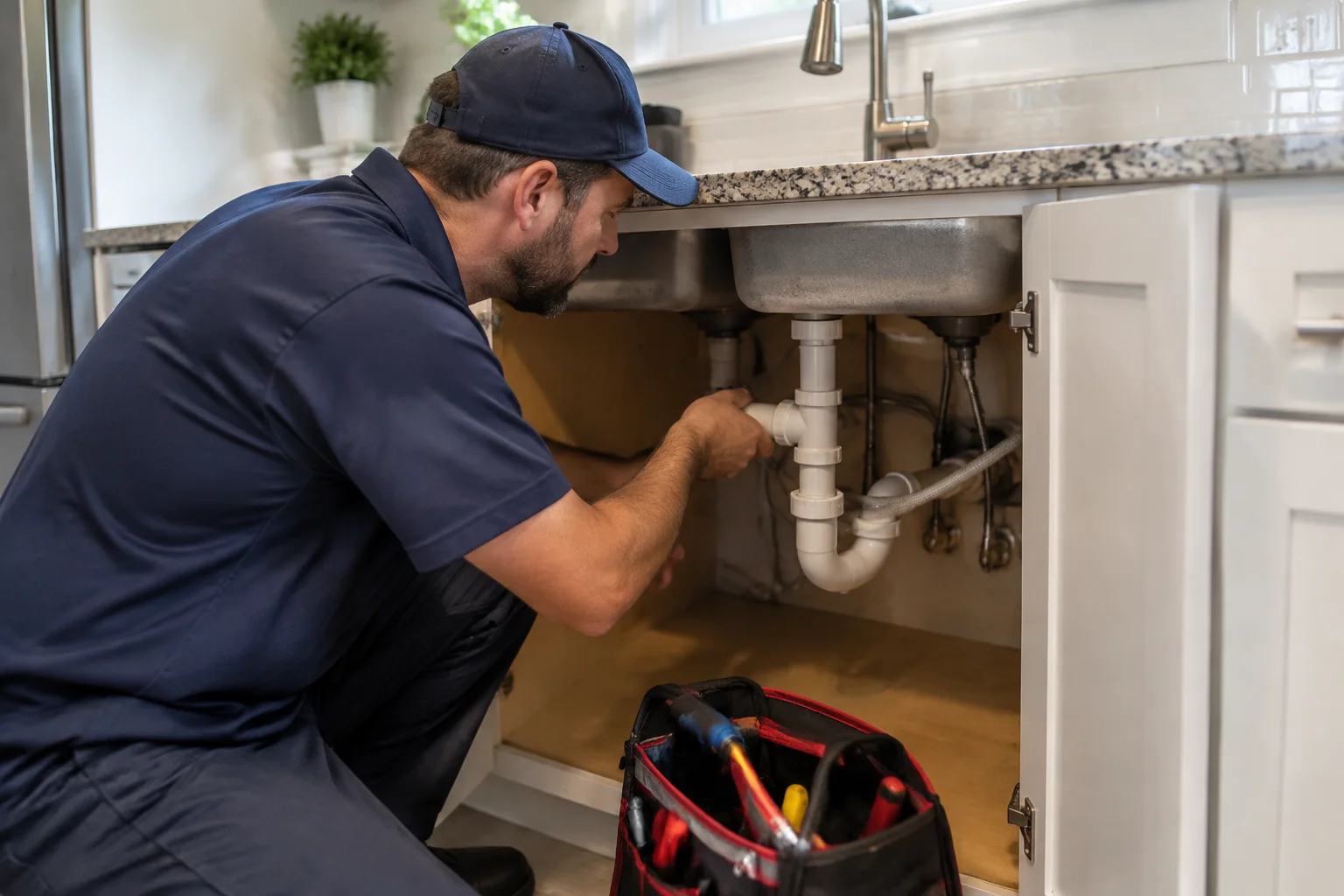
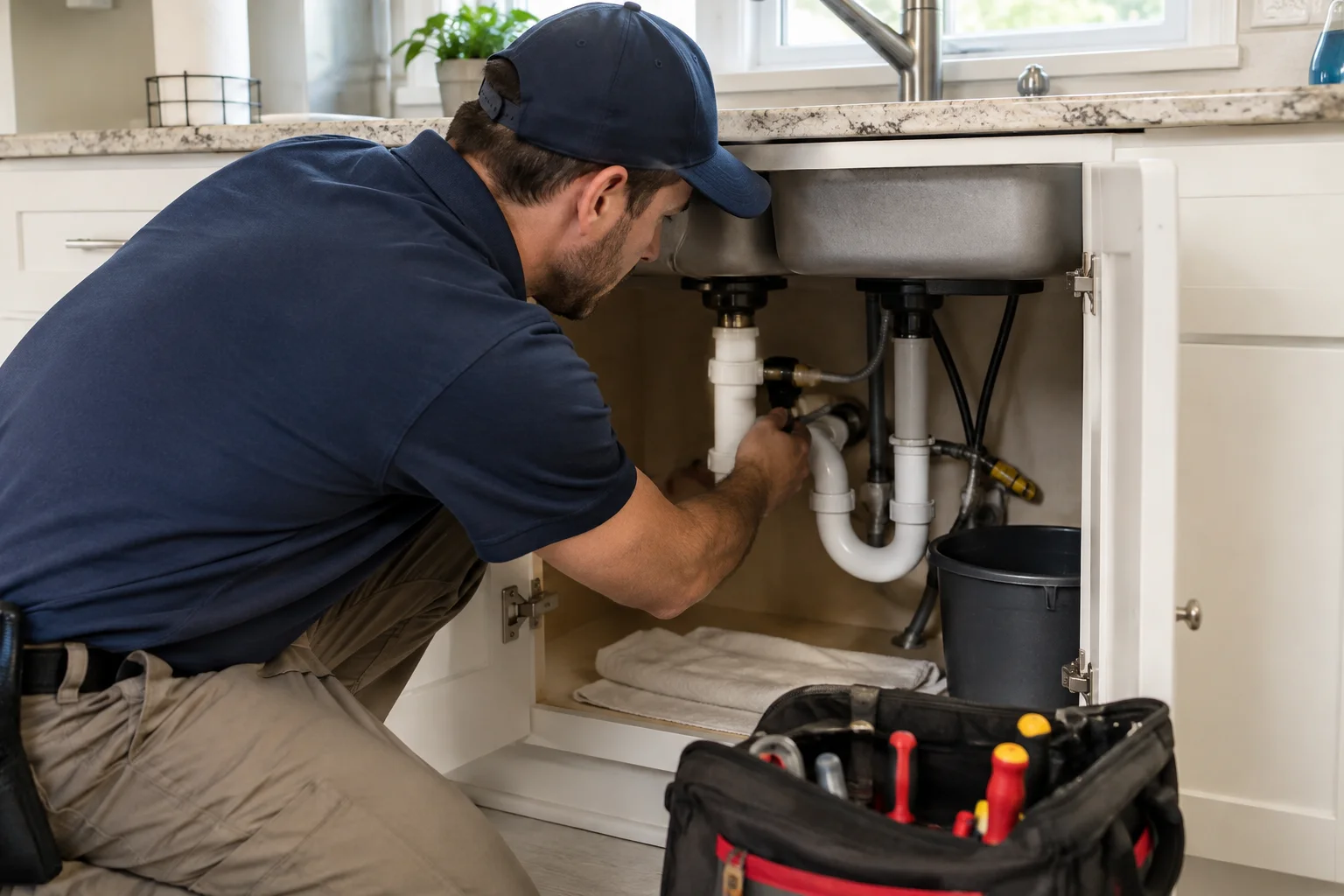
Inspect accessible connections for droplets, staining, or dampness. Check beneath sinks, around toilet bases, and near water heaters. An unexplained increase in water use deserves attention, particularly in a rental where different guests may not report a running toilet or dripping faucet.
With fixtures and water-using equipment off, unexpected meter movement can suggest a leak. First account for scheduled softener regeneration, irrigation, and other automatic uses. A meter check provides a clue, not a diagnosis.
Possible slab leak symptoms include unexplained warm flooring, persistent moisture, or the sound of running water with fixtures off. These symptoms need professional evaluation because other conditions can look similar. Homeowners searching for water leak repair near me should request leak detection before authorizing disruptive excavation or flooring removal.
Soft Water Helps With Residue, Not Every Drain Clog
Softening can reduce hard-water soap deposits, but it is not a drain-cleaning treatment. Hair, grease, food waste, and objects flushed down toilets remain common causes of drainage trouble. Established blockages still require appropriate cleaning or repair.
Use strainers in showers and bathroom sinks. Keep cooking grease out of kitchen drains, and put fibrous scraps and large food loads in the trash rather than the disposal. Only toilet paper and human waste should go into toilets, even when wipes are labeled flushable.
Pay attention to the softener drain connection
A softener discharges water during regeneration. Its drain connection needs an approved arrangement with backflow protection, typically including an air gap, according to local requirements and manufacturer instructions. An improperly routed line can leak, overflow, or create a contamination risk.
Repeated backups, gurgling across multiple fixtures, or wastewater appearing in a shower when a toilet flushes point beyond a simple fixture clog. A sewer camera inspection in 30A can help identify roots, damage, or other sewer line conditions when camera access is appropriate. Softener adjustments will not fix those defects.
Give Water Heaters Their Own Maintenance Plan
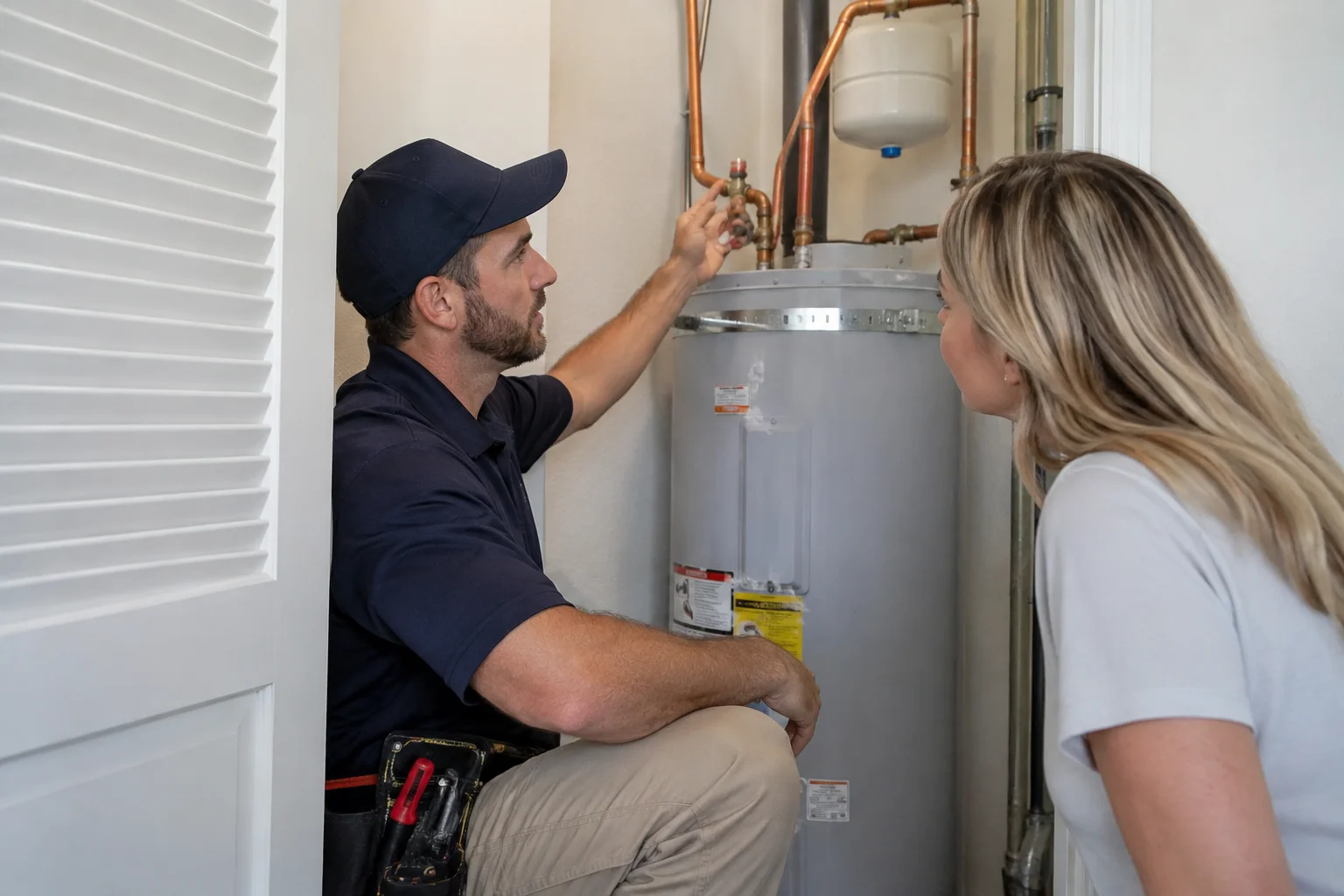
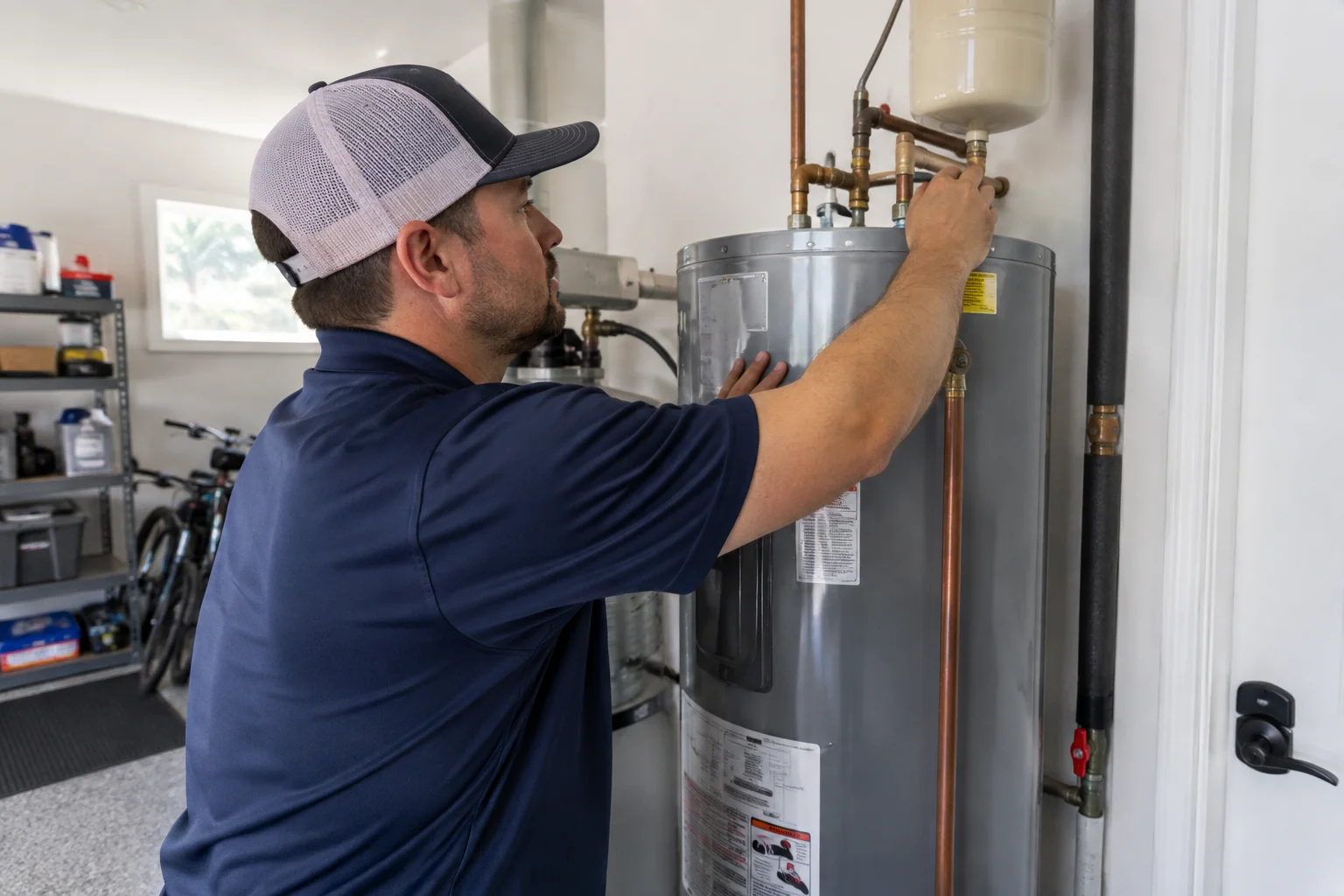
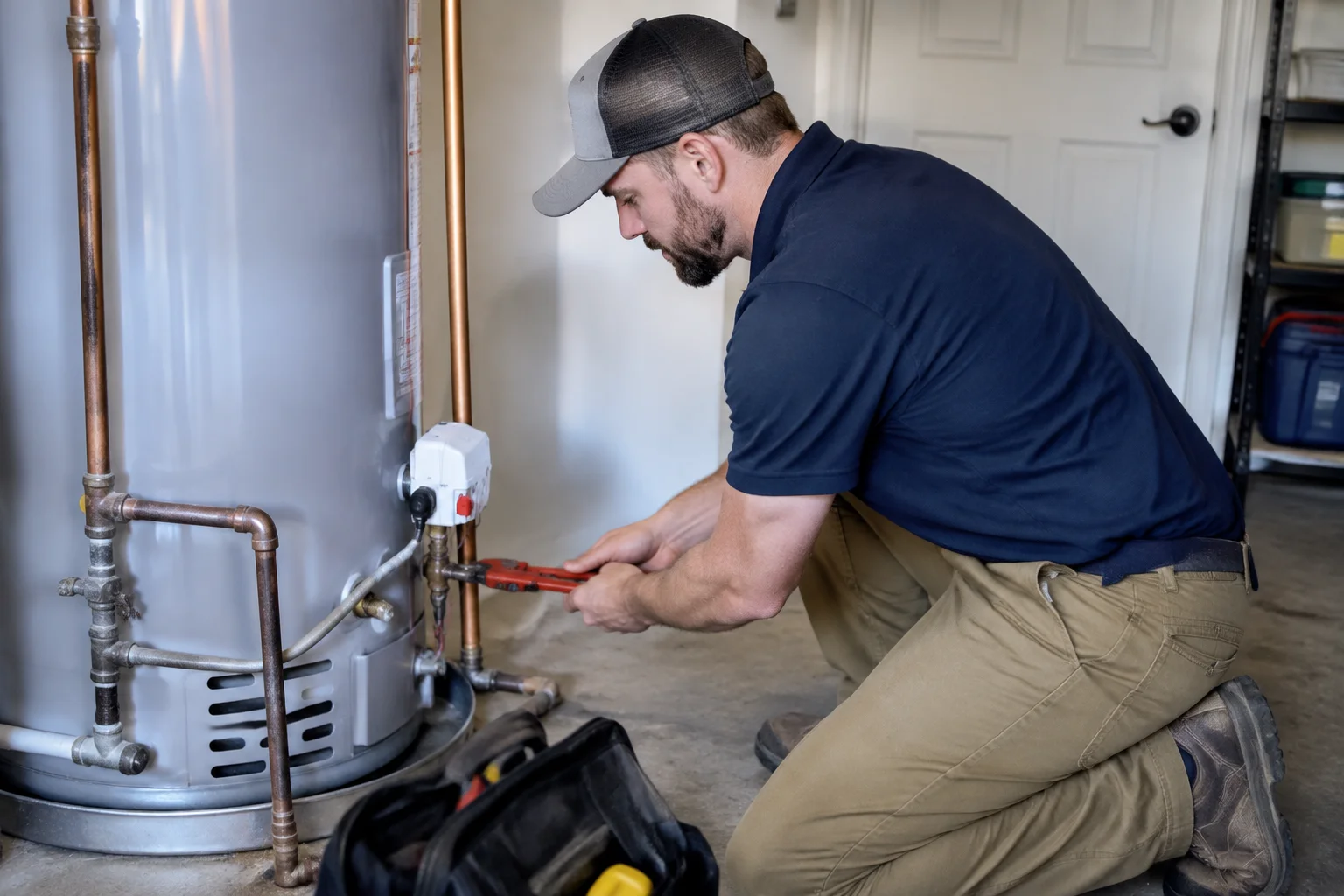
Hardness becomes especially relevant when water is heated. Mineral scale can accumulate on heat-transfer surfaces and inside components. Water softening can reduce additional hardness-related buildup, but it does not make a water heater maintenance-free or reliably remove existing deposits.
Tank water heaters may need sediment maintenance and anode evaluation according to their manufacturer and operating conditions. Tankless equipment may need descaling and inlet-screen cleaning. The correct schedule depends on water chemistry, use, and equipment instructions.
If you are looking for tankless water heater repair near me because hot water fluctuates or an error code appears, mention any softener problems too. The technician should still diagnose the heater itself rather than assume minerals explain every fault.
For a leaking tank or equipment that is no longer practical to repair, discuss water heater replacement in 30A. Pairing properly selected treatment with suitable heating equipment can reduce future scale exposure without promising a particular equipment lifespan.
Look Beyond Scale When Faucets and Toilets Misbehave
Hard water can leave deposits on aerators, cartridges, and toilet components. However, a dripping faucet may have a worn seal, while a running toilet may have a damaged flapper, faulty fill valve, or incorrect water level. Soft water will not replace those parts.
Clean removable aerators using a method approved for the fixture's materials and finish. Avoid aggressive chemicals or abrasive tools that can damage coatings. If a faucet still flows poorly after cleaning, its cartridge or supply connection may need inspection.
For repeated fixture failures, compare targeted faucet repair or toilet repair with replacement. Age, parts availability, finish damage, and underlying pressure conditions all matter. Our guide to replacing plumbing fixtures in 30A homes explains useful planning considerations.
When replacement makes sense, local plumbing fixture replacement should include checking shutoff valves and connections, not just installing a new visible fixture.
Build a Simple Softener Maintenance Routine
Check the salt level at the interval recommended for your system and household usage. Use the specified salt type, and watch for a hard crust or salt bridge that prevents proper brine formation. A full-looking tank does not necessarily mean regeneration is working correctly.
Review settings after occupancy changes or extended vacancies. A vacation rental may need different capacity planning from a lightly occupied second home. Investigate unexpected salt consumption, constant discharge, persistent hardness, or water around the equipment instead of repeatedly changing settings.
Coordinate treatment with the rest of the plumbing
Periodic hardness checks downstream of the softener can help confirm performance. Keep service records and note changes in pressure, fixture flow, and water use. Existing pipe restrictions or failing valves can complicate treatment performance, as discussed in our article on plumbing wear and water softening in nearby Inlet Beach.
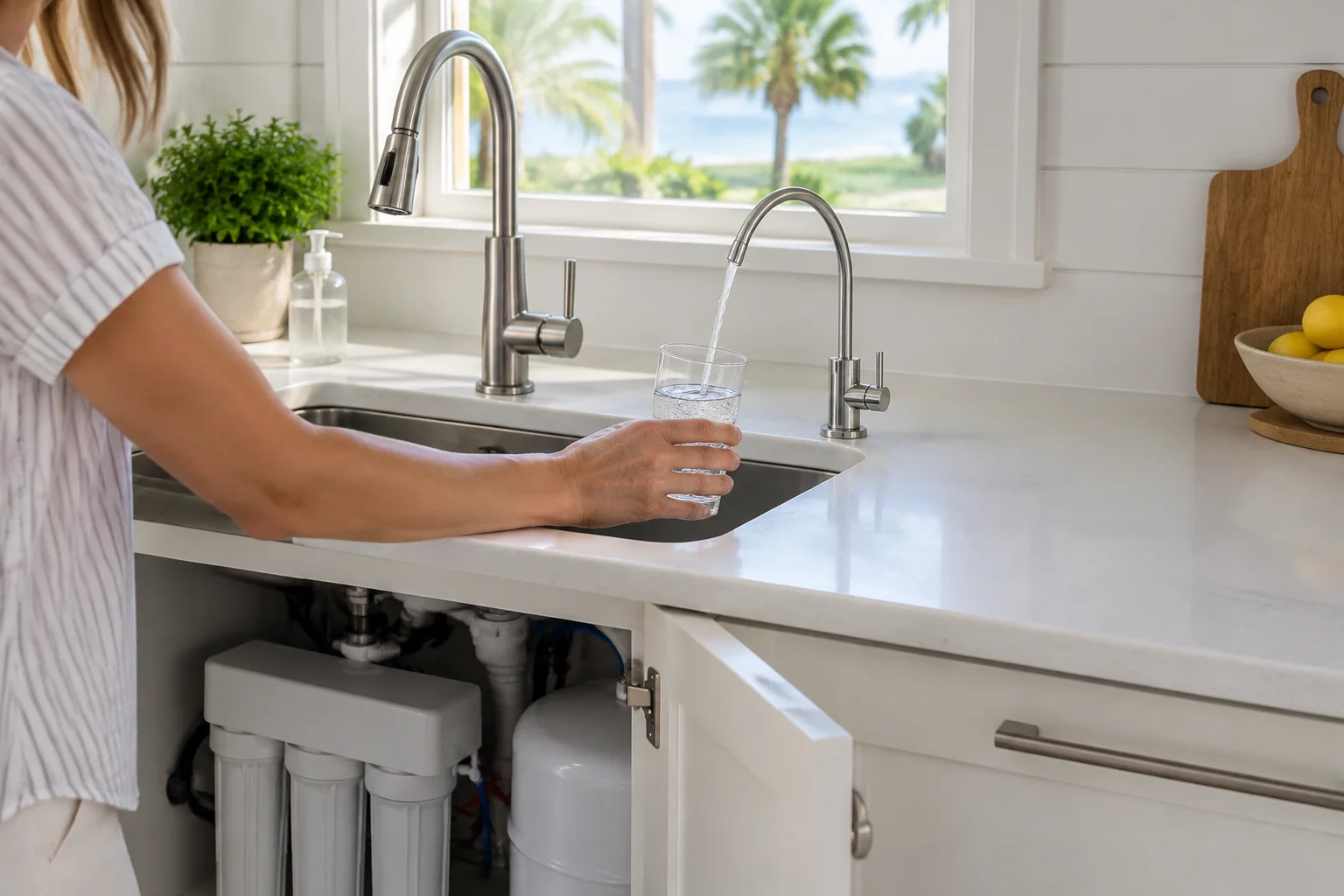
If drinking-water treatment is also a priority, recognize that reverse osmosis serves a different purpose. Our reverse osmosis maintenance guide for 30A homes explains care considerations for those systems. Neither type of equipment eliminates routine plumbing inspections.
Have a Plan for Urgent Plumbing Problems
A burst pipe, rapidly spreading leak, sewage backup, or uncontrolled softener discharge requires prompt action. Know where the home's main water shutoff is before an emergency. Label it clearly and make sure a property manager or trusted local contact can access it when you are away.
If it is safe, stop the water supply during an active supply leak. For a sewer backup, stop using plumbing fixtures and keep people and pets away from wastewater. Avoid standing water near electrical equipment, and do not handle wet electrical components.
When searching for an emergency plumber near me, describe whether the problem involves clean supply water, sewage, or hot water. A Superior Mechanical's emergency plumbing services in 30A provide a local service option. Explain any active flooding when requesting assistance.
Choose Local Care That Connects Treatment and Repair
Good water softening advice starts with the property itself: tested hardness, daily demand, peak occupancy, pipe condition, and installation access. A beach cottage, newer full-time residence, and busy rental may need different solutions.
A Superior Mechanical provides service for 30A properties and serves the surrounding Walton County area. Request an assessment that considers both water treatment and plumbing condition. Bring recent water bills, equipment service records, and a list of recurring symptoms so the visit can focus on a practical plan for your home.
Find Water Softening in 30A, FL
If you need Water Softening in 30A, FL, visit our local service page or contact A Superior Mechanical today.
Map of 30A, FL
Frequently Asked Questions
Does every home in 30A, FL need a water softener?
No. The decision should be based on measured water hardness, household water use, and problems such as recurring mineral scale. Water conditions can vary by supply source and existing treatment. Testing at the property helps determine whether softening is appropriate and what capacity is needed.
Can water softening fix leaking pipes or clogged drains?
A water softener reduces hardness minerals and can help limit new scale, but it does not repair damaged pipes or clear established drain clogs. Leaks need diagnosis and repair, while slow drains may require cleaning or inspection. Multiple fixtures backing up can indicate a sewer line problem.
How should a 30A vacation rental owner maintain a water softener?
Check salt levels and accessible connections regularly, follow the manufacturer's service schedule, and have treated-water hardness checked periodically. Review system sizing and settings when occupancy changes significantly. Give your property manager instructions for recognizing leaks, locating the main shutoff, and requesting plumbing service.
Related Articles
- Smart Plumbing Habits for Reverse Osmosis Systems in 30A Homes
- What 30A Homeowners Should Know Before Replacing Plumbing Fixtures
- How Plumbing Wear and Tear Changes the Way Water Softening Works in Inlet Beach
- How Better Water Softening Helps Callaway Homes Protect Plumbing, Fixtures, and Water Heaters
Photo Gallery