A business can have a working air conditioner and still feel uncomfortable. The front office stays warm, a conference room feels clammy, and employees adjust the thermostat without solving either problem. In Crestview, those complaints often point to maintenance needs that go beyond whether the equipment turns on.
Smart commercial HVAC maintenance considers comfort, airflow, moisture, operating schedules, and equipment condition together. A Superior Mechanical provides commercial HVAC maintenance in Crestview, FL, helping businesses reduce breakdowns and protect equipment life. For homeowners who also manage a storefront, rental office, or home-based business, understanding these priorities makes service decisions easier.
Crestview Weather Makes Preventive Care Worth Planning
Crestview's long cooling season puts sustained demand on condensers, air handlers, and evaporator coils. High outdoor humidity adds another job: the system must remove moisture while lowering the temperature. Frequent door openings, outdoor air ventilation, and crowded rooms can increase that moisture load.
Crestview is inland, so its equipment generally has less direct salt air exposure than equipment near the Gulf. Still, regional coastal weather, wind-driven rain, thunderstorms, and tropical systems affect buildings throughout Okaloosa County. Debris, standing water, corrosion, and storm-related power disturbances deserve attention during equipment inspections.
Cooler weather matters, too. Heat pumps must transition into heating reliably, while furnaces and electric backup heat need checks before a cold morning reveals a problem. Scheduling preventive visits ahead of seasonal demand gives owners more room to address developing issues before they become urgent.
Start With How the Building Actually Operates
A useful maintenance plan begins with an equipment inventory and a conversation about building use. An office with predictable hours has different needs from a restaurant with heat-producing equipment or a shop whose entrance stays busy all afternoon. Equipment age matters, but operating conditions can matter just as much.
Connect equipment records to comfort complaints
Record model numbers, approximate ages, filter sizes, service history, and which areas each system serves. Note rooms that run hot, recurring drain problems, and times when humidity rises. These details help a technician distinguish a building load problem from a failing component.
Homeowners searching for HVAC maintenance near me often recognize the same patterns in local homes. Older homes converted to offices may have ductwork designed for a different layout. Newer homes and commercial buildings can also develop problems when room use or occupancy changes without an airflow review.
Set a schedule based on conditions
There is no single maintenance interval that fits every business. Manufacturer instructions, operating hours, warranty requirements, filtration needs, and site conditions should guide the schedule. Seasonal equipment inspections are a useful starting point, but high-use systems may need more frequent attention.
Filter and condensate checks may be needed between major visits. Ask for written findings that separate urgent repairs from developing concerns and routine upkeep. A clear record makes budgeting easier and helps reveal repeated failures that deserve a deeper diagnosis.
Airflow Comes Before Lower Thermostat Settings
Weak airflow can make an otherwise functional system struggle. A loaded filter, dirty blower wheel, obstructed coil, closed damper, or damaged duct can reduce the amount of conditioned air reaching occupied rooms. Lowering the thermostat does not remove those restrictions.
Watch for weak supply vents, temperature differences between rooms, whistling at returns, or unusually long operating cycles. Ice on refrigerant tubing or an evaporator coil can also indicate an airflow or refrigeration problem. Ice is a reason to stop cooling and arrange service, not keep lowering the temperature.
Inspect the entire air path
A technician should evaluate filters, blower performance, coil condition, return paths, and duct connections. Measuring static pressure where appropriate can help identify restrictions that a visual inspection misses. Commercial systems may also require airflow balancing to match how individual spaces are used.
Ductwork repair and duct sealing can help when conditioned air escapes into attics or other unconditioned areas. However, sealing alone will not correct undersized ducts or a poorly arranged return system. People searching for duct leakage repair near me should ask whether the assessment includes both leakage and airflow capacity.
Keep furniture, storage boxes, and displays away from supply and return vents. Use the filter size and type specified for the equipment. A higher-efficiency filter is not automatically better if the system cannot handle its resistance.
Humidity Control Is Part of Commercial Comfort
A cool room that feels sticky needs more than another thermostat adjustment. In humid Florida weather, moisture removal depends on coil performance, sufficient operating time, ventilation conditions, and equipment sizing. An oversized system may cool quickly and shut off before removing enough moisture.
Persistent indoor relative humidity above roughly 60 percent deserves investigation. A range near 40 to 60 percent is a practical comfort target for many occupied buildings, although requirements vary with use. Measure humidity in representative rooms instead of relying only on how the space feels.
Find the moisture source before adding equipment
A maintenance assessment should consider dirty coils, clogged drain lines, air leaks, outdoor air settings, and fan operation. Continuous fan operation can, in some systems, re-evaporate moisture from a wet coil after cooling stops. Ventilation should not simply be reduced to solve humidity because the building still needs appropriate outdoor air.
Dedicated dehumidification may help when the cooling system cannot manage the moisture load by itself. Homeowners researching a whole home dehumidifier near me face a similar question, but commercial applications require equipment and controls suited to the building. Correct drainage and a verified moisture assessment should come first.
The Components That Need Consistent Attention
Outdoor units, condensers, and refrigerant circuits
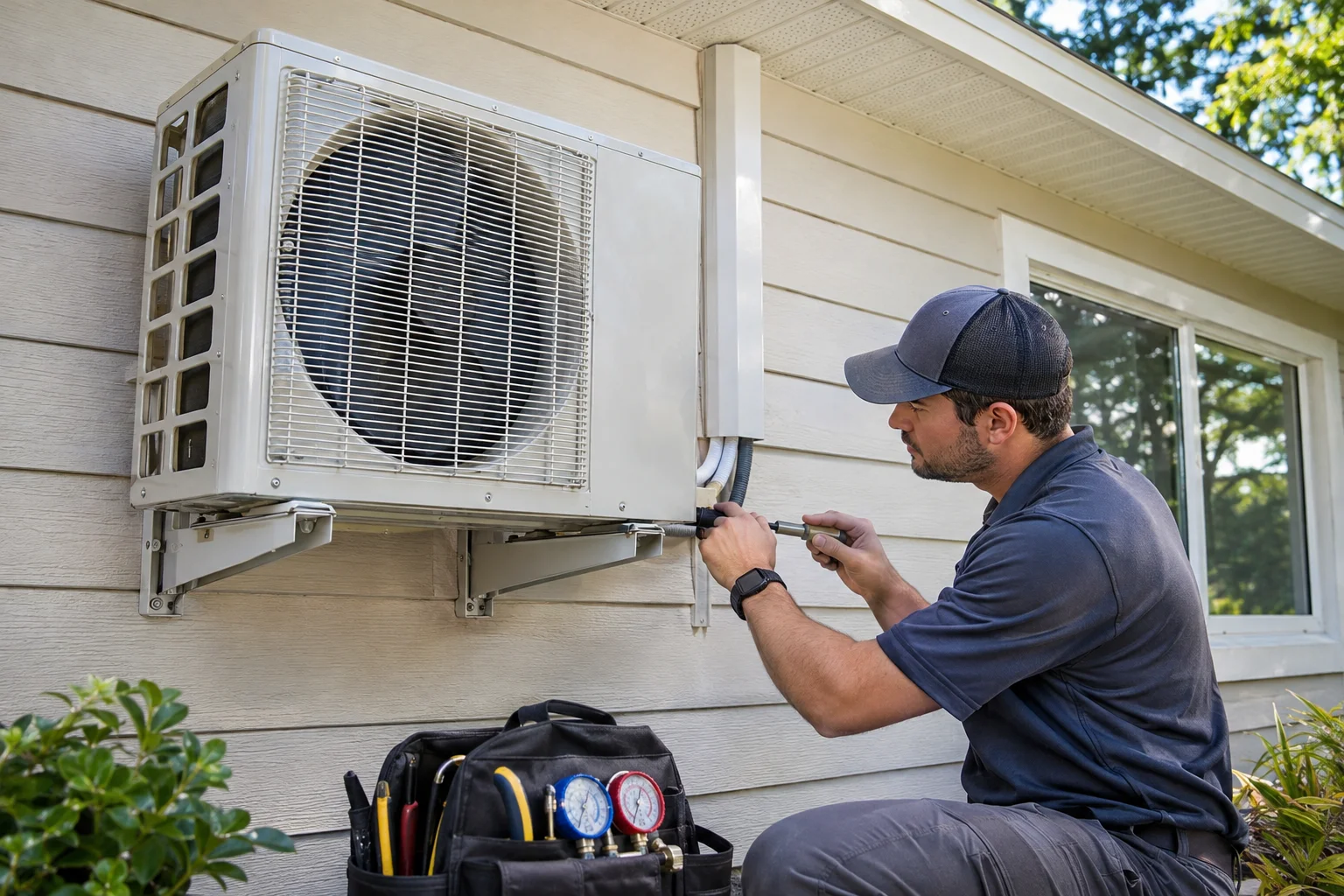
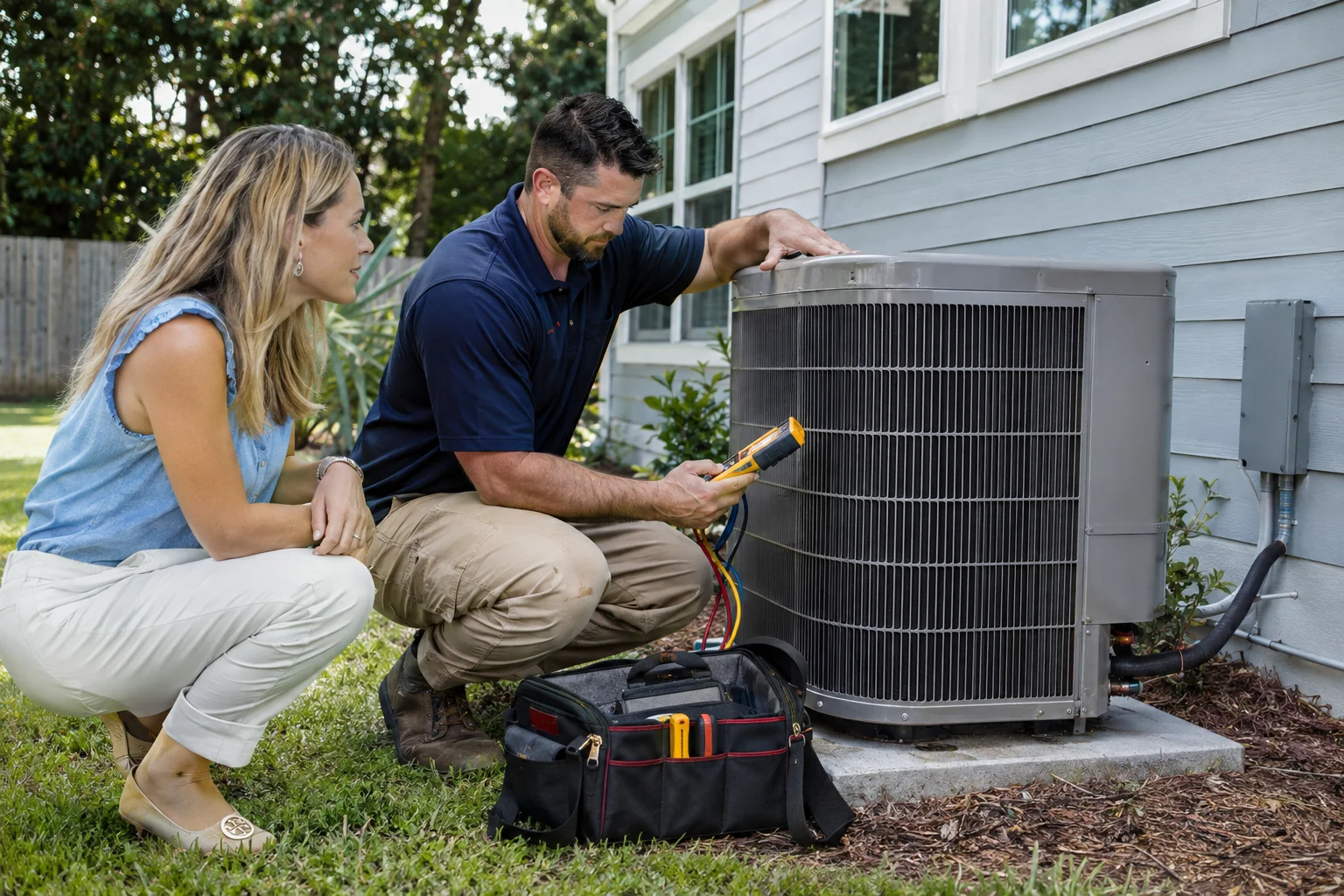
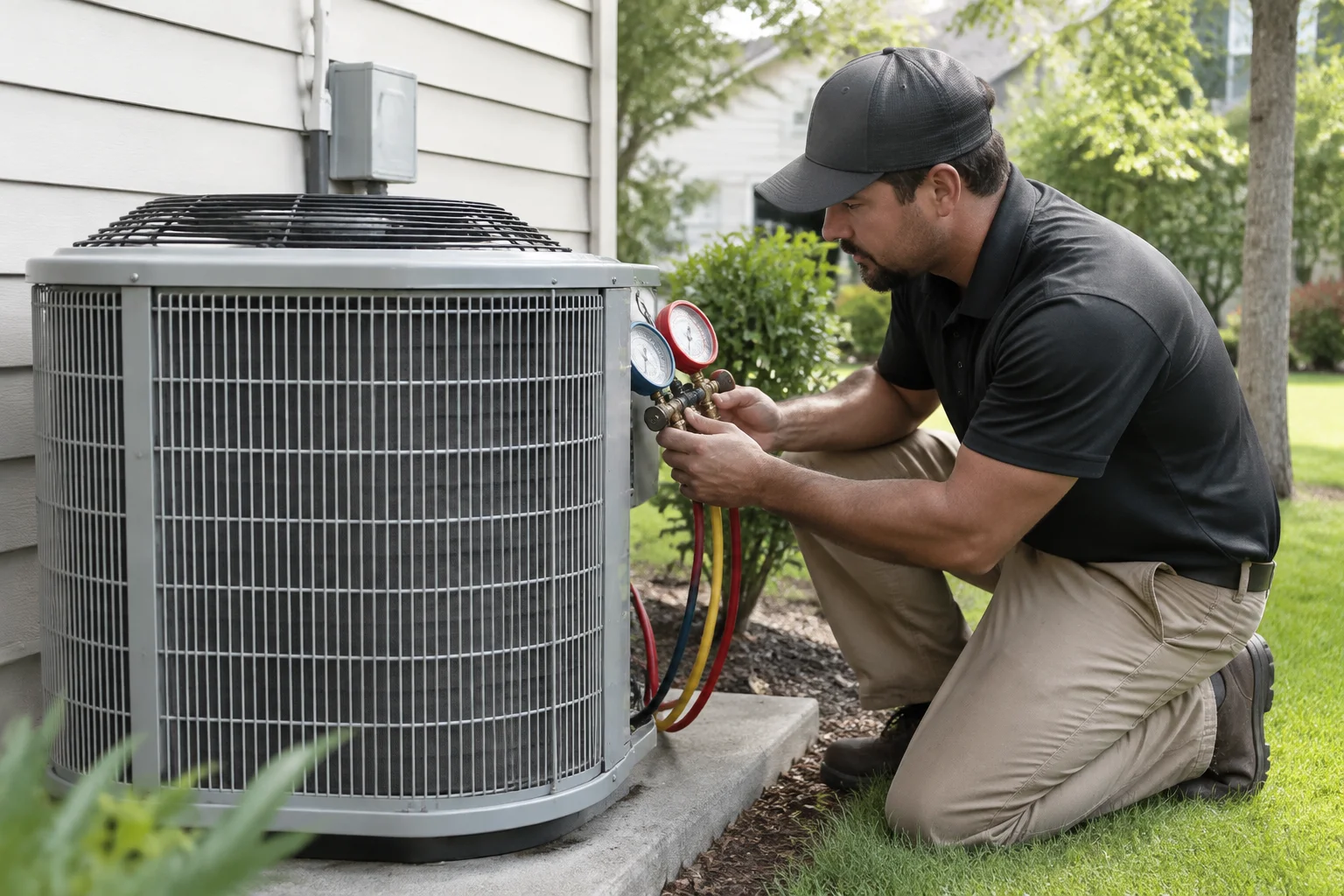
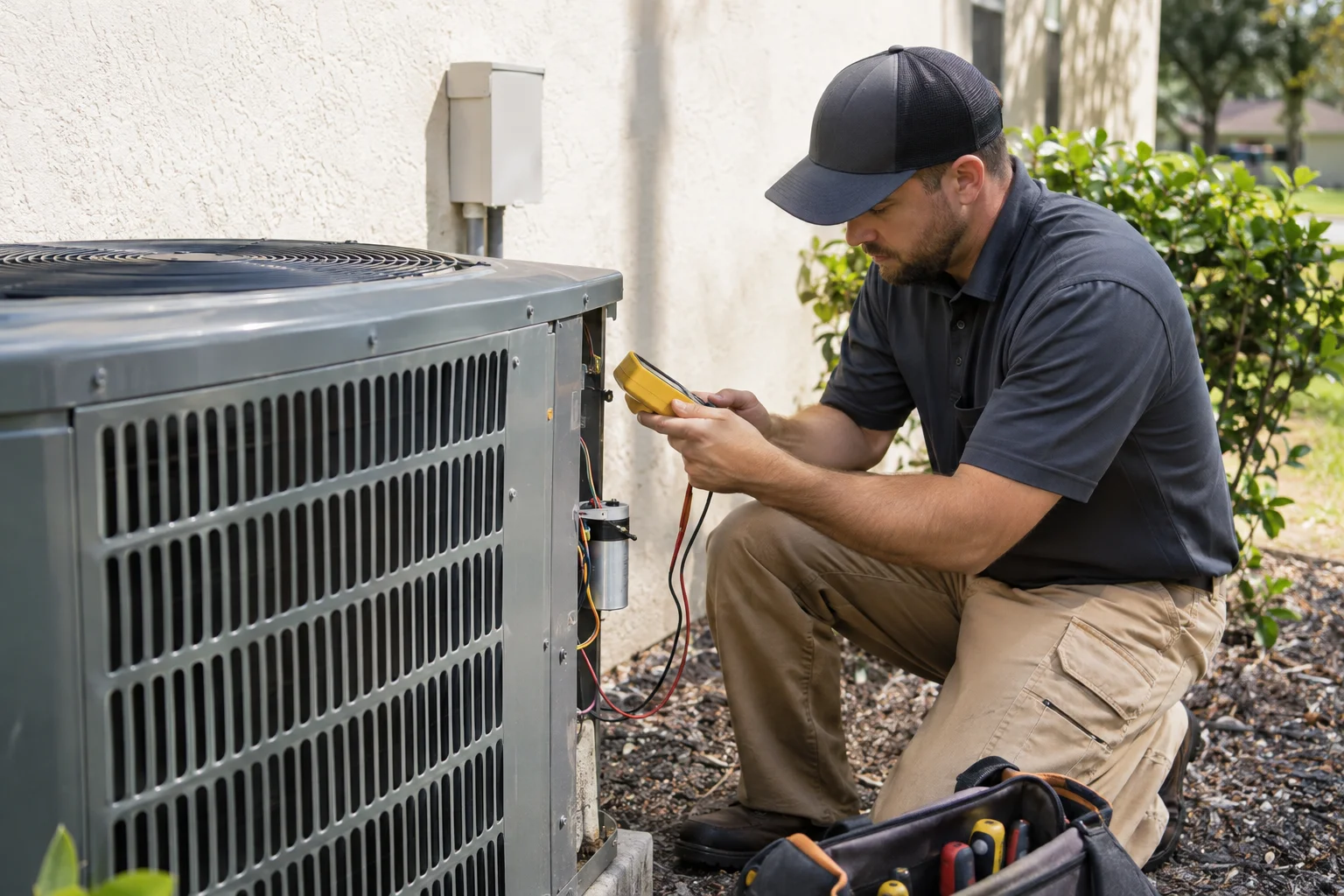
Outdoor units need adequate clearance and clean heat-transfer surfaces. Leaves, grass clippings, and dirt can restrict condenser airflow and make heat rejection harder. Cleaning should follow manufacturer guidance because aggressive pressure or unsuitable chemicals can damage fins and protective coatings.
Refrigerant does not normally get used up. If a system is low, a leak or previous charging problem may be involved. Repeatedly adding refrigerant without investigating the cause is not a lasting solution. Qualified technicians should evaluate operating conditions and determine whether leak testing or repair is needed.
Air handlers, evaporator coils, and drains
Inside the building, maintenance should address blower condition, evaporator coil cleanliness, drain pans, and condensate removal. A clogged drain line can cause overflow, ceiling damage, or a safety-switch shutdown. Where installed, condensate safety switches should be checked for proper operation.
Staff can report water stains, unusual vibration, or musty odors, but should not remove equipment panels or attempt internal cleaning. Air handler repair requires checking the cause of the symptom rather than assuming every airflow complaint means a bad blower motor.
Thermostats and operating controls
Confirm that thermostats read accurately and follow current business hours. A sensor near a sunny window, exterior door, or heat-producing appliance may misrepresent room conditions. Review overrides and setpoints so different zones are not unnecessarily heating and cooling against each other.
For buildings with recurring scheduling or temperature-control problems, reviewing heating control systems in Crestview can be useful. Thermostat installation should account for equipment compatibility, staging, humidity needs, and sensor placement.
Heating Equipment Needs Its Own Seasonal Checks
Heat pumps work through much of the year in Northwest Florida. Heating maintenance should include checks appropriate to the equipment, such as reversing operation, defrost controls, and auxiliary heat. Frequent backup heat operation can increase energy use, although some operation is normal during cold conditions or defrost.
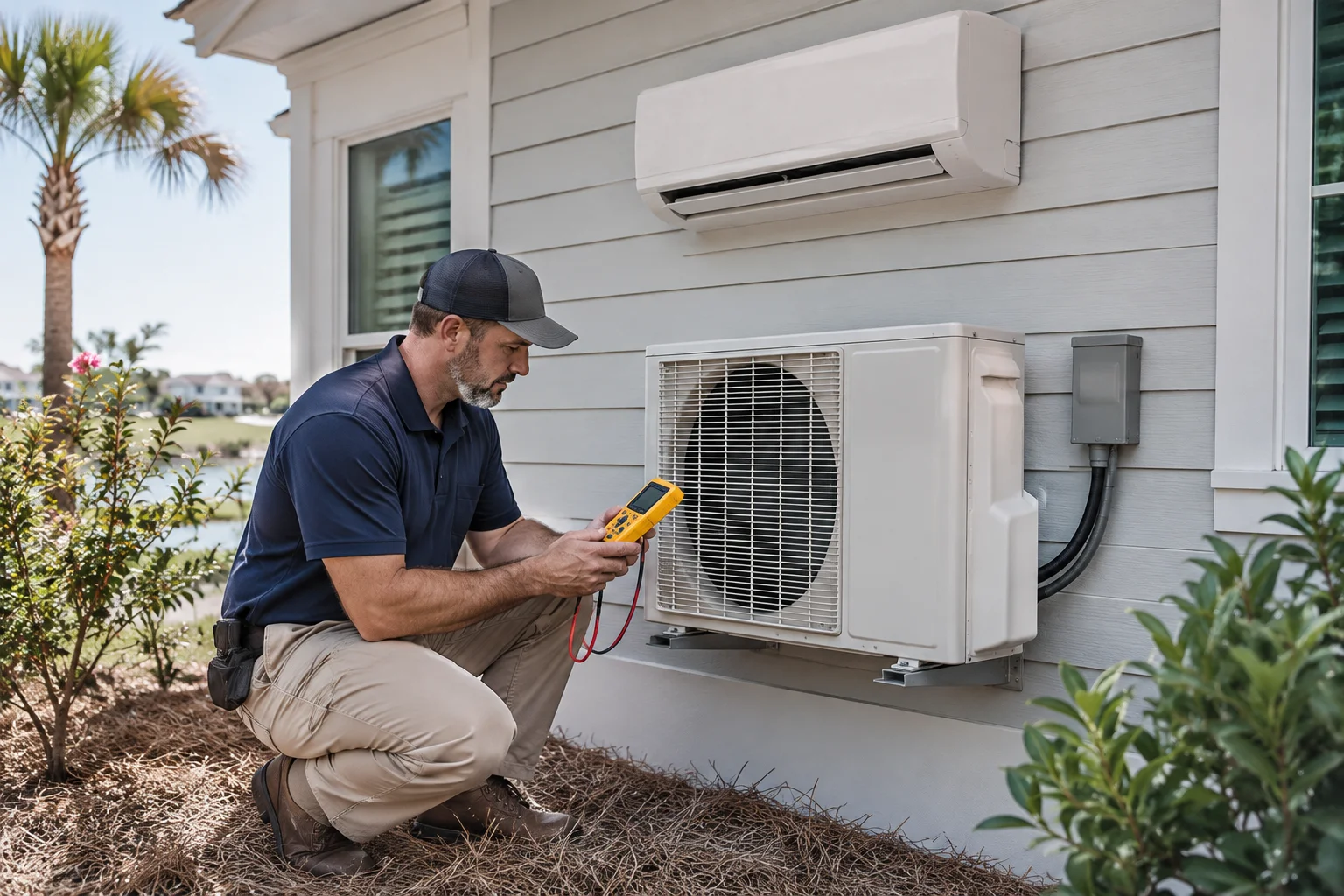
Furnaces require a different approach. Gas equipment needs professional attention to combustion safety, venting, and related components. Electric furnace service focuses on heating elements, sequencers, controls, and airflow. Ductless mini splits also need clean filters, coils, blower components, and reliable condensate drainage, even when they serve only one room.
Cleaner Air Starts With Basic Maintenance
Indoor air quality depends partly on filtration, moisture control, ventilation, and housekeeping. Dirty filters and wet insulation can undermine comfort, but equipment should be inspected before attributing odors or allergy complaints to a specific cause. Maintenance alone cannot identify every indoor air contaminant.
Choose filtration that matches system capabilities and building needs. UV devices or air-cleaning accessories may be appropriate in some situations, but they do not replace source control, coil cleaning, or moisture correction. Persistent visible growth or water damage may require assessment beyond routine HVAC service.
Remodels and Additions Can Outgrow the Original Design
A new conference room, enclosed storage area, or business expansion changes airflow and cooling loads. Simply adding a vent may leave other rooms short of air. Even newer equipment can struggle if the building has changed since the original design.
Before a substantial renovation, discuss load calculations, ventilation, duct capacity, and zoning. Planning air conditioning for new construction in Crestview early helps coordinate these requirements. If existing equipment is no longer suitable, a properly designed air conditioning installation may address limitations that maintenance cannot fix.
Improve Efficiency Without Sacrificing Comfort
Start with clean coils, correct airflow, sound duct connections, and appropriate controls. Then compare utility use against outdoor weather and business hours. A higher bill alone does not prove equipment failure, but an unexplained increase can justify an inspection.
Moderate unoccupied temperature adjustments can reduce unnecessary operation. Aggressive cooling setbacks may allow humidity to climb or create a difficult morning recovery. Review schedules with the technician rather than copying settings from another building.
Regional experience is useful, too. This discussion of commercial HVAC maintenance in Sandestin explores coastal exposure concerns. Crestview businesses can apply the same preventive mindset while tailoring corrosion protection and inspection priorities to their inland location.
Know Which Problems Should Not Wait
Arrange prompt service for repeated shutdowns, water leaks, frozen coils, severe vibration, or a sudden loss of cooling during hot weather. Businesses searching for AC repair near me should describe the affected areas, thermostat readings, noises, and any visible water. Those observations help with triage without requiring unsafe troubleshooting.
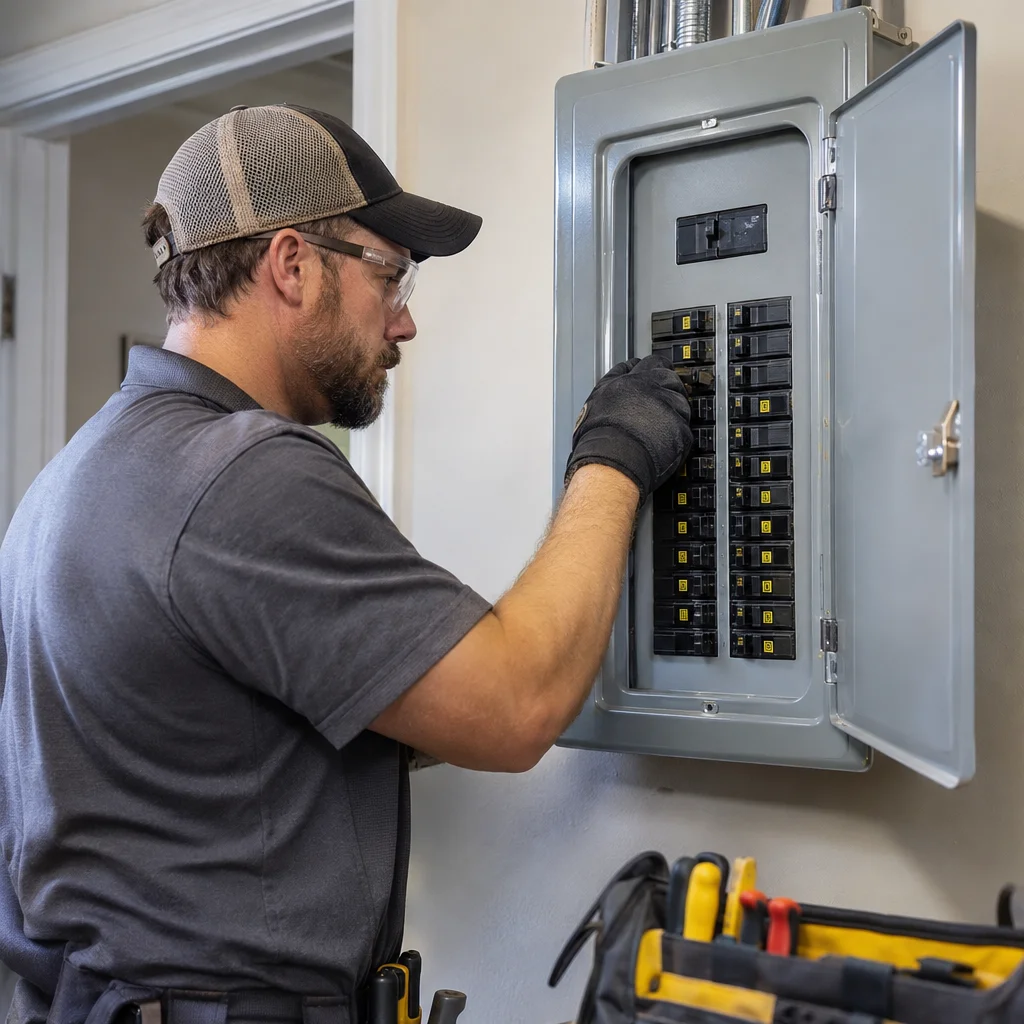
If there is smoke, sparking, or a burning electrical odor, stop using the equipment and seek urgent help. For a gas odor or carbon monoxide alarm, leave the building and contact emergency services or the gas utility from a safe location. Do not repeatedly reset a breaker or bypass a safety switch.
A maintenance plan should include an emergency contact procedure and equipment records. This guide to commercial HVAC repair planning in Crestview offers another way to organize repair decisions before a disruption.
Build a Plan Around Your Crestview Property
Local service matters because weather, building layouts, and seasonal demand shape maintenance priorities. A Superior Mechanical serves Crestview and the surrounding Okaloosa County area. Bring your comfort complaints, recent repair history, and operating schedule to the maintenance conversation.
Ask which tasks your equipment needs, how often they should happen, and what findings will be documented. A practical plan gives you clearer repair priorities, steadier comfort, and a better chance of catching small problems before they interrupt the business day.
Find Commercial HVAC Maintenance in Crestview, FL
If you need Commercial HVAC Maintenance in Crestview, FL, visit our local service page or contact A Superior Mechanical today.
Map of Crestview, FL
Frequently Asked Questions
How often should a commercial HVAC system in Crestview receive maintenance?
The schedule should follow manufacturer recommendations, operating hours, equipment condition, and building use. Seasonal inspections are a useful starting point, while heavily used systems may need more frequent service. Filters and condensate drains may require attention between scheduled visits.
Why does my business feel humid even when the air conditioning is running?
Possible causes include short cooling cycles, oversized equipment, dirty evaporator coils, excessive outdoor air infiltration, or control settings. A technician should measure humidity and evaluate airflow, drainage, and system operation before recommending dehumidification equipment.
Can commercial HVAC maintenance prevent emergency repairs?
Maintenance can reduce the risk of breakdowns by identifying dirty coils, drainage problems, airflow restrictions, and developing component issues. It cannot prevent every failure. Written service records and an emergency response plan help businesses make faster, better-informed decisions when trouble occurs.
Related Articles
Photo Gallery