A commercial electrical system should support more than opening day. It must safely handle the equipment, lighting, technology, cooling loads, security systems, and future changes a Callaway business may face for years. Thoughtful planning during construction is usually more practical and less disruptive than adding circuits or replacing undersized equipment after walls and ceilings are finished.
A Superior Mechanical provides Commercial Electrical New Construction in Callaway, FL for offices, restaurants, retail spaces, multiunit properties, and other new developments. The work includes load planning, panels, wiring, outlets, lighting, grounding, backup power preparation, inspections, and code compliant installation.
Commercial power planning starts before wiring begins
Electrical planning should be coordinated with the building layout, mechanical equipment, plumbing, fire protection, data systems, and the utility service. Waiting until framing is complete can create conflicts, expensive changes, or an electrical layout that does not match how the building will actually operate.
The electrical contractor needs accurate information about major equipment, operating hours, occupancy, tenant needs, and possible future expansion. A restaurant may require dedicated circuits for cooking equipment, refrigeration, exhaust systems, point of sale stations, and cleaning equipment. An office may place more emphasis on receptacle density, lighting controls, data pathways, conference room technology, and EV charging. Retail and service businesses often need flexible circuits because displays and equipment locations change over time.
Property owners comparing a commercial electrician near me should ask how load calculations, equipment schedules, permitting, inspections, and coordination with other trades will be handled. A low bid based on incomplete plans can lead to change orders or limitations later.
Panels and breakers must match the real electrical load
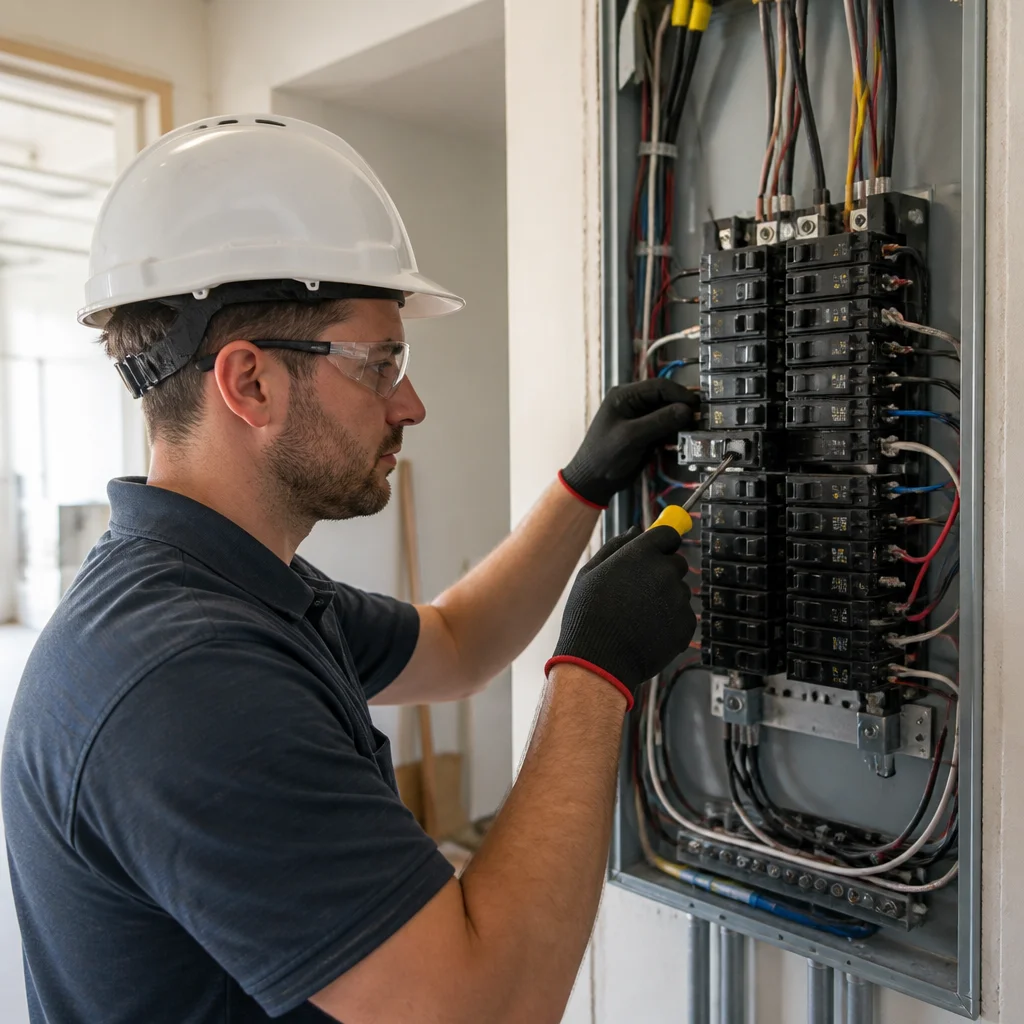
The main service and distribution panels are the foundation of the system. Their size is determined through load calculations, not by simply estimating the number of outlets. Heating and cooling equipment, water heating, commercial appliances, motors, lighting, computers, signage, elevators, EV chargers, and other fixed loads all affect service requirements.
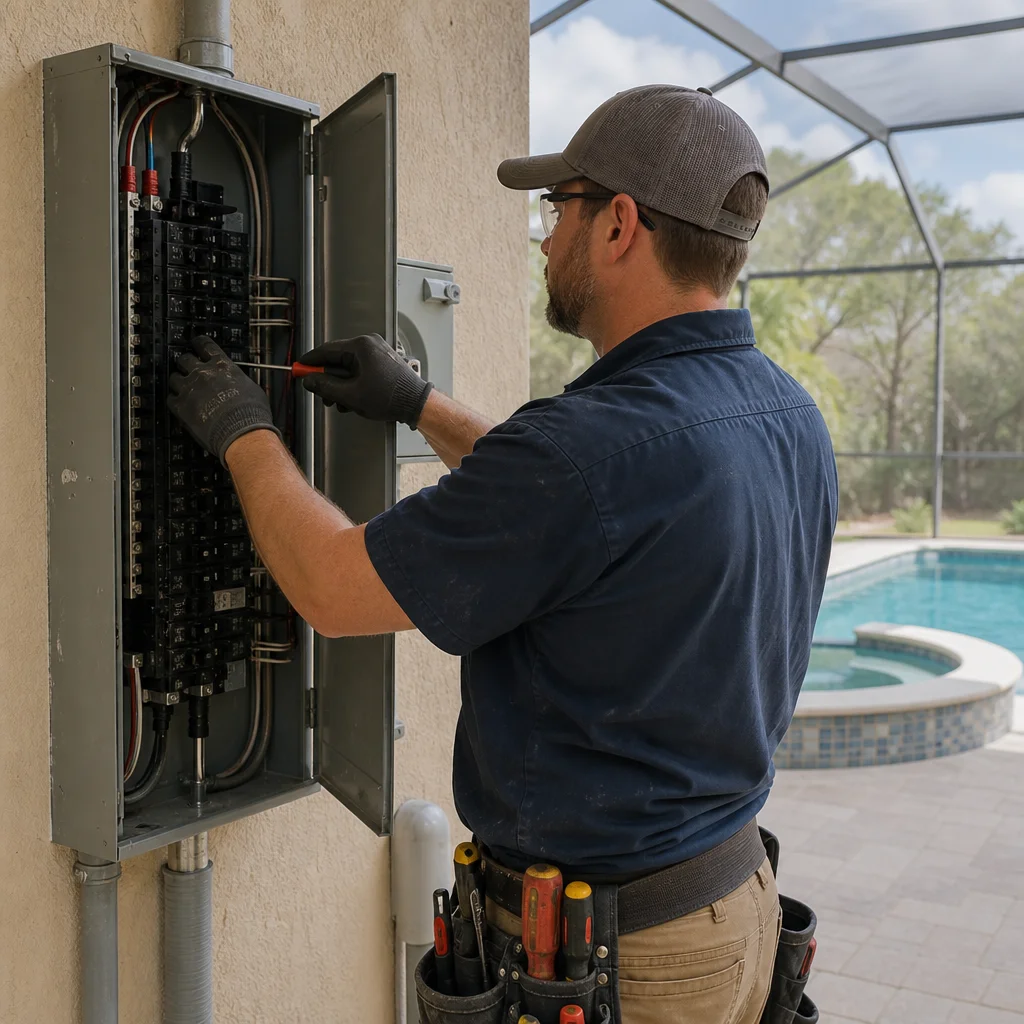
Good panel planning also considers where power must be distributed. A large building may benefit from several panels positioned near major load areas rather than long branch circuit runs from one central location. Panel locations need suitable working clearance, protection from physical damage, clear identification, and reasonable access for future electrical maintenance.
Spare panel capacity can make later additions easier, but empty breaker spaces alone do not guarantee available electrical capacity. The service, feeders, bus rating, and calculated demand still matter. If a breaker trips repeatedly after occupancy, replacing it with a larger breaker is not a safe shortcut. Repeated tripping can indicate an overload, damaged wiring, equipment trouble, or a breaker defect that requires professional electrical troubleshooting.
Accurate labeling saves time during service
Every panel should have a clear, accurate circuit directory. Labels such as “outlets” or “lights” are often too vague for a commercial property. Identifying the room, equipment, or specific area helps staff and electricians isolate a problem without shutting down unrelated operations. Good labeling is particularly valuable during emergency electrical repair, remodels, and routine maintenance.
Wiring methods should fit the building and its use
Commercial wiring is selected according to the building type, occupancy, environmental conditions, and code requirements. Conduit, cable assemblies, raceways, junction boxes, and conductors must be properly sized and installed for the application. Areas exposed to moisture, heat, chemicals, physical impact, or outdoor weather need materials rated for those conditions.
Routing deserves careful attention. Electrical pathways should not interfere with ductwork, plumbing, roof drains, structural components, or access panels. Junction boxes must remain accessible. Conductors should also be grouped and identified in a way that supports testing and future wiring repair.
Some Callaway projects involve additions or remodels connected to an existing structure. Older homes converted for professional use, older storefronts, and mixed use properties may contain outdated panels, deteriorated wiring, ungrounded outlets, or alterations completed without proper documentation. Newer homes and commercial buildings can also have problems if a prior addition increased power demand without upgrading the service. Owners interested in the residential side of this issue can read why electrical replacement matters for Callaway homes.
Outlet placement should follow the work, not an empty floor plan
Outlet planning is most effective when it is based on furniture, equipment, counters, displays, appliances, and workflow. Too few receptacles encourage extension cords and power strips, which can create trip hazards and overloaded circuits. Poor placement can also make finished rooms harder to use.
Dedicated circuits may be needed for refrigerators, commercial kitchen equipment, copiers, servers, medical equipment, workshop tools, pumps, or other high demand loads. GFCI protection is important where required, including appropriate wet, outdoor, food preparation, utility, and service locations. Certain circuits may also require other forms of protective equipment based on the current adopted codes and the building use.
Exterior receptacles need weather resistant components and suitable covers. Floor boxes, counter outlets, and ceiling mounted receptacles can solve specific layout needs when they are included in the design. For a business owner searching for electrical services near me after construction, adding these features later often requires cutting finished surfaces or disrupting operations.
Lighting design affects safety, comfort, and operating costs
Commercial lighting is not simply a count of fixtures. The design should account for room dimensions, ceiling height, work tasks, display needs, natural light, exterior entrances, parking areas, emergency egress, and controls. Poorly planned lighting can produce dark work areas, harsh glare, uneven coverage, or unnecessary energy use.
LED fixtures, occupancy sensors, timers, daylight controls, and zoned switching can improve flexibility. Owners should also plan access for future driver replacement and fixture maintenance. Decorative fixtures may look attractive on drawings but create ongoing problems if replacement parts are difficult to source or service access is blocked.
A search for lighting installation near me may solve a single fixture problem, but widespread flickering can point to loose connections, incompatible controls, overloaded circuits, voltage issues, or a utility problem. The cause should be diagnosed rather than hidden by changing bulbs. Additional practical lighting guidance is available in Better Lighting Starts With Better Electrical Maintenance in Callaway, FL.
Fans, audiovisual systems, and smart controls need early coordination
Ceiling fans need suitable support, correctly rated electrical boxes, practical switch locations, and enough clearance for the room. Commercial projects that include fans can review local ceiling fan services. Conference rooms, restaurants, clubhouses, and waiting areas may also need planned pathways for Home Theater and AV Wiring.
Automation, access controls, connected switches, and other specialty and smart electrical services work best when power, neutral conductors, network access, and equipment locations are considered before finishes go in. Preventive service remains important after installation because smart equipment cannot compensate for loose wiring or unstable power. The same principle is discussed in this guide to preventive electrical service for smart homes.
Callaway weather belongs in the electrical plan
Callaway's hot, humid climate and coastal weather can be hard on electrical equipment. Wind driven rain, salt in the air, flooding, lightning, and extended utility outages all influence material selection and equipment placement. Outdoor disconnects, receptacles, lighting, service components, and generator equipment need proper ratings and installation methods for their environment.
Surge protection should be considered as part of a layered electrical plan. A properly selected service level surge protective device can reduce risk from certain transient voltage events, while point of use protection may help sensitive electronics. No surge device can stop every possible lightning related loss, so grounding, bonding, equipment installation, and manufacturer requirements also matter.
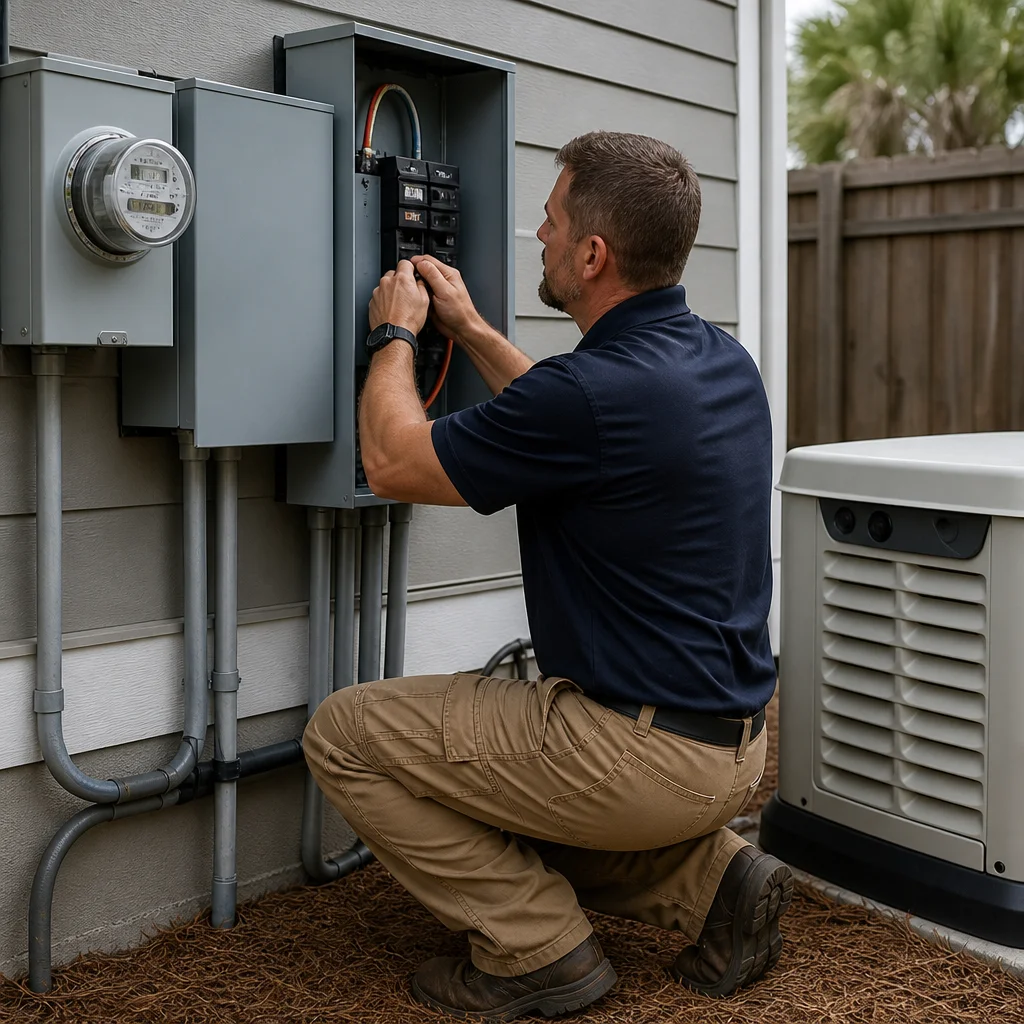
Backup power planning should identify which loads actually need to operate during an outage. Life safety systems, refrigeration, communications, security equipment, selected lighting, pumps, and business critical systems may receive priority. Owners searching for generator installation near me should ask about fuel supply, placement, load management, transfer equipment, maintenance access, and testing. A Superior Mechanical also provides Kohler generator installation and maintenance in Callaway.
EV charging and future power demand
EV chargers can represent a substantial continuous electrical load. Even if chargers are not part of the first construction phase, installing conduit pathways, reserving electrical capacity, and selecting practical parking locations can lower future installation costs. The plan should consider accessibility, vehicle circulation, bollard protection, drainage, networking, billing, and how multiple chargers will share available power.
A property owner searching for level 2 EV charger installation near me needs more than a wall mounted unit. A licensed electrician should evaluate service capacity, circuit sizing, overcurrent protection, grounding, equipment ratings, and the charger's installation instructions. Load management may be useful where several chargers are planned.
Permits, inspections, and code compliance protect the project
Commercial electrical construction typically requires permits, documented plans, inspections, and coordination with the authority having jurisdiction and utility provider. Requirements can vary with occupancy, project scope, equipment, and adopted code editions. The electrical design may also need to coordinate with emergency lighting, exit signs, fire alarm systems, accessibility requirements, and other building systems.
Inspections occur at appropriate stages so concealed work can be reviewed before walls and ceilings close. Deficiencies found late in the project can delay occupancy, which is why quality control should happen throughout construction. Testing outlets, GFCI devices, lighting controls, grounding paths, equipment connections, emergency systems, and panel directories before the final inspection can uncover issues while they are easier to correct.
Hiring a code correction electrician near me after a failed inspection may be necessary, but preventing the deficiency is better. Owners should retain approved drawings, panel schedules, equipment information, test records, permits, and final inspection documents for maintenance and future remodels.
Warning conditions should never be treated as normal
After a building is occupied, hot outlets, buzzing panels, burning odors, visible arcing, discolored switches, frequent breaker trips, shocks from equipment, or lights that change brightness unexpectedly require attention. Water inside a panel, meter area, or electrical room is an urgent concern. Staff should not remove panel covers or repeatedly reset a breaker without identifying why it opened.
If there is smoke, fire, a downed conductor, or an immediate risk of shock, people should move away from the hazard and contact emergency services and the utility as appropriate. For other urgent problems, contact a licensed electrical contractor. Prompt breaker repair, outlet repair, wiring repair, or equipment isolation can keep a small defect from causing broader damage.
Preventive maintenance keeps the original plan working
Even a well built system needs periodic attention. Commercial electrical maintenance may include visual inspections, panel and circuit directory review, GFCI testing, emergency lighting checks, surge device status checks, generator exercising, and investigation of recurring faults. Service frequency should reflect the building use, equipment, environment, and manufacturer guidance.
Remodels and tenant changes should be documented so panel schedules remain accurate. Before adding appliances, machinery, signage, ceiling fans, chargers, or new lighting, an electrician should confirm that the intended circuit and overall service can carry the load. The planning principles in Smart Electrical Planning for Callaway Homes are also useful for owners managing a residence, rental, or home based business.
Local experience matters because electrical systems in Callaway face regional weather, construction conditions, utility coordination, and inspection processes. A contractor serving Bay County can help owners plan around those realities rather than applying a generic design. To discuss drawings, power needs, a new development, or an addition, contact A Superior Mechanical through the contact page.
Find Commercial Electrical New Construction in Callaway, FL
If you need Commercial Electrical New Construction in Callaway, FL, visit our local service page or contact A Superior Mechanical today.
Map of Callaway, FL
Frequently Asked Questions
How early should an electrical contractor join a commercial construction project?
Ideally, the electrical contractor should be involved during design, before framing and major equipment locations are finalized. Early coordination helps establish service capacity, panel locations, dedicated circuits, lighting controls, utility requirements, and pathways for future technology.
Should a new Callaway commercial building include surge protection and generator preparation?
Both are worth evaluating because Callaway can experience lightning, coastal storms, and utility outages. The right approach depends on the building's critical loads, equipment sensitivity, operating needs, generator fuel source, and available electrical capacity.
Can spare breaker spaces guarantee room for future EV chargers or equipment?
No. Empty spaces in a panel do not confirm that the service, feeders, panel bus, or calculated load can support additional equipment. A licensed electrician should complete a load evaluation before adding EV chargers, commercial appliances, machinery, or other substantial loads.
Related Articles
Photo Gallery