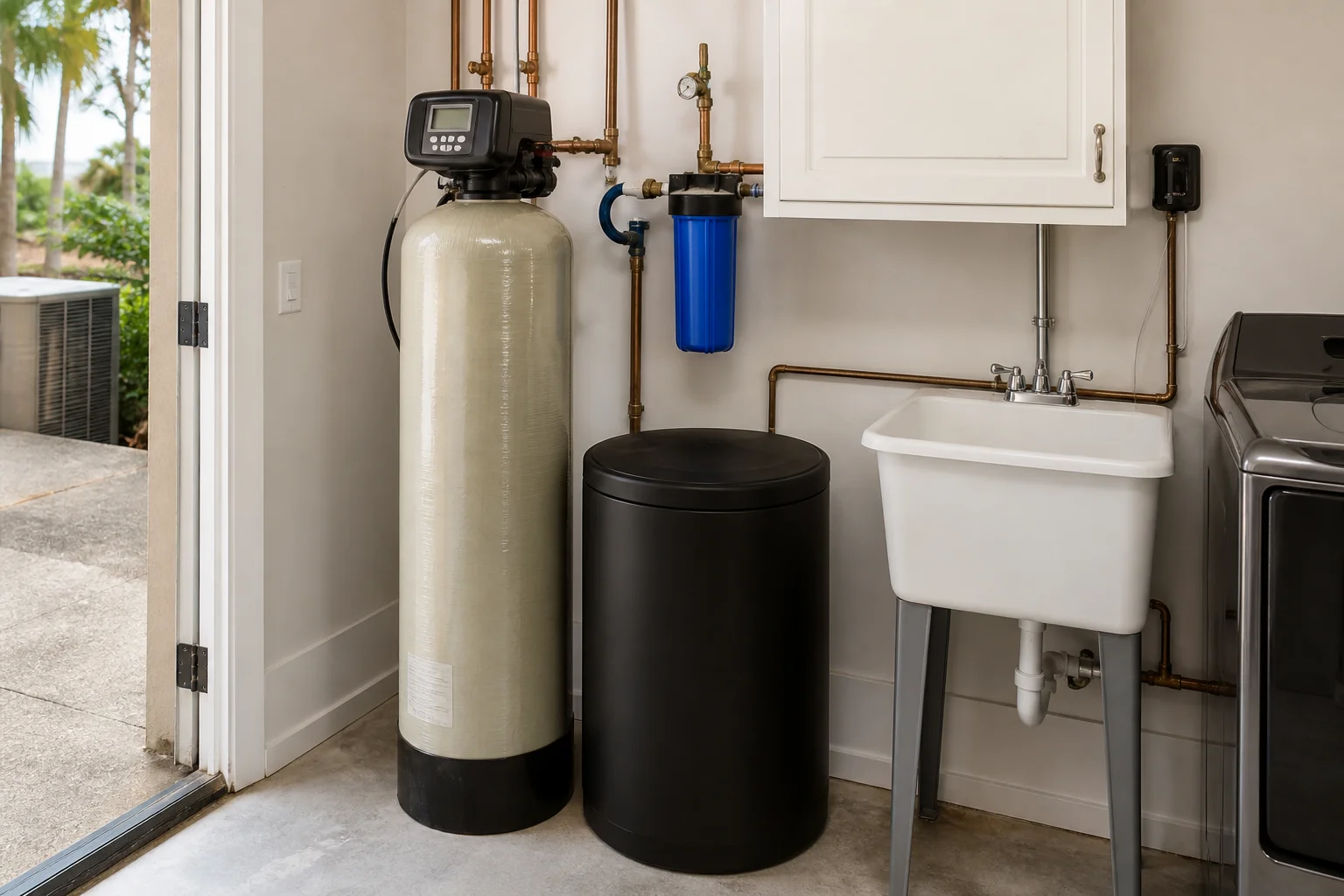
Water affects countless moments in a Freeport home, from filling the coffee maker in the morning to washing vegetables for dinner and bathing before bed. When that water leaves spots, forms scale, smells unusual, or tastes unpleasant, those everyday routines become less enjoyable. The right treatment can improve water at the kitchen sink and throughout the entire house.
A Superior Mechanical provides water purification services in Freeport, FL based on the water conditions and priorities of each household. Rather than guessing at a solution, homeowners can identify what is affecting their water and choose equipment designed to address it.
How water problems show up around a Freeport home
Many water quality concerns first appear as small annoyances. A glass shower door may look spotted soon after it is cleaned. Drinking glasses and dishes may come out of the dishwasher with a chalky film. White or crusty scale can develop around faucets, showerheads, and plumbing connections. These deposits often point to hardness minerals, primarily calcium and magnesium.
Hard water can also change how bathing and cleaning feel. Some homeowners notice dry skin or dull hair after bathing. Shampoo and soap may not lather easily, and residue can remain after rinsing. If soap does not lather as expected, using more soap rarely addresses the underlying water condition. Laundry may feel stiff, colors can appear less vibrant, and mineral residue may collect inside the washing machine.
Taste and odor concerns are just as noticeable. Water may have a metallic, chlorinated, earthy, sulfur like, or otherwise unpleasant taste. Ice cubes can appear cloudy or pass an unwanted flavor to drinks. Coffee drinkers often recognize poor tasting coffee water before they notice a problem from a plain glass of water. Cooking water can also influence tea, soup, pasta, rice, sauces, and other foods prepared in the family kitchen.
Other warning signs include visible sediment in household water, reddish or brown discoloration, particles in faucet aerators, and odors that appear at one fixture or throughout the home. These symptoms do not all have the same cause, which is why water testing and a careful system evaluation matter.
Freeport water conditions are not identical from house to house
Homes across Freeport may receive water from a public supply or a private well. Water chemistry can also vary with location, plumbing materials, well depth, treatment practices, and changes within an individual property. Two neighboring homes can therefore have different concerns and require different equipment.
Freeport's warm, humid climate also influences household water use. Families may run more laundry, take frequent showers after outdoor activities, make extra ice, and rely heavily on cold drinking water during long stretches of hot weather. More water use means mineral deposits, sediment, and taste concerns are encountered more often. Local growth has also brought together newer construction, established homes, rural properties, and private well systems throughout northern Walton County.
A local water treatment professional can account for these differences. Homeowners searching for water treatment near me benefit from working with a team familiar with area homes, common water complaints, and the practical demands that Florida weather places on filtration equipment.
What causes spots, scale, unpleasant taste, and odor?
Hardness minerals
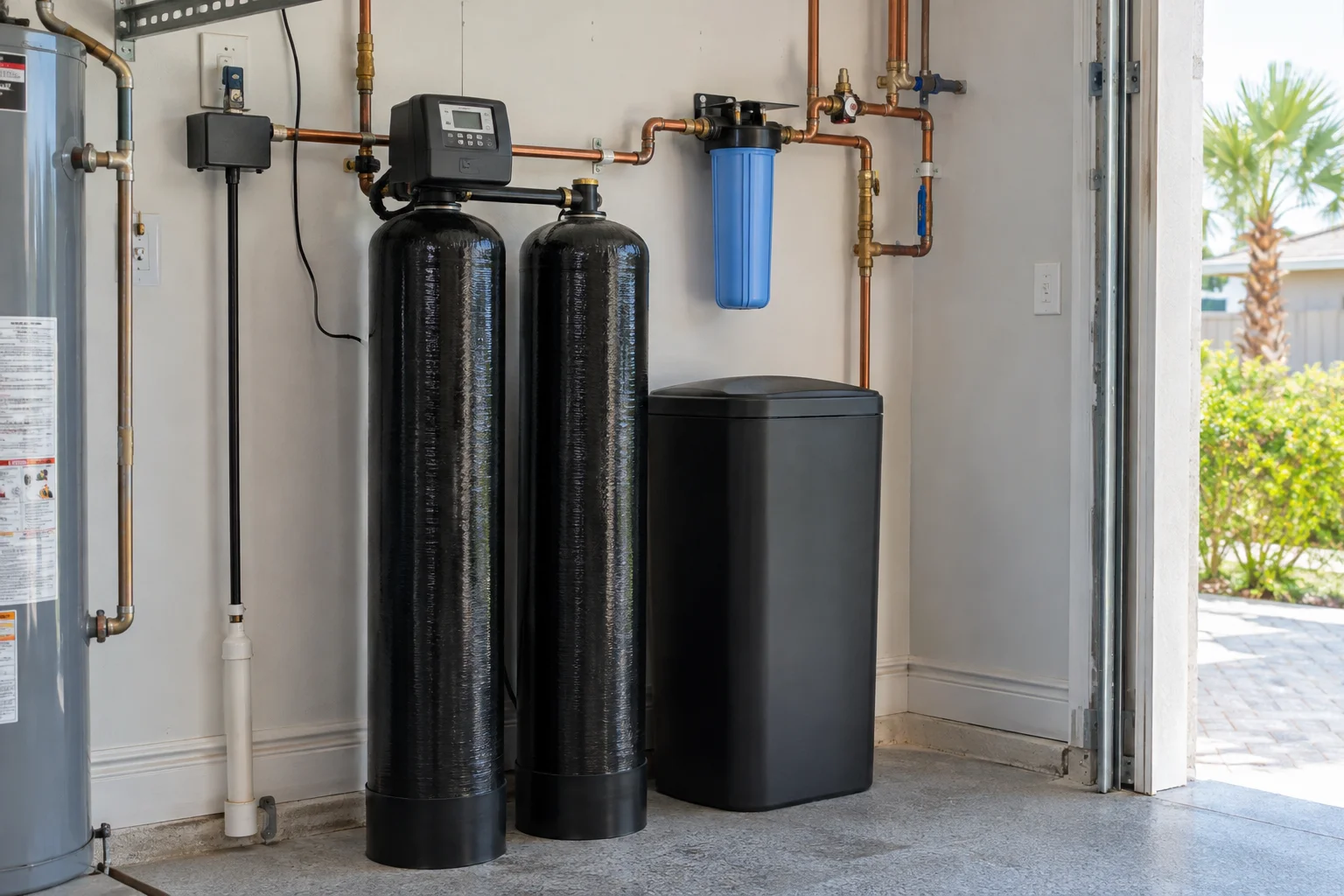
Calcium and magnesium dissolved in water create hardness. These minerals are not removed effectively by a basic sediment filter. As hard water is heated or evaporates, it can leave scale on glass, dishes, fixtures, heating elements, and internal appliance components. Hard water treatment usually requires a properly sized water softener rather than a standard whole house water filter alone.
Disinfectants and organic compounds
Public water systems use disinfectants to help control harmful microorganisms. Some homeowners can detect a chlorine related taste or odor at the tap. Activated carbon filtration may reduce chlorine and certain taste or odor producing compounds, but filter selection and capacity should match the household's water and flow requirements.
Sediment, iron, sulfur, and plumbing materials
Sand, silt, rust, and other particles can create visible sediment or discoloration. Iron may cause metallic flavors and orange or reddish staining. Certain sulfur compounds can produce an odor commonly compared to rotten eggs. Metallic taste may also come from plumbing components or the water supply. Because odor can occasionally originate inside a drain or water heater rather than the incoming water, locating the source is an important first step.
Matching the treatment system to the water
There is no single filter that solves every water concern. A useful recommendation begins with the source of the water, test findings, household size, plumbing layout, peak water demand, and the homeowner's goals. A family focused on better water for drinking and cooking may need a different system from a private well property dealing with sediment, hardness, and odor throughout the house.
Water softening for hardness and scale
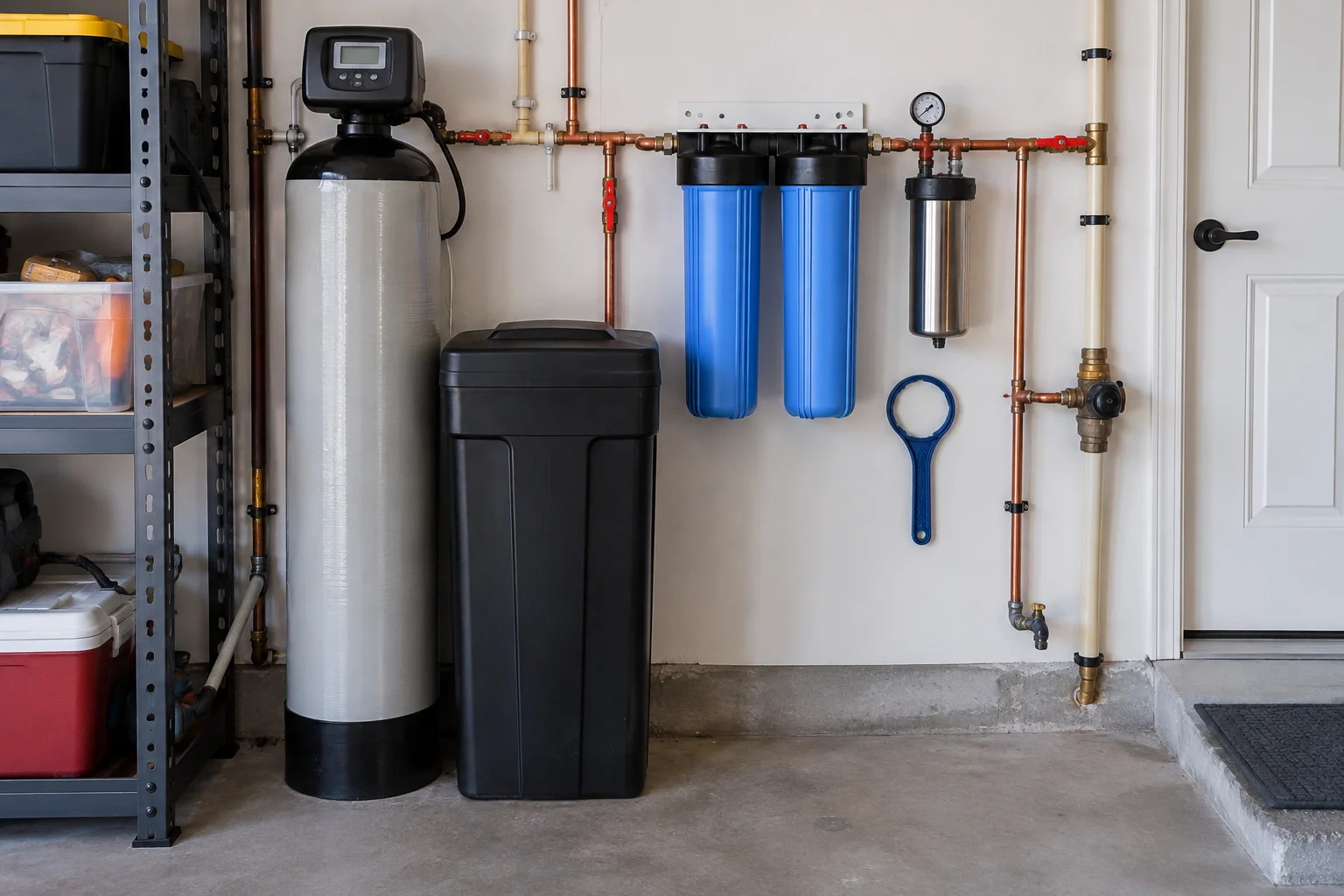
A water softener uses ion exchange to reduce calcium and magnesium. Correctly sized equipment can limit hard water spots and scale buildup around faucets, showerheads, plumbing, and water using appliances. It can also help soap lather and rinse more effectively, making bathing, laundry, and cleaning feel easier.
Softening is not the same as purification. A softener is designed for hardness minerals, not every chemical, microorganism, taste, or odor issue. Homeowners looking for water softener installation near me should ask whether hardness was measured, how equipment size was calculated, and whether pretreatment is needed for sediment or iron.
Whole home water filtration
Whole home water filtration treats water near the point where it enters the residence. Depending on the media and design, a system may reduce sediment, chlorine, certain odors, or other targeted substances before water reaches showers, laundry equipment, fixtures, and appliances. This approach can be useful when concerns extend beyond the kitchen sink.
A whole house water filter must be selected for specific conditions. Sediment cartridges, carbon media, iron treatment, and specialty filters perform different jobs. Someone searching for whole home water filtration near me should expect questions about water source, pressure, flow rate, discoloration, odors, and maintenance preferences before a system is recommended.
Reverse osmosis for drinking and cooking water
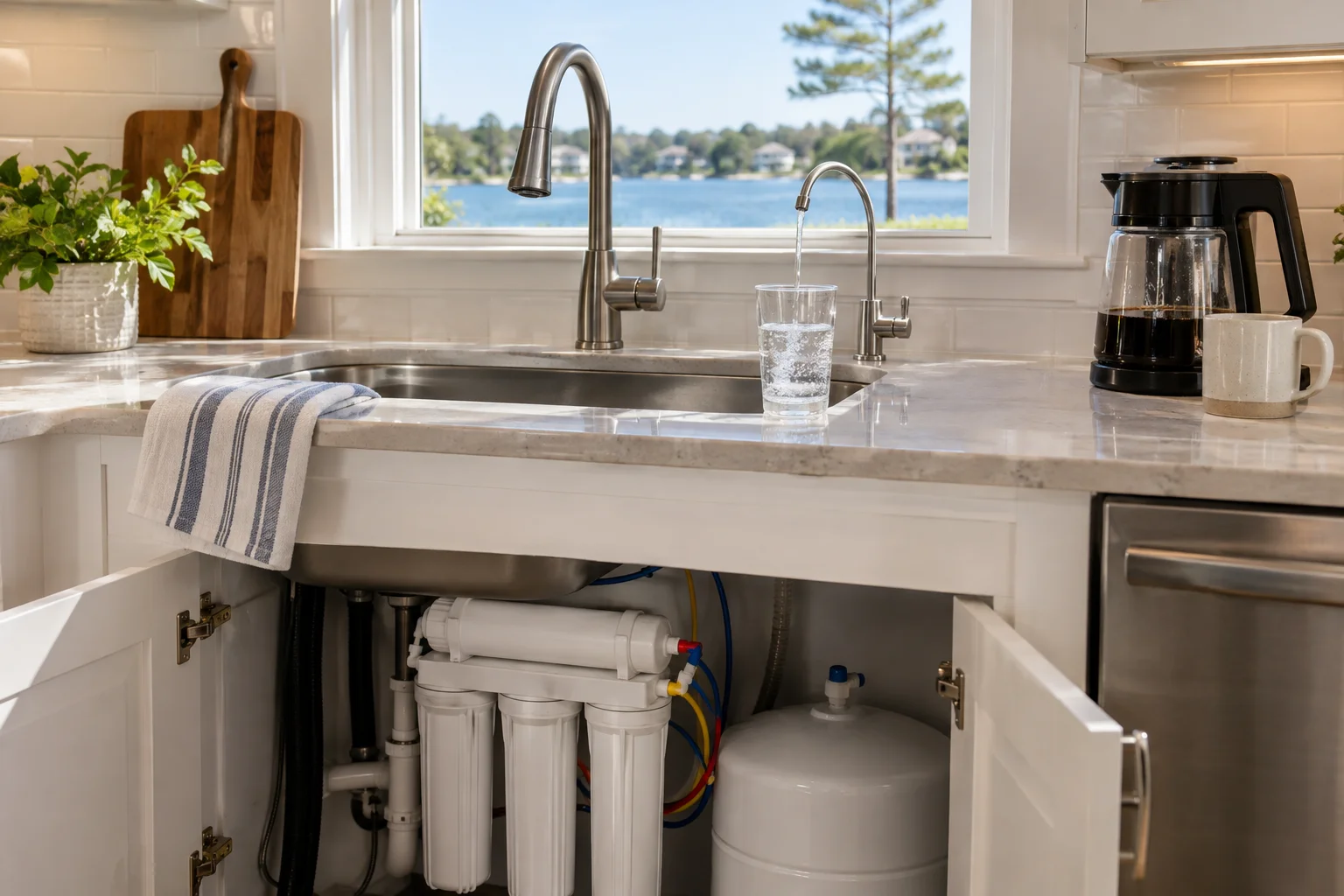
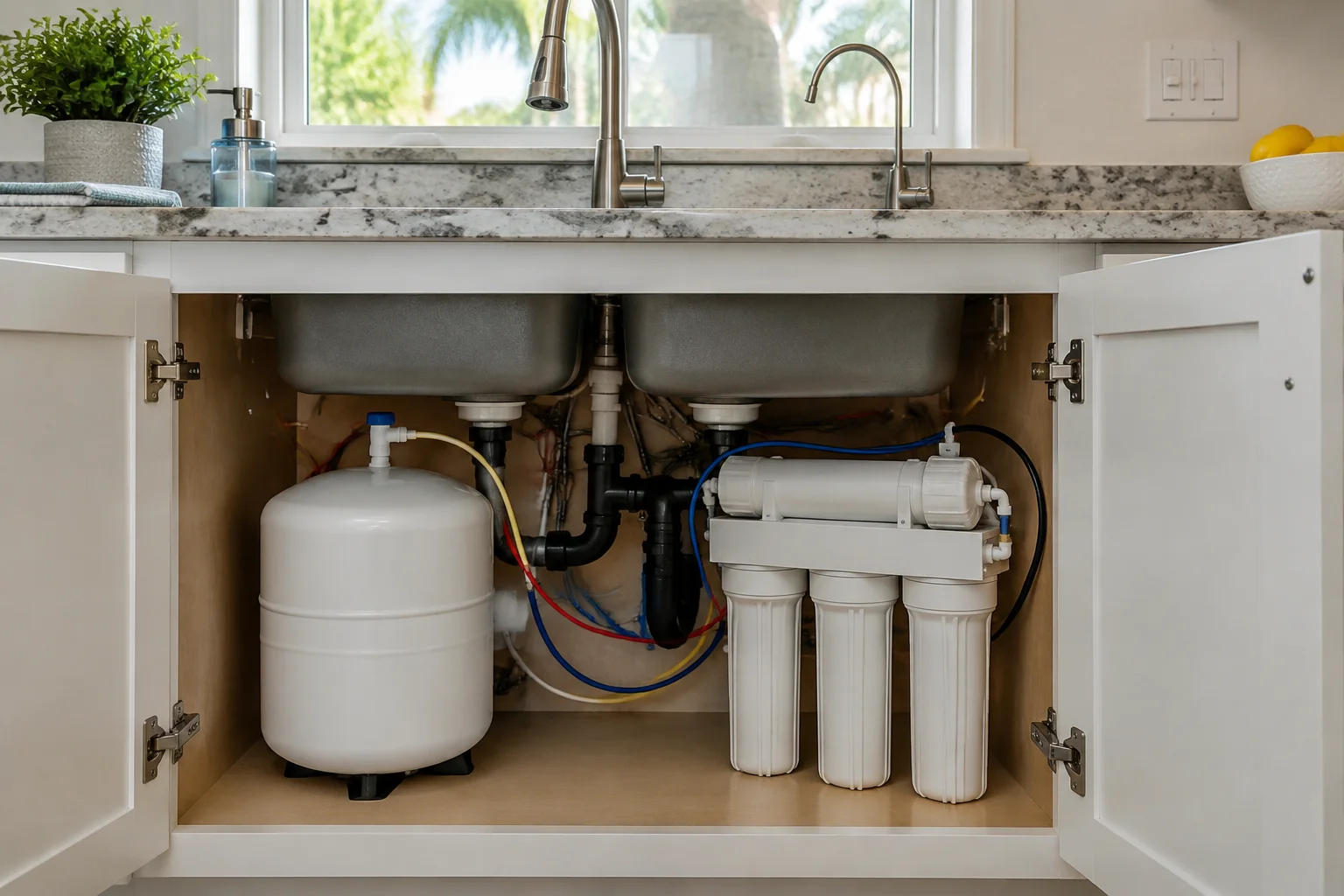
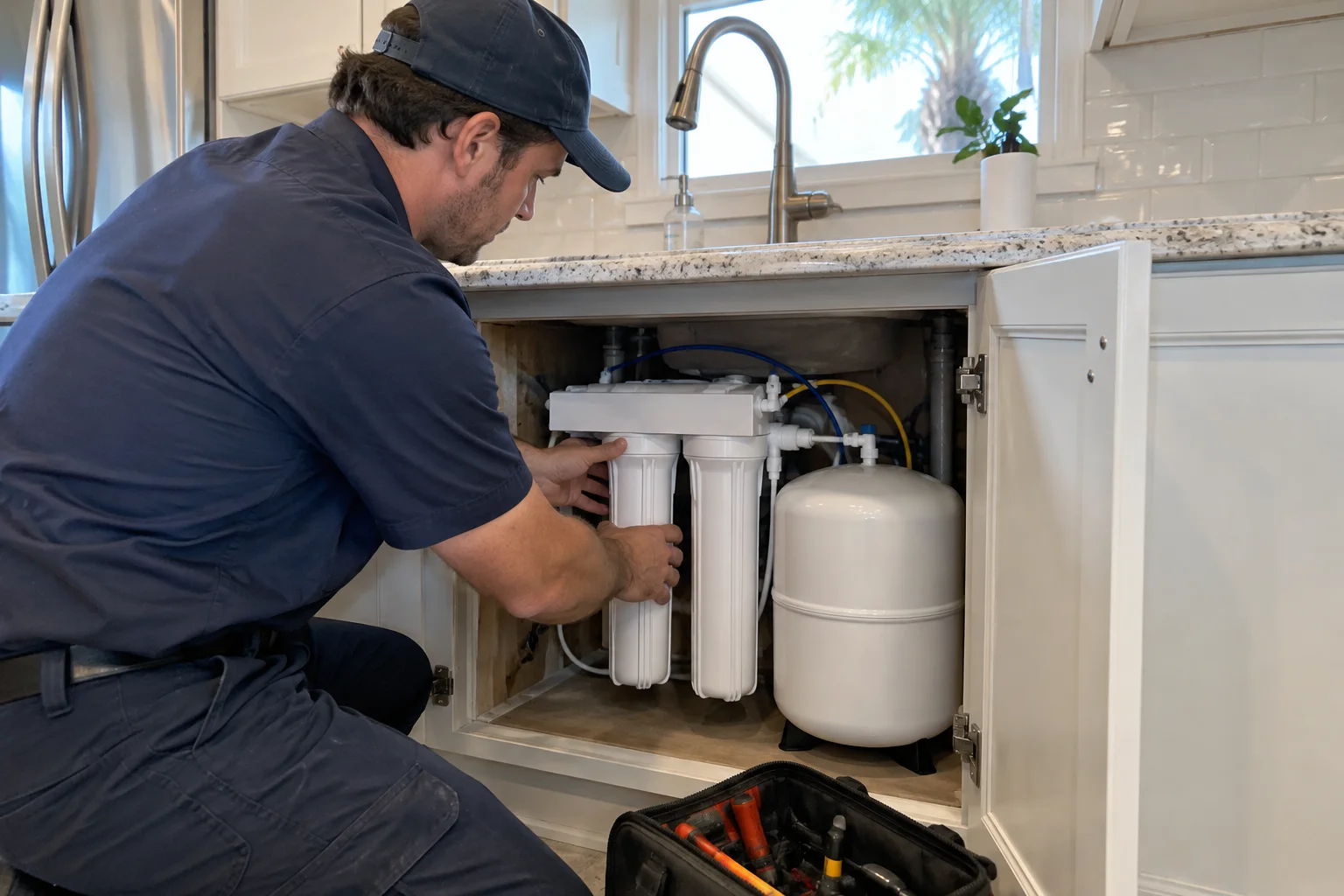
A reverse osmosis system is commonly installed beneath a kitchen sink to provide treated water through a dedicated faucet. RO uses a membrane with prefilters and, in many systems, a carbon polishing stage. Depending on its certifications and design, it can reduce a broad range of dissolved substances that affect drinking water.
For a busy kitchen, reverse osmosis can improve water used for coffee, tea, ice, infant formula when prepared according to medical guidance, and everyday cooking. It is a point of use solution, so it is often paired with whole home filtration or softening when problems are present in showers, laundry, and appliances. Homeowners comparing a reverse osmosis system near me should consider membrane capacity, storage tank size, filter availability, water pressure, and ongoing service.
AO Smith water filtration options
AO Smith water filtration products include equipment designed for different treatment needs, including filtration, reverse osmosis, and water softening applications. An AO Smith water softener or filtration system should still be chosen according to test results and household demand. Brand recognition is helpful, but correct sizing, professional installation, and routine maintenance determine how well any clean water system performs over time.
A Superior Mechanical can explain how these technologies fit together through its main water filtration, reverse osmosis, and water softener services. The goal is a practical system, not an unnecessary collection of treatment equipment.
Better water changes ordinary family routines
The benefits of treatment are most noticeable in everyday moments. In the kitchen, family members may be more willing to fill a reusable bottle from the tap. Clearer ice does not distract from a glass of water, and coffee has a better chance to taste like the beans rather than chlorine or metal. Vegetables, pasta, and soups can be prepared with water the household enjoys drinking.
In bathrooms, reduced hardness can mean fewer spots on shower glass and less crust around showerheads. Soap and shampoo may work more effectively, which can help with complaints about dry skin from hard water or dull hair. Fixtures are easier to keep presentable when mineral residue is controlled.
In the laundry room, softened water can improve detergent performance and reduce mineral deposits inside equipment. Dishwashers, washing machines, water heaters, coffee makers, and ice makers may wear out faster when scale or sediment repeatedly collects in valves, lines, and heating surfaces. Treatment cannot reverse existing damage, but it can help reduce continued exposure.
A professional water assessment avoids guesswork
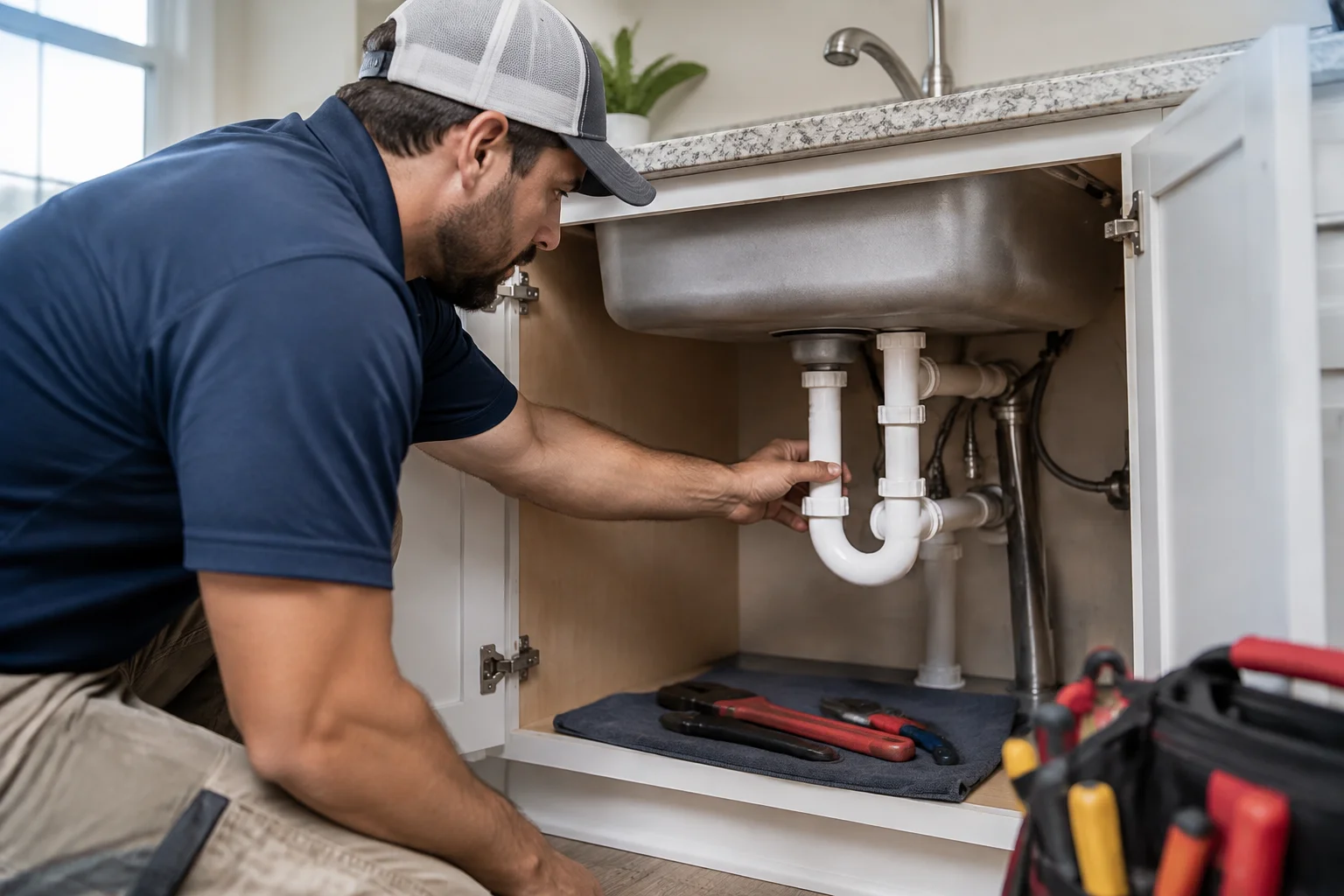
Store bought test strips can provide limited information, but they do not always explain unusual odors, changing discoloration, or combinations of water problems. A professional visit should begin with questions about where and when symptoms occur. Cold water only, hot water only, one fixture, or the entire home are useful distinctions.
Testing may examine hardness, iron, pH, total dissolved solids, disinfectant levels, or other factors based on the water source and complaint. Private well owners may need broader laboratory testing for health related contaminants. No water should be described as safe based only on appearance, taste, or odor. If a health concern is suspected, certified laboratory results are important.
The installation area should also be evaluated for pipe size, pressure, drainage, electrical access if required, and room for service. Treatment equipment must support household flow without creating unnecessary pressure loss. This planning is especially helpful during renovations or fixture changes. The article A Smarter Way to Handle Plumbing Installation in Freeport Homes covers related considerations for coordinated plumbing work.
Maintenance keeps treated water consistent
Filters have limited capacity. Sediment cartridges become loaded, carbon media is eventually exhausted, reverse osmosis membranes decline, and softeners need an appropriate salt supply and periodic inspection. Ignoring maintenance can reduce flow, allow taste and odor concerns to return, or prevent the system from treating water as intended.
Maintenance frequency depends on water quality, usage, equipment design, and manufacturer instructions. Homeowners should keep a record of filter changes, salt checks, sanitizing, test results, and service dates. A sudden change in pressure, taste, odor, or water appearance deserves attention rather than waiting for the next scheduled visit.
People searching for water softener service near me should ask whether the visit includes checking settings, regeneration, salt bridging, valves, leaks, and actual water hardness before and after treatment. Reverse osmosis service should include the prefilters, postfilter, membrane performance, storage tank, faucet, and connections. Additional household observations worth mentioning during a visit are discussed in What Freeport Homeowners Often Miss During Plumbing Service Visits.
When water concerns deserve professional attention
Call a water treatment professional when scale returns quickly after cleaning, fixtures repeatedly clog, soap performs poorly, or appliances show signs of mineral buildup. Persistent metallic or chlorinated taste, cloudy ice cubes, sediment, discoloration, and unpleasant odors should also be investigated. Sudden changes in private well water deserve prompt testing, especially after flooding, well repairs, or long periods without use.
Leaks, pressure changes, and fixture problems can sometimes overlap with water quality symptoms. For example, staining in a toilet may come from minerals in the supply, but a running or poorly flushing fixture is a separate repair issue. Freeport homeowners can learn more in The Local Reality of Toilet Repair and Replacement for Freeport Homeowners.
A Superior Mechanical helps Freeport homeowners move from vague complaints to a clear treatment plan. Whether the right answer is sediment filtration, activated carbon, reverse osmosis, water softening, whole home filtration, or a combination, the system should reflect tested conditions and how the family actually uses water. For homeowners searching for water filtration near me, local assessment and dependable maintenance provide a better path than choosing equipment from symptoms alone.
Find Water Purification Services in Freeport, FL
If you need Water Purification Services in Freeport, FL, visit our local service page or contact A Superior Mechanical today.
For a broader look at whole-home water filtration, reverse osmosis, and water softener options, visit our water filtration, RO, and water softener page.
Map of Freeport, FL
Frequently Asked Questions
Do hard water spots mean my Freeport home needs a water softener?
Recurring white spots, scale, poor soap performance, and mineral buildup often indicate hard water, but hardness should be tested before equipment is selected. A properly sized water softener reduces calcium and magnesium. Additional filtration may be needed if the water also has sediment, iron, taste, or odor concerns.
Is reverse osmosis better than whole home water filtration?
They serve different purposes. Reverse osmosis is commonly used at the kitchen sink for drinking and cooking water. Whole home filtration treats water entering the house and can address targeted concerns at showers, laundry equipment, fixtures, and appliances. Some Freeport homes benefit from using both.
How often should a water filtration system be serviced?
Service intervals depend on the system, household water use, and incoming water quality. Sediment and carbon filters may require periodic replacement, reverse osmosis systems need filter and membrane care, and softeners need salt checks and operating inspections. Follow the manufacturer's schedule and arrange service sooner if pressure, taste, odor, or appearance changes.
Related Articles
Photo Gallery