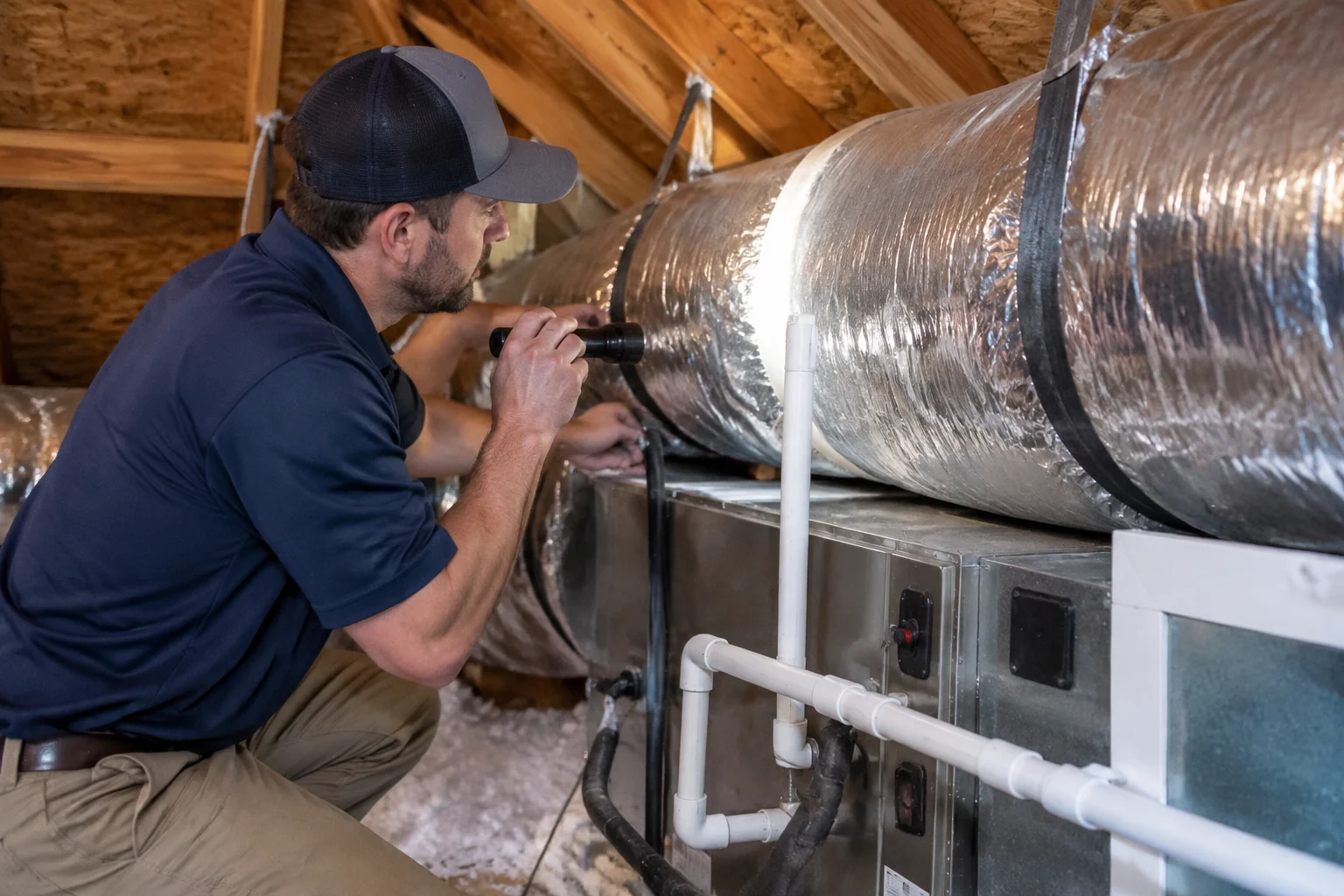
A bedroom that stays warm while the hallway feels cold does not automatically mean your air conditioner is too small. In Springfield, FL, comfort problems often begin between the equipment and the rooms it serves. Hidden duct leaks can waste conditioned air, disrupt airflow, and make an already humid home harder to manage.
Ductwork Aeroseal can address certain leaks from inside the duct system, but good results start with diagnosis. For Springfield homeowners, the smartest plan combines leakage testing with an inspection of the air handler, duct layout, insulation, and moisture conditions. Sealing should solve a verified problem, not substitute for needed AC repair or equipment maintenance.
Why Springfield's Climate Makes Duct Leakage Matter
Springfield shares Bay County's long cooling season, high outdoor humidity, and coastal weather influences. Many local homes have ductwork in hot attics or other spaces outside the conditioned living area. When supply ducts leak in those locations, some cooled air escapes before it reaches the vents.
Return duct leaks can draw hot, humid, dusty air into the system. That additional moisture becomes another load for the evaporator coil to remove. Supply leakage can also contribute to pressure imbalances that encourage outdoor air to enter through gaps in the building envelope.
Salt air can accelerate corrosion on exposed outdoor units and condenser components. Storms can damage roofs, introduce water around ducts, or disturb exposed equipment. Aeroseal does not protect a condenser from corrosion or repair storm damage, but local service should account for these conditions when evaluating the whole system.
Where Aeroseal Fits in a Duct Repair Plan
Aeroseal uses an aerosolized sealant carried through a prepared, pressurized duct system. As air escapes through eligible leaks, sealant particles collect at their edges and build a seal. This can reach small leakage points that are difficult to access behind finishes or deep in an attic.
During the process, technicians temporarily block registers and isolate HVAC equipment according to the treatment procedure. They measure leakage before and after sealing so the homeowner can review the change. A pressure-based leakage result documents tighter ducts, but it is not a promise of a particular utility bill reduction.
Leaks that need hands-on repair first
A disconnected branch, torn flexible duct, collapsed section, or badly damaged plenum generally needs physical ductwork repair. Wet insulation, pest damage, and unsupported duct runs also require separate attention. Sealing cannot correct undersized ducts, restrictive bends, or a missing return air path.
A Superior Mechanical's ductwork Aeroseal service in Springfield provides a starting point for discussing hidden leakage. Ask which defects require conventional repair first and how the final leakage measurements will be explained.
Comfort Clues Worth Investigating
Uneven temperatures, weak vent airflow, excessive dust, and longer cooling cycles can justify a duct evaluation. So can a room that becomes uncomfortable whenever its door closes. These symptoms overlap with equipment and building problems, so none proves that the ducts are leaking.
Before scheduling service, note which rooms struggle, when the problem appears, and whether it changes with interior doors open. Check that supply vents and return grilles are not covered by furniture. Also confirm that the filter is correctly installed and not overdue for replacement.
Separate duct problems from AC problems
A dirty evaporator coil, clogged filter, blower fault, refrigerant leak, or condenser problem can reduce cooling and airflow. Ice on refrigerant tubing or the indoor coil requires professional attention. Sealing the ducts will not resolve low refrigerant or restore a failing compressor.
Homeowners searching for AC repair near me should describe both equipment symptoms and room conditions. If the system cools well near the air handler but delivers poorly to distant rooms, airflow testing can help distinguish leakage from restrictions or inadequate duct sizing.
Humidity Control Needs More Than Tighter Ducts
Reducing return leakage may limit the humid air pulled into an HVAC system from an attic or crawlspace. Reducing supply leakage may improve pressure balance and delivered cooling. Those changes can support humidity control, but Aeroseal is not a dehumidifier and cannot correct every moisture source.
Oversized equipment may satisfy the thermostat quickly without running long enough to remove adequate moisture. Other contributors include roof leaks, poorly vented bathrooms, outdoor air infiltration, and incorrect blower settings. In some homes, dedicated dehumidification is appropriate after the basic HVAC and building issues are addressed.
Watch the readings and the drain system
A simple indoor humidity monitor can reveal patterns that temperature readings miss. Many homes are comfortable around 40 to 50 percent relative humidity, although conditions and preferences vary. Persistent readings above 60 percent deserve investigation, particularly when accompanied by condensation or musty odors.
Keep condensate drain lines and pans on the maintenance checklist. A blocked drain can cause water damage or activate a safety switch that stops cooling. Have a technician evaluate recurring clogs rather than repeatedly resetting the system. Tighter ducts do not repair drainage faults or remove existing mold contamination.
A Useful Evaluation Goes Beyond a Leakage Number
A thorough visit should connect the complaint to measurable conditions. Depending on the system, that may include duct leakage, external static pressure, airflow, temperature readings, humidity, and equipment operation. The technician should also inspect accessible connections, boots, plenums, and insulation.
For homeowners comparing duct sealing near me, the important question is not simply whether a contractor offers Aeroseal. Ask how the company determines suitability, identifies larger repairs, protects equipment during treatment, and verifies performance afterward.
Request a written scope that distinguishes sealing from insulation replacement, duct redesign, cleaning, and equipment service. Also ask about preparation, access, treatment instructions, and any occupancy precautions. A clear scope prevents the assumption that one service includes every improvement the duct system needs.
Older Homes, Newer Homes, and Changing Floor Plans
Older Springfield homes may have duct systems modified through several equipment replacements. Aging connections, deteriorated insulation, and improvised branches can create problems that sealing alone cannot solve. Newer homes can also have installation defects or airflow imbalances, so age is not a reliable measure of duct performance.
Remodels and additions deserve special attention. Converting a garage, enclosing a porch, or adding bedrooms changes the heating and cooling load. Extending a nearby duct without checking system capacity and return airflow can leave both the original room and the new space uncomfortable.
For planned construction, new construction air conditioning in Springfield can incorporate load calculations, equipment selection, and duct design before walls close. Sealing is valuable, but it should complement a suitable layout rather than compensate for poor sizing.
Ductless mini splits may be useful for additions or isolated rooms when extending existing ductwork is impractical. A fully ductless indoor unit has no distribution ducts for Aeroseal to treat. Ducted mini split configurations are different and need evaluation based on their actual design.
Heating Equipment Shares the Airflow Problem
Heat pumps use the same duct system for cooling and heating. Leakage that wastes cooled air in summer can also waste heated air during cooler weather. Weak airflow may be especially noticeable on a cold morning when distant rooms take longer to warm.
Homes with furnaces also depend on sound supply and return paths. Furnace service should include appropriate combustion and safety checks, not just an airflow adjustment. Where fuel-burning appliances are present, the contractor should consider whether duct changes affect building pressure or combustion safety.
If heating performance remains poor after basic checks, Springfield heating services can address heat pump repair, furnace operation, and controls. A thermostat fault, defrost issue, or failed heating component requires its own diagnosis.
Efficiency Improvements Should Follow the Evidence
Sealing meaningful duct leakage can reduce conditioned air loss and improve HVAC efficiency. The benefit depends on where the leaks are, how large they are, and the condition of the equipment and house. Leaks outside the conditioned space generally have different consequences than leaks entirely inside it.
After sealing, ask whether airflow and static pressure need another check. Repairing leaks changes how air moves through the system. A technician may need to address existing restrictions or adjust approved blower settings so the equipment operates within manufacturer requirements.
Thermostat installation can complement these improvements when the control is properly located and compatible with the system. For heat pumps, correct staging and auxiliary heat settings matter. A smart thermostat cannot overcome damaged ductwork, and aggressive temperature setbacks may not suit every humidity situation.
Compare leakage reports alongside comfort observations and humidity trends. When reviewing energy bills, account for weather, thermostat settings, occupancy, and rate changes. Better room temperatures are useful evidence of improvement, but one lower bill does not isolate the effect of duct sealing.
Keep Repaired Ductwork Performing Through the Seasons
Check filters regularly and replace them according to their condition, manufacturer guidance, and household needs. Use a filter type the system can handle. A more restrictive filter is not automatically better for indoor air quality if it causes inadequate airflow.
Leave vents and returns unobstructed, and avoid closing multiple registers to redirect cooling. Keep stored items from crushing accessible ductwork. After roofing work, attic projects, or a major storm, have disturbed ducts and insulation inspected when there is reason to suspect damage.
When comparing preventive HVAC maintenance near me, look for attention to coils, blower operation, condensate drainage, electrical connections, refrigerant concerns, and accessible duct conditions. Routine air conditioning service supports duct performance instead of treating the equipment and distribution system as unrelated parts.
Schedule nonurgent evaluations before peak summer demand when possible. Local Bay County HVAC service matters because coastal exposure, attic conditions, and seasonal scheduling all influence practical maintenance decisions.
Know Which Problems Should Not Wait
Sudden cooling loss during extreme heat, especially with vulnerable occupants, deserves prompt attention. Shut the system off and seek service for smoke, a burning electrical smell, repeated breaker trips, or water threatening electrical equipment. Do not keep restarting a system that trips its protection devices.
A suspected gas leak or carbon monoxide alarm requires leaving the home and contacting emergency responders or the gas utility from a safe location. Those situations are not duct-sealing appointments. For other urgent failures, homeowners searching for emergency HVAC repair near me should describe the hazard and symptoms clearly.
Build a Springfield Comfort Plan Around the Actual Problem
Start with the rooms that are uncomfortable, the humidity readings you observe, and any recent changes to the home. Then ask for an evaluation that separates equipment faults, duct leakage, insulation issues, and airflow design. Prioritize safety and physical damage before hidden-leak sealing.
A Superior Mechanical provides HVAC services in Springfield, FL, including ductwork Aeroseal. Request an assessment and a clearly defined scope so you can decide whether sealing, repairs, maintenance, or a combination will best support your home's comfort.
Find Ductwork Aeroseal in Springfield, FL
If you need Ductwork Aeroseal in Springfield, FL, visit our local service page or contact A Superior Mechanical today.
Map of Springfield, FL
Frequently Asked Questions
Can Aeroseal help reduce humidity in a Springfield home?
It can help when duct leakage contributes to the moisture problem. Sealing return leaks may reduce humid air entering from unconditioned spaces, while sealing supply leaks may improve delivered cooling and pressure balance. Equipment sizing, drainage, ventilation, and building leaks still need consideration.
Does ductwork Aeroseal replace conventional duct repair?
No. Aeroseal addresses eligible leakage points from inside the ducts. Disconnected sections, large openings, crushed ducts, wet insulation, and poor duct sizing require separate repairs or improvements. An inspection should establish which work is needed before sealing begins.
How can I tell whether duct sealing improved my HVAC system?
Ask for the before-and-after duct leakage results and an explanation of the measurements. Room temperatures, humidity trends, and airflow checks can help assess comfort improvements. Energy savings vary, and bill comparisons should account for weather, utility rates, and household usage.
Related Articles
- Before You Plug In: Planning an EV Charger for Your Springfield Home
- Behind a Reliable Security System: Electrical Planning for Springfield Homes
- Better Indoor Lighting Starts Behind the Walls in Springfield Homes
- Smarter Waterline Replacement for Springfield Homes: Leaks, Pipes, Drains, and Prevention
Photo Gallery