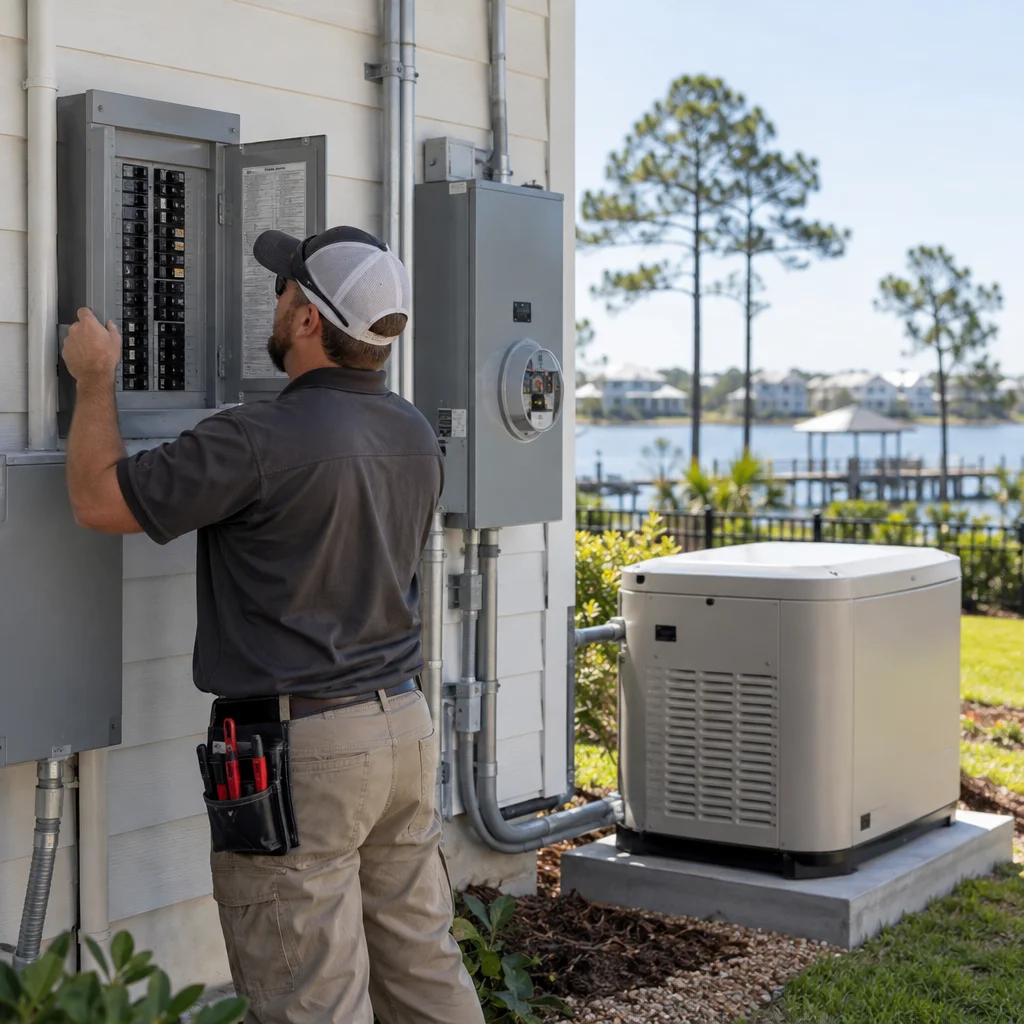
During a Freeport power outage, the refrigerator, a few lights, and a working phone charger quickly become priorities. A backup generator can keep essential equipment running, but its performance depends on the electrical system connecting it to your home. An undersized circuit, damaged panel, or poorly planned transfer arrangement can undermine an otherwise capable generator.
For homeowners considering power backup generators in Freeport, FL, the smartest starting point is an electrical assessment. A Superior Mechanical provides generator installation, maintenance, and replacement, including service for Kohler standby systems. Planning should address your daily electrical needs as carefully as your storm preparations.
Freeport Weather Makes Electrical Preparation Worthwhile
Freeport homes experience summer thunderstorms, tropical weather, heavy rain, and prolonged humidity. Wind can damage utility equipment, while nearby lightning can produce electrical surges even without a direct strike. Coastal conditions also make corrosion an important inspection concern, particularly for exposed equipment and properties closer to saltwater.
Housing differences matter, too. An older home may have limited panel capacity, aging connections, or circuits that have accumulated extra loads through remodels. A newer home may have modern protection but substantial demand from kitchen appliances, pool equipment, and an EV charger. Additions can change both service requirements and the circuits worth backing up. Local electrical service helps connect generator planning with site conditions and the applicable permitting and inspection process in Walton County.
Choose the Loads Before Choosing the Generator
Homeowners searching for generator installation near me often begin by comparing generator sizes. A better first step is identifying what must operate during an outage. Refrigerator circuits, medical equipment, essential lighting, communications equipment, and a well pump, where present, deserve individual consideration. Large appliances may need to be managed rather than operated simultaneously.
Separate essential circuits from optional loads
An essential-load setup supplies selected circuits through an appropriate transfer arrangement. A broader backup system can support more of the home, but whole-home coverage does not automatically mean every appliance can run together. Electric cooking, water heating, clothes drying, and vehicle charging can consume substantial capacity. Load management can temporarily prevent selected equipment from operating while higher-priority loads need power.
Account for starting demand and fuel availability
Motors can require considerably more power to start than to run. An electrician should evaluate starting requirements, connected loads, voltage, and the generator manufacturer's sizing guidance. For fuel-powered standby systems, fuel availability and delivery capacity also affect performance. House size alone is not a reliable sizing method. A smaller home with several large electric loads may need a different plan than a larger home with modest backup priorities.
The Electrical Panel Determines How Backup Power Fits
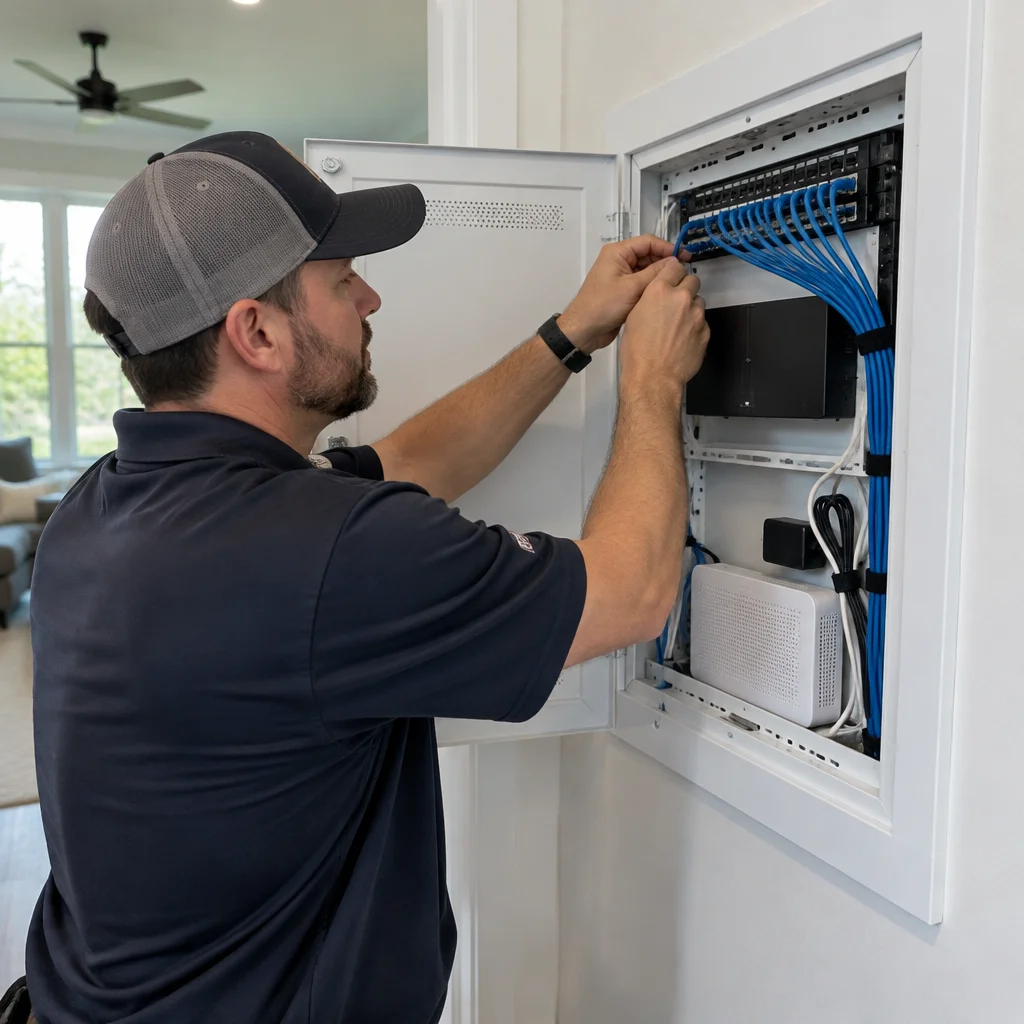
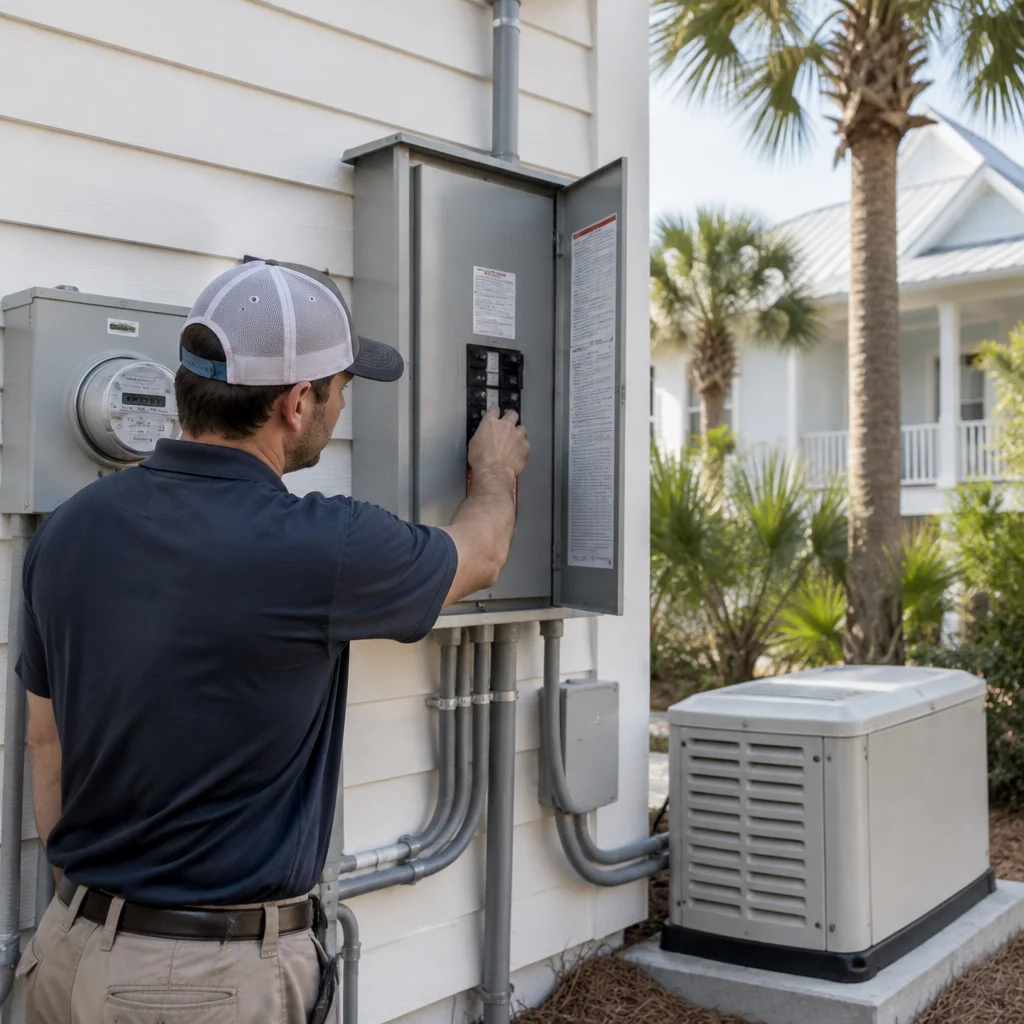
Your panel distributes power and protects branch circuits. Before adding a generator, an electrician should inspect its condition, rating, circuit directory, breaker compatibility, grounding and bonding arrangement, and available space. Heat damage, moisture intrusion, corrosion, or improvised wiring can require electrical repair before installation proceeds. Having unused breaker spaces does not prove that the service has adequate capacity.
A search for 200 amp panel upgrade near me may be appropriate when a home has outgrown its service, but a generator does not automatically require a 200 amp upgrade. Load calculations and equipment condition determine whether the project needs a panel replacement, service upgrade, dedicated backup panel, or a different transfer configuration. An older fuse box deserves evaluation, not an assumption that age alone dictates the entire project.
Repeated breaker trips deserve diagnosis
A breaker that repeatedly trips may be responding to overload, damaged wiring, a faulty appliance, or another unsafe condition. Breaker repair requests should start with troubleshooting. A defective breaker may need replacement with a listed, compatible device. Installing a larger breaker without verifying the circuit's conductors and rating is not a safe solution. Buzzing, scorching, or a burning odor at the panel warrants prompt professional attention.
Transfer Equipment Keeps Generator Power Where It Belongs
A generator supplying household circuits needs approved transfer equipment that prevents utility power and generator power from being connected improperly. Without that isolation, electricity can backfeed utility lines and endanger lineworkers, neighbors, and occupants. Never connect a generator to a household outlet to energize the home, and never use a cord with exposed male plugs at both ends.
Standby systems commonly use an automatic transfer switch. Certain portable-generator arrangements can use a listed manual transfer switch or an approved panel-specific interlock and properly installed inlet, where permitted. Equipment selection depends on the panel, generator, and local requirements. Neutral switching, grounding, and bonding must match the system design. These details belong with a qualified electrical contractor, not a trial-and-error homeowner connection.
Installation may also involve permits, utility coordination, inspections, equipment clearances, and code corrections. A generator does not excuse existing electrical defects. Your contractor should explain which corrections are necessary, how backed-up circuits will be identified, and how the transfer arrangement will be tested.
Wiring, Outlets, and Switches Still Need Attention
Backup power travels through the same downstream wiring that serves your home during normal operation. Loose receptacles, damaged insulation, overloaded circuits, and poorly enclosed splices remain problems when the generator runs. Older homes may need closer examination of past alterations, missing grounding paths, or aluminum branch-circuit wiring. Aluminum wiring requires evaluation and approved repair methods, not improvised connections.
Watch for outlets that no longer hold plugs securely, discolored cover plates, intermittent power, or switches that crackle. Flickering lights can come from a fixture problem, a loose connection, or a supply issue. An electrical wiring repair near me search should lead to diagnosis of the cause, especially when several rooms are affected. Generator installation is a useful opportunity to correct these issues before an outage makes them harder to manage.
Keep GFCI protection and dedicated circuits in the plan
GFCI protection helps reduce shock risk where required, including many outdoor, garage, kitchen, and bathroom locations. Backup operation does not eliminate that need. An outlet that trips should be evaluated for moisture, equipment faults, and circuit problems rather than bypassed. Appliances and equipment requiring dedicated circuits should retain them. Avoid planning emergency power around extension cords stretched through doors or across walking paths.
Lighting installation and ceiling fan work also benefit from circuit planning. Selected LED lights can provide useful coverage with relatively modest demand, while ceiling fans need approved support boxes and correct wiring. For replacement fans or questionable existing connections, ceiling fan installation and replacement can be coordinated with the broader electrical assessment.
Plan for EV Charging, Electronics, and Security
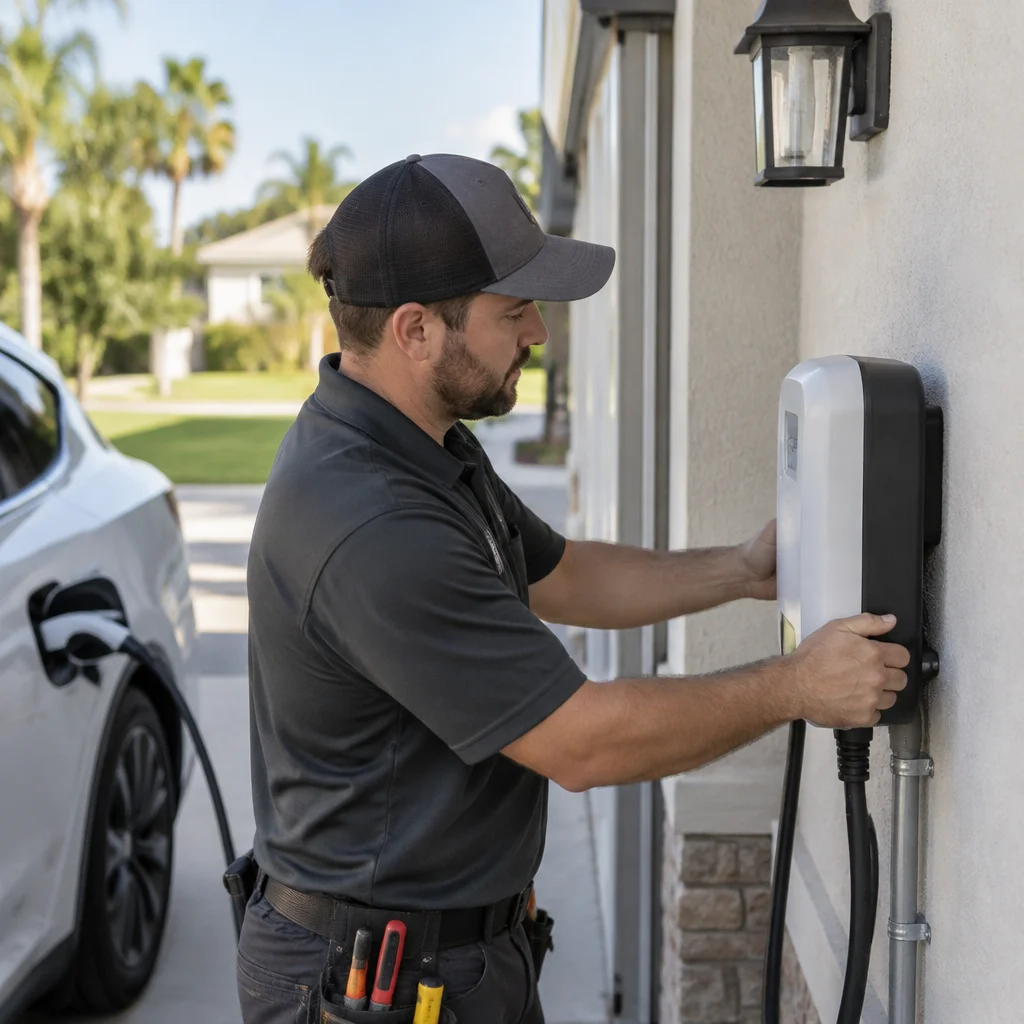
EV charger installation adds a substantial load that should appear in the generator discussion, even if charging is not a backup priority. A garage charger may need to remain off during an outage or participate in a compatible load-management arrangement. Review the service calculation and generator limits before adding another large dedicated circuit after the original installation.
For home offices, entertainment equipment, and security systems, identify the outlets and network components that actually need power. A standby generator normally has a short interruption before it begins supplying the home. An appropriately sized uninterruptible power supply can bridge that gap for suitable electronics. The circuit-planning principles in A Safer Circuit Plan for Freeport Security Systems are especially useful when cameras and networking equipment are outage priorities.
Surge protection complements backup power
A generator supplies energy; it is not a substitute for surge protection. A properly selected panel surge protective device can help limit transient overvoltages, with compatible point-of-use protection providing another layer for sensitive equipment. Homeowners researching surge protector installation near me should also ask about grounding and bonding. No surge device guarantees protection against every lightning event, and damaged wiring still needs repair.
Safe Placement and Carbon Monoxide Prevention
Standby generator placement must follow manufacturer instructions and applicable codes, including required clearances from openings and building features. The site also needs service access and consideration of drainage, flood exposure, exhaust direction, and nearby vegetation. Do not assume a location that looks convenient will satisfy installation requirements.
Portable generators must operate outdoors, at least 20 feet from doors, windows, and vents, with exhaust directed away from buildings. Never operate one in a garage, even with the door open, or in another enclosed or partly enclosed space. Keep the unit dry using a manufacturer-approved arrangement that does not trap exhaust. Shut it down and let it cool before refueling.
Working carbon monoxide alarms and smoke alarms remain essential with backup power. Review locations, age, backup batteries, and interconnection requirements with a professional. Smoke detector and carbon monoxide detector services can help address missing or outdated protection. If a carbon monoxide alarm sounds, move outside immediately and call emergency services.
Maintenance Should Include More Than the Engine
Generator maintenance includes manufacturer-specified oil, filter, battery, and operating checks, but electrical connections and transfer equipment also need attention. Professional service should consider corrosion, enclosure condition, fault history, and transfer operation. Routine exercise cycles are useful, but an engine starting successfully does not prove that every intended circuit will receive power correctly during an outage.
Before storm season, review the backed-up circuit directory, maintenance schedule, fuel arrangements, and operating instructions. Keep vegetation and stored items clear of equipment. After a remodel, addition, or major appliance change, have the backup plan reassessed. Homeowners can monitor status indicators and report unusual sounds, but should not remove electrical covers or reach into energized equipment.
Know Which Problems Cannot Wait
Sparks, smoke, burning odors, a damaged service mast, or water entering electrical equipment require urgent attention. Stay away from flooded panels, downed lines, and generator equipment exposed to standing water. Never touch damaged service equipment or approach a downed line. Contact emergency services or the utility as appropriate, and arrange emergency electrical service in Freeport for hazards within the home's electrical system.
For planned work, ask for an assessment covering loads, panel condition, transfer equipment, protective devices, permits, and maintenance responsibilities. A Superior Mechanical's Freeport service team can help homeowners discuss generator needs within the company's Walton County service area. Bring a list of essential appliances and future projects so the installation plan reflects how your home actually uses power.
Find Power Backup Generators in Freeport, FL
If you need Power Backup Generators in Freeport, FL, visit our local service page or contact A Superior Mechanical today.
Map of Freeport, FL
Frequently Asked Questions
Does installing a backup generator require a panel upgrade?
Not always. An electrician should evaluate the panel's condition, service capacity, circuit arrangement, and compatibility with transfer equipment. Some homes can use their existing panel, while others need repairs, a dedicated backup panel, or a service upgrade.
Can a standby generator power my EV charger during an outage?
Possibly, but EV charging must be included in the generator load calculation. Depending on generator capacity and other household loads, the charger may need to stay off, operate at an approved reduced setting, or use compatible load management.
How often should a Freeport homeowner schedule generator maintenance?
Follow the manufacturer's calendar and operating-hour intervals. Arrange a readiness check before storm season if service is due, and review maintenance needs after extended operation. Coastal exposure, fault alerts, corrosion, or transfer problems may require attention sooner.
Related Articles
Photo Gallery