A toilet that runs after every flush can waste water quietly. One that rocks, leaks at the base, or backs up can damage a bathroom before anyone realizes how serious the problem is. In Miramar Beach, where bathrooms may serve a full household one week and vacation guests the next, small plumbing problems deserve attention before the next busy stretch.
Good toilet repair starts with identifying where the problem actually lives: inside the tank, at the water connection, beneath the fixture, or farther down the drain. This guide explains how to separate those issues, make sensible repair decisions, and protect the surrounding plumbing in your Walton County home.
Start with the symptom, not a replacement toilet
A poorly performing toilet does not always need replacing. A worn flapper, misadjusted chain, or failing fill valve can often be repaired without removing the fixture. On the other hand, a cracked bowl or damaged mounting area may make replacement the safer choice.
Before scheduling toilet repair and replacement in Miramar Beach, FL, note whether the problem happens constantly, only after flushing, or when other fixtures drain. These observations help narrow the diagnosis and prevent unnecessary parts replacement.
A toilet that runs or refills by itself
Water entering the bowl between flushes often points to a leaking flapper or flush valve seal. A chain that catches, mineral buildup on the sealing surface, or an incorrect tank water level can produce similar symptoms. A failing fill valve may also let water rise into the overflow tube.
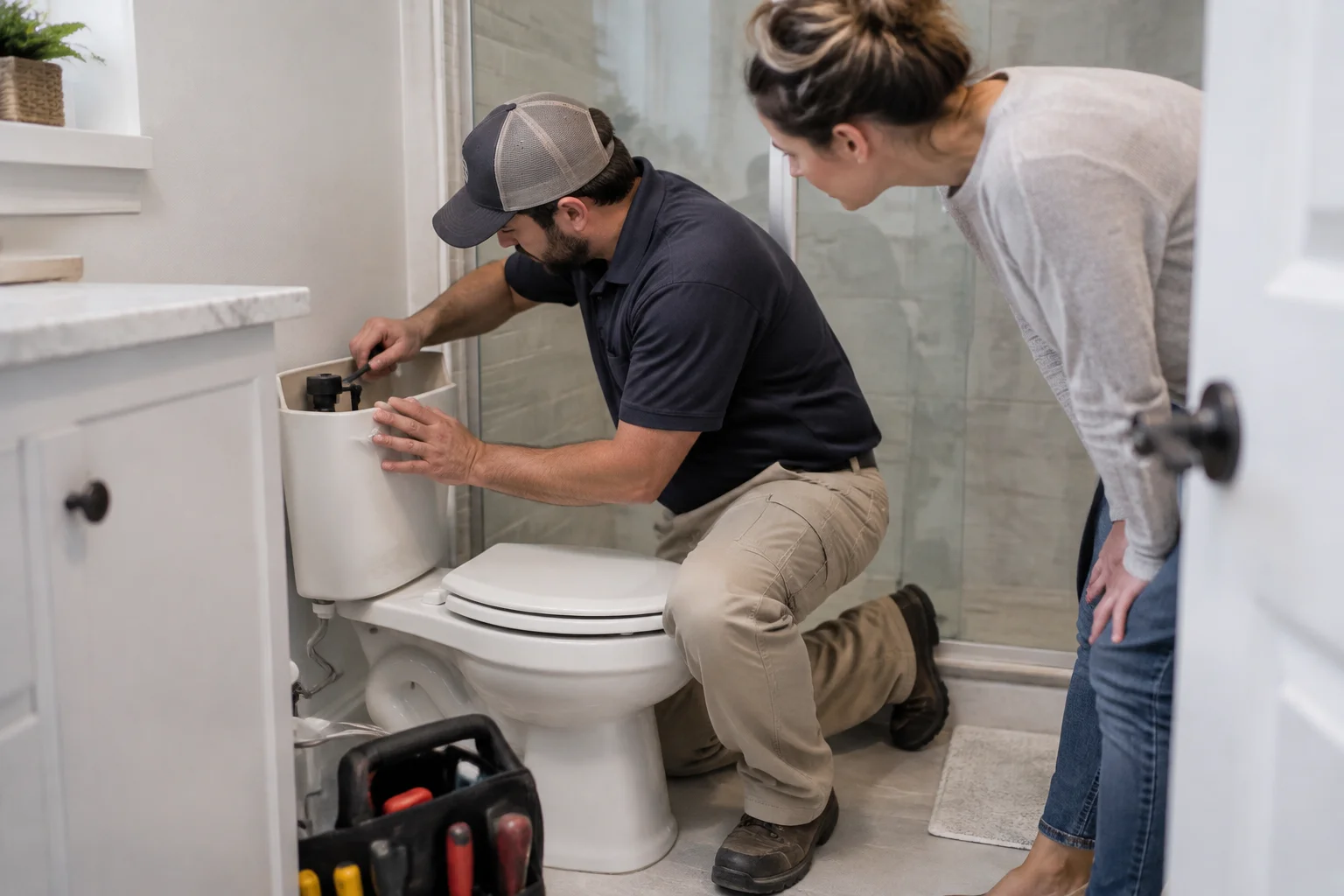
Try placing a few drops of food coloring in the tank and waiting about 15 minutes without flushing. If color appears in the bowl, water is escaping from the tank. Flush afterward to avoid staining. Use replacement parts matched to the toilet model, since an ill-fitting seal may continue leaking even when it is new.
A weak flush or unusually slow refill
A weak flush can come from low tank water, restricted rim openings, or a partial blockage in the toilet trap. Slow refill is more likely to involve the fill valve, supply connector, shutoff valve, or incoming water supply. Most tank-style toilets flush using stored water, so household water pressure is not usually the first explanation for poor bowl evacuation.
Water around the base needs a closer look
A puddle beside a toilet does not automatically mean the floor seal has failed. Water can travel down from a leaking tank bolt, tank-to-bowl gasket, supply connection, or cracked tank. In a humid coastal bathroom, condensation can also collect on a cool tank and drip onto the floor.
Dry the fixture and surrounding floor, then look for where moisture first returns. Avoid repeatedly flushing a toilet that already leaks at its base. Water appearing during a flush, sewer odors, or movement at the floor can suggest a seal or flange problem, but inspection is needed to confirm it.
Why rocking toilets should not be ignored
A toilet should sit securely without shifting under normal use. Movement can damage the seal connecting it to the drain and allow wastewater beneath the flooring. Loose hardware, uneven flooring, a deteriorated flange, or damaged subflooring may be responsible.
Simply tightening the mounting nuts is not always the answer. Excess force can crack porcelain, and caulk cannot repair a failed drain seal. Stop using a leaking or unstable toilet until the mounting, flange, and floor condition have been checked.
Know where a clog ends and a drain problem begins
A single toilet clog often involves excess paper or something that should never have been flushed. Wipes labeled flushable, paper towels, hygiene products, and cleaning pads can lodge in the toilet trap or collect farther along the drain. Only human waste and toilet paper belong in the bowl.
For a simple clog with no other warning signs, a flange plunger may help. Make a firm seal and use controlled strokes. If the bowl is already high, do not flush again. Avoid chemical drain cleaners, which can create splash hazards and complicate later plumbing work.
Recurring backups deserve more than another plunge
A toilet that clogs repeatedly may have a lodged object, an internal restriction, or a problem downstream. Gurgling at a shower drain, water rising in a tub when the toilet flushes, or several slow fixtures can indicate a shared drain or sewer line issue.
If your search for slow drain repair near me began with one bathroom but now involves several fixtures, mention that when requesting service. Professional drain cleaning or a camera inspection may be appropriate. Replacing the toilet alone will not correct a restricted sewer line, damaged drainpipe, or improper drain slope.
Repair or replace? Consider condition and performance
Repair often makes sense when the porcelain is sound, the toilet is stable, parts are available, and the complaint involves a serviceable tank component. Replacement becomes more reasonable when cracks, repeated failures, poor performance, or multiple worn components make another repair less practical.
Age by itself does not settle the question. An older toilet with one worn seal may be worth repairing, while a newer fixture with damaged porcelain may not be. Ask for an explanation of the failure and the condition of the flange before choosing.
Choose a replacement that fits the bathroom
Check the rough-in measurement, available wall clearance, bowl shape, seat height, and access to the supply valve. A larger elongated bowl may be comfortable but crowd a compact bathroom. Consider who uses the space and whether the selected height is suitable for them.
WaterSense-labeled tank-type toilets use no more than 1.28 gallons per flush and meet performance criteria. Replacing an older, higher-consumption model can reduce water use, especially in a frequently occupied home or rental. Proper sizing and installation matter as much as the efficiency label.
Miramar Beach conditions change the maintenance picture
Miramar Beach homes range from year-round residences to condos and vacation rentals with concentrated periods of use. Guest turnover can hide early warning signs: a toilet may refill periodically for weeks before someone reports it. Ask cleaners or property managers to flag running water, loose seats, rocking bowls, and damp flooring.
Florida's warm, humid climate also makes it important to distinguish condensation from leakage and dry wet materials promptly. Heavy rain does not explain every indoor backup, but tell the plumber if sewer symptoms consistently follow storms. That timing can help guide an investigation without assuming the cause.
For condo owners, shared drain systems and building shutoff arrangements may require coordination with management. Choosing local plumbing service in Miramar Beach helps keep those access and property considerations part of the conversation from the beginning.
Look beyond the toilet when water pressure changes
A toilet that refills slowly while nearby faucets also lose flow may be reporting a broader supply problem. A partially closed valve, restricted piping, pressure regulator issue, or leak can affect several fixtures. Pressure and available flow are related, but they are not the same measurement.
Excessive pressure can also stress supply connectors, valves, and other fixtures. Have pressure checked rather than adjusting a regulator by guesswork. Sustained readings above 80 psi generally warrant professional evaluation, along with checks for thermal expansion where applicable.
An unexplained water bill increase, meter movement with all water uses stopped, or persistent dampness may call for water line repair and leak investigation. A water leak repair near me search should lead to locating the source, not automatically replacing the nearest visible fixture. Warm floor areas or unexplained hot water loss can also warrant investigation for a concealed hot water leak, including a possible slab leak.
Mineral buildup can affect several fixtures at once
Where water contains significant dissolved minerals, deposits can build up on fill valves, flush openings, faucet aerators, and water heater components. Do not assume every Miramar Beach property has the same water hardness. Testing provides a better basis for treatment decisions than spotting alone.
Clean toilet components according to the manufacturer's instructions and avoid harsh tank additives that can damage seals. If faucet repair and toilet valve problems keep appearing together, ask whether mineral buildup, pressure, or aging components could be contributing.
Water heaters are part of the same supply system, although a toilet normally uses cold water. Our guide to water heater care in Miramar Beach homes explains why deposits and wear deserve attention. Drinking-water filtration and hardness treatment serve different purposes, as discussed in this guide to everyday water filtration; a point-of-use drinking-water filter will not protect every toilet valve.
A practical maintenance routine for homes and rentals
Once a month, listen after flushing to confirm the fill valve shuts off. Check around the toilet base and supply connection with a dry tissue, look for corrosion, and notice whether the fixture moves. Test for silent tank leakage periodically, especially after an unexplained increase in water use.
Keep a flange plunger available and make disposal instructions clear for guests. Before extended vacancy, arrange periodic property checks and discuss an appropriate water shutoff plan. Do not force an old shutoff valve that resists turning; it may leak or break.
Repeated leaks in different rooms deserve a broader assessment. This article on aging water lines in Miramar Beach homes explains the value of planning ahead. Where deterioration is widespread, discussing plumbing replacement may be more useful than treating every failure as unrelated.
Handle overflowing toilets and active leaks safely
If a toilet starts overflowing, stop flushing and close its supply valve if you can do so safely. This stops incoming tank water, but it will not stop sewage backing up from a shared drain or sewer line. Avoid using other fixtures if multiple drains are affected.
For a broken supply connector or active pipe leak, use the home's main water shutoff if the fixture valve does not stop the flow and the main is safely accessible. Keep people away from contaminated water and avoid wet areas near electrical equipment. Do not operate switches or appliances while standing in water.
An emergency plumber near me search is appropriate for uncontrolled leakage, sewage backup, or a failed toilet when no other bathroom is available. Describe the water source, affected fixtures, and whether you have stopped the supply so the service team can assess the urgency.
Get the fixture and the underlying problem checked
When comparing results for licensed plumber near me, ask whether the visit can include the tank components, supply connection, flange, and drain symptoms rather than just a fixture swap. Share the toilet model, history of clogs, and any recent changes in pressure or water bills.
A Superior Mechanical provides toilet repair and replacement for Miramar Beach homes, vacation rentals, and commercial properties. For properties elsewhere in Walton County, discuss the location and symptoms when scheduling. Whether the solution is a new seal, drain service, or a replacement toilet, the goal is a stable fixture, dependable flushing, and no hidden water loss.
Find Toilet Repair and Replacement in Miramar Beach, FL
If you need Toilet Repair and Replacement in Miramar Beach, FL, visit our local service page or contact A Superior Mechanical today.
Map of Miramar Beach, FL
Frequently Asked Questions
Can a running toilet usually be repaired without replacing it?
Yes. Many running toilets need a properly fitted flapper, flush valve seal, fill valve, or adjustment to the tank water level. Replacement may be more appropriate if the porcelain is cracked, parts are unavailable, or several problems make repair less practical.
Why does my toilet keep clogging even after I plunge it?
Repeated clogs can come from a lodged object, restricted toilet passages, or a blockage farther down the drain. If other fixtures gurgle or back up, a shared drain or sewer line may be involved. A plumber can determine whether the toilet needs service or the drainage system needs cleaning or inspection.
Should I stop using a toilet that leaks around the base?
Yes, stop using it until the source is identified. Water at the base may come from the tank or supply connection, but it can also indicate a failed drain seal, damaged flange, or cracked fixture. Continued flushing can send wastewater beneath the flooring.
Related Articles
Photo Gallery