The dishwasher finishes, but the glasses still look spotted. Your morning coffee tastes slightly off, and a chalky ring keeps returning around the bathroom faucet. None of these details seems especially important on its own. Together, they can make you wonder whether your household water could be better.
Clean Water Services in Bluewater Bay, FL, should begin with understanding those details, not choosing equipment first. A Superior Mechanical provides water filtration, reverse osmosis, purification, and water softening solutions that address different needs. The goal is cleaner water for everyday life, whether you are filling a child's water bottle, washing towels, or preparing dinner.
What your daily routine reveals about your water
Water problems often show up in ordinary family moments. Someone leaves a half-finished glass because the water tastes unpleasant. You rewash dishes before company arrives. Bath towels feel stiff even though you followed the detergent instructions. These observations are useful clues, but they do not identify water chemistry by themselves.
Spots, scale, and soap that will not cooperate
Hard water contains dissolved calcium and magnesium. As water evaporates, those minerals can leave hard water spots on glass, dishes, and fixtures. Around faucets and showerheads, repeated wetting and drying can create stubborn scale. Mineral deposits may also accumulate inside water heaters and other water-handling equipment.
Soap that does not lather or rinse well can be another clue. Hardness minerals react with soap, leaving residue on surfaces and fabrics. Dry skin or dull hair after bathing may accompany that residue, although skin conditions, hair products, and bathing habits also matter. Water treatment is not a medical treatment.
Taste, ice, and the kitchen test
A metallic, chlorinated, or otherwise unpleasant taste can discourage everyone from drinking tap water. It can also affect coffee, tea, soups, and cooking water. Chlorine taste in water may relate to the disinfectant used by the water supplier, while metallic tasting water can have several causes, including plumbing corrosion or dissolved metals.
Cloudy ice cubes are worth noticing, but they are not proof of contamination. Trapped air, the way water freezes, and dissolved minerals can all affect clarity. A suitable treatment system may improve taste without producing perfectly clear ice. Testing is more informative than judging water by its appearance alone.
Why Bluewater Bay homes need an individual assessment
Bluewater Bay's warm, humid climate makes reliable household water especially important. During long stretches of hot weather, families refill drinking glasses, shower after outdoor activities, and wash more sweaty clothing. Outdoor treatment equipment also needs an installation location suited to Florida weather and the manufacturer's requirements.
Homes throughout Bluewater Bay differ in age, plumbing materials, fixture condition, and previous treatment equipment. A problem at one house may not have the same cause as a similar complaint down the street. Coastal location alone does not establish that tap water is hard, salty, or unsuitable for drinking.
Start with your water source and, for utility customers, the supplier's current water quality report. Then assess conditions at the home. For homeowners searching for water treatment near me, local service matters because equipment must fit the available space, household demand, water pressure, and applicable installation requirements.
Testing separates the symptom from the cause
A useful evaluation asks whether the concern occurs at every faucet, only on the hot side, or at a single fixture. Visible sediment in water might relate to supply disturbance, deteriorating components, or material released within the home's plumbing. Discoloration and odor concerns deserve investigation rather than an assumption that a basic filter will solve everything.
Testing should reflect the complaint. Hardness measurement helps determine whether water softening makes sense. Other checks may include pH, iron, manganese, disinfectant levels, or laboratory testing for specific contaminants. A total dissolved solids reading alone does not tell you whether water is safe or which filter you need.
Sudden discoloration, a strong unexplained odor, or a major change in taste warrants prompt contact with the water provider and a qualified professional. Follow any public health advisory. Ordinary household filters should not be assumed to make water safe during a boil-water notice or chemical contamination event.
Matching clean water systems to the job
Water filtration, water softening, and reverse osmosis do different work. Some homes need one targeted solution. Others benefit from equipment that addresses separate concerns at the main supply and the kitchen sink. A Superior Mechanical's clean water services in Bluewater Bay provide a starting point for evaluating those options.
Whole home water filtration for broader household concerns
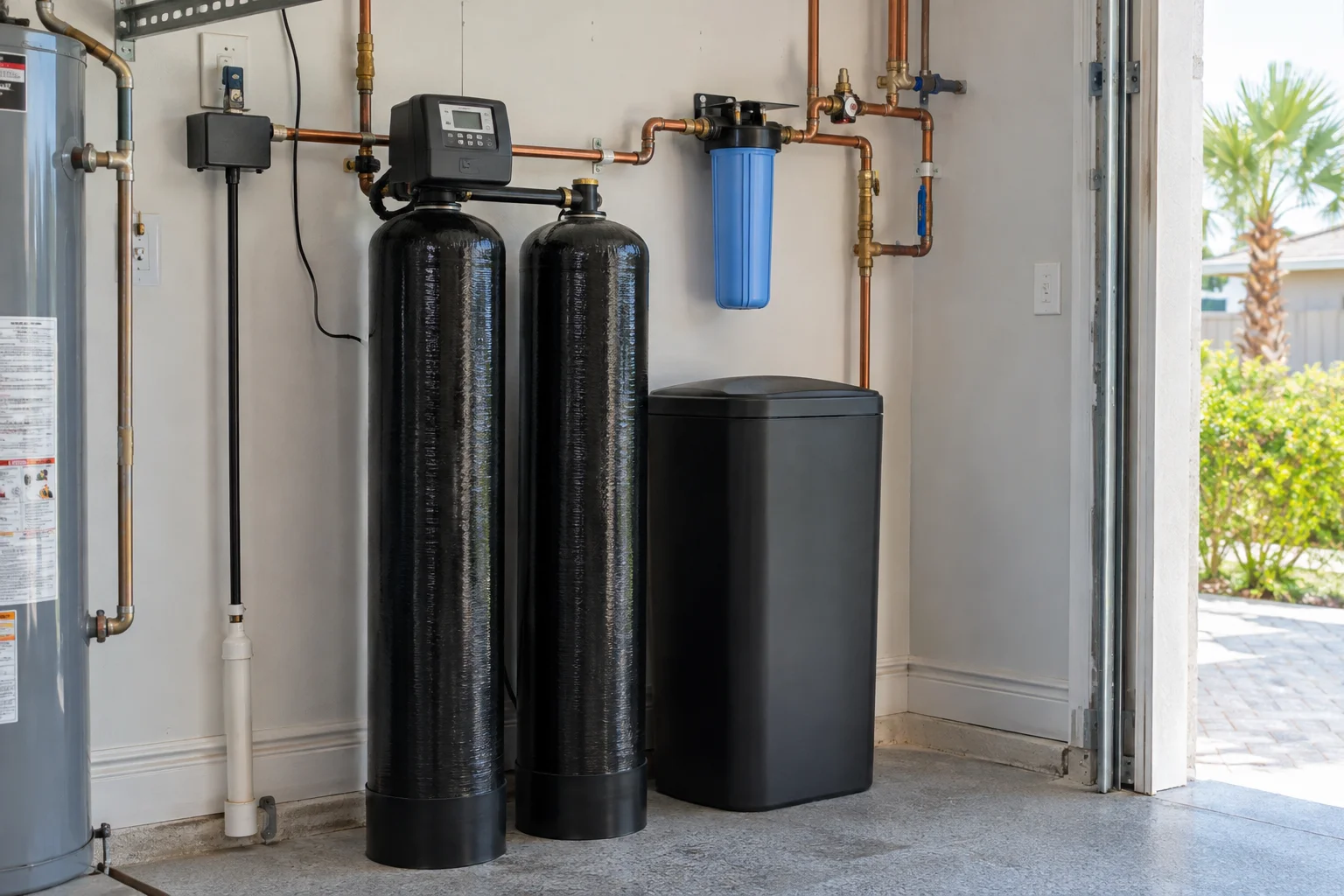
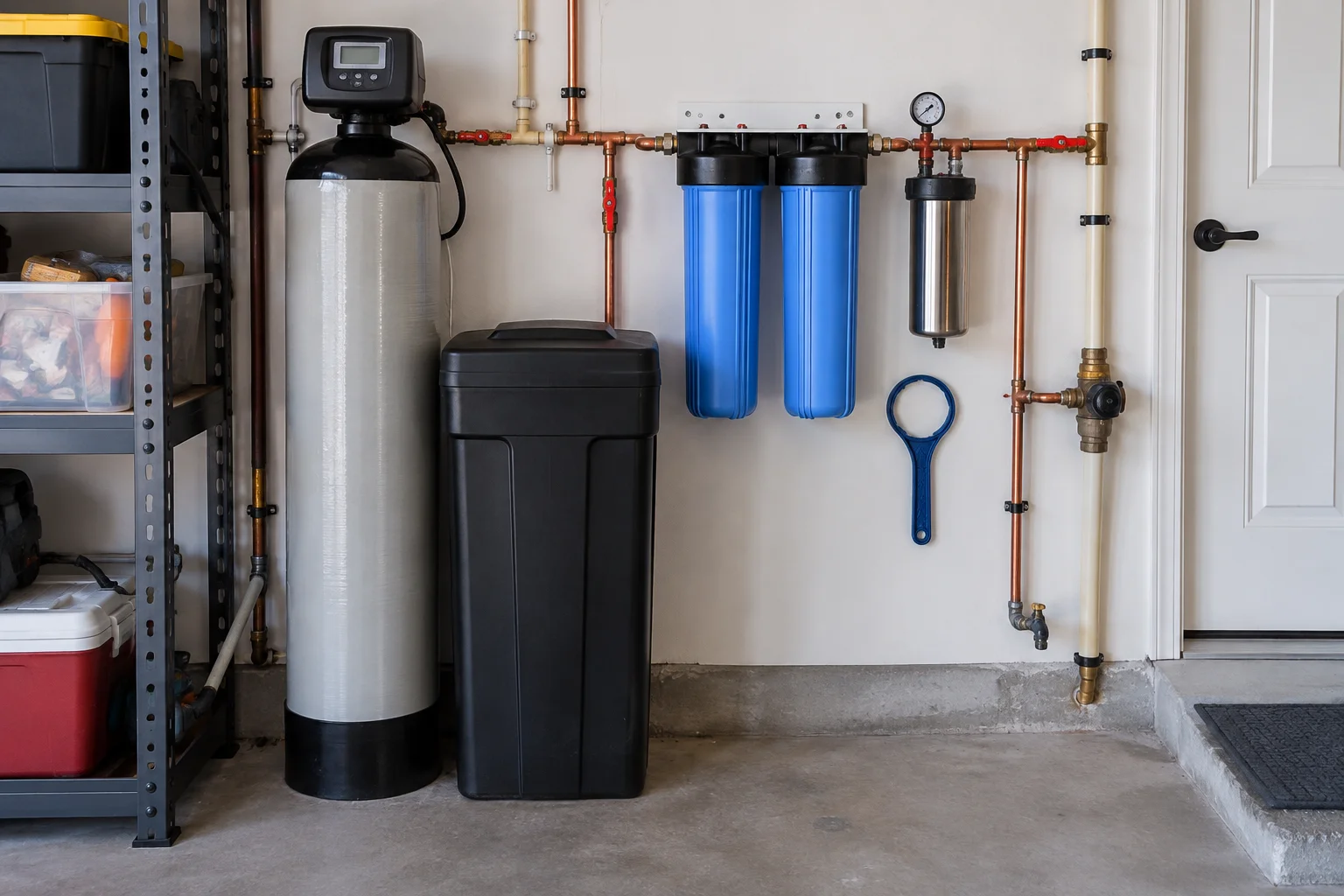
Whole home water filtration treats incoming water before it reaches the fixtures served by the system. Depending on its design, a whole house water filter may reduce sediment, disinfectant taste and odor, or other specifically identified substances. The filter media and performance rating determine what it actually treats.
Sediment filtration captures particles within the filter's rated range. Activated carbon can help reduce chlorine taste and certain odors, but performance depends on the media, contact time, and water chemistry. Chloramine reduction, where needed, requires equipment designed for that task. A standard carbon filter does not soften hard water.
If you are comparing whole home water filtration near me, ask about flow capacity, pressure loss, replacement costs, and independent certification for the exact reduction claims that matter to your home. A filter that performs well at low flow still needs to accommodate showers, laundry, and other simultaneous demands.
Water softening for mineral scale and residue
A conventional ion exchange water softener reduces calcium and magnesium by exchanging them for sodium or potassium ions. Properly selected and maintained equipment can reduce new mineral deposits, make soap easier to use, and lessen hardness-related spotting. It does not remove every contaminant or replace a drinking water filter.
Hard water treatment becomes part of protecting fixtures and appliances when testing confirms significant hardness. Scale can interfere with heat transfer and restrict small passages, contributing to efficiency loss and wear. However, appliances wearing out faster can also reflect age, usage, and maintenance. A softener cannot promise a particular appliance lifespan or repair existing damage.
Softener sizing should account for measured hardness and household water use. Regeneration settings, salt use, drainage, and bypass arrangements matter too. Anyone following a sodium-restricted diet should discuss softened drinking water with their healthcare professional and consider appropriate drinking water treatment.
Reverse osmosis for drinking and cooking water
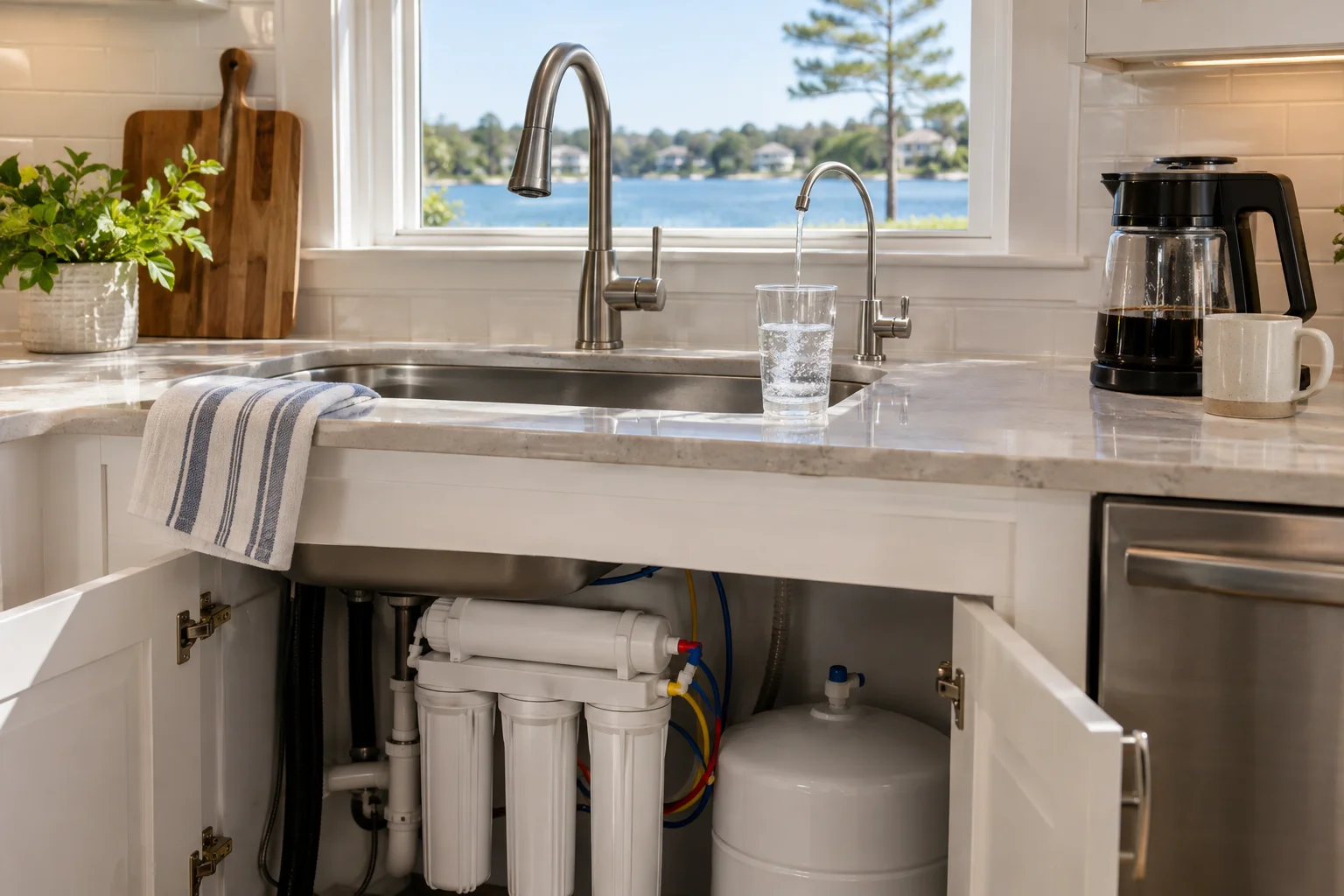
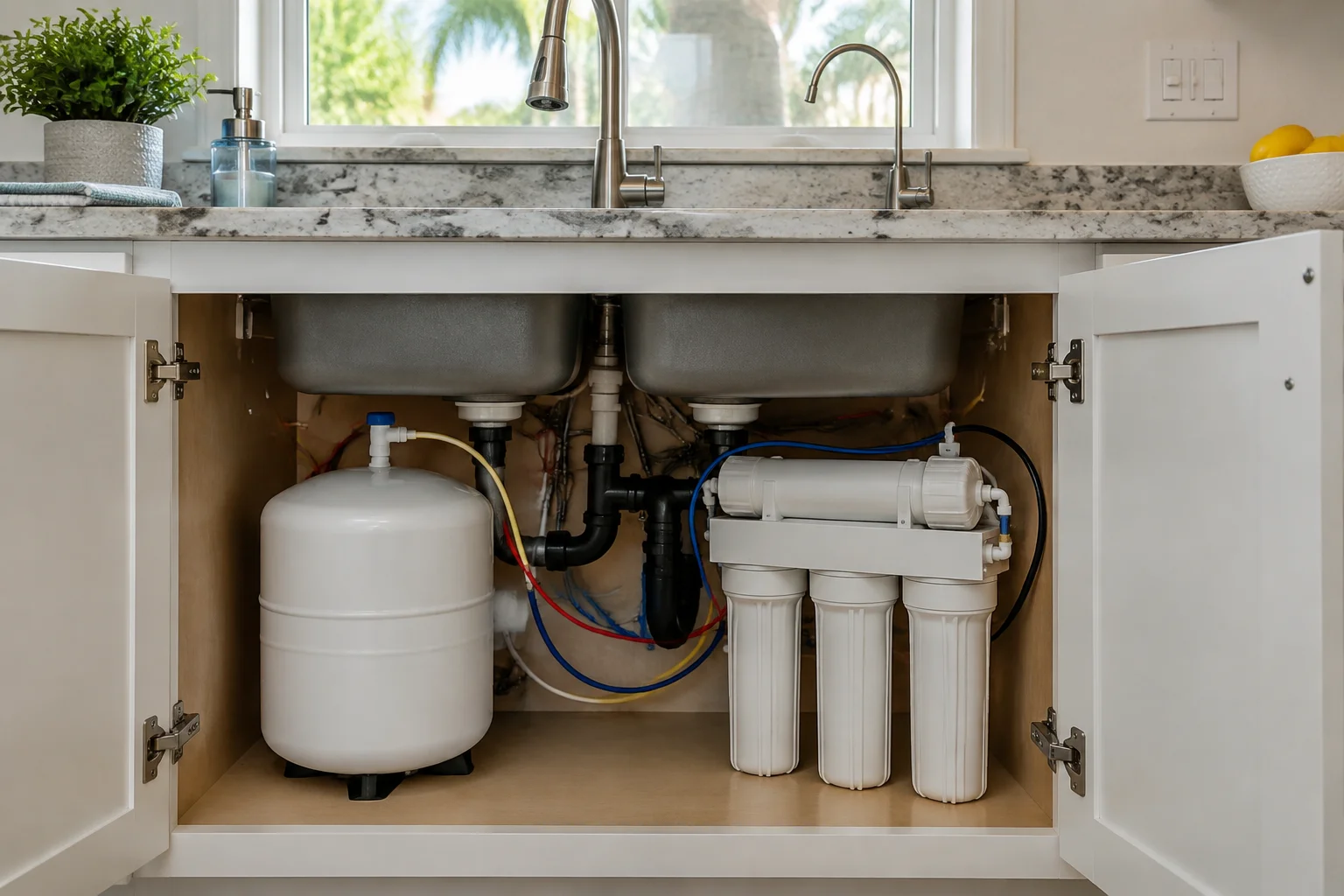
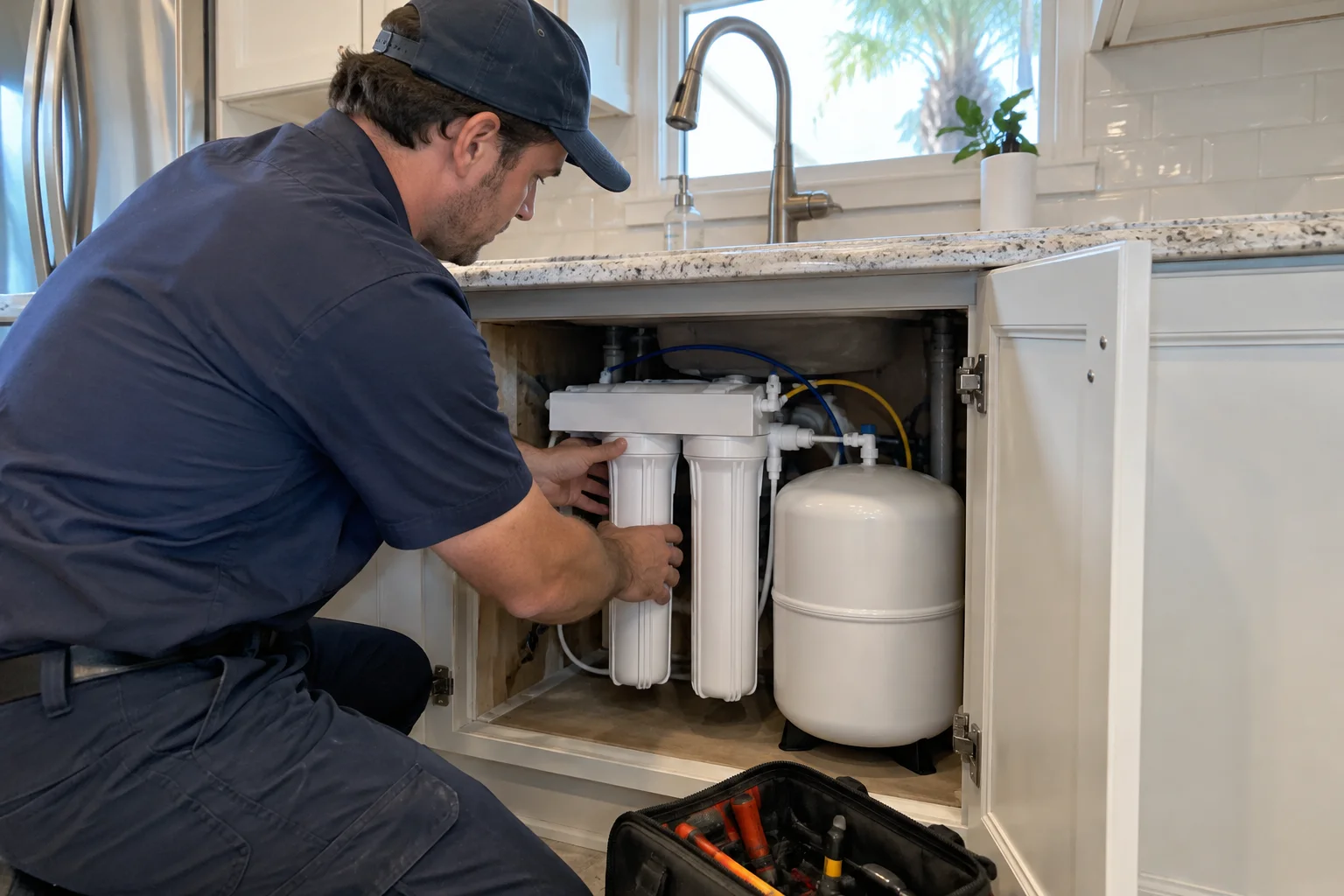
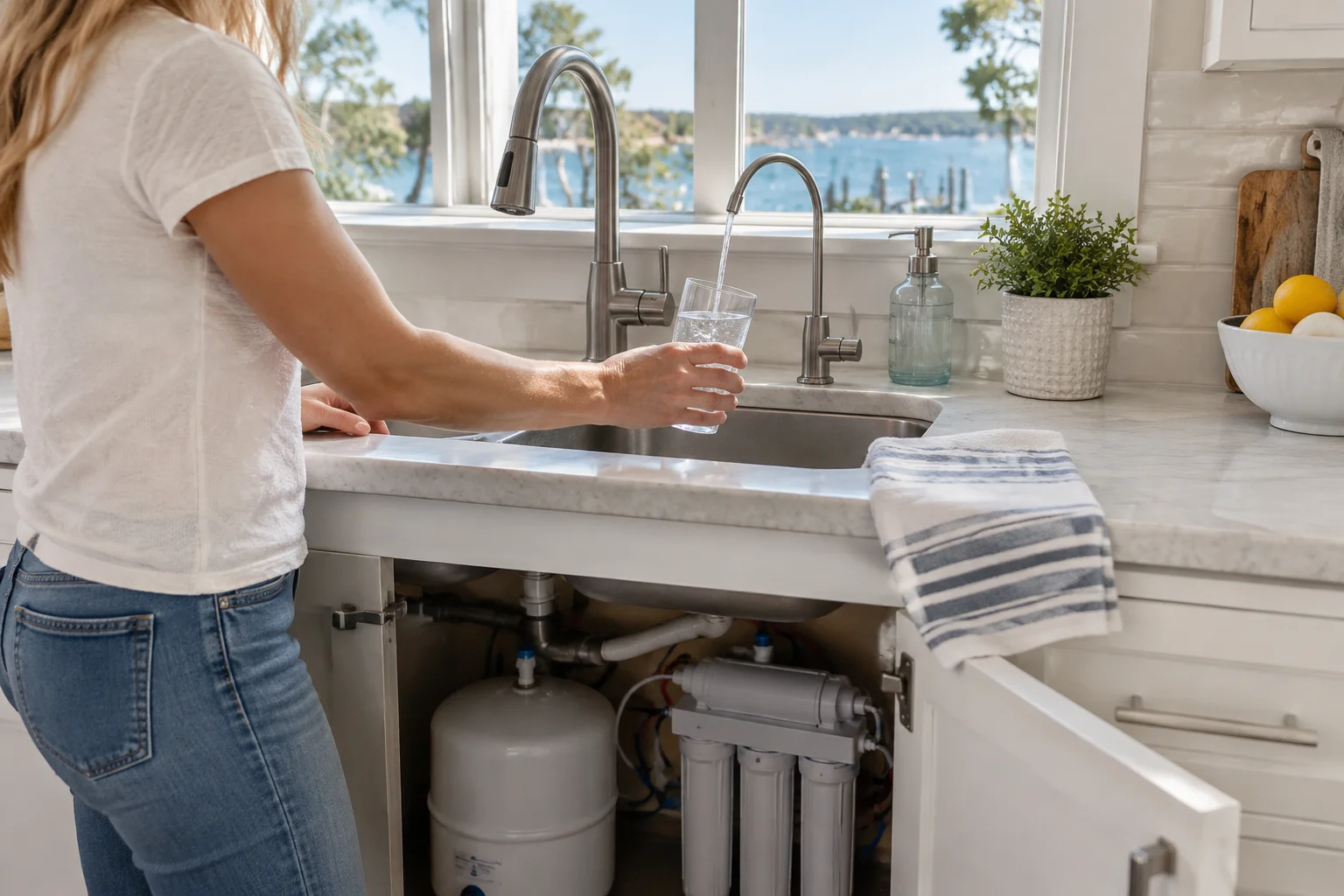
A reverse osmosis system commonly serves a dedicated kitchen tap. It uses a membrane and supporting filters to reduce many dissolved substances, with actual performance depending on the model and its certified claims. It can be useful when the main priority is better water for drinking and cooking.
Imagine filling the coffee maker, rinsing rice, preparing soup, and topping up school water bottles from one convenient tap. An appropriately selected system can improve that routine without treating every gallon used for toilets or laundry. Refrigerator connections may also be possible when pressure, capacity, and manufacturer requirements allow.
Homeowners searching for reverse osmosis installation near me should ask about storage capacity, production rate, drain requirements, filter access, and wastewater generation. Reverse osmosis requires maintenance and does not replace every other treatment need. Incoming water conditions may call for pretreatment to protect the membrane.
Where AO Smith water filtration fits
AO Smith water filtration may be among the product options homeowners consider. Evaluate the specific model rather than relying on the brand name alone. Confirm whether it is intended for sediment, taste and odor, reverse osmosis, or another purpose, and review its rated capacity and replacement schedule.
A Superior Mechanical can help homeowners discuss treatment needs and suitable equipment options. Its water filtration, reverse osmosis, and water softener services explain the broader treatment categories. Ask about current product availability, installation needs, warranty terms, and ongoing service before selecting equipment.
Better water should make household chores easier
The benefits of properly matched treatment show up in small, repeatable ways. Reduced hardness can mean less mineral residue on shower doors and easier fixture cleaning. Laundry may need less detergent once water is softened, so follow detergent and appliance guidance rather than continuing the same dose automatically.
In the kitchen, reducing a specific taste or odor can make tap water more appealing. That matters when family members are choosing between a refillable bottle and another packaged drink. Treatment should support your household's habits, not add a complicated routine that nobody wants to maintain.
Keep expectations realistic. Filtration will not fix a leaking faucet, and softening will not restore etched glassware. Our guide to everyday water purification in Bluewater Bay offers another way to think about water quality across the home, beyond the spots on the sink.
Maintenance keeps water treatment dependable
Every clean water system has service requirements. Replace cartridges according to the manufacturer's instructions and actual use. A filter can become exhausted before the water looks different, while a clogged sediment cartridge can reduce pressure. Record installation dates and keep the correct replacement specifications handy.
For softeners, check salt levels, watch for salt bridging, and arrange periodic checks of regeneration settings and treated-water hardness. Reverse osmosis systems need scheduled filter changes, sanitation, and membrane performance checks as specified by the manufacturer. Storage tanks and connected refrigerator lines also deserve attention during service.
Whole home systems may need media replacement, backwashing checks, or other model-specific care. Homeowners searching for water filtration near me should consider ongoing service access alongside installation cost. Across Okaloosa County, dependable maintenance helps keep treatment matched to household use and changing water conditions.
Get help when the problem persists or changes
Arrange a professional assessment if scale quickly returns, treated water develops an off taste, pressure drops after a filter installation, or a softener repeatedly runs out of capacity. New staining, persistent water odor concerns, and unexplained sediment also deserve a closer look. Note where and when the issue occurs before the visit.
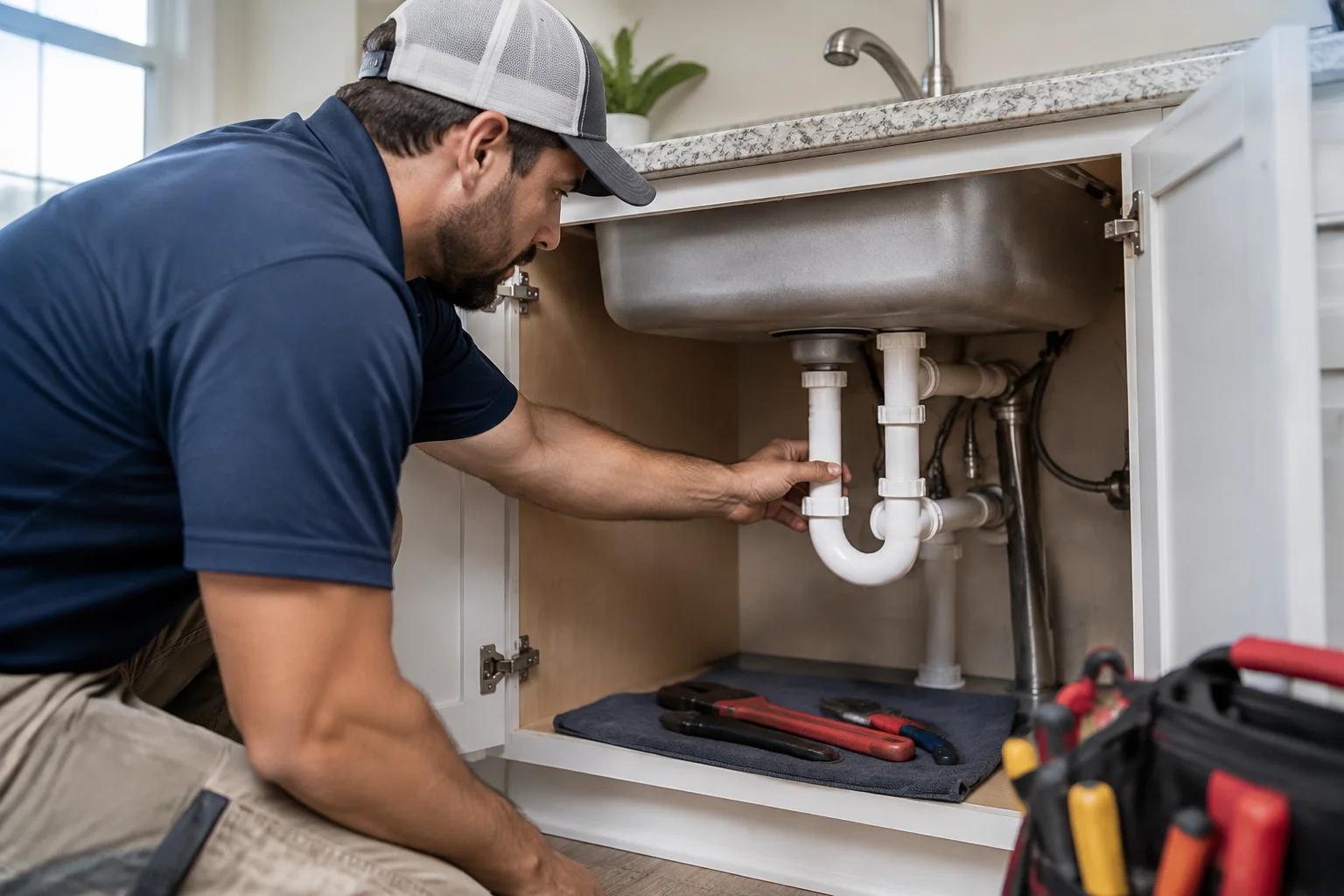
If only one faucet has low flow or discoloration, the fixture or nearby piping may need attention rather than a larger treatment system. This guide to plumbing repair in Bluewater Bay explains why localized problems should not be ignored.
Bring A Superior Mechanical a short list of what bothers you most: spotted dishes, chalky showerheads, poor tasting coffee, or water nobody enjoys drinking. With an assessment of your water and household needs, the conversation can focus on the right combination of filtration, softening, and reverse osmosis for your Bluewater Bay home.
Find Clean Water Services in Bluewater Bay, FL
If you need Clean Water Services in Bluewater Bay, FL, visit our local service page or contact A Superior Mechanical today.
For a broader look at whole-home water filtration, reverse osmosis, and water softener options, visit our water filtration, RO, and water softener page.
Map of Bluewater Bay, FL
Frequently Asked Questions
Do hard water spots mean my Bluewater Bay home needs a water softener?
Hard water spots can indicate dissolved minerals, but testing should confirm hardness before you select equipment. Dishwasher settings, detergent residue, and damaged glassware can also affect appearance. A properly sized softener reduces hardness minerals, while ordinary sediment and carbon filters generally do not.
Can whole home water filtration replace a reverse osmosis system?
Not always. Whole home filtration treats water entering the house for the substances its media is designed to reduce. Reverse osmosis typically treats drinking and cooking water at a dedicated tap and can reduce many dissolved substances. Whether you need one or both depends on testing, certified equipment performance, and your priorities.
What should I do if my tap water suddenly smells bad or changes color?
Contact your water provider and a qualified professional, particularly if the change affects multiple faucets. Note whether it occurs in hot water, cold water, or both. Follow any public health guidance, and do not assume a household filter makes the water safe to drink while the cause is unknown.
Related Articles
- Bluewater Bay Homes and the Plumbing Problems That Shorten Sewer System Life
- Understanding Plumbing Repair Before Small Problems Get Expensive in Bluewater Bay, FL
- Cleaner Water, Fewer Plumbing Surprises: A Bluewater Bay Guide to Home Purification
- Beyond the Water Spots: Everyday Water Purification in Bluewater Bay, FL
Photo Gallery