On 30A, where beach air, coastal humidity, and plenty of outdoor living shape daily routines, water quality still affects everything you do inside your home. The biggest culprit is often hard water. You may notice it as hard water spots on dishes, scale buildup on faucets, or a shower that leaves skin feeling dry. Even if your water looks clear, hard water can quietly shorten the life of fixtures and appliances.
This guide explains what homeowners should know about water softening in 30A, FL, how it works with other water filtration options like reverse osmosis and whole home water filtration, and how to choose a system that fits both everyday family needs and vacation rental turnover.
Why 30A homeowners notice hard water fast
Hard water is water that contains higher levels of minerals, mainly calcium and magnesium. In a coastal region like 30A and Walton County, water chemistry can vary, but the symptoms are consistent. When water heats up or evaporates, minerals leave behind residue that builds over time.
It shows up where you can see it and where you cannot:
- Hard water spots on glass that look like faint film or streaks after the dishwasher or handwashing
- Scale buildup around faucets and showerheads, including rough white rings and stubborn deposits
- Soap does not lather or rinses poorly, leaving a slick or filmy feel
- Dry skin or dull hair after bathing, especially when you shower frequently or have sensitive skin
- Visible sediment, discoloration, and odor concerns that can be more noticeable when water is disturbed or during seasonal changes
- Cloudy ice cubes and water that tastes off, sometimes described as metallic or chlorinated
- Poor tasting coffee and cooking water that does not taste as clean as you expect
- Appliances wearing out faster, including water heaters, dishwashers, and washing machines that struggle with mineral buildup
These issues are not just cosmetic. Scale buildup can reduce efficiency in hot water systems and clog internal components. When hard water treatment becomes part of protecting fixtures and appliances, homeowners often see fewer repairs and more consistent performance.
What water softening actually does (and what it does not)
Water softening is designed to address hardness minerals. Most conventional residential systems use a process called ion exchange. The system replaces calcium and magnesium with sodium or potassium ions, so the water no longer forms the same kind of residue on surfaces.
After softening, you typically notice:
- Cleaner glass and fewer hard water spots on dishes
- Less scale buildup on faucets and showerheads
- Soap that lathers and rinses more easily, which can feel better for skin and hair
- Improved appliance longevity because mineral scale builds more slowly
What softening does not always solve by itself is taste and odor, sediment, or certain dissolved contaminants. That is where pairing softening with water filtration or a targeted system like reverse osmosis can make a noticeable difference, especially for drinking and cooking.
Chlorine taste, unpleasant flavors, and cloudy ice: where filtration fits
Even when hardness is the main problem, many families also want water that tastes better and looks clearer in a glass. Some homeowners describe a chlorine taste in water, a metallic note, or an unpleasant odor. Cloudy ice cubes can happen when dissolved minerals, particulates, or air bubbles are present.
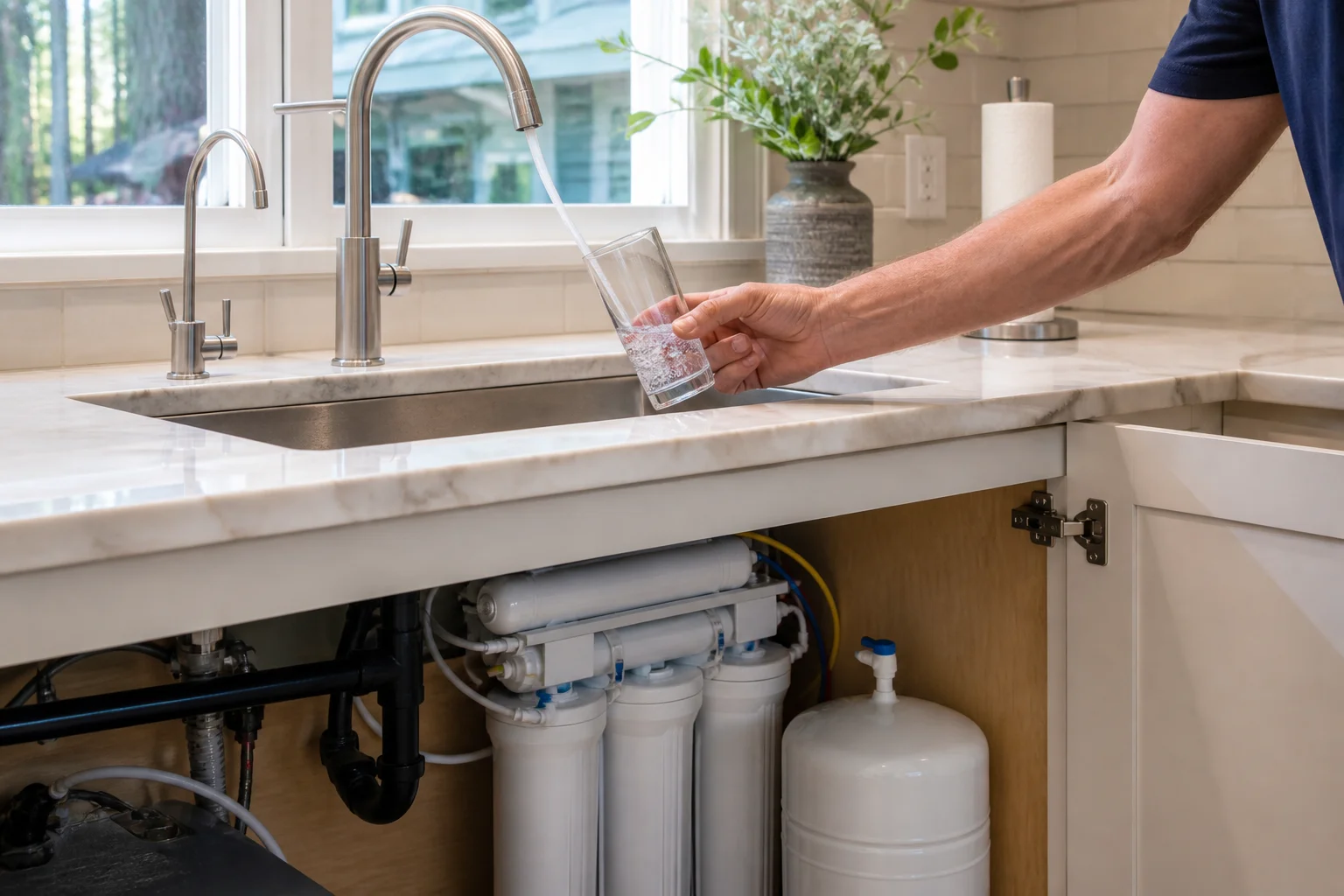
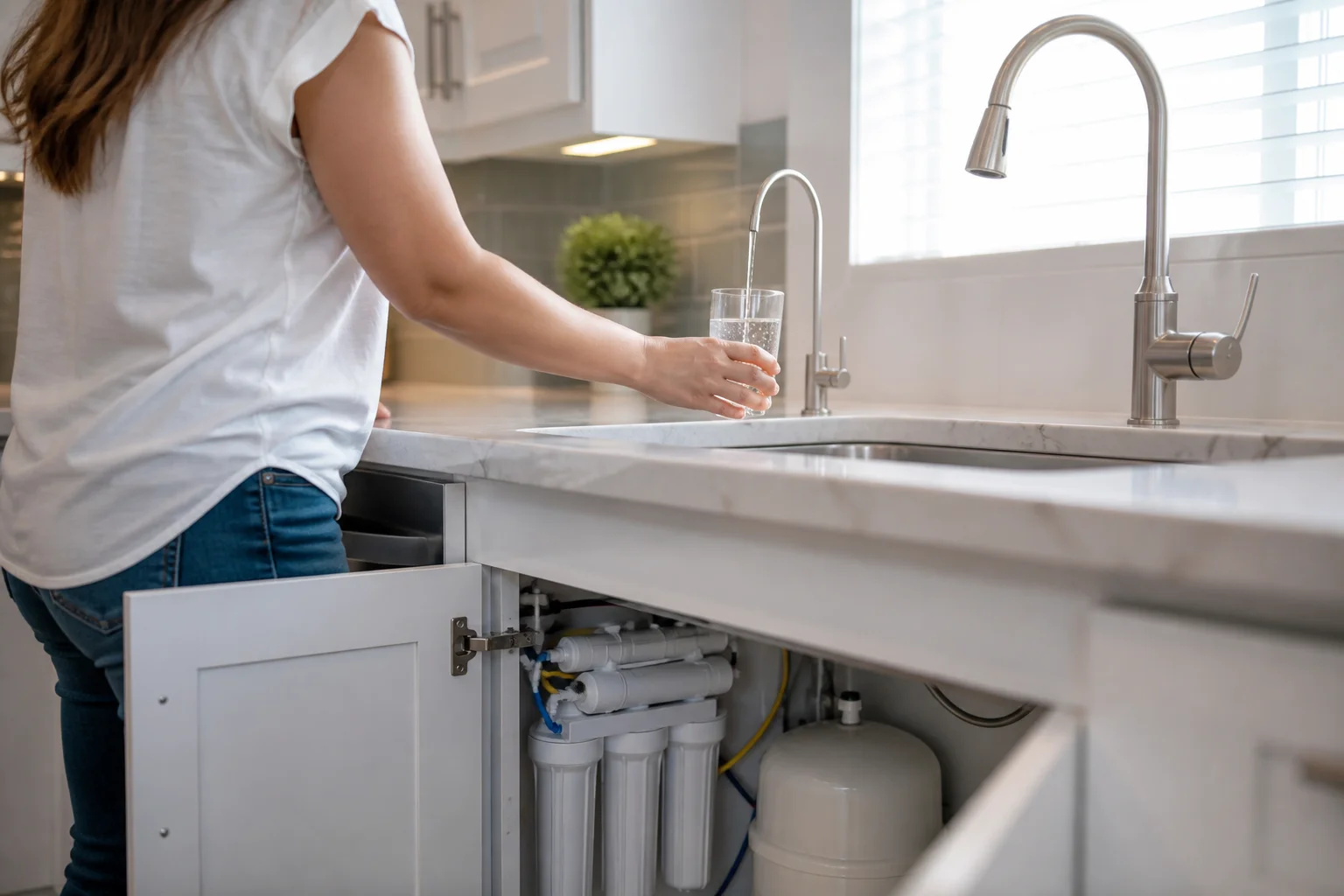
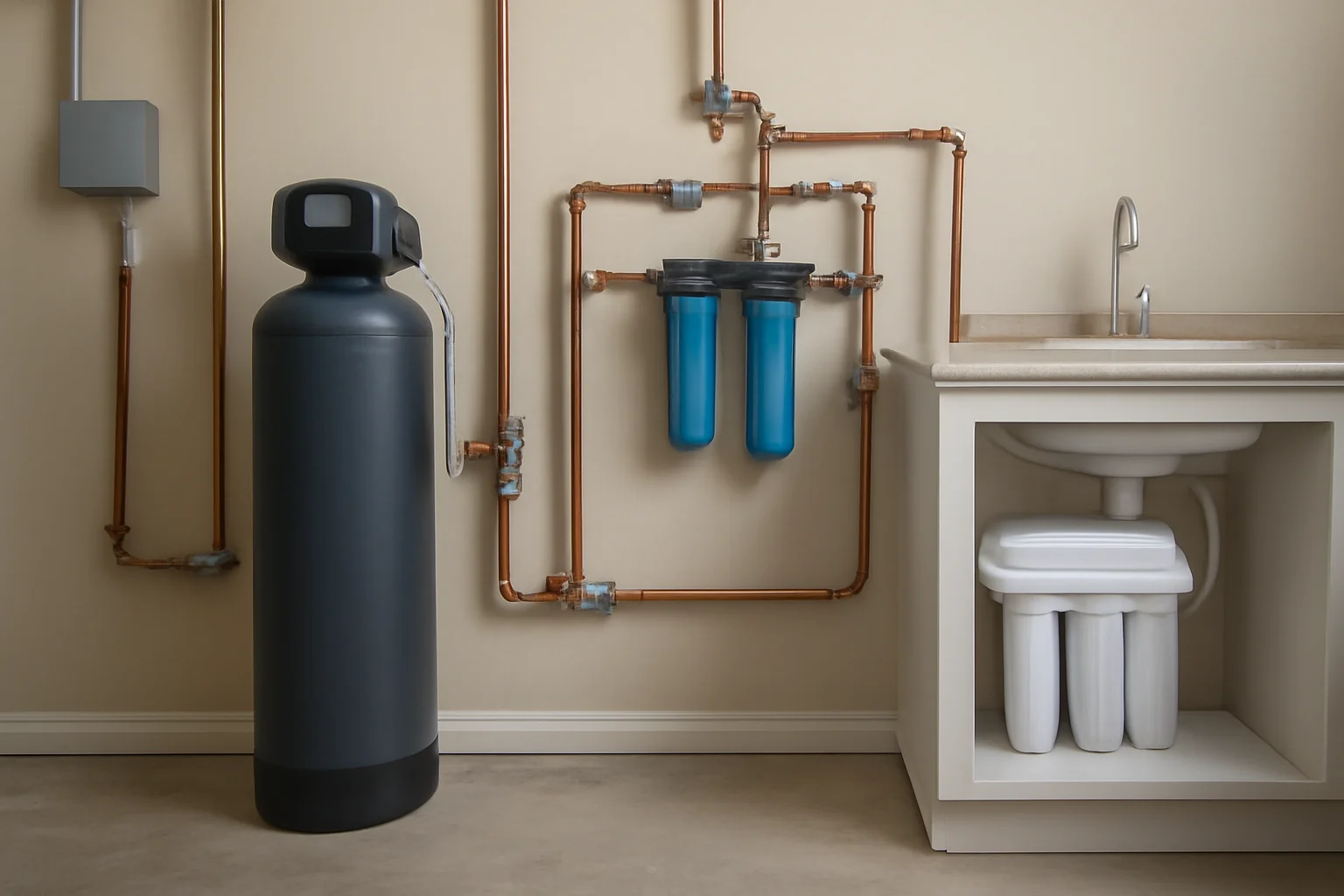
Different filtration technologies handle different concerns. A whole house water filter can help reduce sediment and improve overall water clarity. For drinking water, many homeowners choose an under-sink reverse osmosis system near me approach, which is designed to produce very clean water for the kitchen.
For 30A households, this often looks like a combined strategy:
- Water softening to reduce scale and protect plumbing and appliances
- Whole home water filtration to help with sediment, discoloration, and everyday water quality
- Reverse osmosis for drinking water and cooking, especially if taste issues are noticeable
If you are searching for home water purification near me, it helps to think about your priorities. Do you mainly want fewer spots and smoother bathing, or are you also concerned about the taste of water for the kitchen? The best systems usually match the goal.
A typical 30A kitchen and bathroom routine, and how better water changes it
Picture a normal morning in a 30A home. Someone makes coffee, another person fills a water bottle for the beach, and the kids rinse off after swimming. Then there is laundry and dishwashing, and the day ends with showers.
Hard water can disrupt that routine in small ways that add up. Coffee may taste flat or overly mineral. Ice cubes may look cloudy. Soap may not rinse cleanly. Towels may feel less fresh, and the bathroom may require more frequent scrubbing to keep fixtures looking good.
When a home has properly matched treatment, the difference can feel immediate:
- Better water for drinking and cooking for clearer taste, especially with an RO system for the kitchen
- Fewer minutes spent wiping scale buildup around faucets and showerheads
- Improved rinsing, so shampoo and body wash feel like they leave less residue
- More consistent performance from dishwashers and washing machines, because mineral buildup is reduced
Many vacation rental owners also notice a practical benefit. Guest satisfaction is tied to details, and water that feels clean and leaves fewer spots can reduce complaints and help properties maintain a polished appearance between turnovers.
Whole home water filtration vs. reverse osmosis for drinking water
Homeowners often ask whether they need a whole house system, an RO unit, or both. A simple way to think about it is coverage and purpose.
Whole home water filter: everyday comfort and protection
A whole house water filter treats water before it reaches faucets, showers, laundry, and appliances. It can be a strong fit if you have concerns like sediment in household water, discoloration, or visible particles. It can also support better performance for fixtures by reducing what would otherwise build up.
Reverse osmosis: focused improvement for drinking and cooking
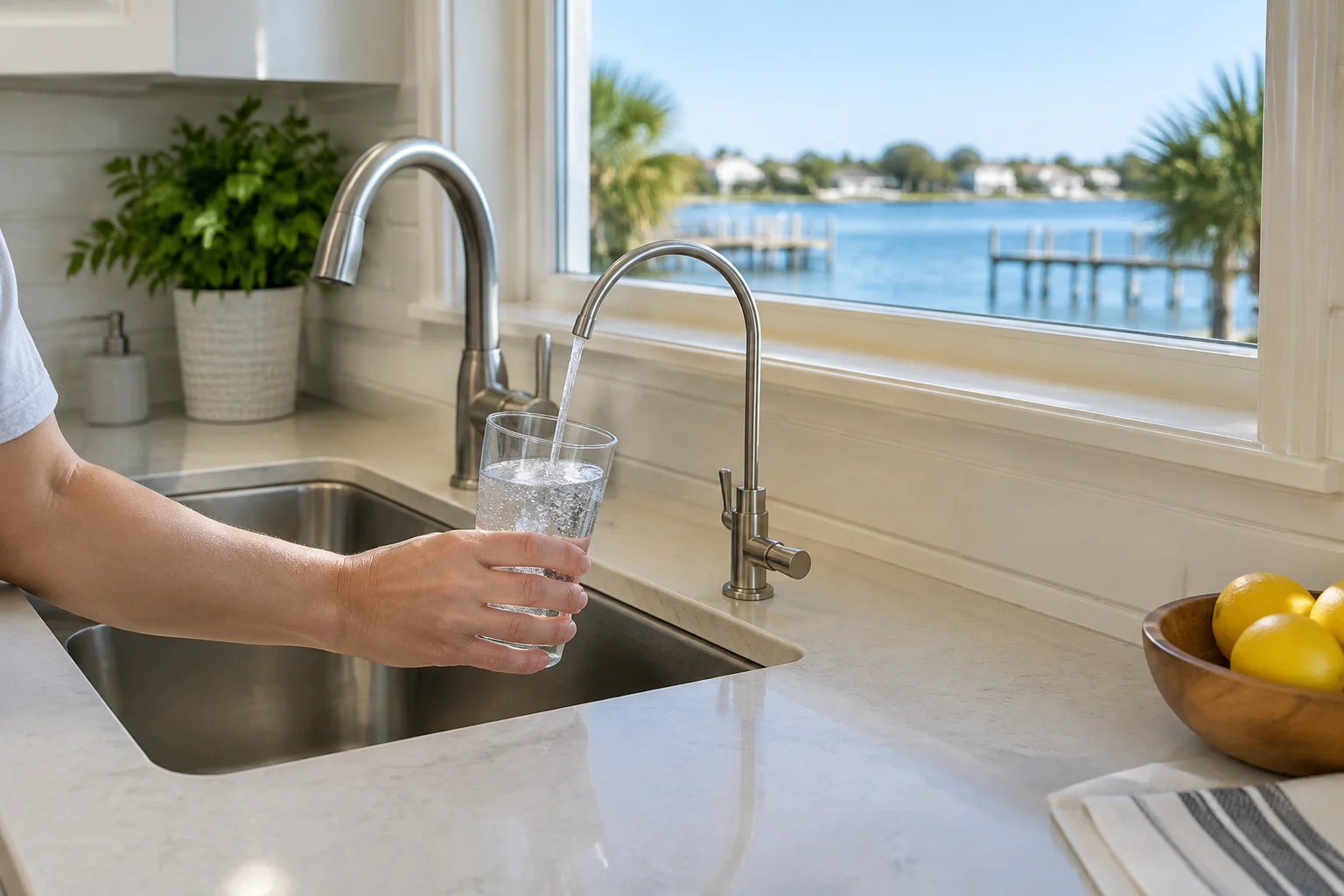
A reverse osmosis system is usually installed under the sink. It produces drinking water that is often clearer and tastes cleaner. Homeowners who are sensitive to chlorine taste in water or who notice metallic or unpleasant flavors often prefer RO for the kitchen.
When you are searching for reverse osmosis installation in the 30A area, it is smart to plan the system around your existing water treatment. If you already have hard water, softening can help protect plumbing components and reduce scale inside parts of your broader system. RO then focuses on the water you drink and cook with.
Where AO Smith water filtration can fit
Many homeowners want equipment from brands known for long-term reliability. AO Smith water filtration is commonly considered for both filtration and system components, depending on the specific model and configuration used for your home.
For 30A homes, the right setup depends on your water profile and goals. A professional water treatment evaluation can help determine whether you need:
- Whole home filtration for sediment and clarity
- Targeted drinking water filtration using reverse osmosis
- Water softening to control hardness and reduce scale buildup
A Superior Mechanical can help homeowners compare options based on real-world needs, not guesswork. If you are looking for water treatment near me and want a system that matches your household routine, start with an assessment of your water and your priorities.
Signs your 30A home is ready for water softening service
If you are seeing multiple hard water symptoms at once, it is usually time to consider water softening and possibly additional filtration. Common signs include:
- Soap does not lather and leaves a residue feel after washing
- Scale buildup around faucets, showerheads, and plumbing connections
- Hard water spots on dishes that do not improve even after adjusting dishwasher settings
- Dry skin or dull hair after bathing, especially after regular showers
- Cloudy ice cubes or water that looks less clear than it should
- Metallic, chlorinated, or unpleasant taste, including coffee and cooking water
- Visible sediment, discoloration, and odor concerns that show up in sinks or tubs
- Appliances wearing out faster than expected, with more frequent maintenance
These problems often overlap. For example, a home may have hardness that drives scale and also have sediment or taste issues that require filtration. That is why homeowners in 30A frequently choose a combined approach.
Maintenance matters: keeping softened and filtered water performing well
Water treatment is not a one-and-done purchase. Systems work best when they are maintained on schedule. Maintenance needs vary by model, but homeowners should plan for periodic inspection and service.
Here are practical maintenance points that help keep results consistent:
- Check salt levels and ensure the softener is operating properly if you have a traditional ion exchange system
- Replace filters at recommended intervals so sediment reduction and taste improvements stay reliable
- Sanitize or service components as required, especially for RO systems
- Watch for changes in water feel, spots on glass, or changes in taste, which can indicate a system is slipping
For homeowners who use their water heavily, such as large families or vacation rentals, maintenance schedules may need to be tighter. When you are comparing water softener installation near me options, ask about ongoing service plans and how filter and softener performance is monitored.
Choosing the right system for a 30A home
Every 30A home has different realities: vacation rental turnover, different shower schedules, varying laundry loads, and unique plumbing layouts. The best system depends on your household and your water conditions.
Here is what professionals typically evaluate:
- Hardness level and how quickly scale forms on fixtures
- Whether you see sediment, discoloration, or odor concerns
- How you use water, including drinking water preferences and cooking habits
- Appliance risks, such as water heater performance and dishwasher efficiency
- Whether whole home treatment is needed or if a targeted kitchen setup makes more sense
To see a service-specific option for your area, you can review water softening services for 30A. For homeowners considering broader treatment choices, the water filtration and RO water softeners landing page is a helpful overview. If you want to explore the full local service footprint, visit the 30A service area and Walton County as well.
Prevention starts with smart pairing: softening plus filtration
It is easy to focus on one symptom. Maybe you are only thinking about the white ring on the showerhead. Or maybe you only care about the taste of drinking water. But the best results often come from pairing solutions.
For example, softening reduces scale buildup, which protects plumbing and appliances. Whole home filtration can reduce sediment and improve clarity. Reverse osmosis can focus on drinking water quality for the kitchen.
This pairing can also support better results across your daily routine. You get cleaner fixtures, better bathing comfort, and improved water for cooking and drinking. That is a meaningful improvement for both homeowners and guests, especially in a region where people notice details.
Helpful resources for 30A homeowners with RO and fixtures
If you are already considering reverse osmosis or you are planning upgrades around your plumbing fixtures, these reads can help you plan more confidently:
- Smart Plumbing Habits for Reverse Osmosis Systems in 30A Homes
- What 30A Homeowners Should Know Before Replacing Plumbing Fixtures
- Plumbing Installation That Helps 30A Homes Stay Ahead of Water Damage
- How Water Softening Protects Rosemary Beach Plumbing from Costly Water Damage
When to call a professional water treatment company
Homeowners in 30A should call a professional when symptoms are consistent and you are seeing multiple impacts across the home. A qualified water treatment specialist can help you avoid buying the wrong system for the wrong problem.
Call for service if you notice:
- Scale buildup around faucets and showerheads that keeps returning quickly
- Hard water spots on dishes that do not respond to detergent changes or dishwasher adjustments
- Dry skin or dull hair after bathing that feels worse over time
- Cloudy ice cubes, metallic or chlorinated taste, or unpleasant odors
- Visible sediment, discoloration, or ongoing odor concerns
- Appliances requiring repairs more often than you expect
A Superior Mechanical provides professional water softening and water filtration support for homes and properties across Walton County. If you are searching for water softener service, water filtration near me, or home water purification near me, the right first step is a local water treatment evaluation that matches your household needs.
Find Water Softening in 30A, FL
If you need Water Softening in 30A, FL, visit our local service page or contact A Superior Mechanical today.
For a broader look at whole-home water filtration, reverse osmosis, and water softener options, visit our water filtration, RO, and water softener page.
Map of 30A, FL
Frequently Asked Questions
Will a water softener fix hard water spots on dishes and glass?
Yes, water softening is designed to reduce hardness minerals that leave residue. Many homeowners see fewer hard water spots on dishes and clearer results on glass when the system is sized and maintained correctly.
Do I need reverse osmosis if I already have a water softener?
Not always. A softener mainly addresses hardness. If you also notice chlorine taste in water, cloudiness like cloudy ice cubes, or taste concerns for drinking and cooking, an RO system can be a good next step.
What is the difference between whole home water filtration and an under-sink RO system?
Whole home water filtration treats water throughout the house, which can help with sediment and clarity. An under-sink reverse osmosis system focuses on drinking water quality for the kitchen faucet.
How do I know whether my 30A home needs water softening service?
Look for patterns like scale buildup around faucets and showerheads, soap that does not lather, dry skin after bathing, and faster appliance wear. If multiple symptoms show up, it is a strong sign hard water is affecting your home.
How often should water filtration and softener systems be serviced?
Service intervals depend on the system type and household water use. Filters typically need periodic replacement, and softeners require ongoing checks. A technician can recommend a schedule after evaluating your water and equipment.
Related Articles
Photo Gallery