A new range, garage freezer, or laundry setup can expose a problem that has been hiding for years: the house does not have the right circuit where the appliance needs it. An available outlet is not proof that the wiring behind it can safely support another load.
For homeowners in Ocean City, FL, dedicated circuit planning connects appliance requirements with panel capacity, wiring condition, outlet placement, and protection. A Superior Mechanical provides dedicated circuits for appliances in Ocean City, helping homeowners address today's needs without overlooking tomorrow's power demand.
What a Dedicated Circuit Actually Does
A dedicated circuit supplies one appliance or piece of equipment rather than serving unrelated outlets, lighting, or other loads. It has an appropriately sized breaker, conductors, and connection point selected for the equipment and applicable electrical requirements.
The benefit is not extra electricity from an ordinary outlet. It is a properly designed path for a specific load. Separating an appliance from other equipment can prevent overloads, reduce interruptions, and make troubleshooting easier. It does not, by itself, fix inadequate service capacity or defective wiring elsewhere.
Not every appliance needs the same arrangement
Electric ranges and dryers commonly need individual 240-volt circuits. Dishwashers, disposals, built-in microwaves, refrigerators, and freezers require an assessment of their ratings, installation instructions, and applicable code. Some arrangements permit shared circuits; others require an individual circuit. Kitchen countertop receptacles have separate small-appliance circuit requirements and should not be treated as spare capacity for any new equipment.
Before buying an appliance, save its installation instructions and electrical specifications. A homeowner searching for appliance circuit installation near me will get a more useful estimate by providing the model number and planned location.
Ocean City Homes Have Different Electrical Starting Points
Older homes in Ocean City may have fewer circuits than a modern household needs. A kitchen that once served a toaster and coffee maker may now support countertop cooking equipment, a larger refrigerator, and additional electronics. Remodels and additions can also leave confusing circuit layouts if electrical planning did not keep pace with the work.
Newer homes are not automatically ready for every upgrade. A spare bedroom converted into a kitchenette, a garage freezer, or a change from gas to electric cooking can introduce loads that were not part of the original design.
Ocean City's coastal humidity and storm exposure add another consideration. Moisture intrusion and corrosion can affect equipment in garages, exterior locations, and other vulnerable areas. Local electrical service matters because circuit planning must account for actual conditions, not just the appliance rating on paper. Our Ocean City service information provides a starting point for coordinating electrical work at your property.
Start at the Panel, Not at the Outlet
Empty breaker spaces do not prove capacity
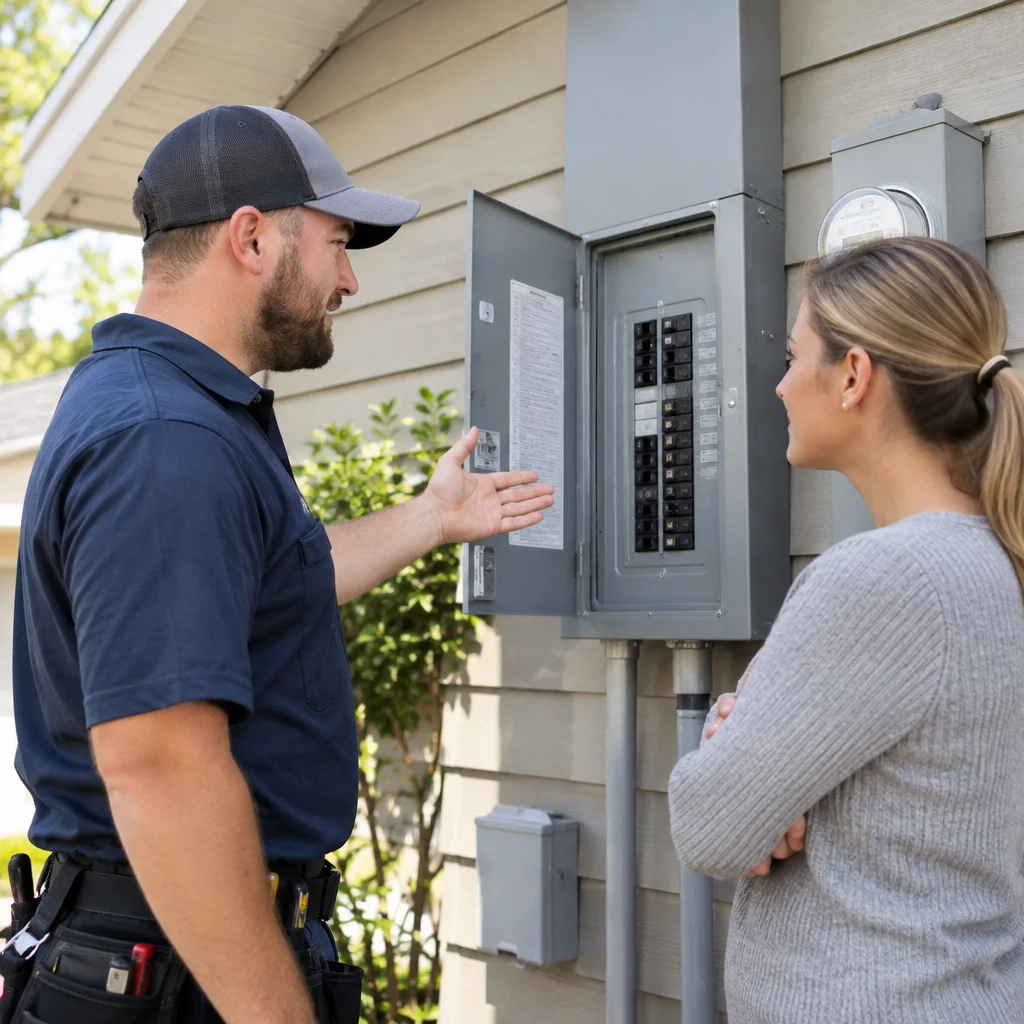
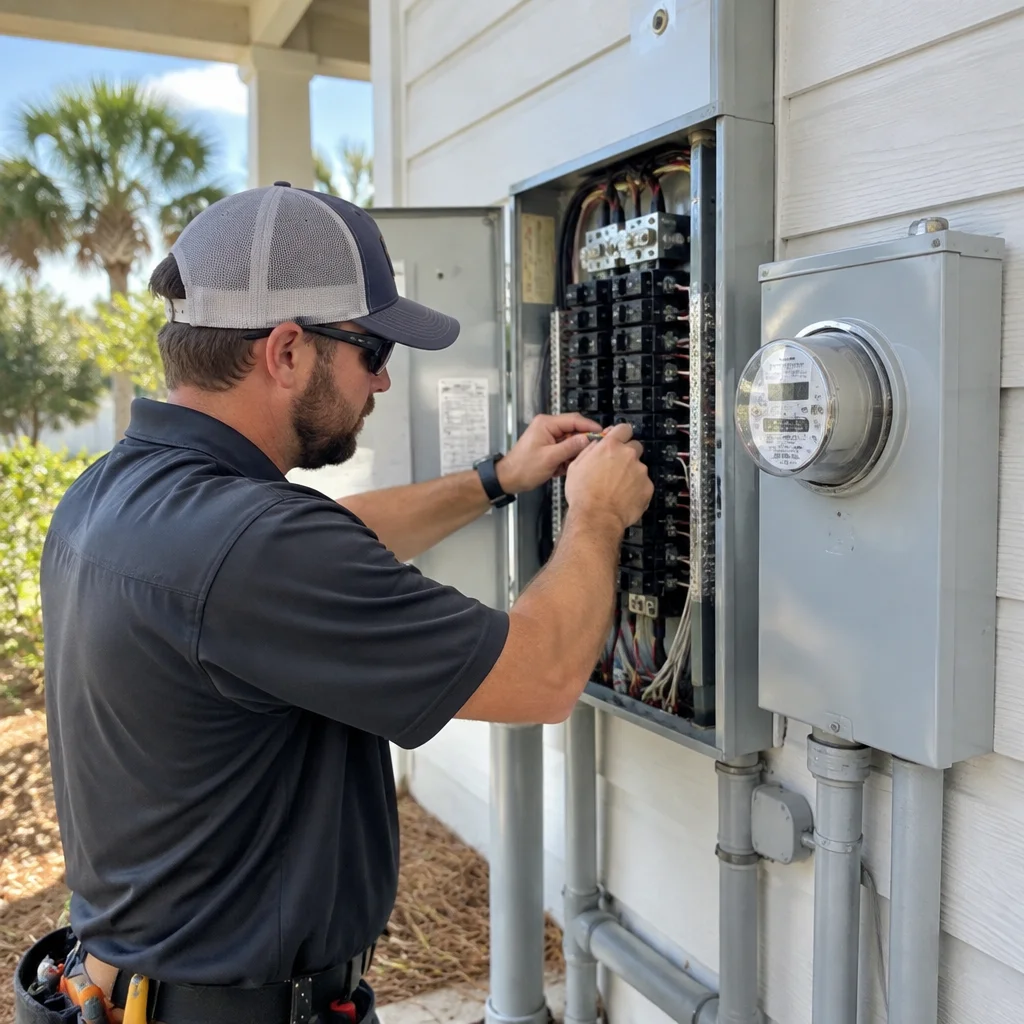
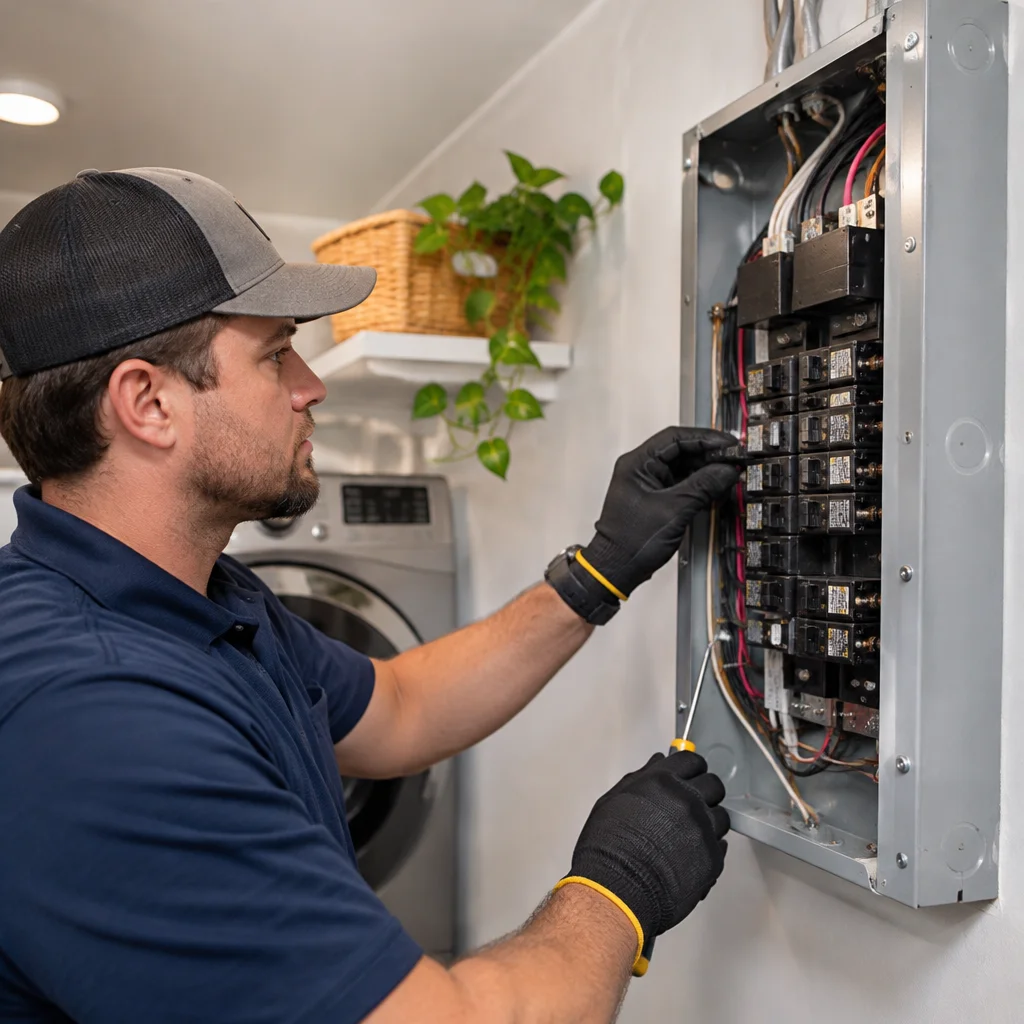
A panel may have room for another breaker while the service lacks capacity for the proposed load. The reverse can also occur: sufficient electrical capacity but no suitable breaker spaces. An electrician evaluates the service, panel rating, existing loads, and calculated demand before recommending a new circuit.
A subpanel can provide additional circuit spaces, but it does not increase the capacity of the home's electrical service. Panel upgrades should follow an assessment, not an assumption that every new appliance requires a larger panel. Our guide to electrical panels and upgrades in Ocean City explains that broader planning process.
Breaker condition and compatibility matter
Breakers must be suitable for the panel and correctly sized for the wiring and equipment. Installing a larger breaker to stop trips can allow conductors to overheat. A breaker that repeatedly trips needs diagnosis, not repeated resetting or an oversized replacement.
What homeowners call breaker repair often means finding the underlying fault and replacing a defective breaker when necessary. Loose connections, damaged bus components, overheating, and incompatible parts may require more extensive electrical replacement work.
Match the Wiring and Connection to the Appliance
Circuit design involves more than choosing an amperage. The electrician considers voltage, conductor material, wiring method, routing, installation conditions, and distance from the panel. Long runs may require attention to voltage drop. Existing cables must be evaluated before reuse, especially during kitchen and laundry remodels.
Grounding and bonding also need verification. A receptacle with a grounding opening does not prove that an effective equipment grounding path exists. Older wiring, altered connections, or inappropriate adapters can create a misleading appearance of compatibility.
Range and dryer connections deserve a closer look
A new electric range or dryer may not match an existing receptacle. Some older installations have three-wire connections, while new branch-circuit installations generally require separate neutral and equipment grounding conductors where both are needed. Whether an existing arrangement can remain depends on its condition, the appliance instructions, and applicable code.
If you are searching for range outlet installation near me, ask for an evaluation of the entire circuit, not just a receptacle swap. The cord, receptacle, circuit rating, and wiring must work together.
Placement affects everyday safety
Appliance outlets should be positioned according to installation instructions, with attention to cord clearance and required access. A plug crushed behind a refrigerator or a cord stretched across a laundry area is not a good installation. Hardwired equipment may also need an appropriate disconnecting means.
During related outlet and switch upgrades, an electrician can identify worn receptacles and loose plug connections. A new faceplate alone does not correct a failing device or damaged wiring.
Protection Is Part of the Circuit Design
GFCI protection reduces shock risk by detecting certain current imbalances. AFCI protection addresses certain arcing conditions associated with fire hazards. Requirements depend on the location, circuit, equipment, and code edition adopted for the project. Dedicated circuits are not automatically exempt from either protection.
A refrigerator or freezer that trips a protective device needs troubleshooting. Possible causes include moisture, damaged cords, appliance leakage, wiring defects, or an unsuitable installation. Removing required GFCI protection is not an acceptable way to keep food cold.
Whole-home surge protection can help reduce damage from transient voltage events, but it does not prevent circuit overloads or guarantee protection from a direct lightning strike. Proper grounding, bonding, and equipment selection remain essential in storm-prone Okaloosa County.
Recognize Trouble Before It Interrupts the Household
A breaker that trips whenever two appliances run together may indicate an overloaded shared circuit. Lights that dim when equipment starts deserve attention if the change is pronounced, persistent, or new. Warm receptacles, buzzing connections, discoloration, or plugs that fit loosely also call for inspection.
These symptoms do not all point to the same solution. A dedicated circuit may solve an overloaded branch circuit, but it will not repair an internal appliance fault or a failing service connection. Homeowners searching for electrical troubleshooting near me should describe which equipment was operating and whether the problem affects one room or several.
Know which situations cannot wait
Smoke, active sparking, a burning odor, or a hot and discolored panel can indicate an emergency. Keep people away and call 911 if there is fire, smoke, or immediate danger. Shut off power only if it can be done safely without approaching damaged or wet equipment.
Do not keep resetting a breaker that trips immediately, remove the panel cover, or touch flood-exposed electrical equipment. After a storm, suspected water damage needs professional assessment before affected equipment is energized.
Plan Appliance Circuits Alongside Other Upgrades
A kitchen renovation is often the right time to review more than the range connection. Lighting installation, under-cabinet lighting, switches, and ceiling fans may reveal older wiring or poorly arranged circuits. Keeping appliance loads appropriately separated helps prevent unrelated lighting interruptions and makes the finished space easier to use.
Garage upgrades deserve similar coordination. EV charger installation, particularly Level 2 charging, can add substantial demand. A freezer circuit and an EV charging circuit should be planned as distinct loads, with a service calculation and any suitable load-management options considered together.
Backup power changes the priorities
Generator installation should start with deciding what must operate during an outage. Refrigeration, selected lighting, and essential equipment may take priority over an electric range or dryer. A dedicated circuit can make a load easier to identify and manage, but it does not automatically connect that appliance to backup power.
Standby generators, portable generator connections, and battery backup systems need properly designed transfer equipment or other approved arrangements. Never backfeed household wiring through an outlet. Generator exhaust must remain outdoors, well away from doors, windows, and vents. Include smoke and carbon monoxide detection in the home's broader safety review.
What a Useful Installation Estimate Should Address
An estimate should identify the appliance requirements, proposed circuit rating, wiring route, connection type, and needed protection. It should also explain whether panel work, permits, inspections, or code corrections are included. Wiring routed through accessible attic space can involve different work than wiring installed through finished walls.
Ask who handles wall access and repairs, whether the panel directory will be updated, and how the completed installation will be tested. Electrical inspections help verify compliance, but they do not replace careful design and workmanship.
When comparing an electrical contractor near me, look beyond the price of adding a breaker. A useful scope addresses the complete circuit and explains any existing condition that must be corrected first. For projects across Okaloosa County, permitting and inspection requirements should be confirmed with the authority having jurisdiction.
Keep the Circuit Reliable After Installation
Keep the panel directory accurate and leave the working space in front of the panel clear. Avoid extension cords and power strips as permanent appliance connections. Check visible cords and plugs for damage without pulling apart equipment or opening electrical enclosures.
Test protective devices according to manufacturer instructions. Note recurring trips, new sounds, or changes after storms, and arrange electrical maintenance rather than waiting for a complete failure. Coastal properties with moisture exposure may warrant closer professional attention based on equipment condition.
Before moving an appliance, adding a second freezer, or replacing equipment with a higher-demand model, revisit the circuit requirements. A Superior Mechanical can help plan appliance circuit installation in Ocean City, FL around your panel, wiring, and household needs. Contact the team with your appliance model and project details to discuss the next step.
Find Dedicated Circuits for Appliances in Ocean City, FL
If you need Dedicated Circuits for Appliances in Ocean City, FL, visit our local service page or contact A Superior Mechanical today.
Map of Ocean City, FL
Frequently Asked Questions
Does every refrigerator need a dedicated circuit?
Not necessarily. The refrigerator's installation instructions, applicable electrical code, and existing circuit arrangement determine the requirements. An individual circuit can reduce interruptions caused by unrelated loads, but it still needs any GFCI or AFCI protection required for the installation.
Will adding an appliance circuit require a panel upgrade?
Not always. An electrician checks available breaker spaces, panel condition, service capacity, and calculated demand. Some homes can accommodate a new circuit without major panel work. Others need a subpanel, panel replacement, service upgrade, or another approved solution. A subpanel adds circuit spaces but does not increase service capacity.
Can a larger breaker stop my appliance circuit from tripping?
Replacing a breaker with a larger one without evaluating the circuit can create a fire hazard. The breaker must protect the installed wiring and meet the equipment requirements. Repeated trips call for diagnosis of possible overloads, appliance faults, damaged wiring, or breaker problems before deciding on a repair.
Related Articles
Photo Gallery