Fort Walton Beach homes feel the effects of water quality fast. You notice it on glass shower doors, in laundry that never feels quite clean, and on fixtures that build up scale no matter how often you wipe them down. Many homeowners assume these problems are “just water,” but small symptoms can actually point to how well your water softening system is working, or whether you need a better approach to whole home water filtration and hard water treatment.
This guide breaks down the most common water quality warning signs connected to water softening systems, plus what they can reveal in kitchens, bathrooms, laundry rooms, and around household appliances. If you are searching for water filtration near me or water softener service near me, you can use these clues to talk with a technician with more confidence.
Why Fort Walton Beach water quality can create “quiet” household symptoms
Hard water is the main driver behind many visible and noticeable water issues in the Fort Walton Beach area. When water contains high levels of minerals like calcium and magnesium, it leaves behind scale as water evaporates. That scale builds up inside plumbing, on showerheads, and on the heating surfaces that help your water feel comfortable.
In coastal Northwest Florida, many homes also face seasonal changes in water demand and source conditions. Even if your water is generally safe to use, mineral content and treatment performance can still vary. That means your water softening system has to keep up. When it does not, you often see small water quality symptoms before a bigger failure shows up.
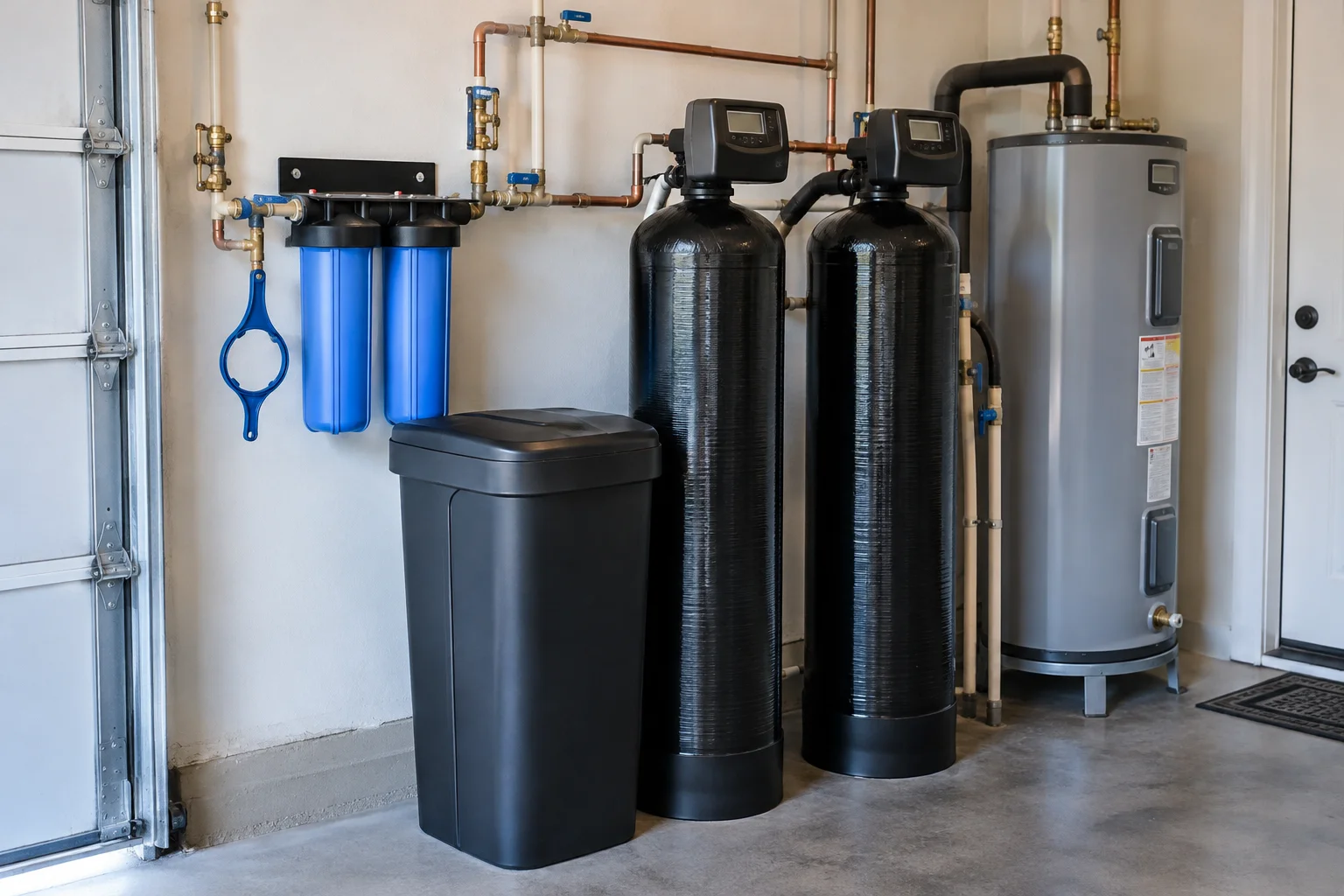
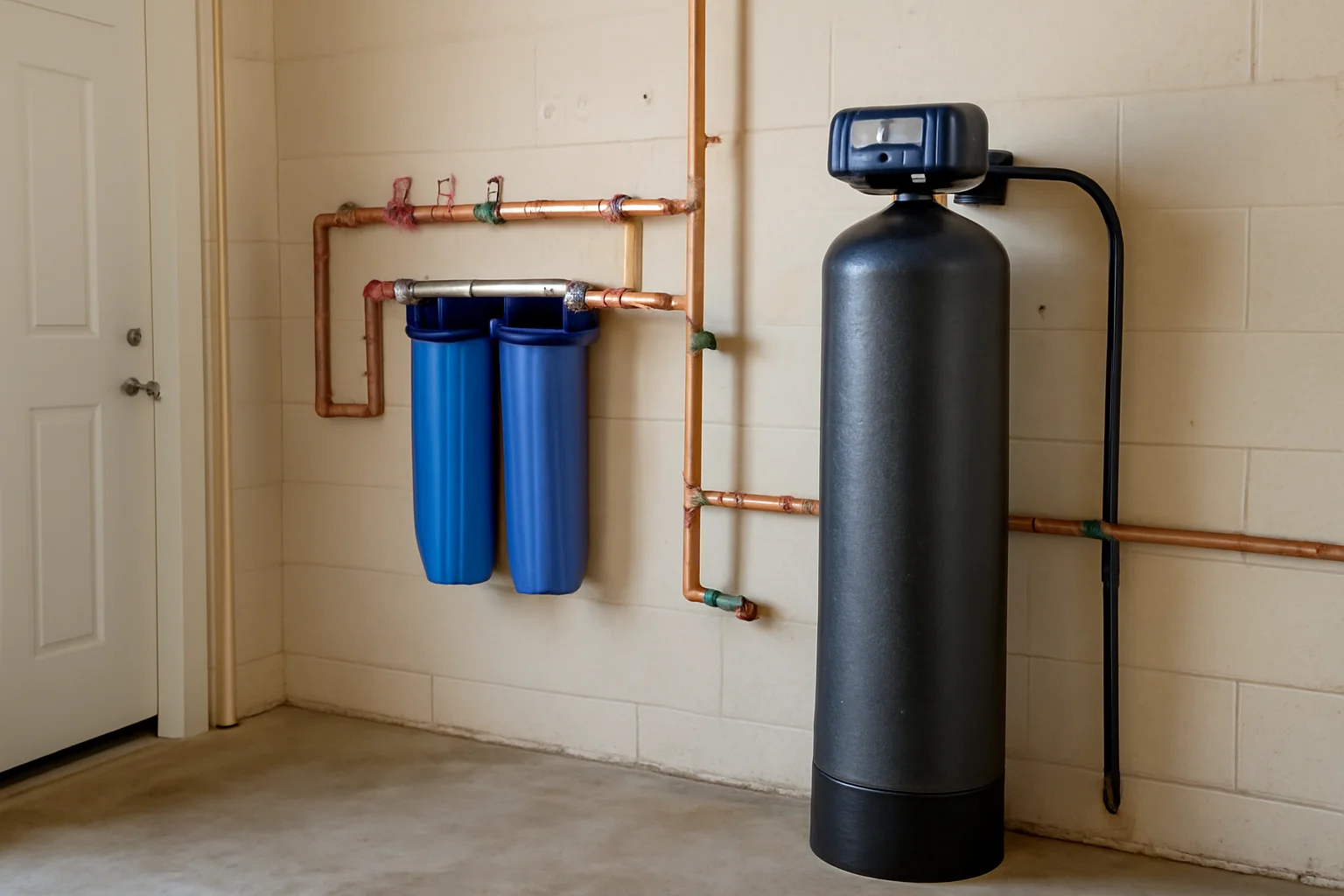
Professional water softener installation in Fort Walton Beach, FL matters because the right system size, correct settings, and consistent maintenance help keep clean water systems operating the way they were designed. Many homeowners also choose AO Smith water filtration or whole home water filtration to address more than one water concern at a time.
Hard water spots on glass, dishes, and fixtures: the most common warning
If you have hard water spots on glass, hard water spots on dishes, or scale on faucets and shower walls, start by looking at your water softening system performance. Scale is not just cosmetic. It is a sign that minerals are still making it through the treatment process.
What it looks like
- Cloudy film on shower doors or bathroom mirrors that returns quickly after cleaning
- White streaks on glassware and drinking glasses
- Rough buildup around faucets, showerheads, and plumbing connections
- Spots that feel gritty when you rub them with a finger
What it can mean
Scale buildup around faucets, showerheads, and plumbing often points to one of these issues: the softener is not regenerating often enough, the settings are off, the unit is undersized for household water use, or maintenance needs to be addressed. Sometimes the brine tank, resin bed, or control settings are the culprit.
When hard water treatment becomes part of protecting fixtures and appliances, you reduce the cycle of scrubbing, re-scrubbing, and replacing components that mineral scale can wear down over time.
Dry skin and dull hair after bathing: a softer-water clue
Hard water can make it harder for soap and shampoo to rinse clean. Minerals interfere with how lather forms and how residue washes away. Even if your water looks clear, your skin and hair can still feel the difference.
Common signs
- Dry skin that feels tight soon after showering
- Dull or flat hair that does not feel as clean
- Soap scum that seems to appear faster than usual in tubs and sinks
- Soap that does not lather or rinse well
Homeowners in Fort Walton Beach often notice these symptoms during humid months when bathing routines increase and laundry and cleaning are more frequent. If you are also seeing scale, these signs together strongly suggest your water softening system is not delivering the level of softening your household needs.
Metallic, chlorinated, or unpleasant taste: when water treatment needs attention
Not every water quality complaint is strictly about hardness. Taste and odor issues can signal problems with filtration stages or insufficient treatment for specific contaminants. Some homeowners describe metallic tasting water, chlorine taste in water, or an unpleasant odor that shows up in drinking and cooking water.
When these taste concerns appear alongside scale or sediment in household water, it can mean your system is not configured to handle all the water issues you are dealing with. This is where AO Smith water filtration, reverse osmosis, or whole home water filtration may be helpful depending on your home and local water conditions.
Cloudy ice cubes and sediment in household water
Cloudy ice cubes are a surprisingly common clue. Clear water can turn cloudy once it freezes, especially if there is air, fine sediment, or dissolved minerals affecting clarity. If you also notice sediment in household water, discoloration, or particles settling in a glass, treat it as a sign to investigate filtration and softening performance.
What homeowners usually report
- Ice that looks white or milky compared to what you used to see
- Water that looks slightly cloudy from the tap
- Small specks that settle at the bottom of drinking glasses
- Discoloration that appears after the water sits
Sometimes the cause is sediment in household water coming from plumbing lines. But if you are also dealing with hardness symptoms, it is worth checking the full clean water systems setup. A technician can evaluate whether you need water softener service, additional filtration, or an RO system for drinking water quality.
Poor tasting coffee and cooking water: the kitchen test
Few things show water quality problems like the kitchen. If your coffee tastes “off,” your tea does not taste right, or your cooking water changes how rice, pasta, or vegetables turn out, you may be dealing with mineral balance, chlorine taste in water, or other dissolved contaminants.
What it can reveal
- Poor tasting coffee and cooking water that never tastes as good as bottled or filtered water
- Mineral scale buildup in kettles and coffee makers
- Residue that appears after heating water repeatedly
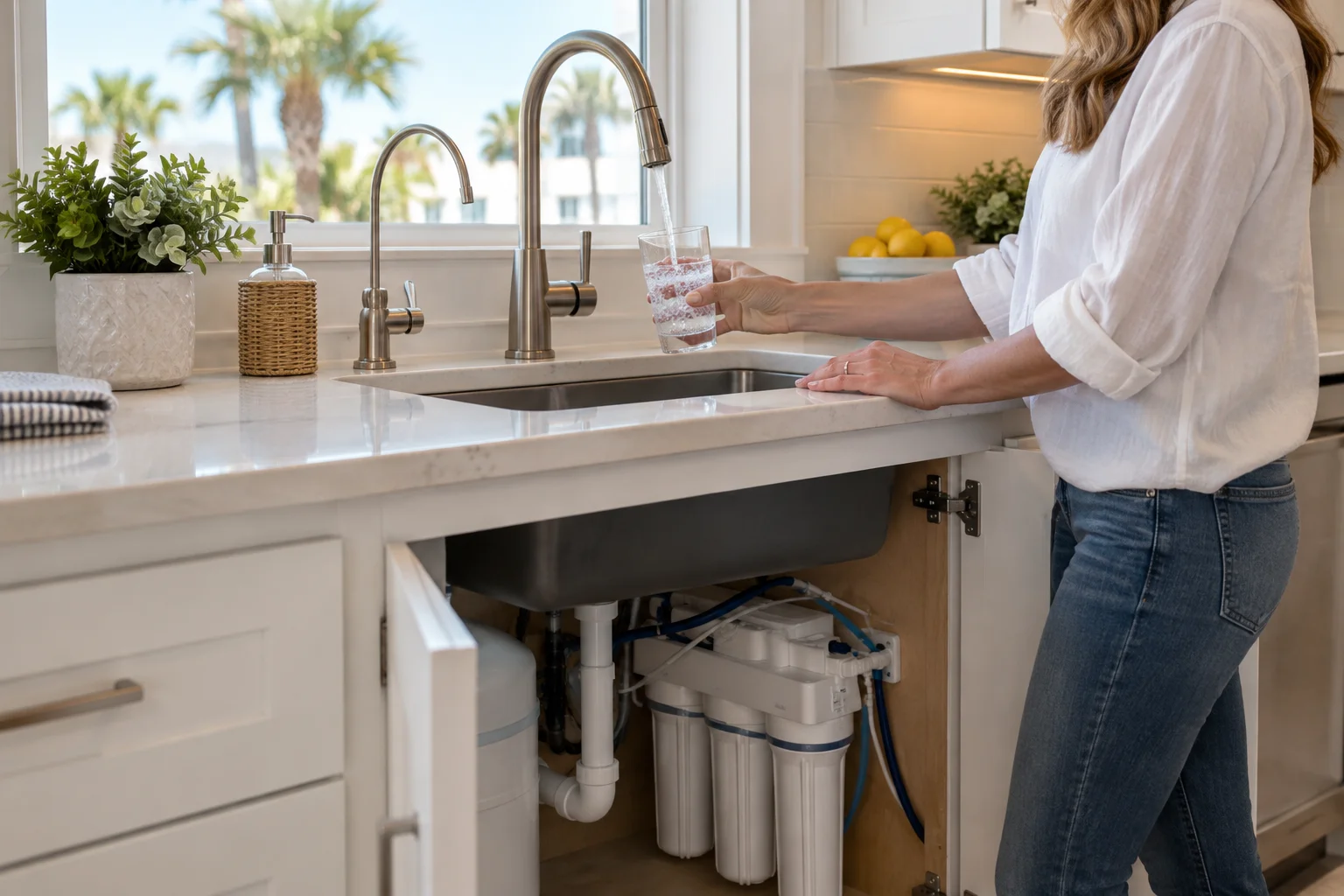
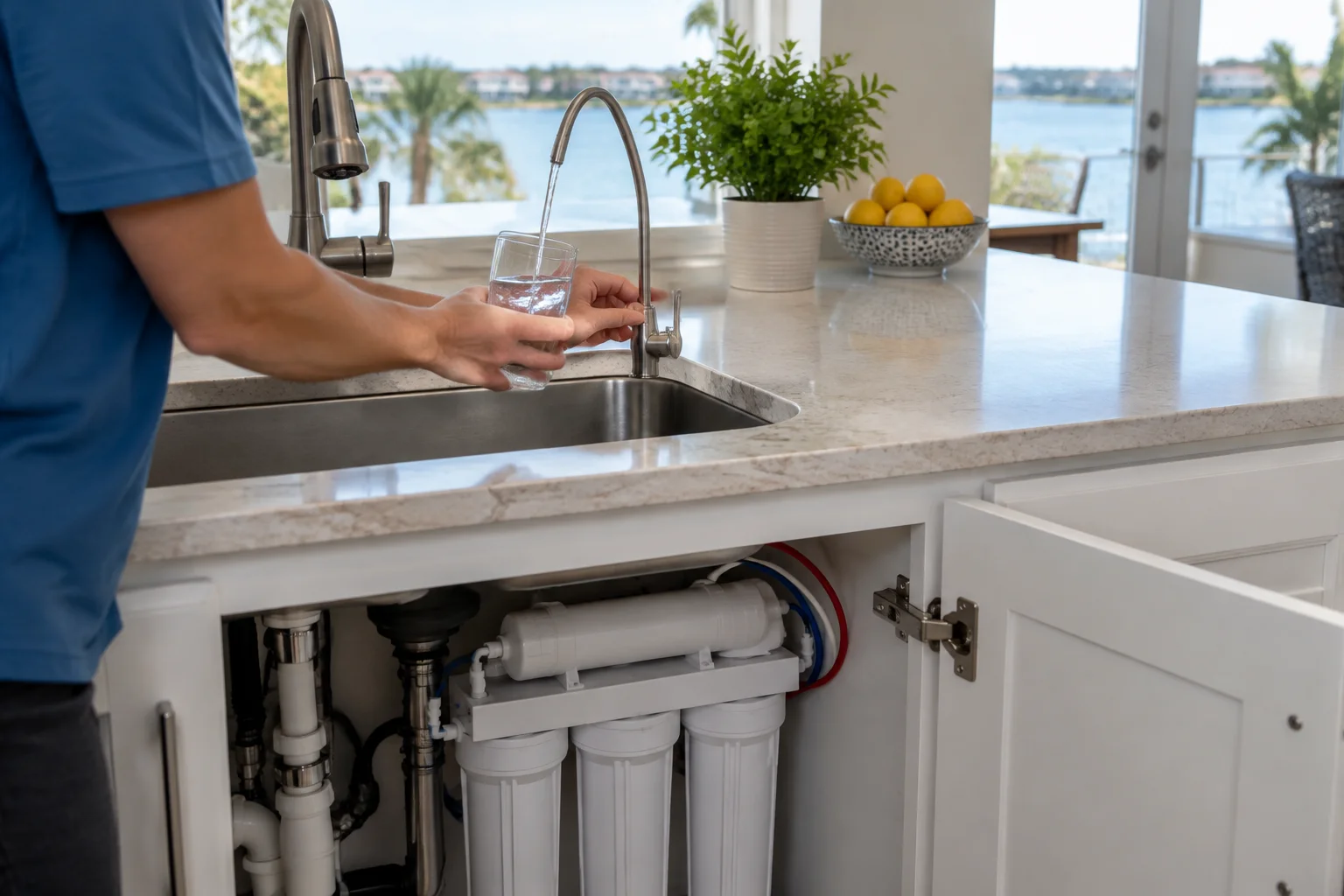
Many Fort Walton Beach households rely on softening for better overall water feel. But for drinking and cooking, some families also want reverse osmosis or targeted filtration. Reverse osmosis systems can be especially useful when you want a cleaner baseline for drinking water quality, while a water softening system protects the rest of the plumbing and appliances from scale.
Appliances wearing out faster: scale damage adds up
Hard water is not just a comfort issue. It can shorten the life of appliances that heat water, including water heaters, dishwashers, and washing machines. When minerals accumulate on heating elements, appliances have to work harder, and efficiency drops.
Signs you might see
- Water heater recovery feels slower than it used to
- More frequent repairs or shorter service intervals for household appliances
- Dishwasher performance that declines, even with the right detergent
- Washing machine cycles that do not leave clothes feeling as fresh
When hard water treatment becomes part of protecting fixtures and appliances, you reduce scale buildup around faucets and showerheads and also help appliances last longer. If you are considering water filtration near me options, ask how the system will work for both whole home water filtration and the specific appliance risks in your household.
Soap that does not lather or rinse well: the “water feel” test
Try this simple household check. If soap does not lather or rinse well, it is often because minerals are binding with the soap. That can leave a film on skin, on bathroom surfaces, and on laundry.
How it shows up
- Detergent builds up instead of rinsing clean in laundry
- Bathtub and shower surfaces feel slick or filmy after cleaning
- Clothes feel coated, stiff, or not fully clean after washing
In Fort Walton Beach, where many families spend more time at the beach and in water sports during the warmer months, bathing and laundry routines can spike. That makes water quality problems more noticeable because residues and mineral films accumulate faster.
What causes these symptoms in water softening systems?
When homeowners see the warning signs above, the next question is usually why. Water softeners do not fail overnight. Problems often start as a gradual loss of performance.
Common causes
- Incorrect hardness settings on the control valve
- Regeneration schedule that does not match your household water use
- Resin bed exhaustion from years of service without proper maintenance
- Brine tank issues, including salt bridging or low salt levels
- Water usage changes, like more laundry, more showers, or a growing household
- Clogging or bypassing that reduces the amount of treated water reaching the home
Sometimes the softener is working, but you still have other water quality concerns. That is where whole home water filtration and AO Smith water filtration can play a role. For example, sediment and odor issues may require additional filtration beyond softening.
How to respond at home: quick checks you can do today
You do not need to guess blindly. A few practical observations can help you decide whether you should schedule water softener service or focus on drinking water filtration.
Try these homeowner checks
- Inspect faucets and showerheads for scale buildup around faucets and showerheads. Look for rough, chalky deposits.
- Check glassware and dishes for hard water spots. Compare new spots to areas that you clean frequently.
- Look for cloudy ice cubes or any discoloration in a clear glass after the water sits for a few minutes.
- Pay attention to soap performance. If soap does not lather or rinse well, the issue is often hardness related.
- Test coffee and cooking water taste. If it is consistently off, you may need additional filtration for drinking water.
If you want clean water systems near me, these observations give a technician a clearer picture of what to measure, including hardness levels, flow rate, and filtration performance.
Choosing the right solution: softening, filtration, and reverse osmosis together
Many Fort Walton Beach homeowners assume one system can solve everything. In reality, different water issues need different treatment steps. A typical approach is:
- Water softening to reduce mineral hardness, protect plumbing, and prevent scale buildup around faucets, showerheads, and appliances.
- Whole home water filtration to help with sediment and improve overall water clarity and feel.
- Reverse osmosis for drinking water and cooking water when taste, odor, or dissolved contaminants are a concern.
- AO Smith water filtration and related filtration options for targeted improvement based on your needs and test results.
When you combine these correctly, everyday life gets noticeably easier. Kitchen scenes feel better because coffee tastes cleaner and cooking water behaves more consistently. Laundry gets fresher because detergent rinses more effectively. Bath time feels more comfortable because skin and hair do not end up coated with mineral residue.
Why local service matters in Fort Walton Beach and Okaloosa County
Water treatment is not one-size-fits-all. Fort Walton Beach homes can differ in plumbing materials, household water use, and the way water interacts with local conditions. Okaloosa County service also matters because technicians can factor in typical water challenges and help you choose a system that matches your home’s needs.
If you are comparing options for water filtration near me, look for a company that can assess your whole setup, not just install equipment. That includes verifying sizing, confirming settings, checking maintenance history, and recommending the right balance of water softening and filtration.
A Superior Mechanical provides professional water softener installation in Fort Walton Beach, FL with Evolve and A. O. Smith systems for homes and light commercial properties across Okaloosa County. You can review our specific service details for water softening systems in Fort Walton Beach and explore more about water filtration and reverse osmosis options.
If you want to see how we serve the broader region, visit the Fort Walton Beach service area page and Okaloosa County coverage.
Preventing problems: maintenance habits that keep softening consistent
Even the best water softening system needs routine care. Simple maintenance helps prevent the small symptoms from turning into bigger issues like heavy scale buildup or reduced appliance efficiency.
Maintenance habits homeowners can follow
- Keep salt levels adequate and use the recommended type of salt for your system.
- Watch for changes in water feel, soap performance, and the speed of scale return on fixtures.
- Stay alert for sediment in household water or changes in taste and odor.
- Schedule periodic checks so the system settings match current water use.
Also, remember that water treatment and plumbing condition can influence each other. If you suspect water line issues, sediment may be coming from plumbing rather than the softener alone. For additional context, homeowners often find these guides helpful: A Fort Walton Beach Homeowner’s Guide to Water Line Replacement Before Small Problems Spread and Planning Sewer Repair Around Fort Walton Beach Homes and Hard Water.
If you are also noticing general plumbing concerns that affect water flow and water quality, you can review Plumbing warning signs Fort Walton Beach homeowners should not ignore.
When to call a water treatment professional instead of troubleshooting alone
Some symptoms are easy to spot, but diagnosing the root cause requires measuring water hardness, checking system settings, and inspecting filtration components. Call a professional when you notice patterns rather than one-off issues.
Call for service if you see:
- Scale buildup around faucets, showerheads, and plumbing that returns quickly after cleaning
- Dry skin or dull hair after bathing that persists
- Cloudy ice cubes, discoloration, or sediment in household water
- Metallic tasting water, chlorine taste in water, or unpleasant odors that show up in drinking water
- Appliances wearing out faster than expected
- Soap that does not lather or rinse well across multiple rooms
If you are searching for water softener service near me, these are strong indicators that the system needs evaluation. A technician can confirm whether you need water softener service, additional filtration, or a reverse osmosis setup for better drinking water and cooking water.
For homeowners who want a broader look at how water systems and home maintenance connect, you may also like A Smarter Way to Handle Plumbing Services in Fort Walton Beach Homes.
How better water changes daily routines in Fort Walton Beach
It is easy to underestimate how much water quality affects the rhythm of home life. When your water softening system works well and your filtration matches your needs, you notice it in small, repeatable moments.
In the kitchen
Drinking water tastes better, cooking water performs more predictably, and poor tasting coffee water becomes a thing of the past. Ice cubes clear up, and kettles and coffee makers build less scale over time.
In the bathroom
Soap rinses cleaner, shower doors stay clearer longer, and your skin and hair feel better after bathing. You spend less time scrubbing hard water spots on glass and fixtures.
In laundry
Detergent lathers and rinses more effectively, clothes feel cleaner, and the residue that can come with hard water is reduced.
On fixtures and appliances
Scale buildup around faucets and showerheads slows down, and appliances like water heaters and dishwashers often run more efficiently for longer.
That is why homeowners searching for water filtration near me and water treatment near me often start with symptoms like these. They are not just annoyances. They are clues your clean water systems need adjustment.
Find Water Softening Systems in Fort Walton Beach, FL
If you need Water Softening Systems in Fort Walton Beach, FL, visit our local service page or contact A Superior Mechanical today.
For a broader look at whole-home water filtration, reverse osmosis, and water softener options, visit our water filtration, RO, and water softener page.
Map of Fort Walton Beach, FL
Frequently Asked Questions
Why do I still see hard water spots even though I have a water softener?
Hard water spots on glass, dishes, and fixtures usually mean the softener is not performing at the level your home needs. Common causes include incorrect hardness settings, an undersized system, regeneration problems, or maintenance issues. A technician can measure performance and confirm whether you need water softener service or additional filtration.
Can a water softening system affect taste and odor like chlorine taste in water or metallic tasting water?
Water softening mainly targets hardness minerals that cause scale. Taste and odor issues often require filtration stages beyond softening, such as AO Smith water filtration or reverse osmosis for drinking water and cooking water. If you notice chlorine taste in water, unpleasant odor, or sediment in household water, it is worth evaluating the full treatment setup.
What does cloudy ice cubes usually indicate?
Cloudy ice cubes can be caused by dissolved minerals, fine sediment, or air and water clarity changes. If you also notice discoloration, sediment in household water, or fast-return scale, the issue may involve filtration performance, softening effectiveness, or plumbing-related sediment. A water quality evaluation helps pinpoint the source.
How do reverse osmosis and whole home water filtration fit with an AO Smith water softener?
Many homes use multiple steps. Water softening reduces scale-causing hardness throughout the home. Whole home water filtration can help with sediment and overall water clarity. Reverse osmosis is often used for drinking water and cooking water when you want improved taste and cleaner water for daily use. The best setup depends on your symptoms and test results.
Related Articles
Photo Gallery