In Santa Rosa Beach, water softening is often treated like a one-time fix, but it works best as part of ongoing home maintenance. Between the Gulf Coast humidity, seasonal rental turnover, and the mix of newer homes and long-standing properties across Walton County, hard water can show up in subtle ways that are easy to miss until they start affecting plumbing, fixtures, and appliances. That is why homeowners who invest in Water Softening Services in Santa Rosa Beach, FL usually get the best results when they think beyond installation and look at the full picture of upkeep.
For homeowners in Santa Rosa Beach, hard water is not just a comfort issue. It can affect how well showers rinse, how long faucets stay clean, and how efficiently water heaters and dishwashers run. In a coastal area where moisture, salt air, and heavy summer use already put stress on home systems, a softener can be one of the most practical plumbing upgrades you make. The key is knowing what people often overlook after the system is installed.
Why water softening matters more in coastal Walton County homes
Water softening helps reduce the mineral buildup caused by hard water, especially calcium and magnesium. Those minerals can leave scale inside pipes, form spots on glassware, and create soap scum on tubs, sinks, and shower doors. In Santa Rosa Beach, where many homes are built for easy coastal living and may see frequent guest use, these problems can become more noticeable because plumbing fixtures are used heavily and cleaned often.
Homes across Walton County also deal with a climate that can make maintenance feel like an afterthought. Humid weather, vacation schedules, and busy family routines can cause homeowners to miss early warning signs. A softener can help protect the home, but only if it is sized correctly, installed properly, and checked on a regular schedule.
What homeowners often overlook after installation
Salt levels and resin maintenance
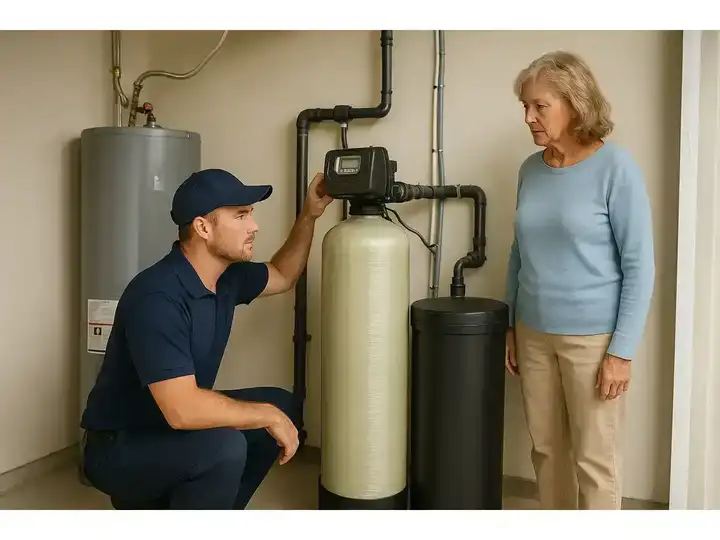
One of the most common oversights is assuming a water softener runs itself forever. Salt levels in the brine tank need to be checked, and the resin bed inside the system eventually needs attention too. If salt bridges form or the tank runs low, the unit may stop softening water effectively even though it still appears to be working. That can lead to hard water symptoms returning slowly, which is easy to miss until buildup becomes obvious again.
Water pressure changes
Another issue that gets overlooked is pressure. If a softener is not sized for the home, or if scale has already built up in the plumbing, homeowners may notice weaker shower flow or slower fixtures. In some Santa Rosa Beach homes, especially those with multiple bathrooms or high demand during the busy season, pressure complaints are sometimes blamed on the plumbing itself when the real issue is a softener that needs service or adjustment.
Appliance performance
Water softening is often sold as a plumbing benefit, but it also protects appliances. Water heaters, dishwashers, washing machines, and coffee makers all last longer when mineral buildup is reduced. That said, appliance protection is easy to ignore because the damage happens slowly. A water heater that heats less efficiently or a dishwasher that leaves cloudy film may not seem connected to hard water at first. Homeowners who want to protect their investment should think of softening as part of a larger maintenance plan, not just a comfort upgrade.
Fixture wear and cleaning habits
Soft water changes how soap and detergent behave. Some homeowners notice they need less soap, while others keep using the same amount and end up with extra residue. That residue can make fixtures look dull and can create the impression that the softener is not working. In reality, the home may just need a small adjustment in cleaning routines. This is especially useful in coastal homes where white finishes, glass showers, and polished fixtures are common design choices.
Signs the system may need attention
Hard water usually leaves clues before it creates major problems. If you live in Santa Rosa Beach, watch for white spots on glassware, soap that does not lather well, film on shower doors, or crusty buildup around faucets and drains. You may also notice laundry feeling stiff, water heaters making more noise, or fixtures looking worn faster than expected.
Sometimes the signs are more subtle. If your softener is using more salt than usual, regenerating too often, or not seeming to make a difference in water feel, it may need service. Homeowners who have also been dealing with recurring plumbing issues may want to read about Keeping Santa Rosa Beach Plumbing Reliable: How to Reduce Pipe Replacement Problems Before They Start and Keeping Plumbing Fixtures Reliable in Santa Rosa Beach Homes for a broader look at how mineral buildup affects the entire system.
How local conditions change maintenance needs
Santa Rosa Beach homes face a unique mix of conditions. Coastal humidity can make mineral residue more noticeable on fixtures. Vacation properties may go through periods of light use followed by heavy occupancy, which can throw off maintenance schedules. Homes near the beach may also have more outdoor showers, hose bibs, and rinse stations, all of which can show hard water buildup faster than indoor fixtures.
That is why local service matters. A plumber who works in Santa Rosa Beach understands the types of homes in the area, from primary residences to rental properties and second homes. They also know how Walton County plumbing systems tend to age and what kinds of water treatment setups make sense for the region. If you want service that fits the home instead of a one size fits all approach, it helps to work with a company that knows the area well.
Choosing the right softening setup for the home
Not every home needs the same system. The right water softener depends on water quality, household size, plumbing layout, and how much water the home uses. A smaller home with one or two occupants may need a very different setup than a large coastal property with multiple bathrooms, laundry loads, and guests coming and going throughout the year.
Professional installation matters because the system has to be matched to the home and tied into the plumbing correctly. Poor placement, incorrect sizing, or skipped bypass connections can create headaches later. If the goal is long term protection, it is worth having the system evaluated as part of a broader plumbing plan. For homeowners also thinking about water quality improvements, Clean Water Systems may be a helpful companion service to consider.
Maintenance habits that make a real difference
Simple routine checks go a long way. Homeowners should keep an eye on salt levels, watch for bridging in the brine tank, and look for any changes in water feel or fixture buildup. It is also smart to schedule periodic inspections so a technician can confirm the system is regenerating correctly and that no parts are wearing out.
In homes that sit vacant part of the year, maintenance becomes even more important. A softener can sit idle for weeks or months and still need attention before peak season starts. That is especially true in rental homes or seasonal properties where guests expect reliable water performance as soon as they arrive. If your home has had plumbing issues tied to age or wear, articles like Smart Planning for Plumbing Replacement in Santa Rosa Beach Homes can help you think through the bigger system picture.
When to bring in a professional
Some homeowners can handle basic salt refills, but service is a better choice when the softener is not keeping up, when water pressure changes, or when mineral deposits keep returning. A professional can test the water, inspect the system, and determine whether the issue is with the softener, the plumbing, or both. That matters in Santa Rosa Beach, where homes may have a mix of older lines, newer fixtures, and high demand during the busy season.
Professional help is also useful if you are planning other home upgrades. If your plumbing has been giving you trouble after hours or during peak use, it may be a good time to review emergency readiness with Keeping a Santa Rosa Beach Home Ready for Plumbing Emergencies After Hours. A well maintained water softener can reduce stress on the system, but it works best as part of a larger maintenance strategy.
Why smarter maintenance saves money over time
Hard water damage rarely shows up as one big repair. It usually starts as small annoyances, then slowly adds cost through extra cleaning, shorter appliance life, and plumbing wear. In a place like Santa Rosa Beach, where homeowners already balance coastal maintenance, HVAC care, and seasonal upkeep, it makes sense to prevent avoidable plumbing problems before they spread.
Water softening is one of those upgrades that pays off quietly. The savings come from fewer mineral issues, better appliance performance, and less stress on pipes and fixtures. For homes that depend on reliable water every day, that kind of protection is hard to ignore. A properly maintained system installed by a local team can help keep the home comfortable, efficient, and easier to care for throughout the year.
If you are comparing service options in Walton County, A Superior Mechanical provides whole home hard water treatment and water softener installation in Santa Rosa Beach, FL. Local experience, regular maintenance, and the right system design make a noticeable difference in how well the home holds up over time.
Find Water Softening Services in Santa Rosa Beach, FL
If you need Water Softening Services in Santa Rosa Beach, FL, visit our local service page or contact A Superior Mechanical today.
Map of Santa Rosa Beach, FL
Frequently Asked Questions
How do I know if my Santa Rosa Beach home needs water softening?
Common clues include white spots on dishes, soap scum on shower doors, stiff laundry, and buildup around faucets. If those issues keep coming back, a water test and system evaluation can help determine whether softening would help.
How often should a water softener be serviced in Walton County homes?
It depends on water use, household size, and the type of system installed. Many homes benefit from an annual inspection, with salt checks and basic maintenance done more often.
Can a water softener help protect my water heater and appliances?
Yes. Reducing mineral buildup can help water heaters, dishwashers, washing machines, and other fixtures run more efficiently and last longer.
What should I do if my soft water starts feeling hard again?
Check the salt level first, then look for salt bridging or any changes in system performance. If the problem continues, a professional can inspect the softener and plumbing to find the cause.
Related Articles
- Keeping a Santa Rosa Beach Home Ready for Plumbing Emergencies After Hours
- Keeping Santa Rosa Beach Plumbing Reliable: How to Reduce Pipe Replacement Problems Before They Start
- Smart Planning for Plumbing Replacement in Santa Rosa Beach Homes
- Keeping Plumbing Fixtures Reliable in Santa Rosa Beach Homes
Photo Gallery