A heat pump in DeFuniak Springs has to do more than switch between cooling and heating. It must remove moisture during long, humid summers, maintain airflow through the home, handle sudden temperature changes, and recover from the effects of storms and seasonal wear. Good planning connects all of those needs instead of treating each service call as an isolated problem.
A Superior Mechanical provides heat pump services in DeFuniak Springs for installation, replacement, repair, and maintenance. The goal is reliable comfort that fits the home, the duct system, and the realities of North Florida weather.
Why Heat Pump Planning Matters in DeFuniak Springs
DeFuniak Springs experiences hot summers, high humidity, heavy rain, storms, and cool winter nights. Although the city is inland, weather moving through Walton County can still carry humid coastal air and, at times, salt laden moisture. Outdoor units also face pollen, grass clippings, leaves, mud, and storm debris that can restrict the coil or encourage corrosion.
Seasonal demand is demanding in a different way. A heat pump may run for long stretches during summer, then switch into heating mode during a winter cool snap. Equipment that seemed fine in mild weather can reveal weak capacitors, airflow problems, refrigerant issues, or defrost faults once the system is under a heavier load.
Local housing also varies. Older homes may have undersized returns, aging ductwork, limited insulation, or additions that were connected to an existing system without a new load calculation. Newer homes can be tighter and more efficient, but they may hold indoor moisture if the equipment is oversized or ventilation is not balanced. Remodels, enclosed porches, bonus rooms, and garage conversions can all change what the heat pump needs to handle.
Comfort Depends on More Than the Thermostat Setting
A thermostat can report the correct temperature while rooms still feel clammy, stuffy, or uneven. Four parts of the HVAC system usually determine whether the home actually feels comfortable: capacity, airflow, humidity removal, and control.
Correct heating and cooling capacity
A heat pump that is too small may run constantly during peak weather and struggle to reach the thermostat setting. A unit that is too large can cool the home quickly but shut off before the evaporator coil has removed enough moisture. That short cycling can leave a house cool but damp, which may contribute to odors, condensation, and indoor air quality concerns.
Equipment selection should be based on a load calculation that considers square footage, windows, insulation, ceiling height, orientation, air leakage, and duct conditions. Replacing an old unit with the same nominal size is not always the right answer, especially after a remodel or efficiency upgrade.
Balanced airflow through ducts and vents
The air handler can only deliver comfort when air moves freely through the supply and return sides of the system. Dirty filters, blocked vents, crushed flex duct, disconnected ductwork, undersized returns, and dirty evaporator coils can reduce airflow. Typical results include hot or cold rooms, weak air at registers, high energy use, frozen coils, and excessive system noise.
A professional duct inspection can identify leakage, poor connections, damaged insulation, and layout problems. Duct sealing may help keep conditioned air out of attics and crawl spaces, while properly sized return paths reduce pressure imbalances between rooms.
Humidity removal that matches Florida conditions
During cooling mode, warm indoor air passes across the cold evaporator coil. Moisture condenses on the coil, enters the drain pan, and leaves through the condensate drain line. A dirty coil, clogged drain, low airflow, improper refrigerant charge, or short run cycle can interfere with that process.
Indoor humidity that stays high can make normal temperatures feel uncomfortable. It can also support musty odors and moisture around vents or windows. Solutions may include correcting the heat pump problem, adjusting airflow, improving thermostat settings, sealing ducts, or installing a whole home dehumidifier. The right choice depends on moisture measurements and how the house is constructed.
Controls that support steady operation
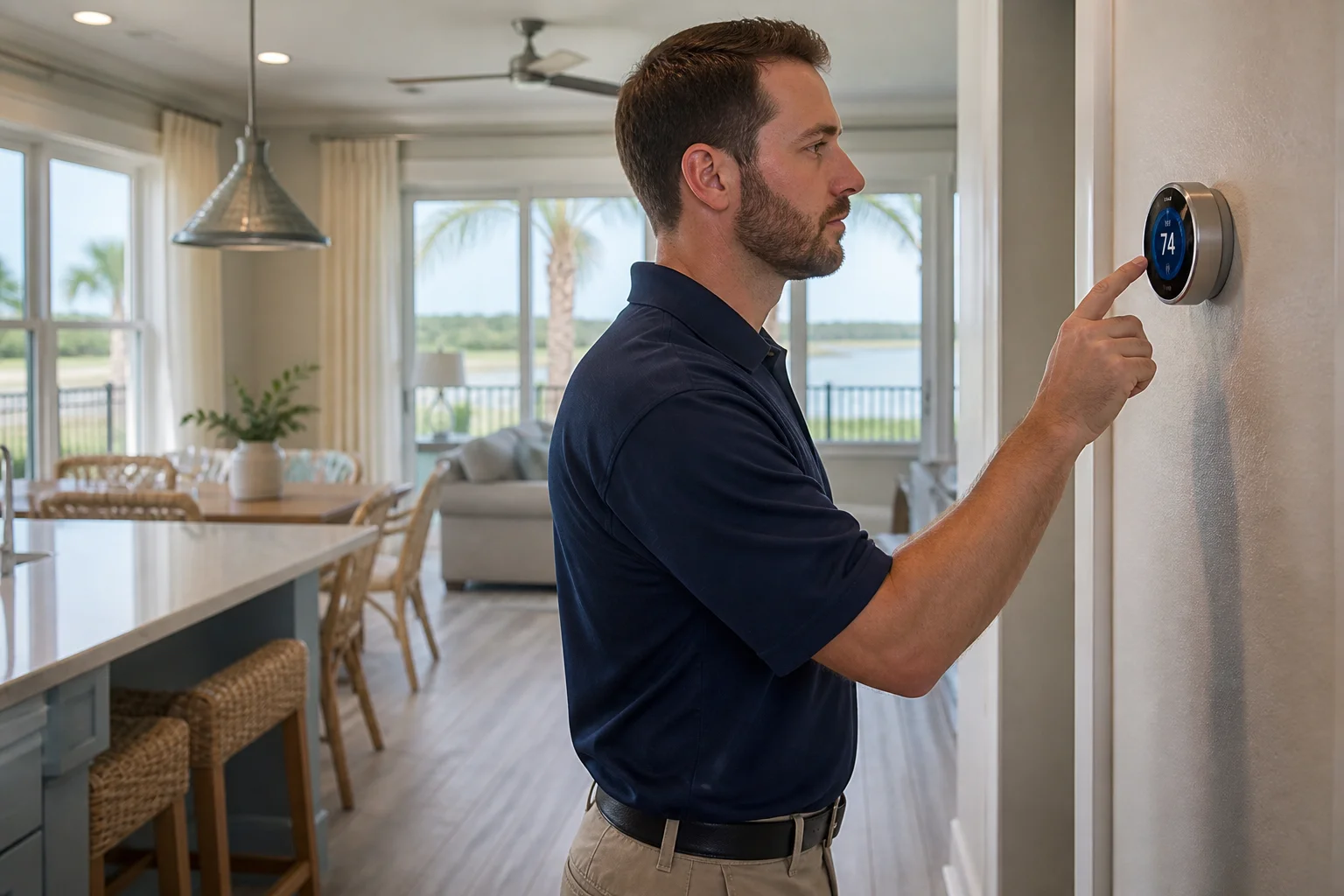
A thermostat should match the heat pump and its available stages. Incorrect wiring or setup can cause frequent auxiliary heat use, poor staging, or unnecessary cycling. Homeowners searching for smart thermostat installation near me should ask whether the thermostat supports their specific heat pump, electric heat strips, variable speed air handler, or dual fuel setup.
Smart scheduling can improve convenience, but aggressive temperature setbacks are not always efficient for heat pumps. A large recovery may activate electric auxiliary heat, which can use more energy than gradual heat pump operation.
Problems That Deserve a Closer Look
Heat pump trouble is not always a complete loss of heating or cooling. Small changes often provide useful warnings. Watch for longer run times, short cycling, weak airflow, rising utility bills, new buzzing or grinding sounds, ice on the outdoor unit, water near the air handler, or rooms that no longer stay even.
In summer, warm air from vents may point to a failed capacitor, outdoor fan motor problem, thermostat fault, dirty condenser coil, or refrigerant leak. Ice on the indoor coil can result from restricted airflow or low refrigerant. A frozen coil should be allowed to thaw before testing, but thawing does not correct the cause. Homeowners searching for frozen AC coil repair near me need diagnosis rather than another refrigerant refill without leak testing.
During heating mode, some frost on the outdoor coil can be normal. The system should periodically enter defrost mode to clear it. A coil encased in heavy ice may indicate a sensor, control board, fan, airflow, or refrigerant problem. Steam rising briefly from the outdoor unit during defrost is also normal and should not be confused with smoke.
Water around the air handler is another concern. A blocked drain line, cracked drain pan, frozen coil, or failed condensate pump can cause ceiling, wall, or flooring damage. If water is approaching electrical controls, shut the system off and arrange service promptly.
How Professional Heat Pump Service Finds the Root Cause
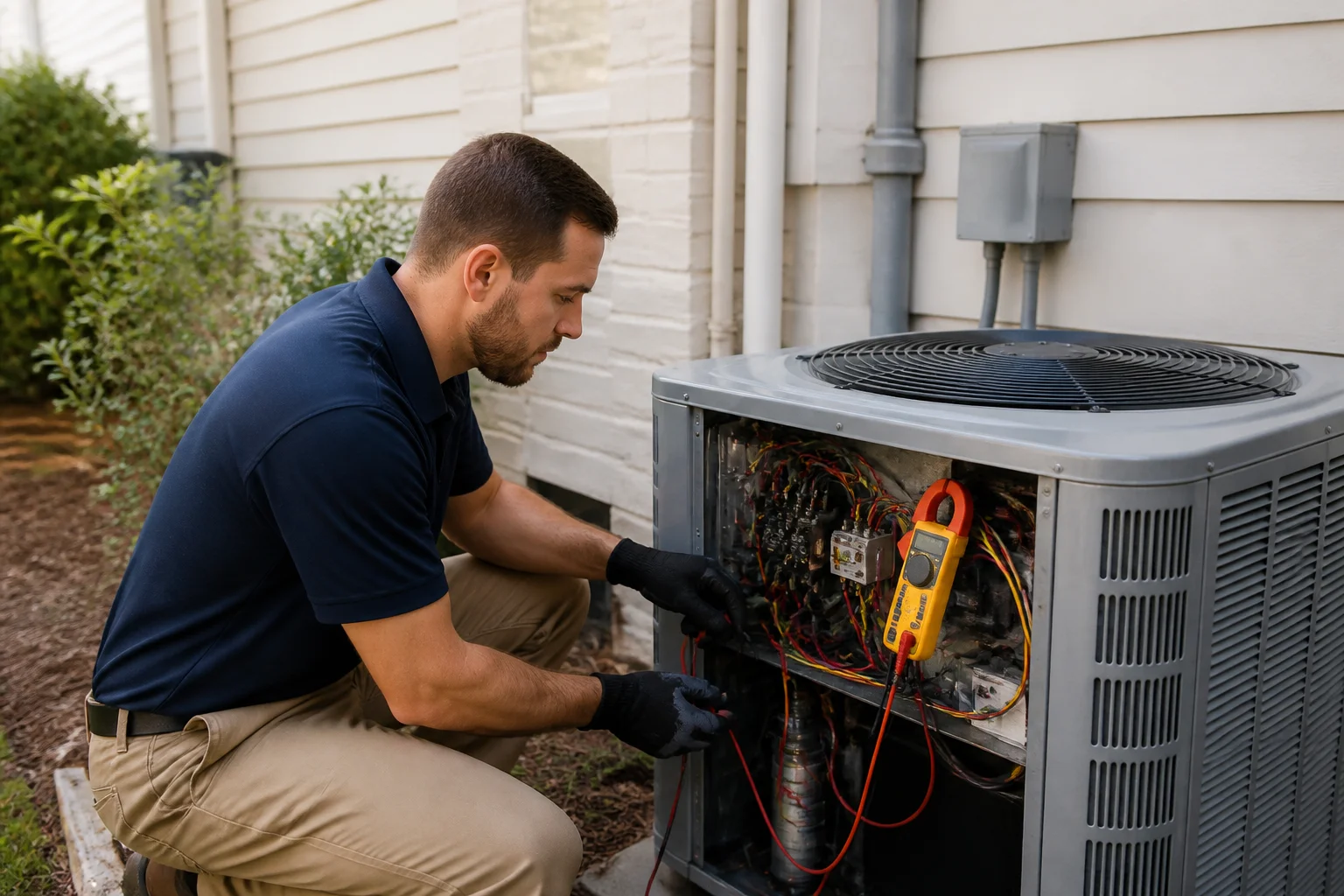
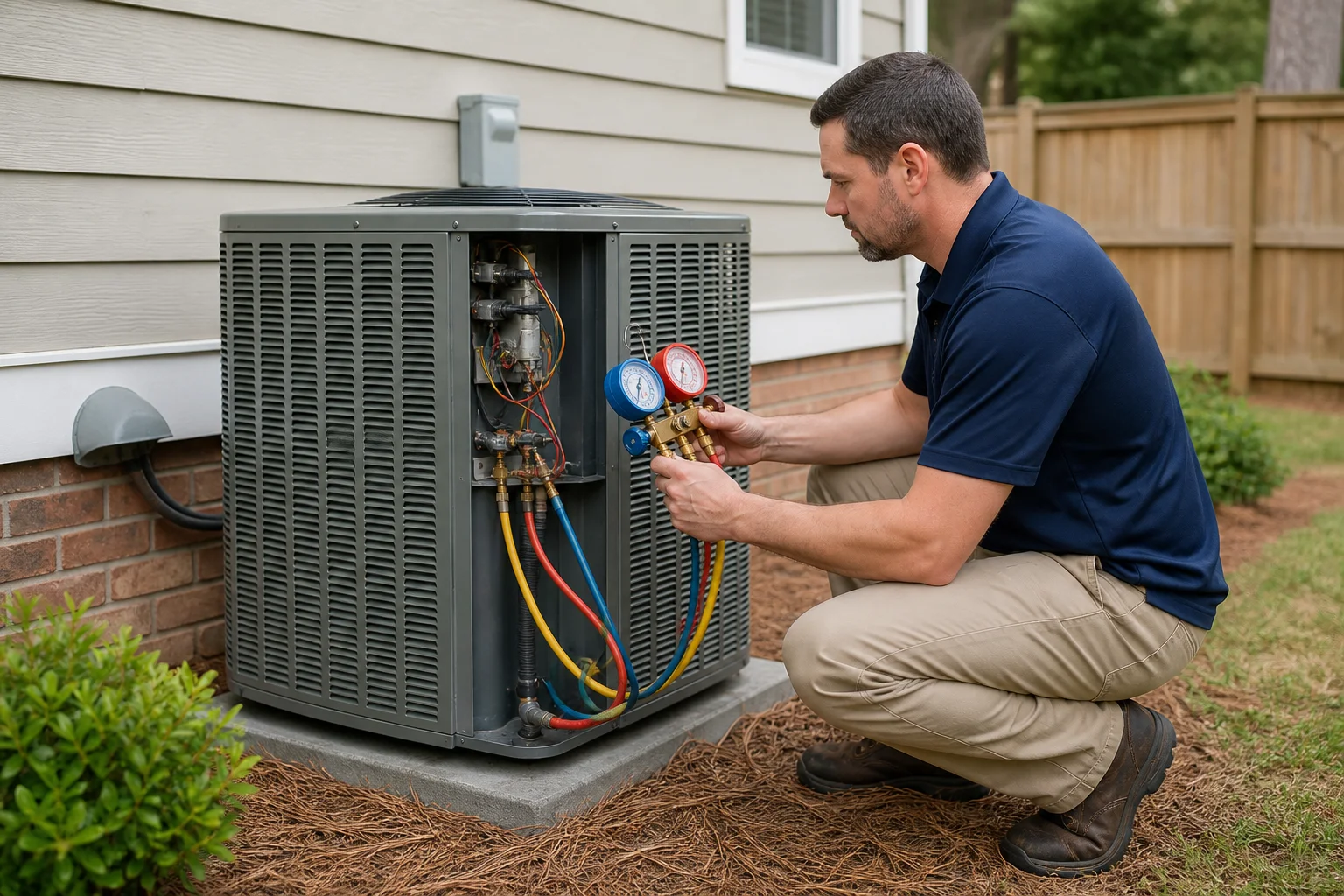
A useful service visit considers the whole system. The technician may inspect the thermostat, filter, air handler, blower assembly, evaporator coil, condensate drain, electrical connections, refrigerant circuit, outdoor coil, compressor, fan motor, reversing valve, and defrost controls. Temperature and pressure readings help determine whether the system is transferring heat correctly.
Refrigerant does not get used up during normal operation. A low charge usually means there is a leak or that the system was charged incorrectly. Adding refrigerant without finding the reason can lead to repeated comfort problems and possible compressor damage. Leak location, repair feasibility, equipment age, and refrigerant type all affect the recommended solution.
Airflow testing is equally important. A new part will not solve a hot bedroom if the real issue is a damaged duct or inadequate return path. Likewise, a larger heat pump can make humidity control worse if the ductwork and load do not support the added capacity.
Repair, Replacement, or a Different System Design
Repair is often sensible when the equipment is in good condition and the failure involves a serviceable component such as a capacitor, contactor, sensor, thermostat, drain blockage, or fan motor. System age, repair history, corrosion, compressor condition, efficiency, and parts availability should still be considered.
Replacement becomes more practical when major failures combine with frequent repairs, high operating costs, extensive refrigerant leaks, or poor comfort. Anyone searching for AC replacement near me should request options based on the complete home rather than a price for equipment alone. Proper sizing, duct condition, drainage, electrical compatibility, thermostat controls, and installation quality all influence performance.
Modern variable speed and multistage heat pumps can adjust output to changing conditions, providing longer cycles and more consistent humidity removal. For homeowners comparing air conditioning systems, efficiency ratings matter, but so do sound levels, serviceability, warranties, and moisture performance.
Ductless mini splits can be useful for additions, workshops, upstairs rooms, or areas that are difficult to connect to central ductwork. A homeowner searching for ductless mini split installation near me should still ask for load calculations and thoughtful indoor unit placement. An oversized mini split can cycle too quickly, while poor placement may create uneven temperatures. Existing systems may also need professional mini split repair when they leak water, lose output, or show communication errors.
Some homes use a heat pump with a furnace as a dual fuel system. The heat pump operates during milder weather, while the furnace takes over under selected conditions. Furnace service remains important in these homes because controls, burners, venting, and changeover settings must work together safely.
Maintenance That Prevents Midseason Disruptions
Preventive maintenance is especially valuable before summer demand and before the first sustained cold weather. A tune up can uncover worn electrical components, blocked drains, dirty coils, damaged wiring, low airflow, and defrost issues before the system is pushed into long run cycles.
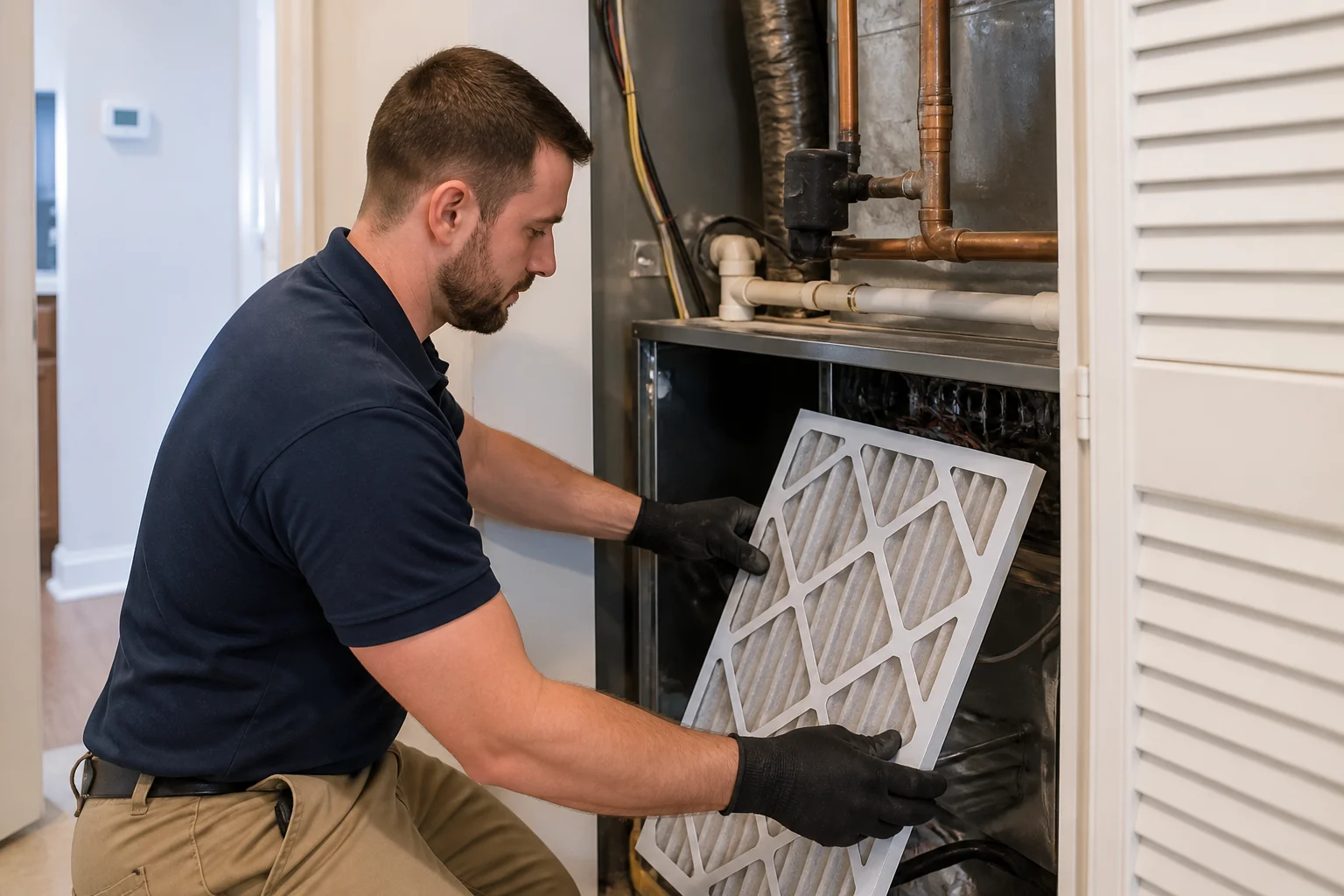
Homeowners can support the system by checking filters regularly and replacing them when dirty. The best interval depends on filter type, pets, occupancy, renovation dust, and allergy needs. A highly restrictive filter is not automatically better. If the air handler cannot move the required volume of air, comfort and efficiency can decline. Allergy air filtration should be selected with the blower and duct system in mind.
Keep the outdoor unit clear of weeds, leaves, storage, and fencing that blocks airflow. Do not lean tools against the cabinet or cover the unit while it is operating. After a major storm, look for bent panels, lodged debris, standing water, damaged line insulation, or unusual sounds. Avoid opening electrical panels or attempting to straighten refrigerant tubing.
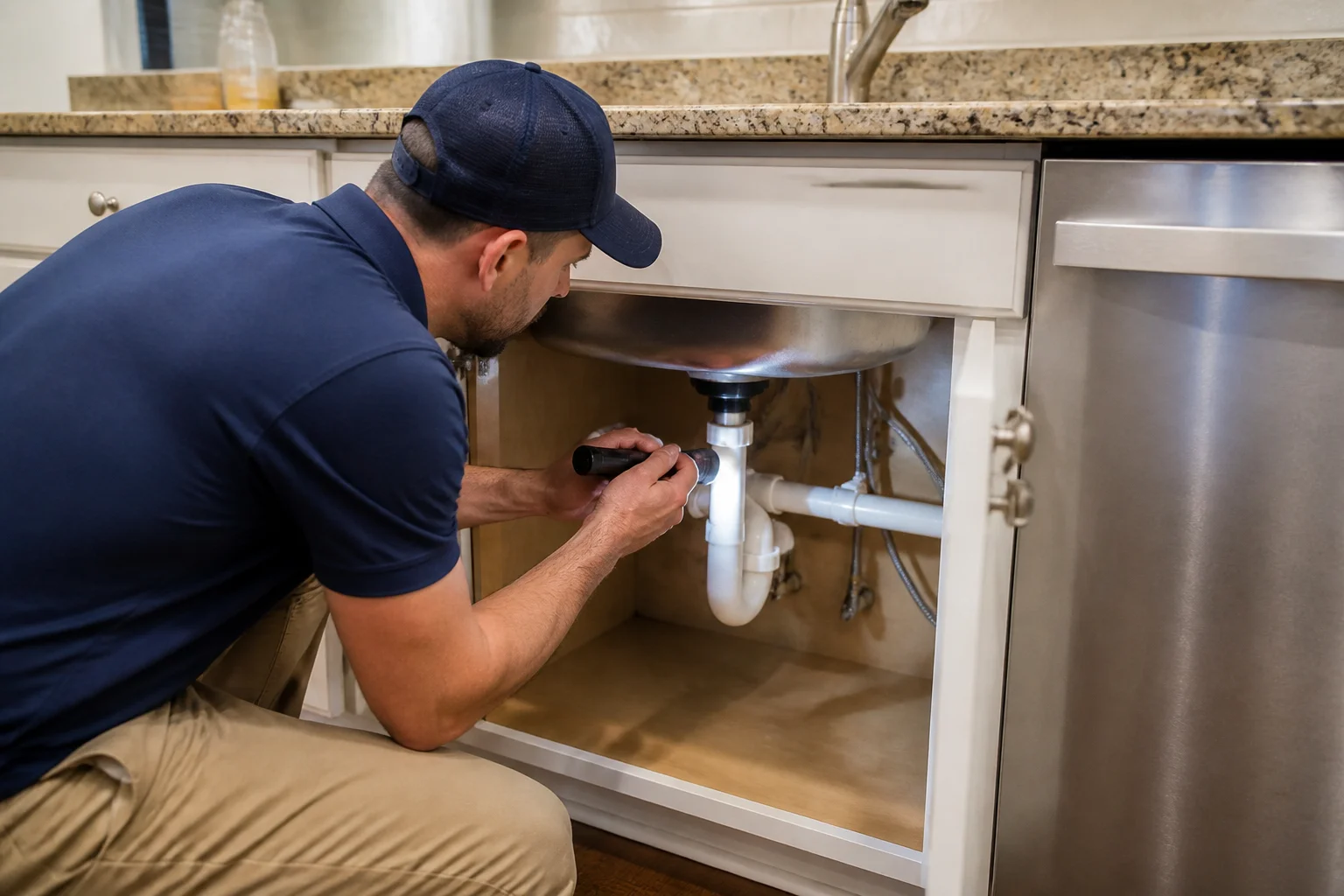
Drain lines also deserve attention in humid weather because the system may remove many gallons of water from indoor air. A maintenance visit can include drain inspection and cleaning, drain pan evaluation, and testing of safety switches. These steps reduce the risk of an overflow near the air handler.
People searching for preventive HVAC maintenance near me or an HVAC tune up near me should look for service that documents system condition rather than providing only a quick visual check. Recorded temperatures, electrical readings, airflow observations, and maintenance findings make it easier to track changes over time.
Efficiency Improvements Should Start With the House
High efficiency equipment cannot overcome major duct leaks, poor insulation, or uncontrolled attic air entering the return system. Before investing in the highest efficiency rating, identify where conditioned air is being lost. Duct sealing, insulation improvements, weatherstripping, shaded windows, and balanced returns may reduce the heating and cooling load.
Zoning can help certain homes, but it must be designed carefully. Closing too many dampers can increase static pressure and reduce airflow across the indoor coil. A properly designed zoned system may require compatible variable capacity equipment, bypass planning, or duct modifications.
Humidity settings also affect energy use. Lowering the thermostat to compensate for damp air can increase runtime without fixing the moisture source. Correcting drainage, airflow, equipment sizing, or duct leakage can provide better comfort at a more reasonable temperature setting.
Emergency Heat Pump Concerns
Shut the system off and request prompt help if there is a burning odor, smoke, loud metal on metal noise, repeated breaker tripping, significant water leakage, or ice spreading across refrigerant lines and the air handler. Do not repeatedly reset a breaker. It may be responding to a motor, compressor, wiring, or electrical component failure.
A complete loss of cooling can become urgent during extreme heat, particularly for older adults, infants, pets, and people with health conditions. Heating loss during a strong cold snap also warrants quick attention. Homeowners searching for emergency heat pump repair near me should describe odors, sounds, error codes, ice, water, and recent storm activity when arranging service. Those details can help the HVAC contractor prepare for the visit.
Why Local HVAC Knowledge Makes a Difference
A contractor familiar with DeFuniak Springs HVAC needs understands how local humidity, storm seasons, regional construction, and seasonal demand affect heat pump performance. That experience is useful in older houses with altered ductwork, newer tightly built homes, and properties that have grown through additions or remodels.
A Superior Mechanical serves homeowners, property managers, and businesses throughout Walton County. Commercial property owners can also explore commercial HVAC repair in DeFuniak Springs. For larger replacement projects, available HVAC financing options may help qualified customers plan around equipment needs and household budgets.
If an HVAC near me search begins with one uncomfortable room, high humidity, or an unexpected power bill, the solution may involve more than one component. Evaluating the heat pump, air handler, thermostat, ductwork, vents, filters, coils, refrigerant circuit, and drain system together creates a clearer path to dependable comfort and energy efficiency.
Find Heat Pump Services in DeFuniak Springs, FL
If you need Heat Pump Services in DeFuniak Springs, FL, visit our local service page or contact A Superior Mechanical today.
Map of DeFuniak Springs, FL
Frequently Asked Questions
How often should a heat pump be serviced in DeFuniak Springs?
Most heat pumps benefit from professional service twice a year because the same equipment handles both cooling and heating. A spring visit prepares the system for summer heat and humidity, while a fall visit checks heating, auxiliary heat, and defrost operation before cooler weather.
Why does my DeFuniak Springs home feel humid even when the heat pump is cooling?
Possible causes include oversized equipment, short cycling, low airflow, a dirty evaporator coil, duct leakage, thermostat settings, or an incorrect refrigerant charge. A clogged drain can also interfere with moisture removal. Indoor humidity measurements and a full system inspection can identify the cause.
Should I repair or replace an older heat pump?
Consider the system's age, repair history, efficiency, refrigerant type, corrosion, comfort performance, and the cost of the current repair. A minor component failure may justify repair, while compressor trouble, repeated refrigerant leaks, or ongoing comfort problems can make replacement more practical.
Related Articles
Photo Gallery