30A homes run on small daily rituals: a first cup of coffee, ice in the freezer, a quick rinse after cooking, and a shower that should leave your skin feeling clean, not tight. When your reverse osmosis system starts acting up, those rituals get disrupted fast. You might notice cloudy ice cubes, poor tasting coffee water, or sediment in household water showing up in sinks and fixtures.
In 30A and Walton County, water conditions and coastal home realities can be tough on RO drinking water systems. The good news is that most problems are predictable. With the right pre-treatment, maintenance schedule, and professional service, you can protect what matters most in your kitchen and bathroom.
First, what a reverse osmosis system is really doing
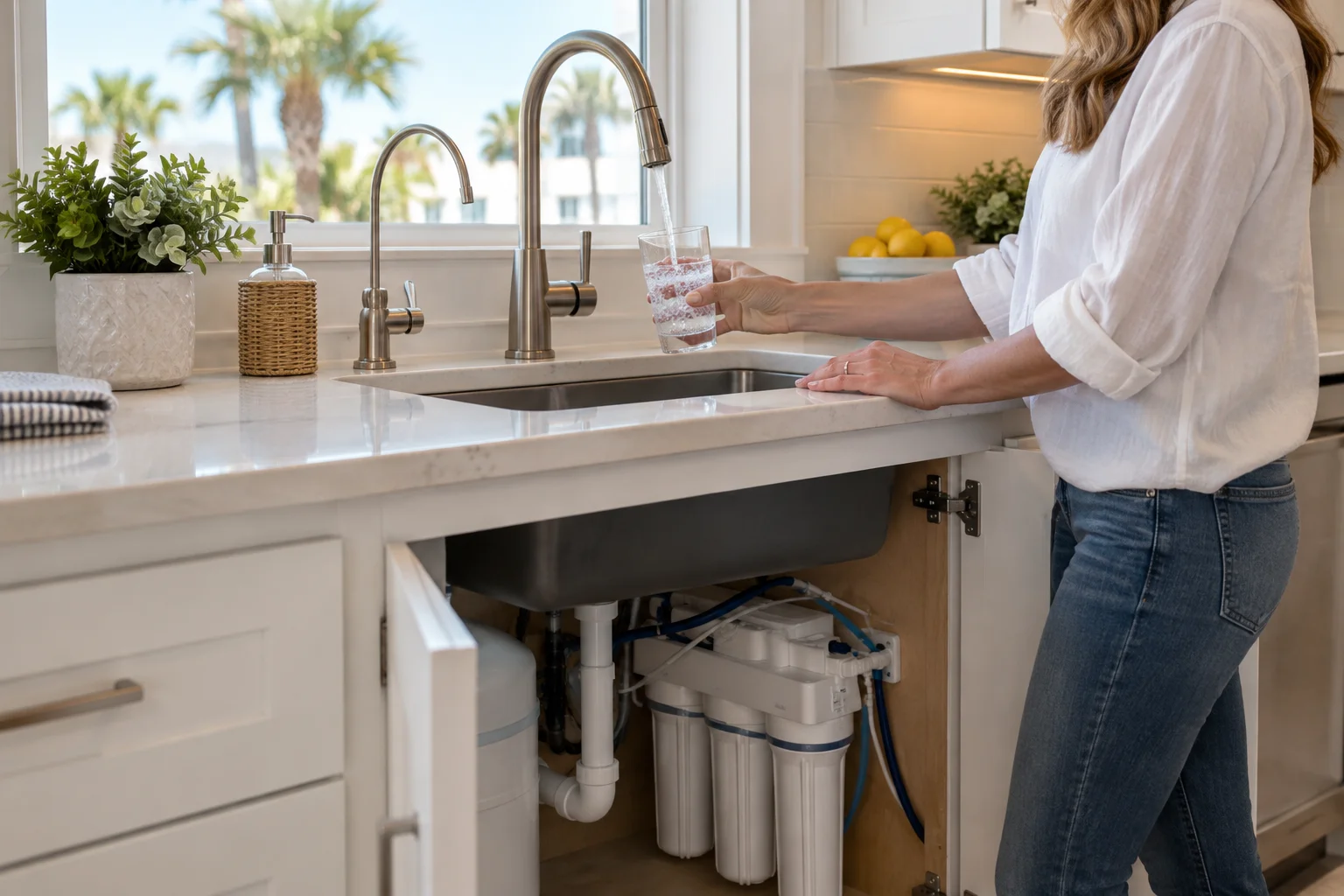
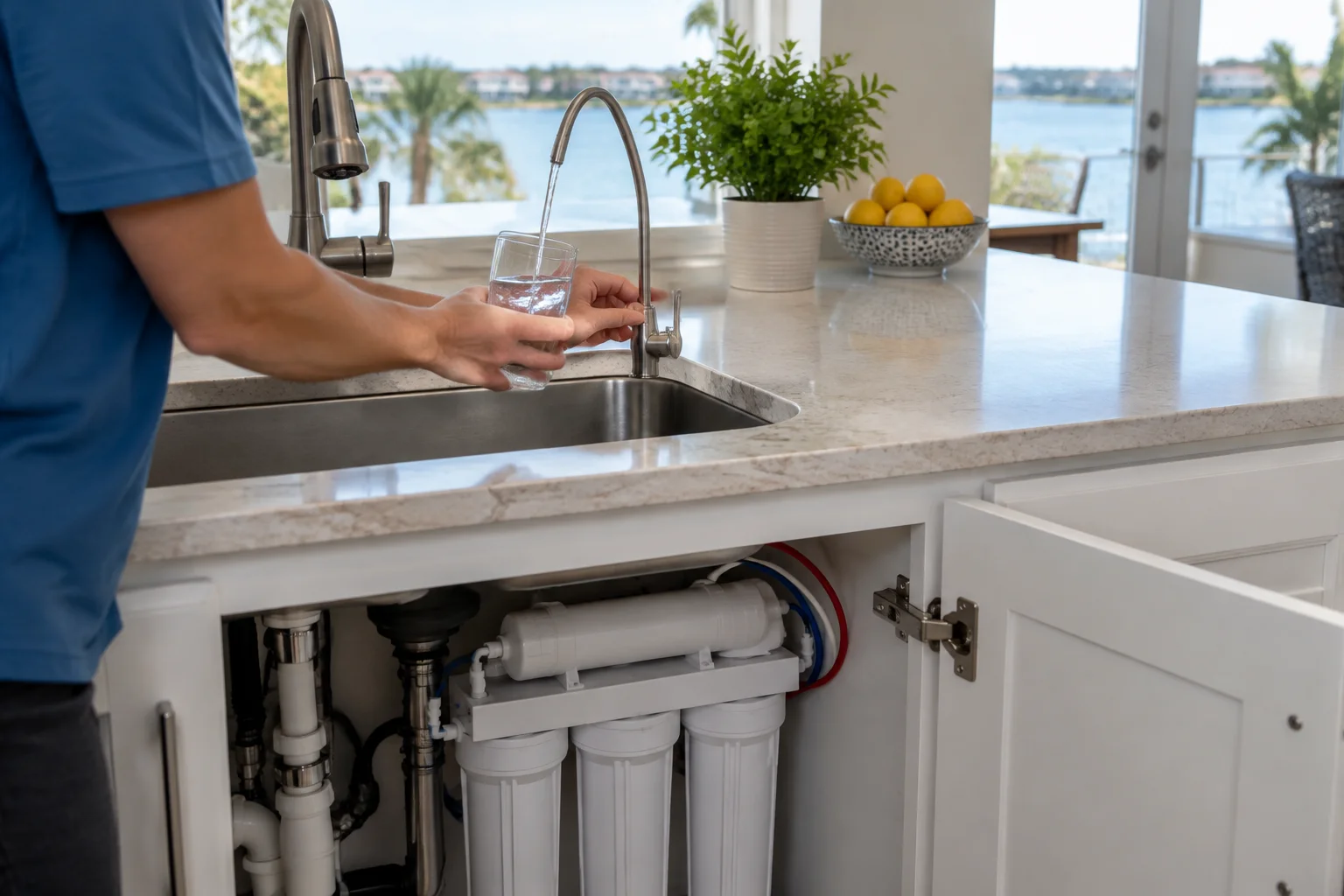
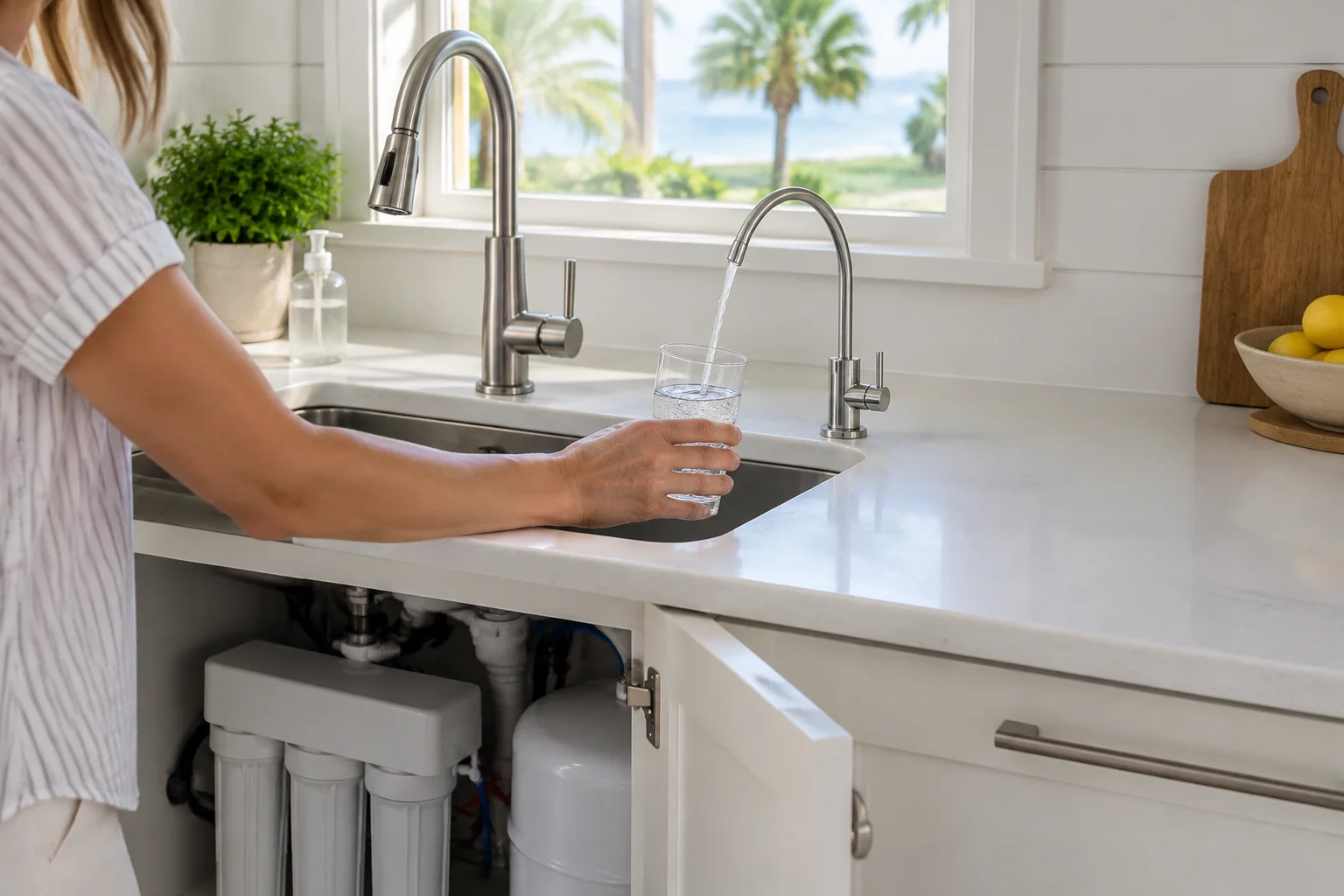
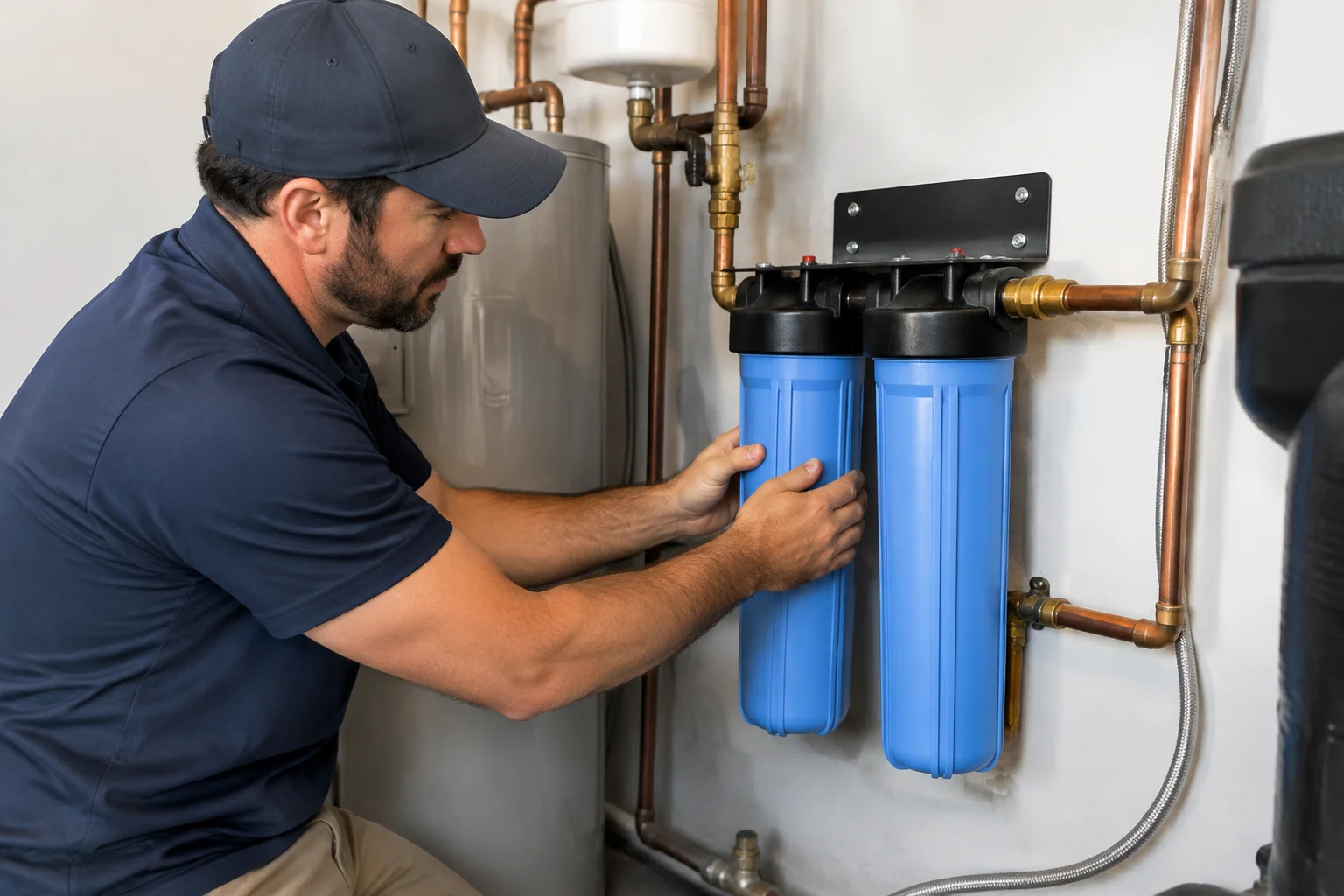
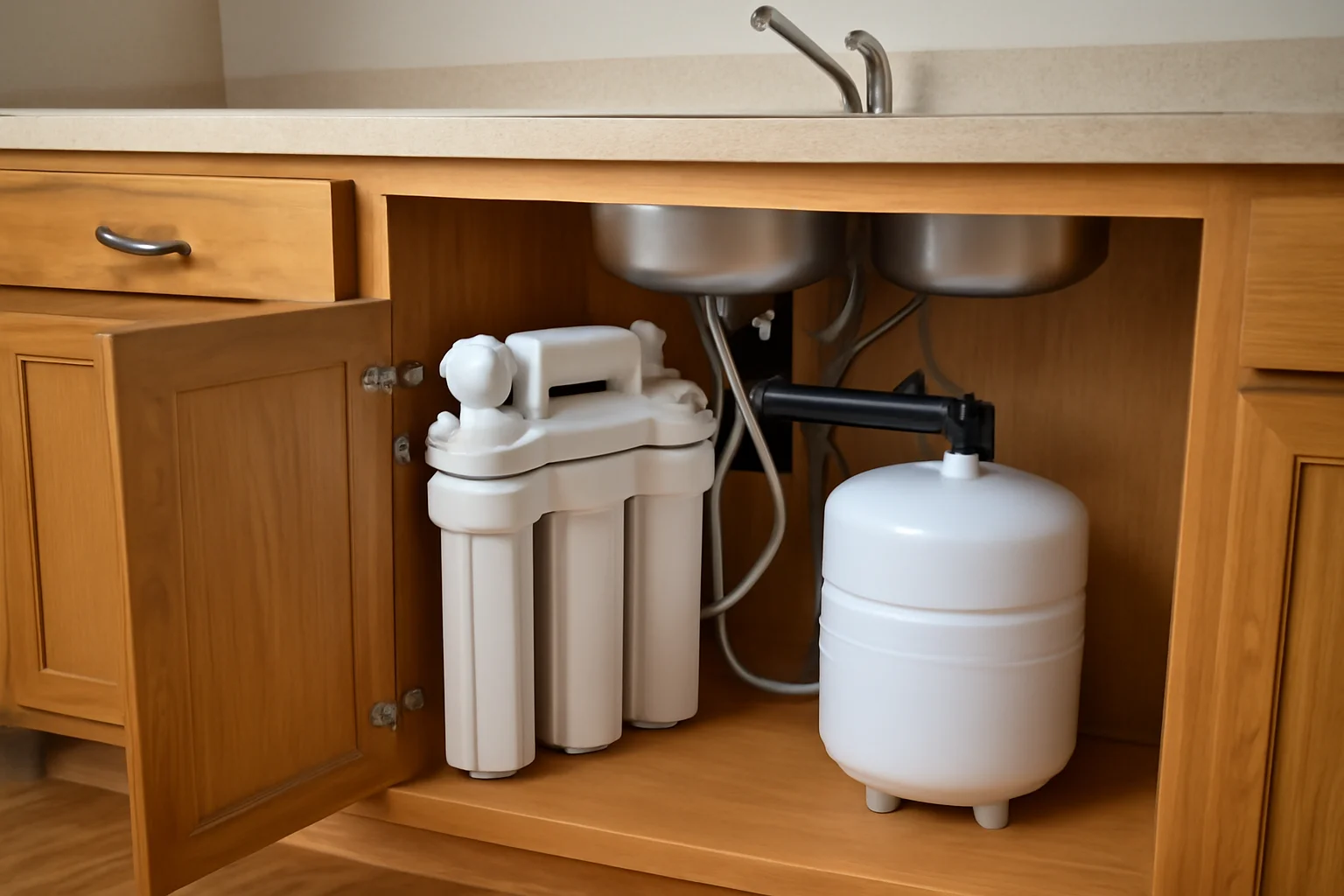
A reverse osmosis (RO) system forces water through a semi-permeable membrane that removes dissolved contaminants and many impurities. Most RO setups also include pre-filters, post-filters, and a storage tank or recirculation depending on the design. The system is designed to deliver clean, better tasting drinking water for drinking, cooking, and ice making.
When RO water quality drops, it is usually because one of these stages is underperforming. Some issues are caused by water chemistry. Others come from wear and tear on filters and membranes. Even small changes in water taste, flow rate, or clarity can signal that the system is working harder than it should.
Hard water and scale: the silent RO system stressor
Hard water is a common challenge across the Florida panhandle. When water contains higher mineral levels, it can leave hard water spots on glass, scale around faucets, and residue in showers. For the RO system, hardness can also mean scale buildup around components.
Scale buildup can show up in your home in ways you can see: scale buildup around faucets, showerheads, and plumbing. In the RO unit, scale can accumulate on the membrane and related parts, reducing how efficiently the system filters water. That can lead to:
- Slower production of RO drinking water
- Higher pressure and more strain on the system
- More frequent filter changes because pre-filters clog faster
- Less consistent taste and clarity
If you have ever noticed that your shower feels less “slippery” or that you get dry skin or dull hair after bathing, it may be tied to your overall water profile, including hard water. RO drinking water helps for drinking and cooking, but whole-home water treatment can be the missing piece for bathing and fixtures.
Many 30A homeowners choose water softening or whole home water filtration as protection, especially when they see persistent scale on fixtures. If you are searching for water softener installation near me or whole home water filtration options, it is worth discussing how your RO system and your broader water treatment plan should work together.
Clogged pre-filters: the most common cause of RO performance drop
Most RO systems start with sediment and carbon filtration. These stages remove particles and reduce chlorine and other chemicals that can harm the membrane. In coastal areas, water can carry more variability depending on source and conditions, and pre-filters can clog sooner than expected.
Homeowners often notice clogged pre-filters through everyday symptoms:
- Visible sediment or discoloration concerns in household water
- An unpleasant taste that returns even though the system is “on”
- Reduced flow from the RO faucet
- More frequent cartridge changes than expected
- Smaller amounts of RO water for ice production
This is where maintenance matters. A neglected RO system can keep producing water, but at reduced quality. That can mean metallic, chlorinated, or unpleasant taste in the glass and a noticeable change in coffee and cooking water.
Membrane wear and tear: when RO water gets cloudy or inconsistent
The RO membrane is the heart of the system. Over time, it can lose efficiency due to normal wear, scale accumulation, or chemical exposure. When the membrane is struggling, RO water may look different and behave differently in your kitchen.
Common signs include:
- Cloudy ice cubes from the RO line, especially if the system is not consistently producing high-quality water
- Water that tastes flat or “off,” even when it is not obviously dirty
- Shorter periods of good water between filter changes
- Ice makers that seem to cycle more often or produce less
In a 30A kitchen, that can feel like the whole routine changes. The kids notice first. The coffee brewer is next. If your RO drinking water system is not delivering steady output, you will see it in the freezer and on the countertop.
Chlorine, taste, and odor: carbon filtration that is past its useful life
Chlorine control is a big deal for RO performance. Carbon filters are designed to reduce chlorine and help protect the membrane. When the carbon stage is exhausted, you may experience:
- Metallic, chlorinated, or unpleasant taste in RO water
- Odor concerns that show up in drinking water
- Poor tasting coffee and cooking water
Coffee and tea are sensitive to water chemistry. If you have ever switched to a new bag of beans and still tasted “something off,” the water may be the culprit. Many homeowners reach for better filters, but the real fix is making sure your RO system’s carbon and post-filters are doing their job on schedule.
Air gaps, leaks, and pressure issues: smaller problems that cause big symptoms
RO systems are plumbing systems with tubing, fittings, and valves. Even if the filters and membrane are healthy, issues like leaks, clogged lines, or pressure problems can affect output and taste.
Look for these household hints:
- The RO faucet sputters or produces water unevenly
- Water pressure feels lower than it used to
- You see dampness near the system components
- Ice cubes look inconsistent, not just cloudy
For homeowners in 30A, where many properties are vacation rentals, turnover schedules can also matter. If a system sits unused for a while, then ramps up quickly when guests arrive, the first batch of water may not match your usual quality. A professional service visit can help confirm the system is stable.
How water quality shows up on dishes, glass, and fixtures
Even if you primarily use RO for drinking and ice, your home water still touches everything: the dishwasher, laundry, showers, and handwashing. When hard water and untreated minerals are present, you can see it in the cleaning results.
Here are the familiar signs many 30A homeowners recognize:
- Hard water spots on glass after rinsing or running the dishwasher
- Dull or spotty dishes that do not fully rinse clean
- Soap that does not lather or rinse well
- Scale buildup around faucets, showerheads, and plumbing
- Appliances wearing out faster, including water-using units that rely on clean flow
Better water is not just about taste. It is also about how long your fixtures stay looking good and how efficiently your home appliances run.
Why coastal conditions and local water variability matter in 30A
30A is defined by coastal humidity, seasonal demand, and a mix of home ages. Many homes are built near salt air and experience higher humidity indoors and outdoors. While RO systems are designed for indoor installation, humidity and temperature swings can affect system components and how quickly filters load with contaminants.
Local water variability can also influence your RO system. If your pre-filters are clogging faster than expected, it is a sign that your system needs a review, not that you should ignore it. Homeowners searching for clean water systems near me often assume RO alone solves everything, but the best results come from matching treatment to the water you actually have.
If you are considering broader treatment, exploring water filtration and RO water softeners helps you build a complete plan for drinking, cooking, bathing, and fixture protection.
What helps protect coffee, ice, cooking, and bathing
Protecting the RO experience comes down to three categories: correct system sizing and setup, smart pre-treatment, and consistent maintenance.
1) Pair RO with the right pre-treatment
If hardness and scale are affecting your system, adding water softening or appropriate pre-filtration can reduce scale stress on the membrane. Many homeowners also consider whole home water filtration to reduce sediment and improve overall water consistency across sinks, showers, and appliances. This is especially helpful when you are dealing with dry skin from hard water or soap that does not rinse well.
2) Keep filter and membrane schedules realistic
RO systems are not “set it and forget it,” especially in homes with ice makers, heavy coffee use, or vacation rental schedules. A filter schedule based on water testing and usage usually beats a generic calendar.
When filters are changed on time, you are more likely to keep:
- Better tasting drinking water for daily use
- Steady ice production that avoids cloudy ice cubes
- Consistent performance for RO drinking water system output
3) Use AO Smith water filtration components when appropriate
Many 30A households choose recognized brands for reliability and predictable performance. AO Smith water filtration options can be a strong fit depending on the system design and your water profile. If you are comparing choices for reverse osmosis installation near me or replacement planning, ask how the system’s stages align with your needs, including chlorine control and sediment reduction.
AO Smith water filtration and AO Smith water softener solutions are often considered when homeowners want dependable clean water systems that are easier to maintain over time.
4) Watch the “kitchen cues” that something changed
Your home gives clues before a problem becomes expensive. Pay attention to:
- Poor tasting coffee water or tea that tastes dull
- Ice cubes that suddenly turn cloudy
- A change in odor or a return of metallic or chlorinated notes
- Visible sediment or discoloration in the RO faucet stream
These cues often point to carbon exhaustion, membrane decline, or pre-filter clogging.
Signs it is time to schedule RO service in 30A
If you notice any of the following, it is a good time to have your system inspected. A professional can check pressure, flow, filter condition, and membrane performance, then recommend the right next steps for your home.
- RO water tastes metallic, chlorinated, or unpleasant
- Ice cubes are cloudy or inconsistent
- Flow rate is slower than normal
- You see sediment, discoloration, or odor concerns
- Dishes and glass show worsening hard water spots
- Soap does not lather or rinse well in other parts of the home
- Dry skin or dull hair after bathing becomes noticeable again
If you are seeing these issues, do not assume the RO faucet is the only problem. Many homeowners need both RO for drinking and cooking, and additional treatment for the rest of the home.
How homeowners can protect their system between service visits
You cannot replace professional service with guesswork, but you can reduce avoidable problems.
Keep the RO faucet and lines clean
Wipe the faucet spout and keep the area dry. If you see moisture around the RO unit, address it quickly. Small leaks can change system output and create messy spots under sinks.
Use the system consistently
Vacation rentals and second homes often sit unused. When the system is reactivated, quality may take a short period to stabilize. A technician can advise on a safe flushing routine and confirm the system is ready for guest use.
Track taste and ice changes
If your family starts commenting on “weird taste” or the ice looks different, write down when it started. That timeline helps a technician pinpoint whether it is pre-filter, carbon, membrane, or a pressure issue.
Consider whole home water filtration for fixture protection
If you are seeing hard water spots on glass, scale around showerheads, and soap that does not rinse well, RO-only may not be enough. Whole home treatment can reduce the minerals that create buildup in the first place, helping protect fixtures and appliances over time.
RO service and replacement planning for 30A homes and rentals
In 30A, your water treatment needs can shift with your property type. A primary residence may have steady daily use. A vacation rental may experience high demand during peak seasons, then lower usage in off months. Those patterns can impact filter loading and membrane performance.
When you plan for RO system replacement or upgrades, consider:
- How much RO water you use for drinking, cooking, and ice
- Whether scale is showing up around faucets and showerheads
- How often the system is serviced
- Whether you need water softener service near me style support to protect the whole home
If you are also updating plumbing fixtures, it helps to coordinate water treatment with those changes. For practical fixture planning, see What 30A Homeowners Should Know Before Replacing Plumbing Fixtures.
And if you want to reduce water damage risk tied to plumbing performance, review Plumbing Installation That Helps 30A Homes Stay Ahead of Water Damage.
For homeowners who want to protect their RO system with everyday habits, Smart Plumbing Habits for Reverse Osmosis Systems in 30A Homes is a helpful companion read.
Getting the right match: RO drinking water plus better whole-home water
Many families want RO drinking water system performance for the kitchen while also improving bathing and fixture longevity. That is where a complete approach makes sense. RO helps with better tasting drinking water, cooking water, and ice. Water softening and whole home filtration help with scale, soap performance, and the feel of your skin after bathing.
If you are looking for cleaner drinking water and want a locally focused guide, check Cleaner Drinking Water and Healthier Plumbing: A Rosemary Beach Homeowner’s Guide to Reverse Osmosis Systems.
For professional reverse osmosis system installation and service in 30A, Walton County, contact A Superior Mechanical. You can explore options on our service page at reverse osmosis systems for 30A and learn more about our broader service coverage at /service-areas/walton-county. If your goals include whole home water filtration and water softeners, start with water filtration RO water softeners.
Find Reverse Osmosis Systems in 30A, FL
If you need Reverse Osmosis Systems in 30A, FL, visit our local service page or contact A Superior Mechanical today.
For a broader look at whole-home water filtration, reverse osmosis, and water softener options, visit our water filtration, RO, and water softener page.
Map of 30A, FL
Frequently Asked Questions
Why do my ice cubes look cloudy even if I have an RO system?
Cloudy ice cubes often point to a change in RO water quality. Common causes include exhausted carbon filters, a membrane that is losing efficiency, or reduced system performance that allows more dissolved material to pass through. A technician can check flow rate, filter condition, and membrane status.
Can hard water spots on glass mean my reverse osmosis system is failing?
Hard water spots on glass usually reflect mineral content in the water used for dishwashing and bathing, not only the RO drinking water line. If you are seeing spots on fixtures and glass, you may need whole home water filtration and/or water softening in addition to RO for drinking and cooking.
How often should reverse osmosis filters be replaced in a 30A home?
It depends on your water quality and usage, including sediment load, chlorine levels, and how heavily you use RO for ice and cooking. Many systems need staged filter changes on a schedule, but the most accurate plan comes from water testing and system inspection.
What does AO Smith water filtration add to an RO setup?
AO Smith water filtration components can be a reliable option for staged filtration, including pre-treatment and carbon filtration depending on the system design. The right combination helps protect the RO membrane, improve taste and odor control, and support consistent RO drinking water quality.
Related Articles
- Smart Plumbing Habits for Reverse Osmosis Systems in 30A Homes
- What 30A Homeowners Should Know Before Replacing Plumbing Fixtures
- Plumbing Installation That Helps 30A Homes Stay Ahead of Water Damage
- Cleaner Drinking Water and Healthier Plumbing: A Rosemary Beach Homeowner’s Guide to Reverse Osmosis Systems
Photo Gallery