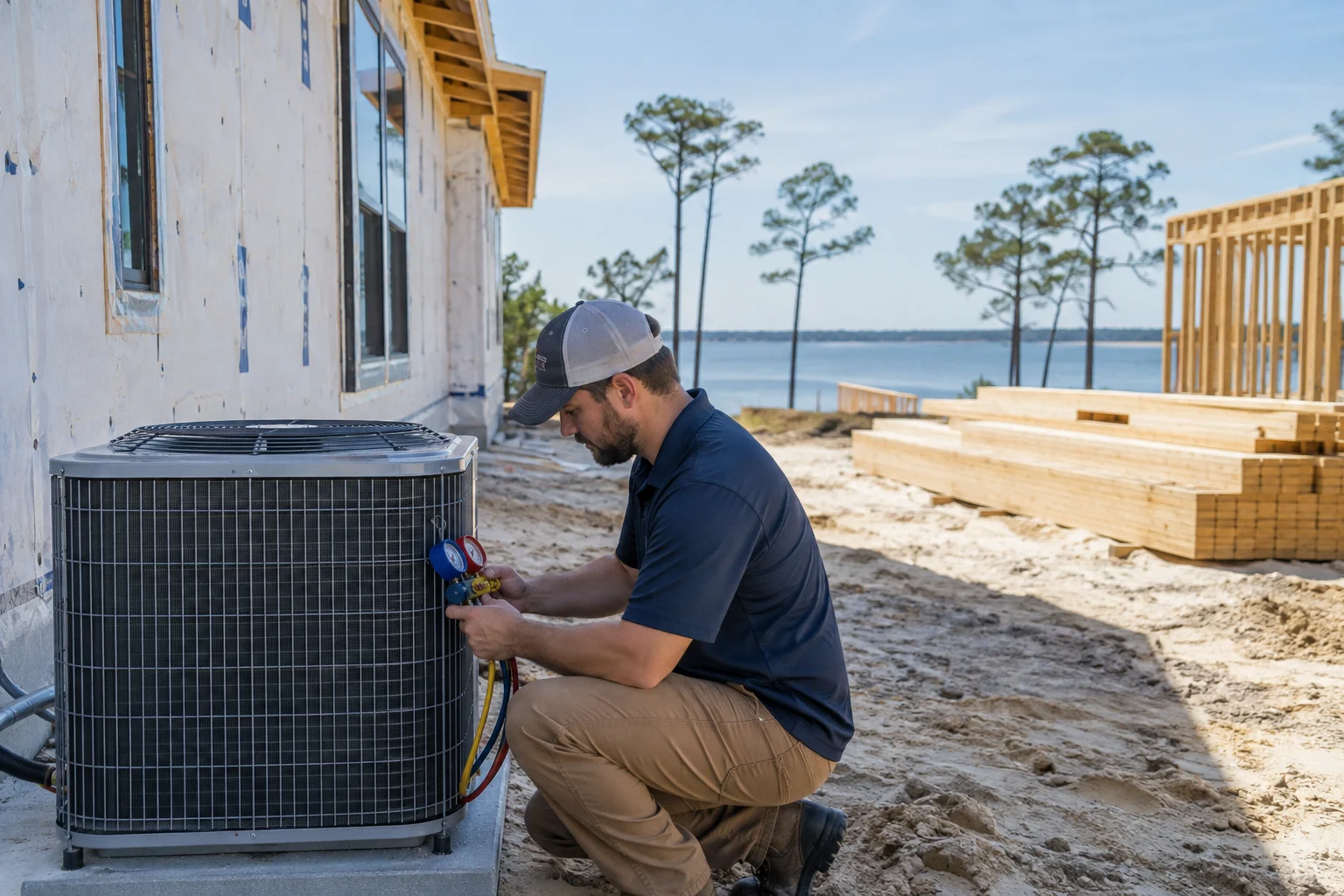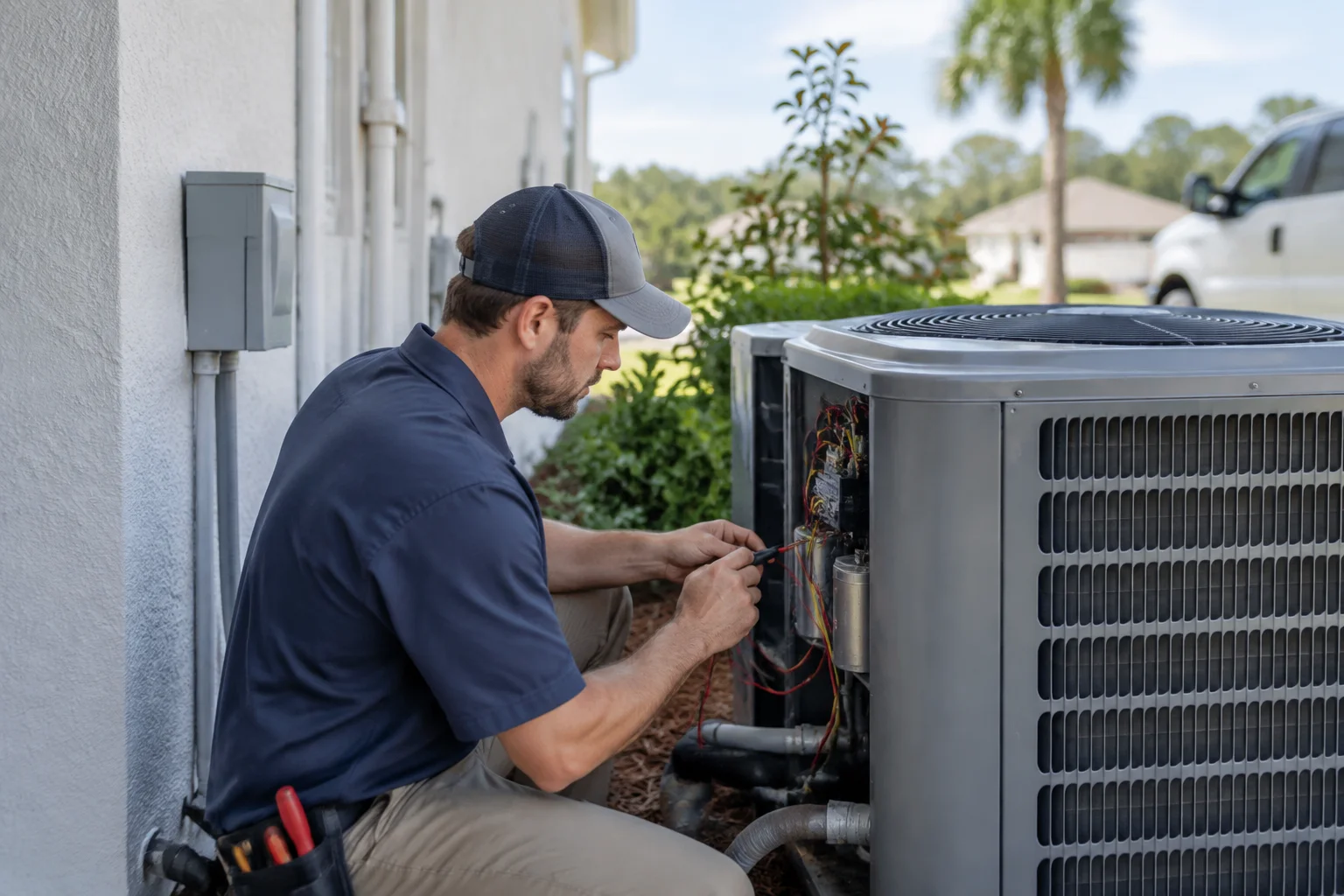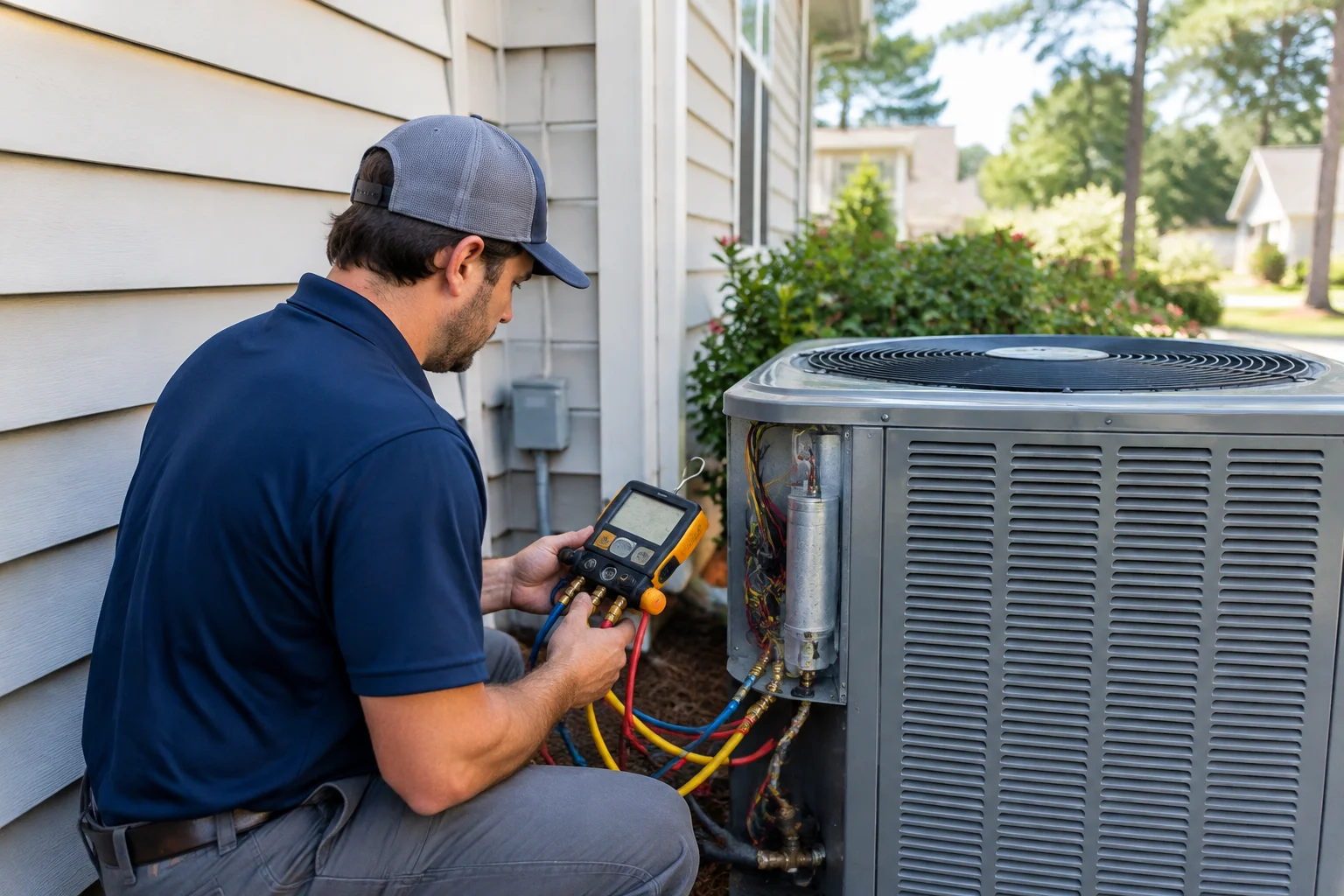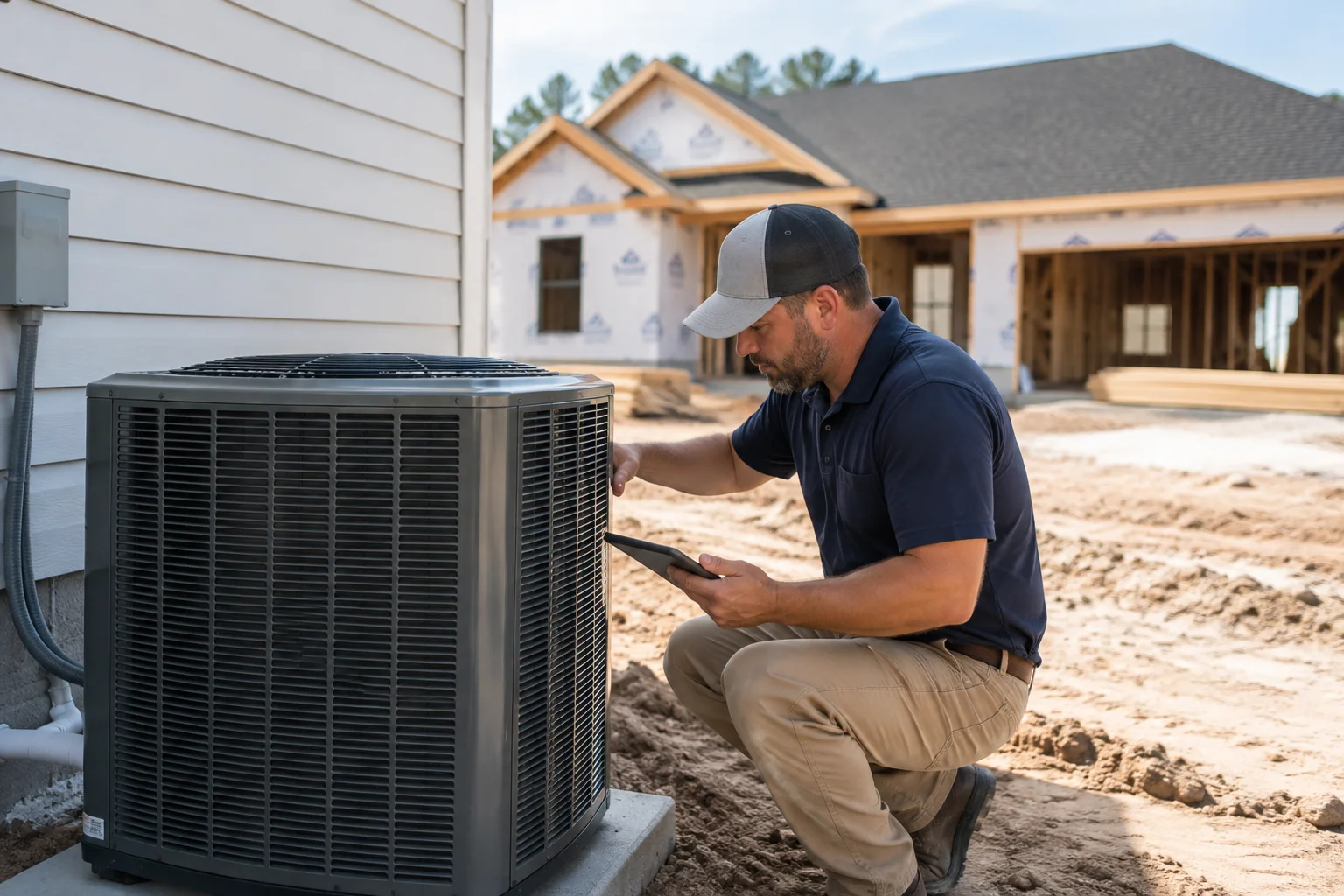
A new home can have beautiful finishes and still feel uncomfortable if its air conditioning was treated as an afterthought. A warm bedroom, a damp living room, or a noisy return vent often traces back to decisions made before the drywall went up.
For new construction air conditioning in Callaway, FL, the goal is more than reaching the thermostat setting. The system needs to handle summer heat, coastal humidity, changing room loads, and occasional cold weather. A Superior Mechanical provides new construction air conditioning design and installation in Callaway, including load calculations, ductwork, equipment installation, and final testing. Here is what homeowners should discuss while changes are still practical.
Build the HVAC plan around Callaway's climate
Callaway homes face long cooling seasons and frequent humid weather. Outdoor moisture enters through doors, leaks in the building enclosure, and ventilation. An air conditioner must remove that moisture while handling heat from sunshine, occupants, appliances, and outdoor air.
Coastal conditions also affect equipment placement and maintenance. Salt exposure varies by location, but airborne salt can accelerate corrosion on outdoor units. Storms bring wind-driven rain, debris, and potential flooding. These conditions deserve attention before a condenser pad location becomes permanent.
Newer homes are often tighter than older homes, which can improve energy efficiency but changes ventilation needs. Remodels and additions create another challenge: the original HVAC system may not match the updated floor plan. Local design knowledge matters because a system that performs well in a dry climate may not provide the same comfort in Bay County.
Start with a load calculation, not a square-footage shortcut
A home's size alone cannot determine its cooling needs. Window area and orientation, insulation, ceiling height, air leakage, roofing, and shading all affect the load. Two Callaway houses with equal square footage may require different equipment capacities and room-by-room airflow.
Ask how the equipment capacity was selected
For residential construction, a Manual J load calculation is a recognized starting point. Equipment selection should then account for the calculated load and the system's actual performance under design conditions, commonly using Manual S guidance. Duct design, often based on Manual D, connects that equipment selection to individual rooms.
Oversizing is not extra protection against hot weather. A system that cools too quickly may shut off before removing enough moisture. Undersizing can leave rooms warm during peak conditions. Variable-capacity equipment can adjust output, but it still needs proper sizing and setup.
Homeowners comparing a licensed HVAC contractor near me should ask whether calculations reflect the final plans. Changes to windows, insulation, or an enclosed porch may require revisiting the design before equipment is ordered.
Give ductwork enough space before framing closes
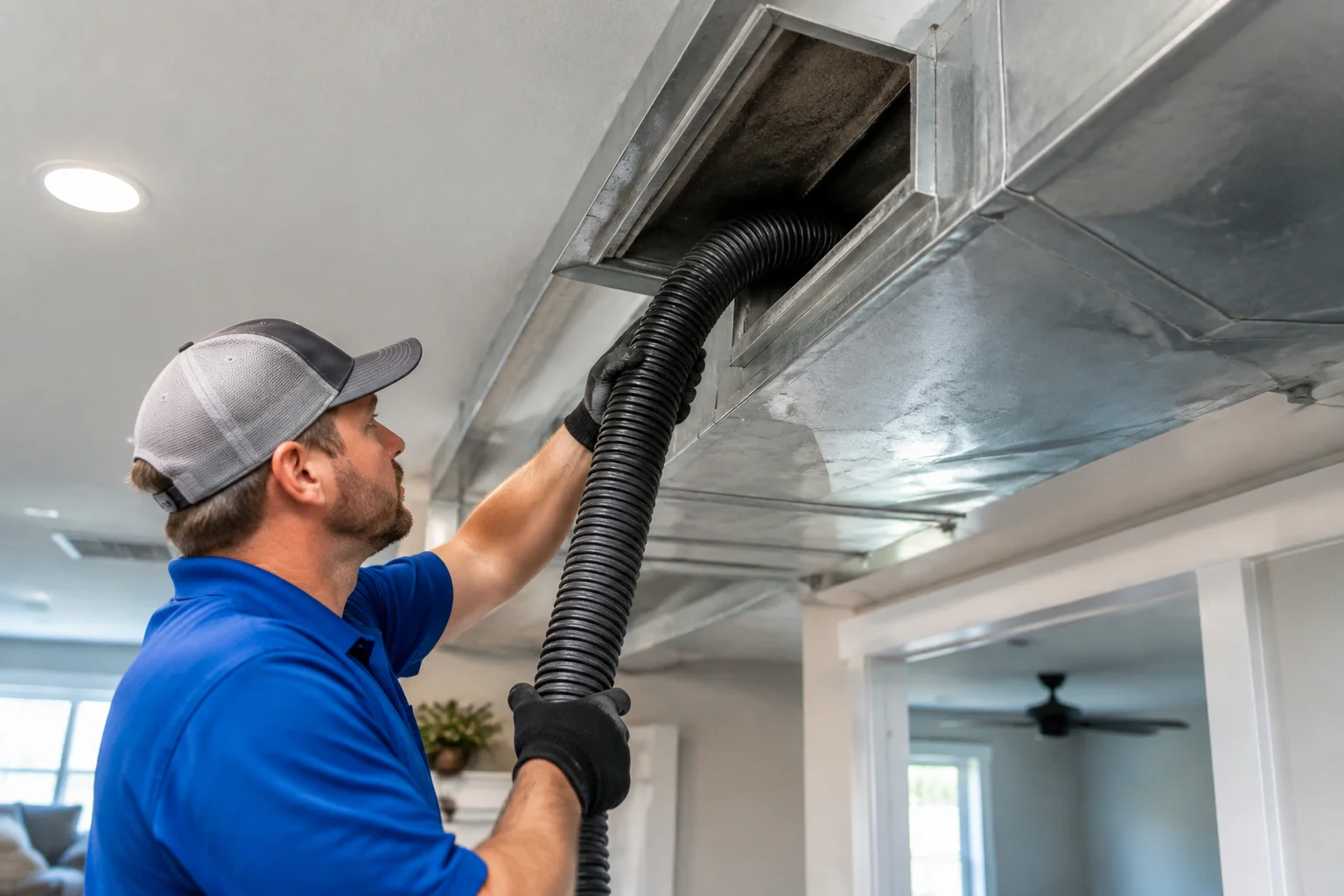
Ductwork needs a planned route, not whatever space remains after other trades finish. Tight turns, crushed flexible duct, undersized returns, and long unsupported runs can reduce airflow. The result may be noisy operation, uneven temperatures, and unnecessary fan energy use.
Plan supply air and a return path for every room
Supply vents deliver conditioned air, but that air also needs a path back to the air handler. A bedroom with a closed door can become uncomfortable if its return path is inadequate. Depending on the design, dedicated returns, transfer grilles, or properly sized jump ducts may help.
Discuss register locations alongside furniture plans. A vent hidden under a bed or blocked by cabinetry cannot distribute air effectively. Where feasible, keeping ducts within conditioned space reduces exposure to extreme attic temperatures and makes leakage less costly.
Connections should be sealed with approved materials, and ducts outside conditioned space need appropriate insulation. A pre-drywall review can catch problems while access is easy. Searching for ductwork installation near me is more useful when the conversation includes duct sizing, sealing, support, and testing rather than price alone.
Treat humidity as a separate comfort target
A home can reach 74 degrees and still feel sticky. Temperature and relative humidity are related, but one thermostat reading does not explain both. Persistent dampness, musty odors, or condensation deserve investigation even when the AC appears to cool normally.
Indoor relative humidity around 40 to 55 percent is a practical comfort target for many homes, with levels generally kept below 60 percent. Results depend on outdoor conditions, the building enclosure, ventilation, and equipment operation. An inexpensive humidity monitor can reveal patterns in bedrooms and living areas.
Correct sizing and airflow help the evaporator coil remove moisture. A variable-speed air handler or properly configured dehumidification mode may improve control. Some tight homes benefit from dedicated dehumidification, particularly during mild but humid weather when cooling demand is low.
Bathroom exhaust and kitchen ventilation must discharge outdoors as required, not into an attic. Keeping windows open while the AC runs adds moisture. Thermostat fan settings matter too: continuous fan operation can re-evaporate moisture from a wet coil in some systems. Ask which setting suits the installed equipment.
Choose equipment for the whole house, including heating
Heat pumps are a practical option for Callaway because they provide cooling and heating. Planning should cover winter performance, defrost operation, and backup heat controls as well as summer efficiency. Incorrect auxiliary heat settings can increase electricity use during cool weather.
Some homes use furnaces with central air conditioning. Those installations require appropriate combustion safety, venting, and service access. Whether the home has a heat pump or furnace, a local heating service provider should be able to explain routine care and future heating repair needs.
Ductless mini splits can work well for additions, detached rooms, or sunrooms with loads that differ from the main house. A garage system should be evaluated separately, with attention to fumes and separation from living space. Do not assume the main duct system can safely or effectively serve every added room.
For larger custom homes or mixed-use projects, zoning may be worth evaluating. Multiple thermostats do not automatically create effective zones; equipment controls and airflow limits must be coordinated.
Leave outdoor units and air handlers room to work
Outdoor condensers need manufacturer-specified clearances for airflow and service. Avoid locations that will later be boxed in by fences, dense landscaping, or storage. Consider bedroom windows and neighboring patios when evaluating operating sound.
Mounting, anchoring, and elevation should meet applicable requirements and account for the site's storm and flood exposure. Ask about corrosion protection appropriate to the equipment and location. Protective treatments should follow manufacturer guidance, not improvised coatings that could restrict heat transfer.
Air handlers also need accessible panels, filter access, and sufficient space for coil and blower service. In attics or other locations where a leak could damage finishes, required secondary drainage and overflow protection are especially important. A service technician should not need to remove permanent cabinetry to inspect a drain connection.
If backup power is part of the build, coordinate HVAC starting requirements and generator load management early. This guide to storm-ready generator planning in Callaway provides context for that discussion without replacing HVAC sizing or installation planning.
Match filtration and thermostat controls to the system
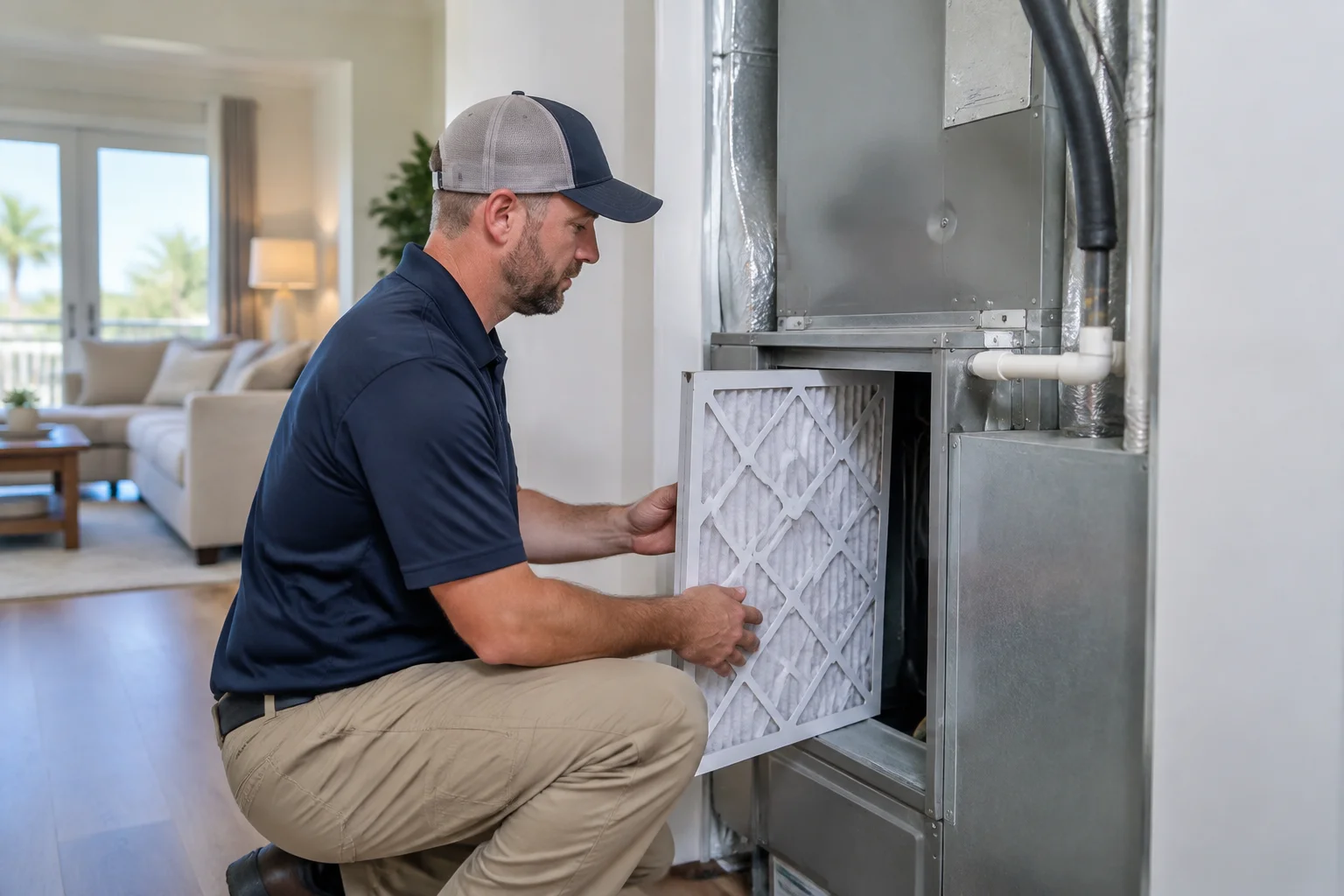
Indoor air quality begins with controlling moisture, providing appropriate ventilation, and keeping construction dust out of equipment. Filters capture particles, but a more restrictive filter is not automatically better. The blower and filter cabinet must support the selected filter without excessive pressure drop.
A properly sized media filter cabinet can offer useful filtration and convenient maintenance. Ask which filter rating and replacement schedule fit the design. UV accessories have specific applications, such as limiting microbial growth on treated coil surfaces, but do not replace filtration, cleaning, or humidity control.
Thermostat installation should include a representative location away from direct sun, supply vents, and heat-producing appliances. Nest and ecobee controls require compatibility checks, especially with communicating equipment or advanced humidity functions. Some systems perform best with manufacturer-specific controls.
Use reasonable schedules rather than extreme temperature setbacks that require long recovery periods. Ceiling fans can improve perceived comfort while a room is occupied, but they do not remove humidity or correct inadequate airflow.
Require testing before move-in
New equipment is not proof of correct performance. Startup should include checks of airflow, external static pressure, refrigerant charge using the manufacturer's procedure, thermostat operation, and condensate drainage. The contractor should verify that heating and cooling modes operate as intended.
Room-by-room airflow balancing helps identify areas receiving too much or too little air. Homeowners looking for airflow balancing near me after moving in may be addressing something that could have been caught during commissioning. Closed-door comfort checks are particularly useful in bedrooms.
Ask for equipment model information, warranty documents, filter specifications, and maintenance instructions. A professional air conditioning inspection can also help evaluate unresolved performance concerns after occupancy.
Recognize trouble early and prevent avoidable repairs
A frozen evaporator coil, water near the air handler, repeated shutdowns, or weak airflow is not normal break-in behavior. Restricted filters, blower problems, refrigerant leaks, blocked drain lines, and installation defects can produce overlapping symptoms. Diagnosis should come before adding refrigerant or replacing parts.
If ice develops, stop cooling and arrange service rather than scraping the coil. For an overflowing drain pan, shut the system off if safe and protect nearby finishes. Smoke, a burning smell, or repeated breaker trips calls for immediate shutdown and professional help; active fire or smoke warrants emergency services.
Keep outdoor units clear of debris and inspect filters monthly at first, especially after construction. Replace filters based on condition and manufacturer guidance. Schedule preventive HVAC maintenance before peak summer demand, when repair appointments can become harder to secure. Heat pumps also benefit from heating-season checks.
Persistent room imbalances may justify a duct inspection before ductwork repair, duct sealing, or vent replacement is recommended. A new system should not need recurring refrigerant additions; the cause of a confirmed low charge needs to be addressed.
Bring the floor plan into the HVAC conversation
The best time to discuss comfort is before equipment locations and duct routes are locked in. Bring your floor plan, window specifications, insulation details, and plans for future additions to A Superior Mechanical. Explain which rooms get heavy use and whether humidity, quiet operation, or separate temperature control is a priority.
Explore the company's Callaway HVAC service options or its broader Bay County service area while planning the project. Coordinating design, installation, and ongoing air conditioning service with a local team helps keep the home's actual operating conditions at the center of each decision.
Find New Construction Air Conditioning in Callaway, FL
If you need New Construction Air Conditioning in Callaway, FL, visit our local service page or contact A Superior Mechanical today.
Map of Callaway, FL
Frequently Asked Questions
When should HVAC planning begin for a new home in Callaway?
Begin during the design stage, before framing and mechanical routes are finalized. Early planning gives the contractor time to calculate loads, reserve duct space, choose equipment locations, and coordinate drainage, ventilation, and service access.
Will a larger air conditioner control humidity better in a new home?
Not necessarily. An oversized air conditioner may satisfy the thermostat quickly and shut off before removing enough moisture. Correct sizing, appropriate airflow, and properly configured controls are more important. Some homes also need dedicated dehumidification.
What should be checked before a new construction AC system is handed over?
The contractor should verify airflow, static pressure, refrigerant charge, thermostat operation, condensate drainage, and heating and cooling performance using applicable manufacturer procedures. Homeowners should also receive equipment documentation, filter guidance, warranty information, and maintenance instructions.
Related Articles
Photo Gallery