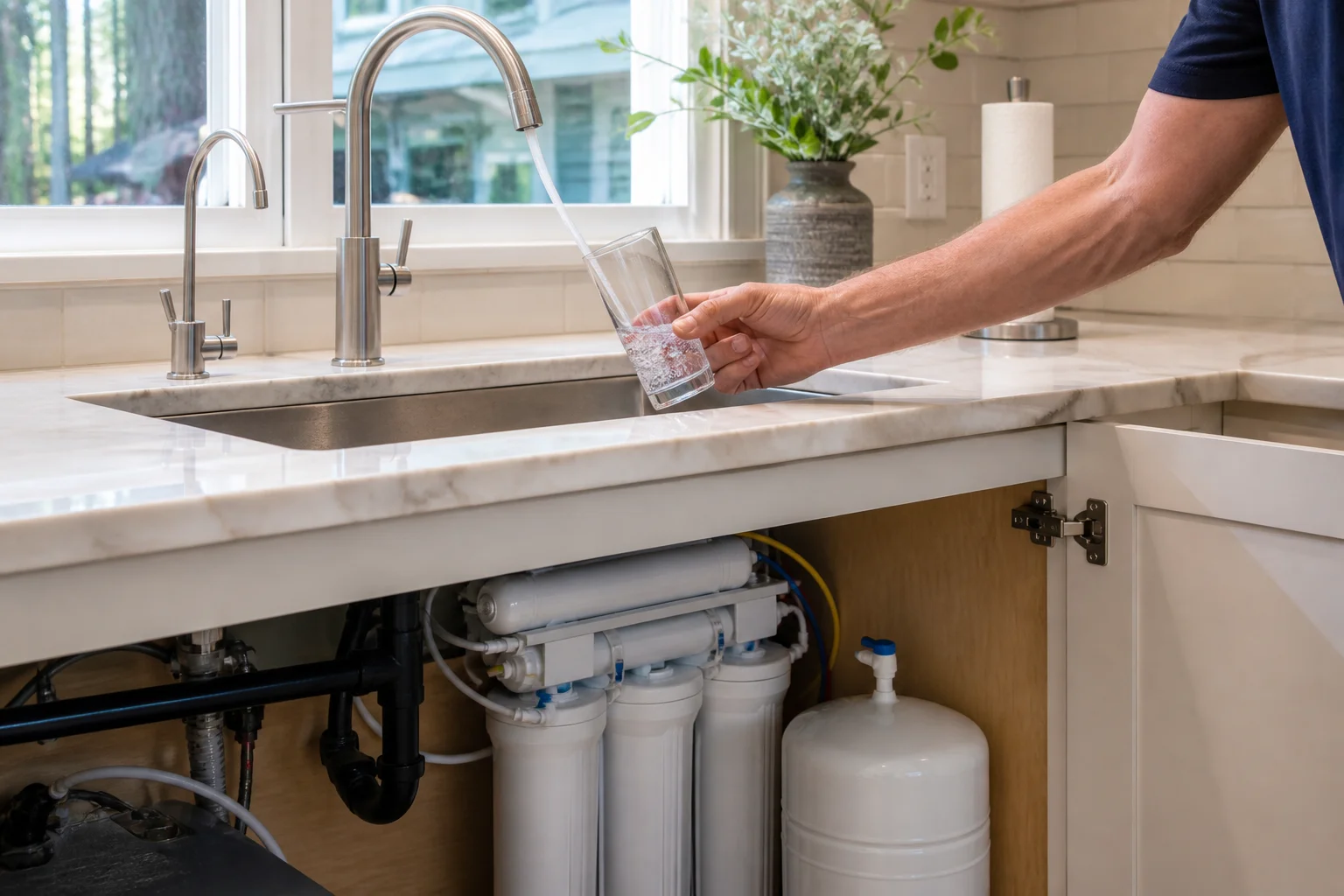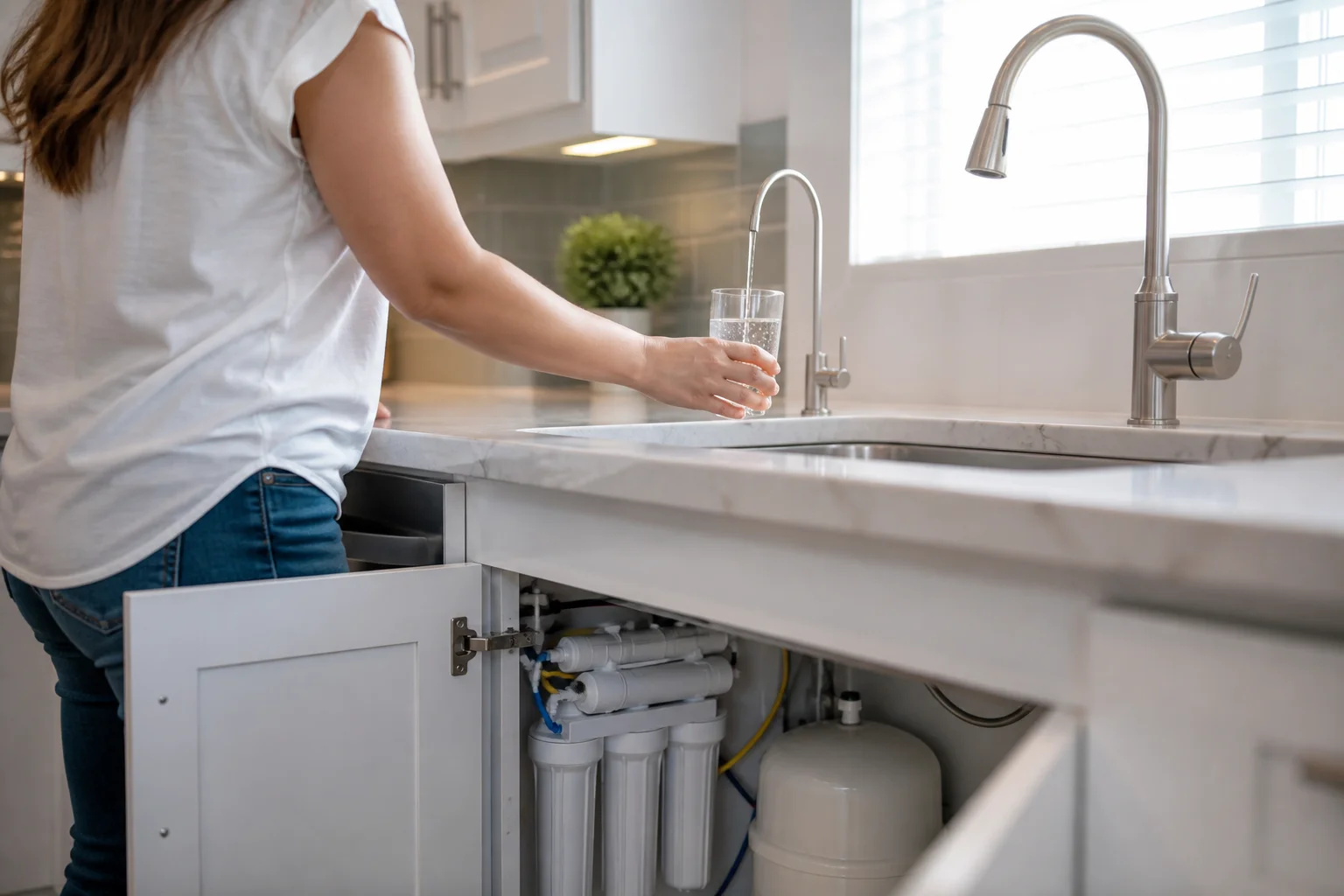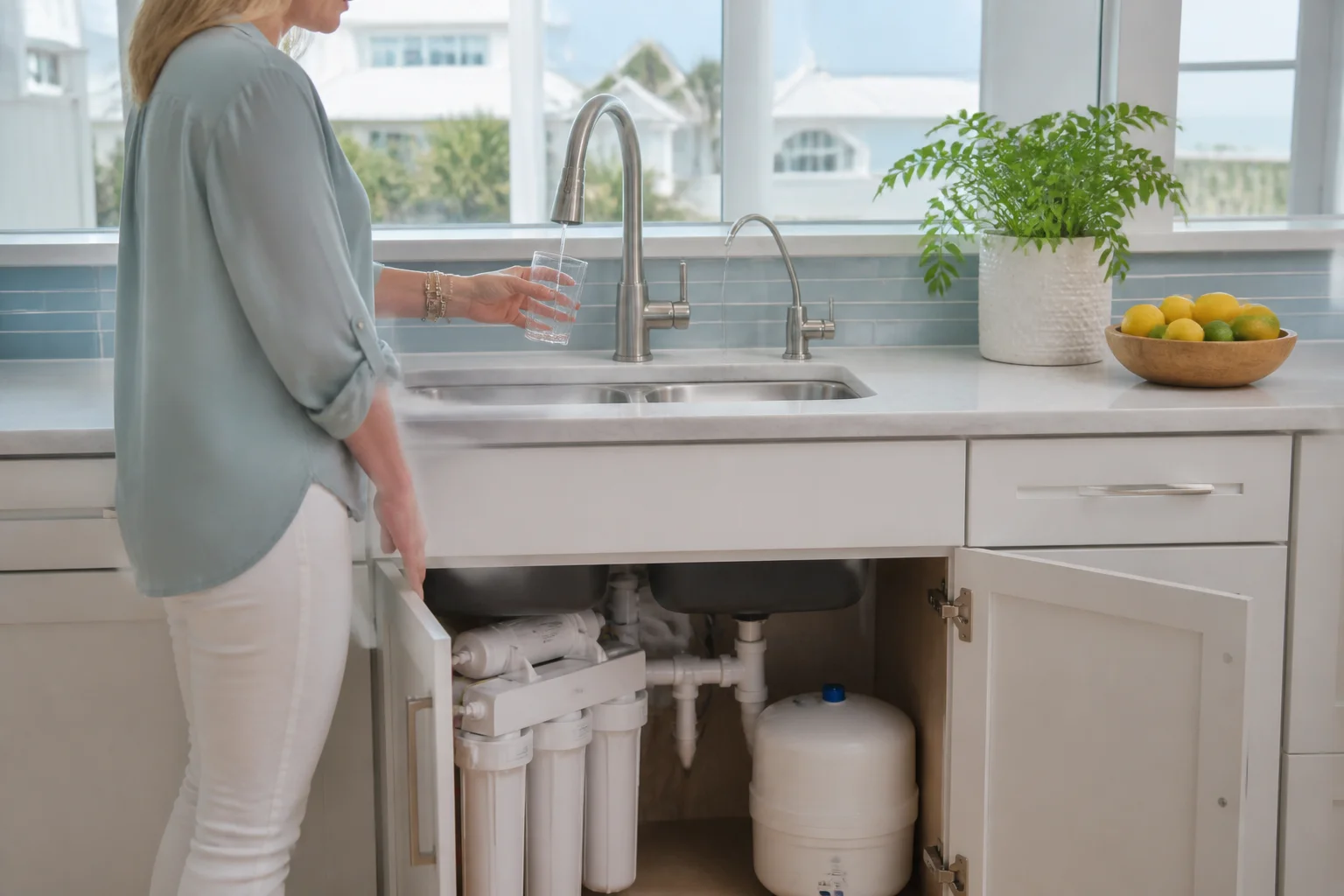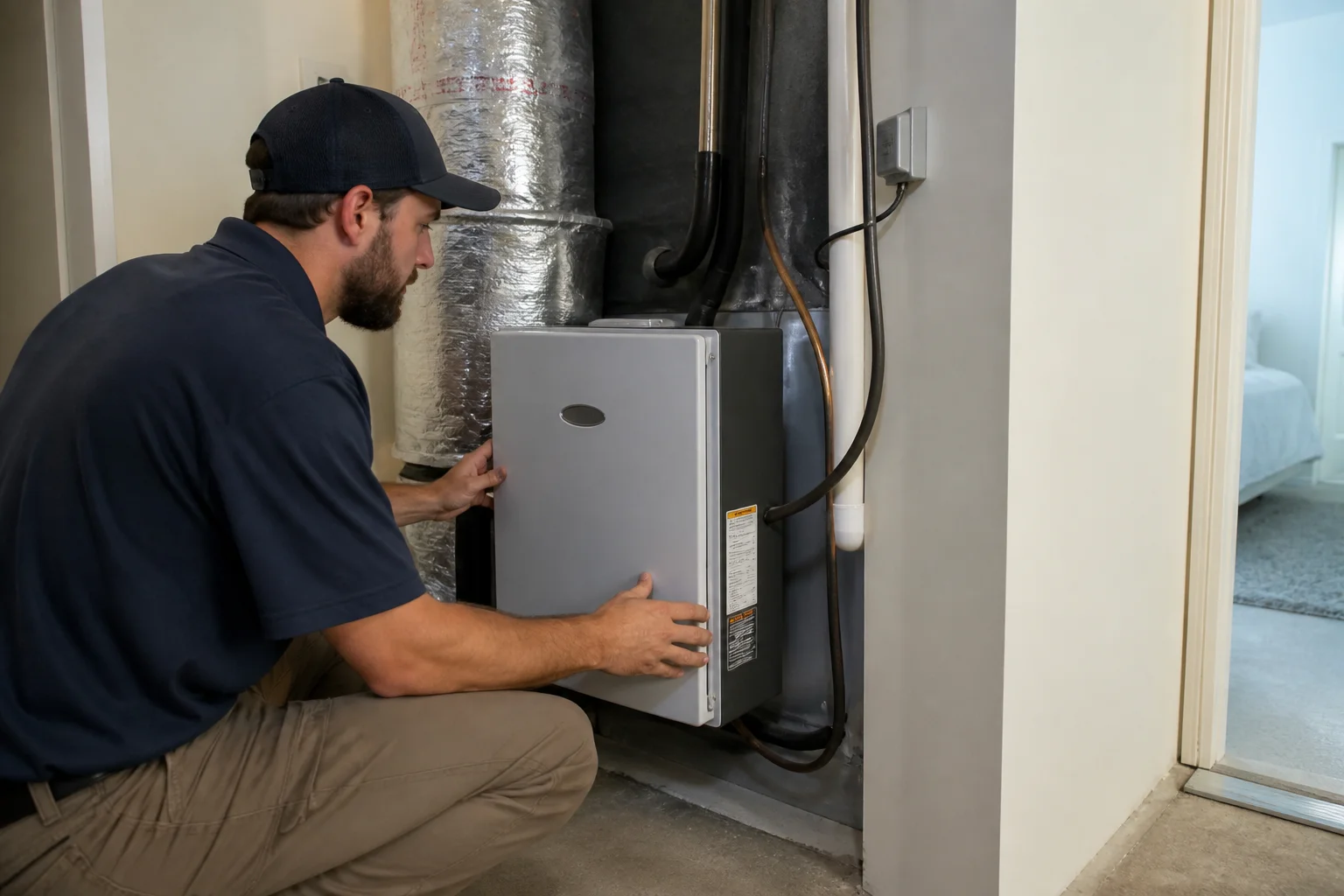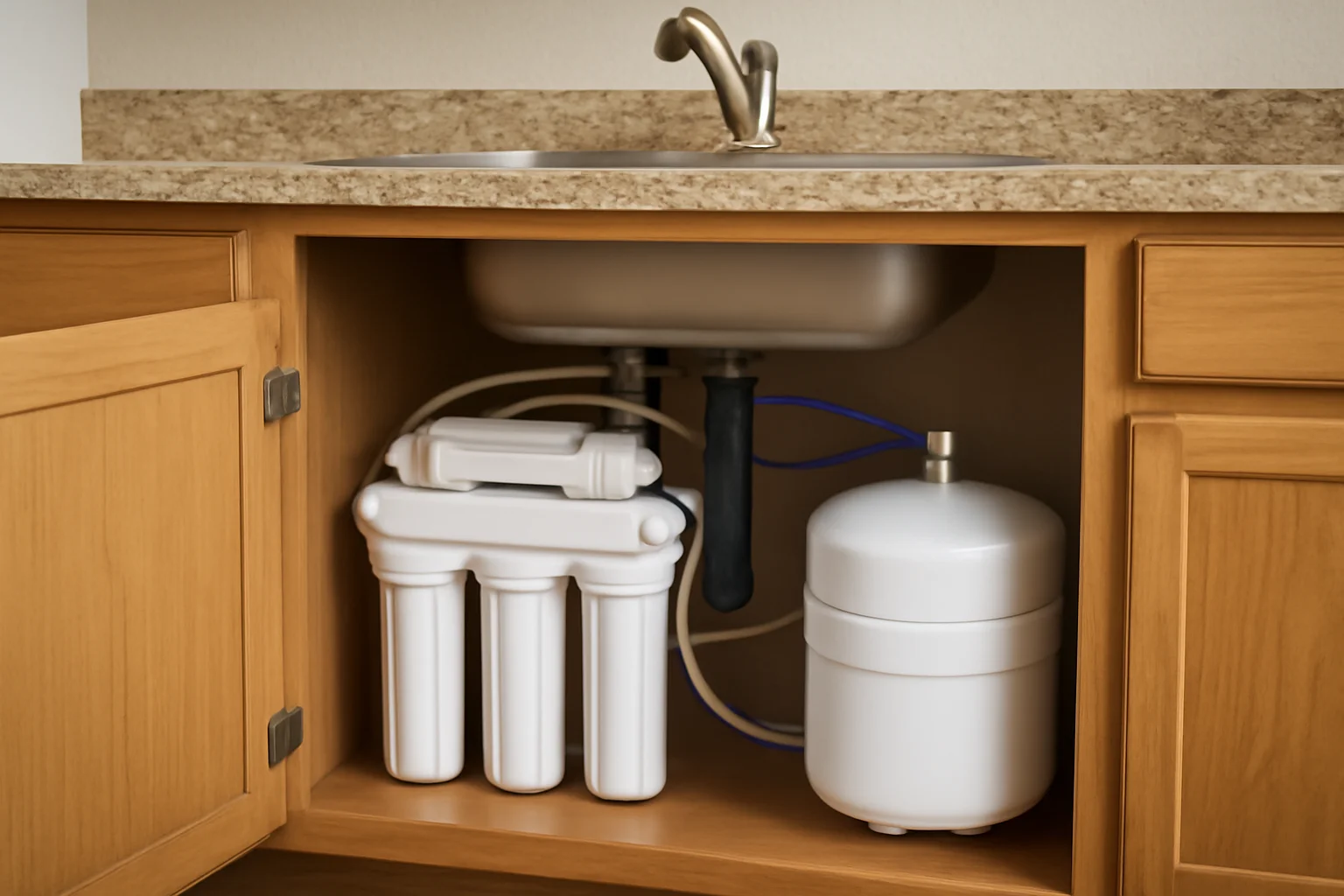
Callaway, FL homeowners often want the same thing from reverse osmosis installation: better drinking water, clearer ice cubes, and fewer complaints about taste, odor, and buildup on fixtures. But local water conditions can make RO systems work harder than expected. When reverse osmosis systems meet hard water, sediment, and chlorine, they can develop performance issues that show up in everyday life, from cloudy ice cubes to soap that does not lather.
If you are seeing hard water spots on glass, scale buildup around faucets and showerheads, or dry skin from hard water, it does not always mean your RO unit is “broken.” It may mean the system is fighting the wrong feed water, the wrong filter schedule, or a pressure and flow problem that is common in Bay County. This guide breaks down the most common causes of RO problems in Callaway and the practical steps homeowners can take to reduce hard water headaches.
Hard water in Callaway can turn RO maintenance into a constant battle
Reverse osmosis systems are designed to remove dissolved minerals, contaminants, and many taste and odor compounds. However, RO does not eliminate the need for good pre-filtration. If your home’s water contains high mineral hardness, the RO membrane can foul faster and the unit can struggle to produce consistent permeate.
In Callaway homes, you may notice the downstream effects of hard water even before you think about the RO system. Common clues include:
- Hard water spots on glass after the dishwasher or a quick rinse
- Scale buildup around faucets, showerheads, and plumbing
- Dry skin or dull hair after bathing, especially when you shower regularly
- Soap that does not lather or rinse well
- Visible sediment, discoloration, and odor concerns that show up in sinks and tubs
When these symptoms are present, RO systems often face faster filter clogging and membrane scaling unless the system is properly matched to your water and maintained on schedule. That is where hard water treatment and whole home water filtration can make a big difference.
Scale buildup around fixtures is a warning sign for RO performance
Scale is not just an eyesore. It is a sign that minerals are accumulating throughout your plumbing and appliances. Those same minerals can also contribute to RO membrane scaling if the water feeding the system is not treated appropriately.
Look for scale where water is heated or evaporates, such as:
- Faucet aerators and showerhead nozzles
- Dishwasher spray arms and glassware
- Water heater piping and plumbing lines
When scale forms quickly, it often means the feed water hardness is high enough to stress the RO process. Even if the RO unit produces “some” purified water, it may not be producing it efficiently. Over time, homeowners may see:
- Lower RO output (less purified water from the storage tank)
- Frequent filter changes that seem to happen too soon
- A need to run the system longer to fill a pitcher
- Higher rejection rate and faster wear on components
For many Callaway households, the best path to fewer RO problems is pairing RO with the right water softening strategy. An AO Smith water softener can reduce hardness so the RO membrane does not have to fight scale forming conditions.
Clogged sediment and inadequate pre-filtration
RO systems rely on a sequence of filters before the membrane. If pre-filters cannot keep up with sediment in household water, they clog, restrict flow, and shorten the life of the system. In Bay County, water can vary seasonally and after weather events, and that can change how quickly sediment accumulates.
When pre-filtration fails to protect the RO membrane, you may notice:
- Cloudy or discolored water at the RO faucet
- Slower production or reduced pressure at the RO tap
- Premature filter life compared with what the install guidelines predicted
- More frequent service calls than expected
This is also where homeowners searching for water filtration near me often need more than a single RO unit. Whole home water filtration can reduce sediment entering the kitchen system and help protect appliances throughout the house.
If you are considering reverse osmosis installation near me, ask your installer about feed water testing and a complete filtration plan, not just the RO unit itself. The best systems are designed around real water conditions.
Chlorine taste and odor can interfere with the RO process
Many homeowners think RO is only about removing “hardness.” In reality, taste and odor are often part of the reason people install RO drinking water systems. If your water has chlorine taste in water or an unpleasant smell, the RO system may reduce it, but it depends on how the system is configured and how the filters are maintained.
Chlorine and certain oxidants can affect RO membranes over time. A properly designed system includes the right stage of filtration to protect the membrane and maintain performance. If that stage is undersized, clogged, or overdue for replacement, you may experience:
- Metallic, chlorinated, or unpleasant taste in drinking water
- Odor that seems to return sooner than expected
- Cloudiness that comes and goes
- Reduced consistency between refills
Home kitchen scenes make this problem easy to spot. Maybe your coffee tastes “off,” or your cooking water does not behave the way you expect. You might notice:
- Poor tasting coffee and cooking water
- Tea and soups that taste flatter than they should
- Ice that looks cloudy or partially cloudy
- Cloudy ice cubes even when you think your fridge water is clean
If you want better tasting drinking water, a service visit that includes checking filter stages and verifying the system is producing the intended quality can be more effective than simply replacing the RO tank and hoping for the best.
Low water pressure, wrong flow rate, and repeated stress on membranes
RO systems are sensitive to water pressure and flow. If your home experiences pressure swings, clogged lines, or plumbing restrictions, the RO unit may not operate in the proper range. That can lead to slower production and uneven filtration.
In practical terms, homeowners might notice:
- The RO faucet runs but does not fill quickly
- The system cycles more frequently
- Purified water tastes different at different times of day
- More waste water than usual (a sign the system is not operating efficiently)
Pressure issues can also be connected to whole home plumbing conditions. This is why it helps to work with a local water treatment provider that understands how Callaway homes are plumbed and how municipal water conditions can affect feed water quality.
If you are searching for reverse osmosis installation near me, look for a company that offers water testing and system sizing. A Superior Mechanical supports homeowners in Callaway with reverse osmosis systems designed to match local needs. You can review the service details here: /service-areas/bay-county/callaway/reverse-osmosis-systems-cfl.
Storage tank issues and “it tastes fine today” confusion
RO systems include a storage tank that holds purified water. If the tank pressure or internal bladder is failing, you may see inconsistent quality. That is when homeowners say things like, “It tasted great last week, but now it does not.”
Common signs include:
- Shorter time between noticeable taste changes
- RO water that seems weaker or different
- The system refills but does not hold consistent quality
Storage tank problems can also create confusion with other issues, like clogged filters or water pressure changes. A professional diagnostic helps pinpoint whether the membrane, pre-filters, tank, or post-treatment stage is the real cause.
Why appliances wear out faster when water is not properly treated
Hard water and sediment do not stay only in the bathroom. They travel through your home and impact appliances. When households do not have effective water treatment, homeowners often report:
- Coffee makers that scale up quickly
- Dishwashers that leave residue on glassware
- Faster wear on water using appliances
- More frequent cleaning and descaling
- Soap scum buildup that never seems to fully rinse away
Better water changes the day-to-day experience. Laundry can feel cleaner, bathing can feel less drying, and kitchen prep can taste more consistent. That is why many Callaway homeowners consider a layered approach: RO for drinking and cooking, plus water softening or whole home water filtration to protect everything else.
If you are exploring options like water softeners and whole home systems, start with the broader overview here: /water-filtration-ro-water-softeners.
What to check at home before calling for service
Some issues are visible right away, and others show up as performance trends. If you suspect your RO system is struggling, take note of these practical checks:
1) Watch the signs at the RO faucet
- Does the taste shift toward metallic or chlorinated?
- Do you see cloudy water or tiny particles?
- Is the flow slower than it used to be?
2) Compare with what you see on fixtures
- More scale buildup around faucets and showerheads than before
- Hard water spots on glass after rinsing or dishwashing
- Soap residue that does not rinse well
3) Look at bathing and laundry
- Dry skin or dull hair after bathing
- Laundry that feels stiff or looks less bright
4) Check kitchen results
- Poor tasting coffee and cooking water
- Cloudy ice cubes
These observations help your technician diagnose faster. They also help you decide whether the problem is limited to the RO unit, or whether you need broader hard water treatment as part of protecting fixtures and appliances.
Solutions that reduce hard water headaches for RO systems
The most effective fix depends on the cause, but the patterns are consistent across Callaway homes. Here are the common solutions that help RO systems run cleaner and longer.
Use the right pre-treatment for your water
RO performance improves when pre-filters match your incoming water. If your household has sediment in household water, you may need a more effective pre-filtration stage. If chlorine taste in water is a concern, the system should be configured to protect the membrane from oxidants.
Ask your provider whether the system includes appropriate stages for your feed water, and whether whole home water filtration could reduce sediment before it reaches the RO cartridge stages.
Pair RO with water softening to prevent scaling
If you see scale buildup around faucets and showerheads, consider water softening as part of your treatment plan. An AO Smith water softener can help reduce hardness entering the RO system. That can mean fewer clogs, less membrane stress, and more consistent RO drinking water quality.
Many homeowners find that the best plan is not either RO or softening, but the two together. RO handles drinking water taste and contaminant reduction, while softening helps protect the plumbing and RO membrane from scaling conditions.
Consider whole home water filtration for consistent protection
Whole home water filtration can reduce sediment and improve water quality throughout the house, including laundry and bathing. That is especially helpful when you are dealing with visible sediment, discoloration, and odor concerns that show up beyond the kitchen sink.
If you are comparing options, it can help to explore how whole home water filtration fits with RO. For homeowners looking for water filtration near me, this layered approach often reduces the “whack-a-mole” feeling of replacing cartridges too frequently.
Stay on a maintenance schedule, not a guess
Filter changes and system checks should be based on water quality and usage. In Callaway, seasonal changes and varying water conditions can affect how quickly cartridges load up. A professional service plan helps you avoid the common trap of waiting until the RO faucet tastes off.
Regular maintenance can also prevent issues that lead to cloudy ice cubes, inconsistent taste, and appliances wearing out faster.
Why local service matters in Callaway and Bay County
Water treatment is not one-size-fits-all. Callaway homes experience real differences in water quality, household plumbing age, and how often people use showers, dishwashers, and laundry. Bay County also has weather patterns that can influence sediment and water quality.
That is why local water treatment service matters. A technician who services Callaway can check what is typical for the area, confirm system performance with real measurements, and recommend a setup that fits your home. If you want to learn more about service coverage, you can explore the broader area here: /service-areas/bay-county/callaway and /service-areas/bay-county.
For homeowners who want RO drinking water system performance that holds up, the best results usually come from combining correct system design, appropriate pre-treatment, and reliable maintenance.
When to call A Superior Mechanical for reverse osmosis help
Call a professional when you notice performance problems that do not resolve with basic troubleshooting. Reach out if you are seeing:
- Metallic, chlorinated, or unpleasant taste returning quickly
- Cloudy ice cubes or cloudy RO water
- Lower RO output, slower filling, or inconsistent flow
- Visible sediment or discoloration at the RO faucet
- Scale buildup around faucets and showerheads that seems to be accelerating
- Soap does not lather or rinse well, plus dry skin after bathing
A Superior Mechanical can help you evaluate your current system, test your water conditions, and recommend the right combination of reverse osmosis, water softening, and whole home water filtration. If you are ready to explore options for your home in Callaway, start with the RO service page: /service-areas/bay-county/callaway/reverse-osmosis-systems-cfl.
Helpful reading for Callaway homeowners planning upgrades
If you are trying to understand why RO performance can change from one home to another, these guides can help you connect the dots between hard water, filtration choices, and fewer plumbing headaches:
- Why Reverse Osmosis Systems Struggle in Callaway Homes and What Water Treatment Can Fix
- A Callaway Homeowner’s Guide to Smarter Water Filtration and Fewer Plumbing Repairs
You can also compare ideas for different coastal and residential setups in Bay County by reading:
- Cleaner Drinking Water and Healthier Plumbing: A Rosemary Beach Homeowner’s Guide to Reverse Osmosis Systems
- Smart Plumbing Habits for Reverse Osmosis Systems in 30A Homes
Find Reverse Osmosis Systems in Callaway, FL
If you need Reverse Osmosis Systems in Callaway, FL, visit our local service page or contact A Superior Mechanical today.
For a broader look at whole-home water filtration, reverse osmosis, and water softener options, visit our water filtration, RO, and water softener page.
Map of Callaway, FL
Frequently Asked Questions
Why does my RO water taste metallic or chlorinated even after installation?
Metallic or chlorinated taste often points to filter stages that are overdue or not sized for your feed water. It can also happen when pre-filtration is not protecting the membrane. A technician can check cartridge condition, confirm system flow and pressure, and verify the RO post-treatment stages.
Does hard water cause problems for reverse osmosis systems?
Yes. High hardness can lead to scale buildup, which can foul the RO membrane and reduce output. Homeowners notice the effects as hard water spots on glass, scale around faucets and showerheads, and dry skin after bathing. Pairing RO with appropriate water softening can reduce scaling stress on the system.
What does cloudy ice cubes mean for my reverse osmosis setup?
Cloudy ice cubes can indicate dissolved air, mineral carryover, or inconsistent RO quality. If the RO faucet water is cloudy or tastes off, it usually points to a filtration or maintenance issue such as clogged pre-filters, membrane fouling, or a storage tank problem.
How often should reverse osmosis filters be replaced in Callaway, FL?
It depends on water quality, household usage, and the system design. In areas with hard water and variable sediment conditions, cartridges can load faster. A service visit that checks pressure, flow, and filter condition is the best way to set a realistic maintenance schedule.
Is whole home water filtration worth it if I already have RO drinking water?
Often, yes. RO mainly targets drinking water at the kitchen tap. Whole home water filtration and water softening help protect fixtures, laundry, bathing, and appliances from sediment and hardness. That can reduce scale buildup, improve soap performance, and help your RO system run more efficiently.
Related Articles
- Why Reverse Osmosis Systems Struggle in Callaway Homes and What Water Treatment Can Fix
- A Callaway Homeowner’s Guide to Smarter Water Filtration and Fewer Plumbing Repairs
- Smart Plumbing Habits for Reverse Osmosis Systems in 30A Homes
- Cleaner Drinking Water and Healthier Plumbing: A Rosemary Beach Homeowner’s Guide to Reverse Osmosis Systems
Photo Gallery